

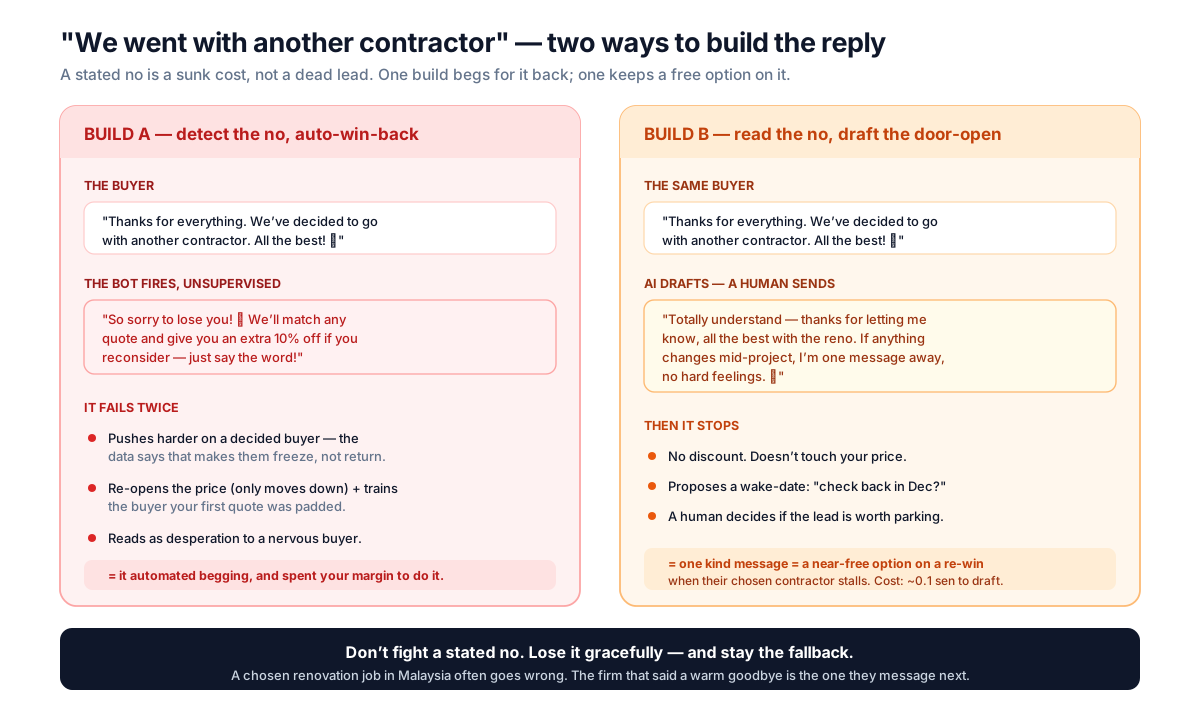
A renovation firm in Shah Alam spends three weeks on a RM70,000 landed-house job — a site visit, a detailed quote, two rounds of "can adjust a bit ah?", a follow-up every few days. Then, on a Tuesday, the message lands: "Hi, thanks so much for everything. We've decided to go with another contractor. All the best!"
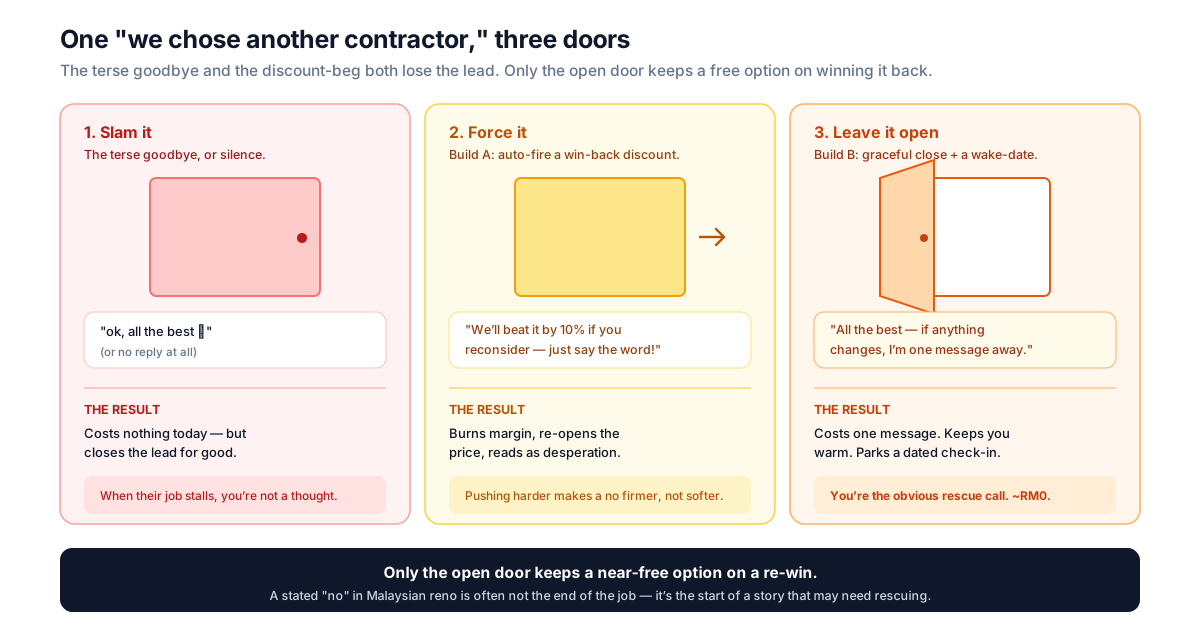
The owner stares at it, types "ok, all the best 🙏," and closes the chat. Dead lead. Move on.
That reflex — the terse goodbye, or worse, silence — happens forty times a year in a busy inbox, and every one of them is a door slammed on a lead you paid weeks of work to open. So the 2026 reflex writes itself: "The buyer said no to us and yes to someone else. Can't AI spot that and fire off a win-back offer automatically, before they're gone for good?"
I built it. I pointed a model at live WhatsApp threads with instructions to detect a rejection and respond with a win-back message. Within an hour it had replied to a polite goodbye with: "So sorry to lose you! 😟 We can match any quote and give you an extra 10% off if you reconsider — just say the word!" It begged, and it discounted, in the same breath. Here's why that's the most expensive way to handle a lost lead — and the version of the build that keeps a near-free option on winning them back without ever chasing a no.
Why isn't "we chose another contractor" the end of the lead?
Because in the Malaysian renovation market, choosing a contractor is not the same as finishing the job with them — and a real share of those chosen jobs go sideways. This isn't wishful thinking; it's one of the most reliable patterns in the industry here. Open any month's consumer news and you'll find it: a Sarawak homeowner who paid a contractor RM50,000 to rebuild, watched him demolish the house, then abandon it; a Penang condo renovation abandoned since August 2025 that landed at the Tribunal for Consumer Claims with RM28,700 still owed; a Johor homeowner who had to stop their contractor mid-job and withhold the balance to hire a replacement. The New Straits Times reported the tribunal was seeing at least 84 such cases a month.
So when a buyer tells you they went with someone else, you're not watching a finished story. You're watching the opening of one that, often enough to matter, ends with them needing a rescue — a half-done kitchen, a contractor who's gone quiet after the deposit, a budget that's blown. (This is the whole reason rescuing an abandoned renovation is a lead type of its own.) The only question is whether, when that happens, you're the firm they remember — the one who said a warm goodbye and left the door open — or the one who sent a desperate 10%-off plea and then went silent.
So what did the flashy build do? (Build A)
It auto-detected the rejection and auto-fired a win-back offer — and failed twice, both times by fighting a no the buyer had already settled. Build A is the one everyone pictures: "AI, watch my chats, and the moment someone says they're going elsewhere, send them an offer to win them back." Hands-off, instant, on paper a safety net. In practice it stacked the two worst moves you can make on a stated no.
Failure one: it pushes harder on someone who's already decided. The largest study of how deals are actually lost — Matthew Dixon and Ted McKenna's analysis of over 2.5 million recorded sales conversations for The JOLT Effect — found something counter-intuitive and consistent: when a buyer is hesitating, piling on the case for why they should act makes it worse. In their data, leaning harder into the pitch made a wavering buyer more likely to freeze, not less. A win-back bot that answers "we chose someone else" with urgency and a hard sell is doing exactly the thing the research says backfires — turning a soft, salvageable "not this time" into a firm, slightly annoyed "please stop messaging me."
Failure two: it reaches straight for a discount. Told to "win them back," a model does the easiest thing it can: drops the price. "We'll match and beat it by 10%." In a high-trust, high-ticket purchase, that's three mistakes in one sentence. It re-opens the number you already quoted, and a re-opened price only ever moves down (anchoring is one of the most robust effects in decision research — Tversky and Kahneman, 1974). It trains the buyer, and everyone they tell, that your first quote was padded and your real floor is lower. And it reads as desperation — the single worst signal to send a nervous homeowner who's trusting someone with their house. You don't win a RM70k relationship back by begging; you make them relieved they left.
Why can't AI decide whether to chase a lost lead?
Because the two facts that decide it — is this no final, and why did they really leave — are almost never written in the chat. This is the same wall every build in this series hits: the deciding fact lives off-channel. "We've decided to go with another contractor" is a single polite sentence covering wildly different situations, each needing a different move:
- They went with a relative's contractor or a friend's referral — a relationship you were never going to beat on price, and a job that genuinely might wobble later.
- They chose on trust, not price — the other firm just felt safer, which is useful feedback and a door worth leaving open.
- Their budget collapsed or the loan fell through, and "another contractor" is a face-saving exit — they may not be renovating at all this year.
- The enquiry was never serious — a price-benchmark, a landlord gathering quotes, a tyre-kicker — and staying in touch is wasted effort.
The words are identical. What separates them is in the buyer's family, their bank, or their head — none of it in the thread a model is reading. A model told to "win back lost leads" can't see any of that, so it treats all four the same and applies the one lever it has: pressure and a discount. The one-question test settles who owns this cleanly — is the answer written in the chat? No. So AI flags the rejection and drafts a graceful close; a human decides whether it's worth parking, and on what date.
What did the build that actually paid look like? (Build B)
It reads the rejection, drafts a genuinely gracious door-open note, and parks the lead with a wake-date — never discounts, never auto-sends, never chases. Same shape as every build in this series that's earned its keep: AI reads and drafts; the person who can read the buyer decides and sends.
Pointed at the same thread, Build B doesn't fire an offer. It says: "Looks like they've chosen another firm. I wouldn't discount or push — here's a graceful close: 'Totally understand, and thanks so much for letting me know. All the best with the reno — it's going to look great. If anything changes along the way, or you'd ever like a second opinion mid-project, I'm just one message away, no hard feelings at all. 🙏' Want to send this, and shall I set a wake-date to check in around December?" Then it stops. The difference between the two builds reads small and is the whole game:
| Build A — "detect the no, auto-win-back" | Build B — "read the no, draft the door-open" | |
|---|---|---|
| What it sends | A win-back offer, instantly, unsupervised | A graceful close — a human sends it |
| Its first instinct | Push harder, discount to claw back | Accept, remove pressure, leave a door open |
| Effect on price | Re-opens it; it only moves down | Doesn't touch it |
| How it reads to the buyer | Desperate, bot-like, "please come back" | Warm, secure, "no hard feelings" |
| On a lead that's genuinely gone | Wastes a chase and annoys them | Costs one kind message, then lets go |
| The follow-up | A nag, or nothing | A dated, no-pressure check-in |
| What it costs per draft | — | ~0.1 sen, illustrative |
Why does the graceful version pay? Because it's a cheap option on an asymmetric bet. The downside is one polite message to a lead who's gone — a near-zero cost. The upside is the slice of "chosen" jobs that go wrong, where a warm goodbye makes you the obvious rescue call. You're not spending money to chase a no; you're spending a sentence to stay the fallback. And if you do re-win the job, it's one of the cheapest you'll ever close — the acquisition cost was already sunk the first time around. (Marketing research on reactivating lapsed buyers puts the odds of selling to someone who's dealt with you before well above a cold prospect's — directionally 20–40% versus 5–20%, per figures attributed to Marketing Metrics; treat it as the shape of the thing, not a promise.)
What should an owner actually do when a lead picks someone else?
Lose gracefully on purpose, because the goodbye is the start of the next opportunity — not the end of this one. Most of the win here is a habit plus a thin, honest layer of software; the AI is a drafting assistant, not a closer.
- Say a warm, specific goodbye — fast. A terse "ok" or silence is the only genuinely wasteful response. "Totally understand, all the best with the reno" costs nothing and keeps you human. Send it while the chat's still warm, inside the open WhatsApp window so it's free and instant.
- Do not discount to claw it back. A panic discount re-opens your price, trains the buyer, and signals desperation. If you honestly want to compete on value, that's a separate, deliberate conversation — not a reflex stapled to "no."
- Leave one specific door open. Not a vague "let us know" — a concrete offer that costs them nothing and helps if their job goes wrong: "if you'd ever like a second opinion mid-project, I'm here." That line is written for the exact moment their chosen contractor stalls.
- Park it with a wake-date, don't nag. Set a check-in a month or two out — a single warm "how's the reno going?" on that date, zero messages before it. A lost lead isn't dead, it's dormant; treat it like a dated lead, not a lost one.
- Learn why separately — and don't take the stated reason as gospel. The reason they give ("a bit expensive") is often not the reason they left. Read your losses as a pattern across the funnel, not one bruised ego at a time, so you fix a real leak instead of discounting at a phantom one.
How HotLead fits — honestly
I'll be straight, the way I try to be in all of these, because over-claiming is the exact hype I keep arguing against. HotLead does not detect when a lead rejects you, and it does not send win-back offers or messages for you — auto-handling a rejection is the experiment in this piece, and the piece is the argument for keeping your own hand on that particular goodbye. What it ships is the plumbing that turns a graceful exit from a forgotten intention into a tracked step:
- The whole thread on one lead record. So a goodbye — or a re-greeting months later — can actually reference their job and their quote, instead of "hi, remind me what you were renovating?" The same single record that lets you keep the quoted number straight across a long thread is what makes a warm, specific close possible.
- A next action and a wake-date on every lead. So "check back with the Setia Alam client in December" surfaces itself as a due step, in plain sight, rather than relying on you to remember a lead you mentally filed as lost. It's the same engine that keeps a not-this-year lead from vanishing.
- One owner per lead, by rule. So a lost lead isn't orphaned the moment it's marked lost — someone still holds the relationship, and the re-win call lands on a person, not a void.
- A funnel and per-channel view. So "lost to a competitor" is a visible exit you can count and read as a pattern — which channels send leads that leave on price, which ones you lose on trust, and how many of the ones you said goodbye to gracefully actually come back.
The judgement of whether a "no" is final, why they really left, and whether this lead is worth staying in touch with stays with you — because you're the one who can read a family rate from a trust wobble, and the model will just reach for a discount. If the real problem underneath this is leads walking out the door for good, start with the complete guide to managing renovation leads in Malaysia, see how it fits a renovation firm or an interior design studio, and read the companion builds on why a lead actually went quiet after your quote, when it's worth reviving a dead lead at all, and the honest ledger of which AI builds in this series actually paid.
Sources: The finding that pushing harder on a hesitant buyer makes them more likely to freeze — and that indecision, not objection, drives most late-stage losses — is from Matthew Dixon and Ted McKenna's analysis of over 2.5 million recorded sales conversations in The JOLT Effect (2022); secondary summaries put the share of deals lost to "no decision" at 40–60%, with Dixon noting that leaning harder into the case for change carries roughly an 84% chance of making the buyer more indecisive. The anchoring effect — that an exposed number drags subsequent judgements toward it, so a re-opened price tends only to move down — traces to Amos Tversky and Daniel Kahneman, "Judgment under Uncertainty: Heuristics and Biases" (Science, 1974). The Malaysian renovation-abandonment pattern is drawn from recent reporting: a Sarawak contractor who took RM50,000, demolished a house and abandoned it, via The Borneo Post (2026); a Penang condo renovation abandoned since August 2025 with RM28,700 outstanding, via The Star (2026); the wider picture of poor-workmanship and abandonment disputes in The Star's "From dream homes to renovation nightmares" (2024); and the figure of at least 84 cases a month before the Tribunal for Consumer Claims from the New Straits Times (2024). The directional reactivation economics (a former buyer converting at a higher rate than a cold prospect — roughly 20–40% versus 5–20%, attributed to Marketing Metrics, and win-back campaign reactivation commonly cited in the 10–30% range) are from practitioner benchmarks such as this win-back statistics roundup and are labelled directional, not a peer-reviewed study. Lead economics (a ~RM70k Shah Alam landed-house job, ~RM1,280 expected gross profit per lead, ~0.1 sen per AI draft) are typical operating numbers reused across this series and labelled illustrative; the AI experiment and the Shah Alam scenario are described from practice and labelled illustrative, not a controlled trial. No win-back rate, re-win rate or rejection-detection accuracy is invented here — the reactivation figures are cited as directional vendor benchmarks and the model's failure mode is described using the JOLT and anchoring findings, not a number of my own.
Frequently asked questions
What should I say when a renovation customer tells me they chose another contractor?
Accept it graciously, don’t discount, and leave one specific door open. Something like: “Totally understand — thanks for letting me know, and all the best with the reno. If anything changes along the way, or you ever want a second pair of eyes mid-project, I’m one message away, no hard feelings.” Then park the lead in your system with a wake-date a month or two out. That reply costs you nothing, keeps your name warm, and — because renovation jobs in Malaysia go wrong often enough that a tribunal hears dozens of abandonment and dispute cases a month — it quietly makes you the obvious person to call if their chosen contractor stalls. A terse “ok, all the best” or silence slams a door you paid weeks of work to open.
Should I offer a discount to win back a lost renovation lead?
Almost never, and especially not as a reflex the moment they say no. Dropping your price to claw back a lead you’ve lost does three bad things at once. It re-opens the number you already quoted, and a re-opened price only ever moves down (the anchoring effect is one of the most robust findings in decision research). It trains the buyer — and everyone they tell — that your first price was padded and your real floor is lower. And it reads as desperation, which is the opposite of the signal a nervous, high-ticket renovation buyer wants from the firm they trust with their home. If you genuinely mis-scoped or want to compete on value, that’s a fresh, deliberate conversation — not a panic discount stapled to a goodbye.
Can AI automatically win back leads who went with a competitor?
AI can draft a good graceful reply in a second; it cannot decide whether the no is final, why they really left, or whether this lead is even worth staying in touch with — and those are the decisions that matter. A model told to “win back lost leads” will do the two worst things: push harder on a buyer who’s already decided, and reach for a discount, because that’s the easiest lever it has. The reasons a lead actually left — a cheaper relative’s contractor, a trust wobble, a budget that collapsed, a job that was never serious — live off the chat, in their head and their circumstances. So the honest split is the one that runs through this whole series: let AI draft the message; keep the judgement of whether to send it, and whether to bother, with a human.
Is it even worth staying in touch with a lead who picked someone else?
Often yes, because it’s one of the cheapest options you can hold. The lead already cost you real money to win — the ad spend, the site visit, the quote, the weeks of chasing — and that cost is sunk whether you stay graceful or slam the door. A warm, no-pressure door-open note costs effectively nothing on top of that. The upside is asymmetric: renovation jobs in Malaysia fail at a non-trivial rate (contractors abandoning half-finished work and disappearing with deposits is common enough to be a running consumer-protection story), so a meaningful slice of the buyers who chose someone else will be looking for a rescue in a few months. The firm that said a warm goodbye is the one they message. You’re not chasing a no; you’re buying a near-free ticket on their re-entry.
Does HotLead send win-back messages to lost leads for me?
No, and I won’t pretend it does — auto-detecting a rejection and auto-firing a win-back offer is the experiment in this article, and the article is the argument against running it unsupervised. What HotLead ships is the plumbing that makes a graceful exit a tracked step instead of a forgotten intention: the whole WhatsApp thread sits on one lead record, so you (or AI, as a draft) can write a reply that actually references their job; every lead carries a next action and a wake-date, so “check back with the Setia Alam client in December” surfaces itself instead of living in your memory; one owner holds the lead by rule, so a lost lead isn’t orphaned; and the funnel shows how many leads you lose to competitors, so you can read it as a pattern — and see which of those come back.
Keep reading
- The Only Three Ways to Grow a Renovation Firm — and Which Lever to Pull FirstEvery renovation firm's revenue comes down to three levers — how many leads you get, how many you close, and how big each job is. They multiply, so a modest lift on each compounds. But they cost wildly different amounts to pull, and most owners reach first for the one they should reach for last. Here's the ranking, with Malaysian numbers.
- Sight Unseen: Winning the Overseas Malaysian Who Renovates a Unit They Can't VisitA Malaysian working in Singapore collects the keys to a KL condo and messages you to fit it out — but they can't come to a site visit, can't walk your showroom, and will wire a deposit to a firm they've never met. Most firms treat this lead like a walk-in, go quiet when the buyer can't pop by, and lose the highest-budget job in the inbox. Here's why the remote buyer is your hardest-trust but best-paying lead, and how to build a remote lane that actually closes it.
- "Ok, Proceed" Isn't Money in the Bank — I Built an AI to Ask for the Deposit the Moment a Renovation Buyer Says YesA Cheras contractor closes a RM62k job on WhatsApp, the buyer says "ok proceed lah", and then the owner — mid-site, phone in a dusty hand — has to stop, pull the bank details, the agreed deposit and the scope, and type a careful money message. In that gap a hot yes quietly cools back to "let me think." The 2026 reflex is to ask AI to detect the yes and auto-fire the invoice. I built it, and it asked a half-committed buyer for 40% to a personal account two seconds after a soft "ok ok". Here's the version that kills the typing delay without asking for money off a misread.