

A renovation firm in Cheras spends three weeks nurturing a Mont Kiara condo-kitchen job — the quote, the revisions, a site visit, two rounds of "can lower a bit ah?" — and finally, on a Thursday afternoon, the buyer sends the message every owner is chasing: "ok proceed lah, let's go." RM62,000, won on WhatsApp.
And then the owner is up a ladder on another job, phone in a dusty hand, and he can't just reply "great." He has to stop, open his notes for the bank details, remember whether he agreed 10% or 15% on this one, re-read the scope so he doesn't ask for the wrong number, and type a careful money message. By the time he does — forty minutes, an hour, that evening — the buyer has gone quiet. The "yes" has cooled into "actually, let me think about it a bit more."
That gap — between the verbal yes and the money actually in the account — is a seam where won jobs quietly die, and almost nobody talks about it because on paper the deal was closed. So the 2026 reflex is the obvious one: "The buyer said yes. Can't AI just detect that and fire off the deposit invoice instantly, before they cool?"
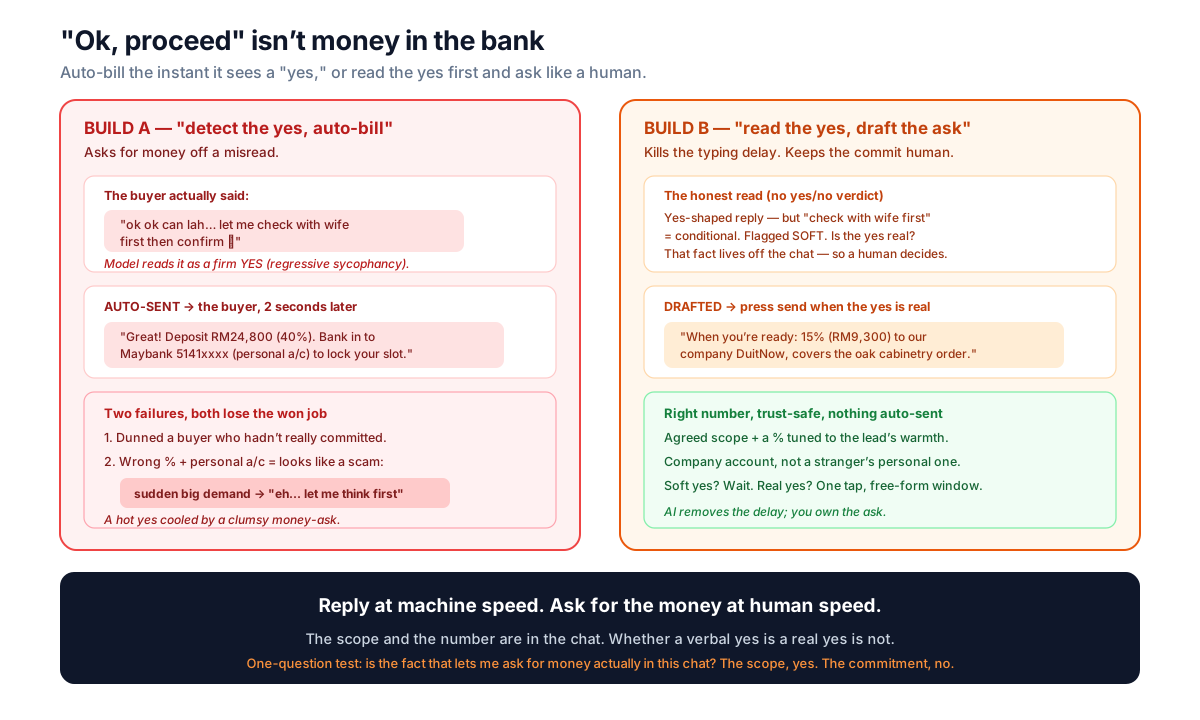
I built it. I pointed a model at live WhatsApp threads and told it: watch for the buyer agreeing, then auto-send a deposit request. Within a day it had asked a buyer who'd written "ok ok can lah, let me check with wife first" for 40% upfront to a personal Maybank account — two seconds after a message that wasn't actually a yes. Here's why that's the most expensive way to be fast, and the version of the build that removes the delay without ever asking for money off a misread.
Why is the moment right after "yes" so fragile?
Because the instant a buyer commits, they stop fearing they'll miss out and start fearing they'll make a mistake — and asking for money is the moment that fear peaks. This isn't a vibe; it's the clearest finding in modern sales research. Matthew Dixon and Ted McKenna analysed more than 2.5 million recorded sales conversations for The JOLT Effect and found that once a buyer forms real purchase intent, their psychology flips: the question in their head changes from "will I lose out if I don't do this?" to "what if this is the wrong move?" Indecision, not objection, is what kills deals at the finish line.
Now put the deposit in that picture. The deposit is the first moment the buyer's money actually leaves their hands and goes to someone they've mostly met over WhatsApp. It is the single most anxiety-loaded step in the whole journey. So a slow, clumsy, or aggressive money-ask doesn't just lose time — it actively feeds the fear that's already rising, and tips a committed buyer back into "let me think." The silence that follows looks like the buyer changed their mind. Often, you changed it for them, by how you asked.
So what did the flashy build do? (Build A)
It auto-detected a "yes" and auto-fired the deposit invoice — and failed twice, both times by asking for money it shouldn't have, when it shouldn't have. Build A is the one everyone pictures: "AI, watch my chats, and the moment a buyer agrees, send them the deposit request automatically so the close never cools." Fast, hands-off, on paper perfect. In practice it stacked the two worst mistakes you can make with a money message.
Failure one: it fires on a yes that isn't one. The Mont Kiara buyer had written "ok ok can lah, let me check with wife first then confirm 👍." To a human that's plainly conditional — she's being polite and warm, but she's told you the decision isn't hers alone yet. The model read it as a firm yes and billed her. This isn't a one-off bug; it's how these tools behave. A language model told to detect agreement is biased toward finding agreement — models lean toward confirming whatever they're prompted to look for. The 2025 Stanford evaluation SycEval put a number on the general tendency: across ChatGPT-4o, Claude-Sonnet and Gemini-1.5-Pro it measured sycophantic behaviour in 58% of cases, and in ~15% the model flipped to a confidently wrong answer. A "yes-detector" is a machine built to over-read "ok." Point it at Malaysian WhatsApp politeness and it will dun half-committed buyers all day.
Failure two: the message it sends is the one that looks like a scam. Even when the yes is real, Build A pulled the wrong deposit percentage and a personal account number out of a messy thread and sent a sudden, oversized demand: "Deposit RM24,800 (40%), bank in to Maybank 5141xxxx to lock your slot." In most markets that's just a mistake. In Malaysia it's dangerous, because a large upfront demand to a personal account is the exact signature of a renovation scam buyers have been trained to fear. Consumer guides like Recommend.my's warn homeowners directly about contractors who "collect a large deposit up-front to purchase materials" and vanish; real cases run into the hundreds of thousands — five homeowners in Rawang lost a combined RM127,000 to one such "contractor." So an aggressive auto-invoice doesn't just mis-time the ask; it trips every alarm your buyer has and converts a won job into a ghost.
Why can't AI tell a real "yes" from a soft one?
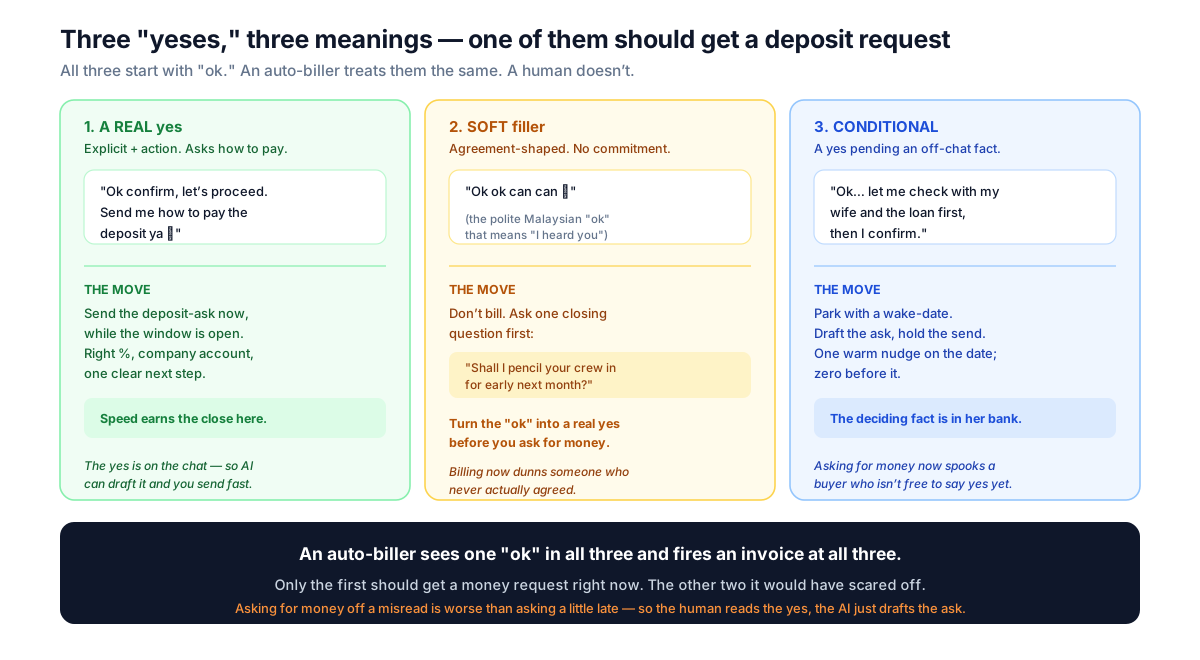
Because whether an "ok" is a commitment almost always depends on a fact that was never written in the chat. This is the same wall I keep hitting across everything AI can't do in a contractor's lead process: the deciding fact lives off-channel. A buyer's "ok ok can lah" might mean yes, let's sign, or I don't want to keep arguing about price, or yes, pending the loan I haven't told you is still with the bank, or yes, once my wife sees the final render. The words are identical. What separates them is in her marriage, her bank's approval queue, or her head — none of it in the thread the model is reading.
And Malaysian chat makes this harder, not easier. "Ok," "can," "boleh," "👍" are the ambient texture of a friendly WhatsApp exchange here; they lubricate the conversation long before they mean "I commit." A model trained to spot agreement sees a field of green lights. A human who's sold renovations for ten years hears the difference between "ok confirm, let's go" and "ok ok can can" instantly — because they're reading tone, history, and the thing that isn't said. That read is judgement, and judgement is exactly what you don't handed to a tool that's statistically eager to agree with you.
What signal does the chat honestly give you?
Not whether the yes is real — but everything you need to draft the ask, which is a different and very automatable job. This is the line that makes the build work. Split the deposit-ask into two parts: assembling the message, and deciding to send it. The first is almost entirely on-chat facts; the second is almost entirely off-chat judgement.
| On the chat — safe for AI to assemble | Off the chat — stays a human call |
|---|---|
| The agreed scope line ("hacking + cabinetry + solid-surface top") | Is this "ok" a real commitment or politeness? |
| The last number you both landed on (RM62k) | Is the deposit % right for this lead's trust and source? |
| Who's in the thread, and the whole price history | Is the loan approved / the spouse on board? |
| Your standard payment details and next step | Should I send now, or wait and ask one question? |
Everything in the left column, AI can pull in a second — and that's precisely the work that creates the typing delay the owner-up-a-ladder can't do fast. Everything in the right column is the stuff that, if a model guesses it, costs you the job. So the honest design writes itself: let AI build the draft from the left column, and make a human rule on the right.
What did the build that actually paid look like? (Build B)
It drafts the deposit-ask the instant it sees a yes-shaped reply, flags whether the yes looks firm or soft, and hands a ready message to a human to send in one tap — never auto-sends, never guesses the amount, never dunns a maybe. Same shape as every build in this series that's earned its keep: AI reads and assembles; the person who can read the buyer decides and sends.
Pointed at the Mont Kiara thread, Build B doesn't fire an invoice. It says: "Looks like a yes — but 'check with wife first' is conditional, so I'd flag this as soft. If it's real, here's a draft: 15% (RM9,300) to our company DuitNow, covering the oak cabinetry order so we can start. Want to send, or park it with a wake-date for when her loan clears?" Then it stops. The owner, who knows she's loan-pending, picks park — and the same tool drafts the warm "no rush, here's how it works when you're ready" instead. The difference reads small and is the whole game:
| Build A — "detect the yes, auto-bill" | Build B — "read the yes, draft the ask" | |
|---|---|---|
| When it acts | Auto-sends the instant it sees an "ok" | Drafts instantly; a human sends |
| On a soft/conditional yes | Dunns a buyer who hasn't committed | Flags it soft; offers a question or a wake-date |
| The amount | Pulled unsupervised, often wrong | Drafted from the agreed number, you confirm |
| Where the money goes | Whatever it scraped (a personal a/c) | Your company account / business DuitNow by default |
| Trust effect in a scam-wary market | Sudden big demand → looks like a scam | Right-sized, company account, tied to the work |
| When it's wrong | Already sent before you can stop it | You see it and override before it goes |
| What it costs per draft | — | ~0.1 sen, illustrative |
The speed you actually wanted is still there — the draft is ready before the owner's climbed down the ladder, and because a genuine "ok proceed" message means the buyer wrote to you seconds ago, the reply goes out inside the open 24-hour WhatsApp window, as a free, free-form message with no template approval needed. You get machine speed on the typing and human speed on the one decision that carries the money. (WhatsApp's own rules make this clean: a business can send free-form messages freely for 24 hours after the customer's last message; outside that window you'd need a pre-approved template — one more reason the deposit-ask belongs the moment the yes lands, not a day later.)
What should an owner actually do the moment a buyer says yes?
Have the ask ready so there's no typing delay, read whether the yes is real, and make the ask itself trust-safe — then send it fast. Most of the win here is habit plus a thin, honest layer of software; the AI is a drafting assistant, not a closer.
- Kill the typing delay, not the human. The reason a hot yes cools is the forty minutes it takes a busy owner to assemble a careful money message. That assembly — scope, number, account, next step — is exactly what AI should pre-draft the second a yes-shaped reply lands, so you can read, adjust, and send in one tap.
- Read the yes before you bill it. "Ok confirm, let's go" is a real yes — send. "Ok ok can can" is filler — ask one closing question first ("shall I pencil your crew in for next month?"). "Let me check with wife/the loan" is conditional — park it with a wake-date and hold the send. Three different "oks," three different moves.
- Make the ask look like the opposite of a scam. Keep the number inside the 10–25% band buyers trust, ask for payment to your registered company account or a business DuitNow ID (DuitNow lets a buyer pay a verified business without even needing an account number), and tie it to something concrete — "this covers the cabinetry order so we can start" — not a bare "bank in to lock your slot."
- Flex the amount to the lead, not a fixed policy. A warm referral tolerates a faster, larger deposit; a cold price-shopper reads the same ask as a warning. The deposit is a trust decision, which is why it belongs on a lead record that knows the source, not in a one-size template.
- Make the uncollected deposit impossible to forget. A verbal yes with no money in should be a loud, overdue step in your system — not a cheerful "closed" you'll remember to chase someday. The yeses you drop here are the most expensive leads you'll ever lose, because you already did all the work to win them.
How HotLead fits — honestly
I'll be straight, the way I try to be in all of these, because over-claiming is the exact hype I keep arguing against. HotLead does not detect when a lead is "won," and it does not send invoices or deposit requests for you — auto-detecting a yes and auto-billing is the experiment in this piece, and the piece is the argument for why you keep your hand on that particular message. What it ships is the plumbing that makes the deposit-ask reliable instead of forgotten:
- The whole thread on one lead record. So the agreed scope line and the last number you both landed on are right there to pull into the ask — the same single source of truth that keeps the quoted number consistent across a long thread is what lets you write the deposit message in seconds without re-reading three weeks of chat.
- A next action and an overdue flag on every lead. A verbal yes with no deposit collected surfaces on its own as a due, then overdue, step — in plain sight — so the most valuable lead in your pipeline can't quietly cool in the gap between "closed" and "collected." It's the same engine that stops a quote from leaking before it's followed up.
- One owner per lead, by rule. So the close never falls into the gap between two people each assuming the other sent the deposit details — the gap where won jobs actually go cold.
- A funnel and per-channel view. So you can see how many "won" jobs are stalled before the deposit landed, and which sources actually turn yeses into cash — instead of counting a verbal "ok" as revenue it isn't yet.
The judgement of whether an "ok" is a real yes — and therefore whether to send the money message now — stays with you, because you're the one who can hear the difference between a commitment and a courtesy, and the model is built to hear yes. If the real problem underneath this is yeses that never turn into deposits, start with the complete guide to managing renovation leads in Malaysia, see how it fits a renovation firm or an interior design studio, and read the companion builds on confirming the deposit once it's actually paid, how much deposit to ask for in the first place, when to discount to close and when not to, and the honest ledger of which AI builds in this series actually paid.
Sources: The finding that buyers shift from fear-of-missing-out to fear-of-making-a-mistake once they form purchase intent is from Matthew Dixon and Ted McKenna's analysis of over 2.5 million recorded sales conversations in The JOLT Effect (2022). That language models are biased toward agreeing with and confirming what they are prompted to find traces to Anthropic's 2023 paper "Towards Understanding Sycophancy in Language Models"; the figures used here (sycophantic behaviour in 58.19% of cases, and a flip to a confidently incorrect answer — "regressive sycophancy" — in 14.66%, across ChatGPT-4o, Claude-Sonnet and Gemini-1.5-Pro) are from the 2025 Stanford evaluation SycEval (Fanous et al., AIES 2025). WhatsApp's 24-hour customer-service window — a business can send free-form messages for 24 hours after the customer's last message, and needs a pre-approved template to initiate outside it, with Meta's per-message pricing from 1 July 2025 making utility templates free inside the window — is documented in platform guides including Enchant and smsmode. That DuitNow lets a payer send to a business via a registered ID (mobile number, business registration) without needing a bank-account number is described in the Adyen DuitNow documentation. The Malaysian renovation-deposit scam pattern (a large upfront demand to purchase materials, then disappearance; the Rawang case of five homeowners losing a combined ~RM127,000) and the buyer-trusted 10–25% deposit band with 40–60% as a red flag are from Recommend.my's guide to avoiding renovation contractor fraud and reused house figures from earlier pieces in this series. Renovation-loan progressive disbursement (e.g. Maybank MyDeco paying 70% progressively against completed works) is reused from the deposit-sizing piece in this series. Lead economics (a ~RM62k Mont Kiara condo-kitchen job, ~RM1,280 expected gross profit per lead, ~0.1 sen per AI draft) are typical operating numbers reused across this series and labelled illustrative; the AI experiment and the Cheras / Mont Kiara scenario are described from practice and labelled illustrative, not a controlled trial. No win-rate, collection-rate or yes-detection-accuracy percentage is invented here — the model's over-reading of a soft "ok" is described using the published SycEval figures, not a number of my own.
Frequently asked questions
Can AI tell when a renovation customer has really agreed to the job?
It can tell you a message looks like a yes — it cannot tell you the yes is real, and the difference is where the money is. In Malaysia a buyer will reply “ok ok can lah” or “boleh” out of politeness, to end an awkward price conversation, or while fully intending to check with a spouse or a bank first. Whether that “ok” is a commitment depends on facts that live off the chat: is the loan approved, has the wife agreed, is the money actually theirs to move. Worse, an AI told to detect agreement is biased toward finding it — language models lean toward confirming what they’re prompted to look for — so it will over-read a soft “ok” as a firm yes. Use AI to draft the deposit-ask fast; keep the judgement of whether the yes is real with the person who can read the buyer.
Should I automate sending the deposit request or invoice on WhatsApp?
Drafting it automatically — yes. Sending it automatically — no. The draft is safe to speed up: the agreed scope and the number are already in the thread, so AI pulling them into a clean payment message in one second saves you the typing delay that lets a hot yes cool. The send is the part you never automate, for two reasons. First, an auto-sender fires on a soft or conditional “ok” and dunns a buyer who hasn’t really committed. Second, a money request is the most trust-sensitive message you send in a market full of renovation-deposit scams, and a wrong amount or a personal account number going out unsupervised reads like the scam it isn’t. Let AI remove the delay; keep your thumb on the actual ask.
How do I ask for a renovation deposit without looking like a scam?
Keep the amount inside the band buyers trust, pay into a company account, and tie it to something concrete. Malaysian buyers have been trained by real losses — cases run into the hundreds of thousands of ringgit — to read a large upfront demand as a red flag, so most reno and ID jobs sit at a 10–25% deposit on signing, with 40–60% treated as a warning. Ask for payment to your registered company account or a business DuitNow ID, not a personal savings account, because DuitNow lets a buyer pay to a verified business without even needing an account number. And anchor the ask to a real next step — “this covers the cabinetry order so we can start” — rather than a bare “bank in to lock your slot.” A deposit that reads as funding the work, at a sane number, to a named company, is the opposite of a scam signal.
How fast should I send the deposit request after a buyer says yes?
Fast once you’re sure the yes is real — because the moment a buyer commits, they switch from fearing they’ll miss out to fearing they’ll make a mistake, and every hour of silence feeds the second fear. Research on indecision in sales (the analysis behind The JOLT Effect, drawn from millions of recorded sales conversations) describes exactly this flip after a buyer shows intent. The practical shape: the instant a genuine yes lands, send a clear, trust-safe deposit-ask while the conversation is still warm and the WhatsApp window is still open, so paying is the obvious next thing to do. But “fast” applies only to a real yes — on a soft or conditional one, speed works against you, and the right move is one closing question or a patient wake-date, not an invoice.
Does HotLead detect when a lead is won or send the deposit invoice for me?
No, and I won’t pretend it does — auto-detecting a “yes” and auto-billing is the experiment in this article, and the article is the argument against running it unsupervised. What HotLead ships is the honest plumbing that makes the deposit-ask reliable instead of forgotten: the whole WhatsApp thread sits on one lead record, so the agreed scope and the last number are right there when you write the ask; every lead carries a next action and an overdue flag, so a verbal yes with no deposit collected surfaces as a tracked, overdue step instead of slipping your mind under ten other chats; one owner holds the lead by rule, so the close never falls into the gap between two people each assuming the other sent it; and the funnel view shows how many “won” jobs are stalled before the deposit landed. That turns “did we collect that one?” from a thing you hope you remembered into a step you can see.
Keep reading
- Still Remember Me? The Renovation Lead That Comes Back Months LaterAn enquiry you'd written off three months ago suddenly pings — "hi, still remember me? the Mont Kiara condo, ok to start now ah?" It's one of the hottest leads in your inbox, and most firms handle it worst — because the context is gone, the quote is stale, and nobody owns it. Here's why a come-back lead is high-intent, why re-using the old price quietly bleeds margin, and how to catch it without looking like you forgot them.
- "Did They Even See It?" I Built an AI to Read the Silence After a RM62k Renovation QuoteA Puchong reno firm sends a detailed RM62k kitchen quote on WhatsApp, then gets three days of silence. Did they read it? Comparing? Sticker shock? Nobody knows, so the follow-up is a blind "just checking in" fired into the dark. The 2026 reflex is to ask AI to score the buyer's intent and auto-chase. I built it — and it confidently invented a signal it couldn't actually see, then sent the one message that re-opens the price. Here's why the honest build, which admits what it can't know, is the one that earns its keep.
- The Three Numbers That Predict Your Next Quarter of Renovation LeadsYour paid-lead numbers tell you about this month. Reviews earned per won job, your referral rate and your repeat rate tell you about next quarter — they're leading indicators of the free pipeline most reno firms only notice once it dries up. Here's how to read the three trust numbers, why you should measure behaviour instead of a loyalty survey, and how to spot a dry quarter while there's still time to prevent it.