

There's a particular ping that should make a renovation firm's day, and usually ruins it a little instead.
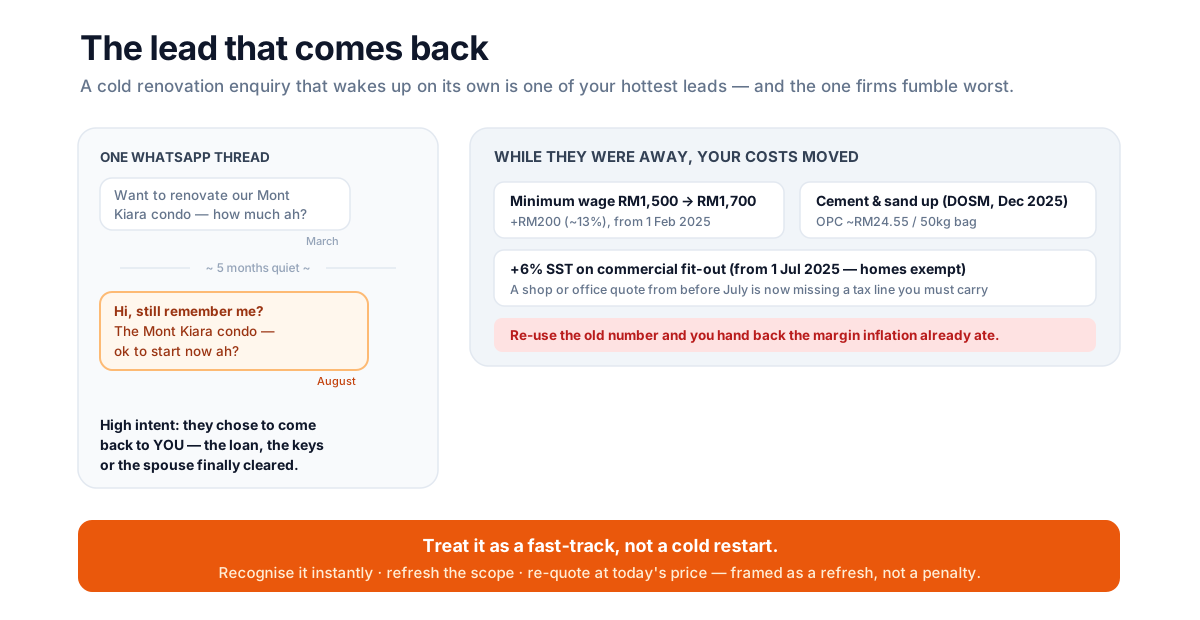
Three months ago someone messaged your firm about doing up a condo in Mont Kiara. Keen at first — good questions, a site visit, maybe even a quote — then it went quiet. You chased once or twice, got nothing, and quietly filed it under lost. Then, on a random Tuesday, your phone lights up: "Hi! Still remember me? The Mont Kiara condo — ok to start now ah?"
Here's what happens next in most firms. Whoever happens to see the message squints at an unfamiliar name. The original chat is buried under four hundred newer ones, or it was on the phone of a salesperson who left in June. So the reply goes out cold: "Hi, sorry — can you remind me which project this is and what we discussed?" And a buyer who was ready to sign this week suddenly feels like a stranger to the firm they just chose to come back to — so they go and ask two other contractors instead.
Or the opposite happens. Someone does find the old quote, wants to look easy and keen, and fires back: "Yes of course! The RM85k we quoted — still good, when can we start?" — handing back three months of cost inflation without noticing, and turning a healthy job into a thin one.
A lead that comes back to you on its own is one of the hottest leads you'll ever get. And because it arrives unlabelled, out of sequence, and with its context gone, it's the one most firms fumble. Let's fix that.
Why is a lead that comes back one of the best leads in your inbox?
Because it already passed every test a cold enquiry still has to pass — and then it chose you a second time. A fresh WhatsApp enquiry is a stranger you have to win from scratch: convince them you're competent, get a reply, qualify them, earn a visit. A come-back lead did all of that months ago. The hard, expensive top-of-funnel work is already spent.
More than that, think about why they went quiet in the first place. In Malaysia, a renovation stalls for a handful of very specific, very real reasons — and a return usually means one of them just cleared:
- The housing or renovation loan came through. A buyer who can't confirm financing can't commit, and bank approval takes its own sweet time. When the loan lands, they're suddenly ready — and they come back to the firm they'd already picked.
- The keys or vacant possession finally happened. People enquire the moment they book a unit, then disappear for months until handover. When they get the keys, the clock starts and they message again.
- The festive bonus or ang pow money arrived. A lot of renovations are quietly waiting on a lump of cash — year-end bonus, Raya or CNY money, a maturing investment.
- The spouse, parents or co-owner finally agreed. The decision was stuck in a family discussion you were never part of, and it just resolved in your favour.
None of those are rejections. They're pauses. And when the pause ends, the buyer doesn't start their search over — they go back to whoever they were last talking to, as long as that firm doesn't make them feel like a stranger. That's the whole opportunity, and the whole risk.
Why do firms handle their best returning lead the worst?
Because it arrives with no label and no memory attached — and in a WhatsApp-first firm, memory lives in people's heads and personal phones, not in a system. So the one lead that most deserves a warm, instant, "of course I remember you" gets whatever the inbox happens to serve up.
Three things break, and they stack:
- The context is gone. The original thread is buried under hundreds of newer chats, the quote is in someone's email or a folder nobody can find, and — critically — why it stalled was never written down. So even a well-meaning reply starts from zero.
- Nobody owns it. The salesperson who built the relationship may have left the firm, taking the history (and sometimes the actual WhatsApp number) with them. The ping lands in a shared group chat where everyone assumes someone else will handle it, so it either gets a cold generic reply or sits unanswered — on a lead that's ready to buy.
- It's treated as a fresh cold lead. Out of sequence, unrecognised, it goes to the back of the queue behind today's new enquiries — when it should be jumping to the front.
This is the quiet tragedy of it: firms pour real money into generating leads and chasing cold ones, and then fumble the warmest lead of all simply because it showed up unannounced. Around 44% of salespeople give up after one follow-up while roughly 80% of sales need five or more — which means most firms never kept these threads alive in the first place, so when one walks back through the door, there's nothing to pick up.
The two reflexes that both leak — re-using the old quote, and "sorry, remind me?"
When a firm does catch the message, two instincts kick in, and both lose money in opposite directions. One eats your margin; the other hands the buyer back to the market.
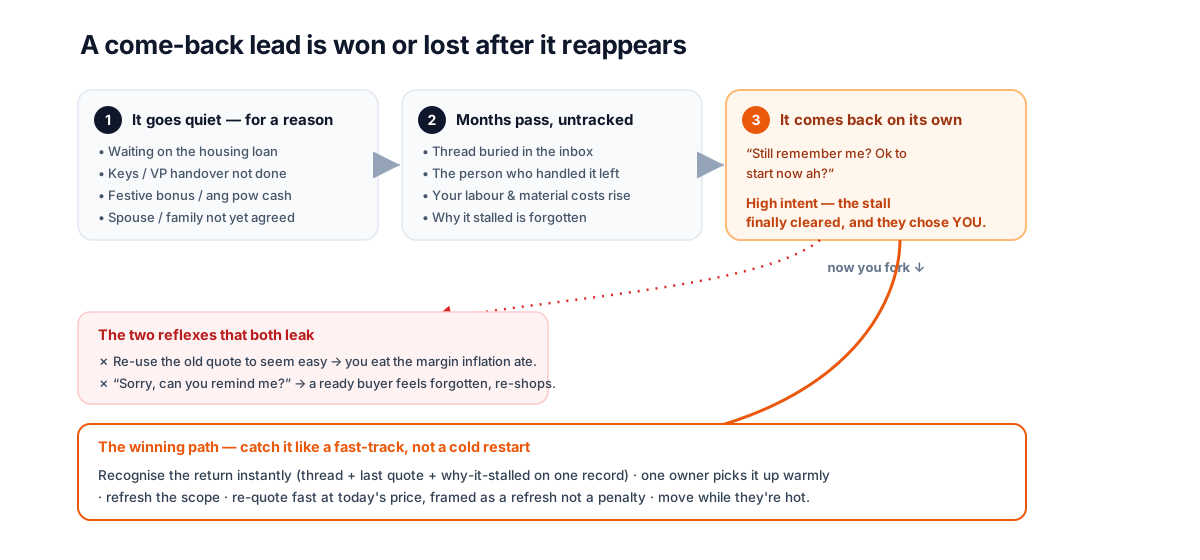
Reflex one: re-honour the old number to look easy. It feels like good service, and it's the more expensive mistake, because your cost base genuinely moved while the buyer was away. This isn't a negotiating excuse — it's documented:
- Labour. Malaysia's monthly minimum wage rose from RM1,500 to RM1,700 on 1 February 2025 — about a 13% jump at the floor, and skilled trades sit well above it. The labour line in a quote from early last year is simply underpriced today.
- Materials. The Department of Statistics Malaysia reported cement and sand as the main drivers of building-cost inflation at the end of 2025, with cement up roughly 2% to 6% year-on-year and an Ordinary Portland cement bag averaging about RM24.55 per 50kg. (Steel actually softened over the same period — so "prices moved" is real but uneven, which is exactly why you re-cost rather than guess.)
- Tax, if it's commercial. From 1 July 2025 a 6% service tax applies to construction work services — purely residential projects are exempt, but a shop lot, office or F&B fit-out is not. A commercial quote you sent before July is now missing a 6% line you'll either absorb or awkwardly add on later.
Re-use that old number and you're not being generous — you're quietly funding the client's renovation out of your own margin. On an RM85k job at a ~20% margin, giving back even a few percent of cost is giving back a real slice of the only profit the job was ever going to make.
Reflex two: the cold "sorry, can you remind me?" This one doesn't cost margin — it costs the whole job. A buyer who has just chosen to come back to you, specifically, reads a blank reply as they've forgotten me / I'm just a number here — and the obvious next move is to message the two other firms they'd shortlisted, who might remember them better. You had the warmest lead in the market and handed it straight back to the market.
What a come-back quote should look like — old number vs today
The move is neither "same price, no questions" nor "start over, who are you again?" It's: recognise them instantly, then refresh the quote to today's reality and say so.
| Re-honour the old quote | Cold "remind me?" | Recognise + refresh (the win) | |
|---|---|---|---|
| Buyer feels | Looked after — at first | Forgotten, like a stranger | Remembered and dealt with straight |
| Your margin | Quietly eaten by inflation | N/A (you've lost the job) | Protected at today's cost |
| Risk | Thin or loss-making job | They re-shop and you lose | A small, explained adjustment |
| Speed | Fast but wrong | Slow and cold | Fast and right |
The script is simpler than firms fear: "Eh, of course I remember — the Mont Kiara condo! Great that you're ready to go. Quick heads-up: material and labour costs have moved a little since I quoted in March, so let me send you the refreshed number — same scope — and I can lock it in for you this week." That's it. You've shown you remember them, you've been transparent about why the number changed, and you've given them a reason to move now rather than drift off again. A buyer who is genuinely ready accepts a modest, explained refresh almost every time. What they don't forgive is feeling like a stranger — or discovering later that you quietly padded the price.
How do you catch a come-back lead every single time?
You stop relying on memory and start relying on a record. The firms that win these leads aren't the ones with better recall — they're the ones where a dormant lead's full story is sitting in one place, ready to be picked up the moment it stirs. Four moves:
- Keep the whole thread, the last quote, and the reason it stalled on one record — not in a head or a personal phone. The reason-it-stalled is the part everyone forgets to capture and the part that matters most: "waiting on his loan," "keys in Sept," "wife keen, husband not yet." When the lead comes back, that one line tells you instantly how to greet them and what's likely changed.
- Park it with a wake-date instead of marking it dead. A "not now, keys in September" lead shouldn't vanish into a lost pile — it should resurface on its own in September with a nudge to check in. Most leads that go quiet aren't dead, they're dated — a parked lead with a wake-date is the difference between you reaching out the week their keys arrive and them having to chase you.
- Give it one named owner who can pick the relationship back up warmly — ideally the person who built it, but if they've left, someone who can see the full history and step in without the buyer feeling handed around.
- Fast-track it, don't back-of-queue it. A recognised come-back lead with a cleared blocker is closer to signing than most of today's fresh enquiries. Treat it that way: reply fast, refresh the quote in days not weeks, and move while they're hot.
Done this way, the "still remember me?" message stops being a panic and becomes the easiest win of the week: you open the record, see "Mont Kiara condo, quoted RM85k in March, waiting on loan," reply warmly in thirty seconds, refresh the number, and close a job you'd already written off.
The bottom line
The lead that comes back on its own is the market handing you a second chance at a job you'd already paid to win once — and the firms that lose it don't lose on price or quality, they lose on handling. They treat a hot, hand-raised buyer like a cold stranger because the context disappeared, or they eat a chunk of margin re-honouring a quote that the last year of wage and material inflation quietly made wrong.
Neither is necessary. Keep every stalled lead's thread, last quote and reason-it-stalled on one record with a wake-date, hand the return to one owner who can greet them warmly, and re-quote at today's price framed as a refresh, not a penalty. Do that, and "still remember me?" stops being the question that catches you out and becomes the one you love to hear.
For the whole system this sits inside — capture, qualify, visit, quote and follow up — start with the complete guide to managing renovation leads in Malaysia. This piece is about the inbound moment a long-dead lead reappears; read it alongside the outbound follow-up system that keeps leads warm in the first place, the chase-or-wait call when a warm lead goes quiet right after a quote, and how to nurture a "not now" lead without annoying them.
How HotLead helps you catch a lead that comes back
HotLead doesn't message dormant leads for you or decide who's worth reviving, and it can't re-price a job — that's your judgement and your cost sheet. What it does is make sure that when a lead walks back through the door on its own, you catch it instead of fumbling it:
- One record for the whole thread and the last quote, so a months-old enquiry is recognised in seconds — you see who they are, what you quoted, and why it stalled, instead of asking a ready buyer to re-explain themselves.
- A next action with a wake-date, so a "not now — waiting on his loan, keys in September" lead stays visible and resurfaces on schedule, rather than rotting in a lost pile until it happens to ping you.
- One named owner per lead, so the relationship survives a staff member leaving and the buyer deals with a familiar firm, not a blank slate.
- A funnel and per-source view, so you can see which parked leads are worth a nudge and which channels send enquiries that stall but come back — the ones worth building a wake-date habit around.
If your best returning leads keep getting a cold reply or a margin-eating "sure, same price," the leak isn't your quoting — it's that the context vanished between the first chat and the comeback. See how HotLead works, or how it fits a renovation firm or an interior-design studio.
Sources: The Vibes — Minimum wage to increase to RM1,700 starting February 2025 (monthly minimum wage up from RM1,500 to RM1,700, effective 1 February 2025, with a six-month deferment to 1 August 2025 for employers with fewer than five workers); Grant Thornton Malaysia — Revision of sales tax rates and expansion of scope for service tax (6% service tax on construction work services from 1 July 2025; purely residential projects and base materials such as cement and aggregates exempt); Department of Statistics Malaysia (DOSM), Building Material Cost reporting, December 2025, as reported by trade and news outlets (cement up roughly 2% to 6% year-on-year, Ordinary Portland cement averaging about RM24.55 per 50kg bag, with cement and sand cited as the main drivers of building-cost inflation; steel prices softened over the same period); Level CFO — What a good win rate looks like for contractors and The 7-day rule: why stale quotes kill contractor revenue (median contractor wins roughly 38% of quotes; quotes are perishable). Expected gross profit per winnable enquiry (~RM1,280) and the 44%-quit / 80%-need-five-follow-ups figures as cited in the real cost of a lost renovation lead and the follow-up system that wins renovation jobs.
Frequently asked questions
An old renovation lead suddenly messaged me again after months — should I just re-use the quote I already sent them?
No — re-using an old number is the quiet way to give away margin. A renovation quote is perishable, and your cost base has genuinely moved since you sent it. Malaysia's minimum wage rose from RM1,500 to RM1,700 in February 2025, cement and sand climbed through 2025 per the Department of Statistics, and if the job is a shop or office there's now a 6% construction service tax that didn't exist before July 2025. Re-quote at today's cost. The buyer came back because they're ready, not because they're holding you to a three-month-old figure — so a small, clearly-explained refresh is completely reasonable and they'll accept it.
A lead went cold and came back — how do I re-quote without making them feel punished by a higher price?
Frame the new number as a refresh of a stale quote, not a price hike aimed at them. Something like "great to hear from you! Material and labour costs have moved a little since March, so let me send you the current number — the scope's the same, and I can lock it in for you this week." You're being transparent, not opportunistic, and you're giving them a reason to move now. What a ready buyer won't tolerate isn't a modest adjustment — it's being treated like a stranger, or being quietly overcharged and finding out later.
Is a lead that comes back on its own actually worth prioritising over fresh enquiries?
Usually yes. A cold enquiry has to be convinced you're worth talking to; a come-back lead already decided that months ago and returned to you specifically, often after the exact blocker that stalled them finally cleared. You've already spent the first reply, the qualifying and sometimes the site visit on them, so the expensive top-of-funnel work is done. Treat it as a fast-track — recognise it, refresh the quote, and move while they're hot — not as a fresh cold lead that goes to the back of the queue.
The staff member who handled this lead has left, or I can't find the old chat. What do I do?
That's exactly why come-back leads leak — the context lived in one person's head or one person's phone. Short term, be honest and warm instead of blank, with something like "Of course — let me pull up your details and come back to you properly today", then reconstruct what you can and confirm the scope with them rather than guessing. Long term, the fix is structural — keep every lead's full thread and last quote on a shared record that doesn't walk out the door when a salesperson does, so the next person can pick up a months-old lead warmly instead of cold.
Does HotLead automatically bring back old leads for me?
No — HotLead doesn't message dormant leads on its own or decide who to revive, and it can't re-price a job for you; that's your judgement. What it does is make sure that when a lead comes back on its own, you catch it. The whole thread and last quote sit on one record so you recognise the return instantly, a next action with a wake-date keeps a "not now, waiting on his loan" lead visible instead of buried, one named owner holds the relationship across the gap, and the funnel shows which parked leads are worth a nudge. The judgement stays yours; the context stops disappearing.
Keep reading
- "Did They Even See It?" I Built an AI to Read the Silence After a RM62k Renovation QuoteA Puchong reno firm sends a detailed RM62k kitchen quote on WhatsApp, then gets three days of silence. Did they read it? Comparing? Sticker shock? Nobody knows, so the follow-up is a blind "just checking in" fired into the dark. The 2026 reflex is to ask AI to score the buyer's intent and auto-chase. I built it — and it confidently invented a signal it couldn't actually see, then sent the one message that re-opens the price. Here's why the honest build, which admits what it can't know, is the one that earns its keep.
- The Three Numbers That Predict Your Next Quarter of Renovation LeadsYour paid-lead numbers tell you about this month. Reviews earned per won job, your referral rate and your repeat rate tell you about next quarter — they're leading indicators of the free pipeline most reno firms only notice once it dries up. Here's how to read the three trust numbers, why you should measure behaviour instead of a loyalty survey, and how to spot a dry quarter while there's still time to prevent it.
- A Main Contractor Just Asked You to Quote a Package. Qualify the Payer First.When another contractor WhatsApps you to price a trade package, it looks like the cleanest lead of the month — a pro who knows what he wants. It's actually your riskiest, because the risk isn't the project, it's the payer. Here's how to handle it.