

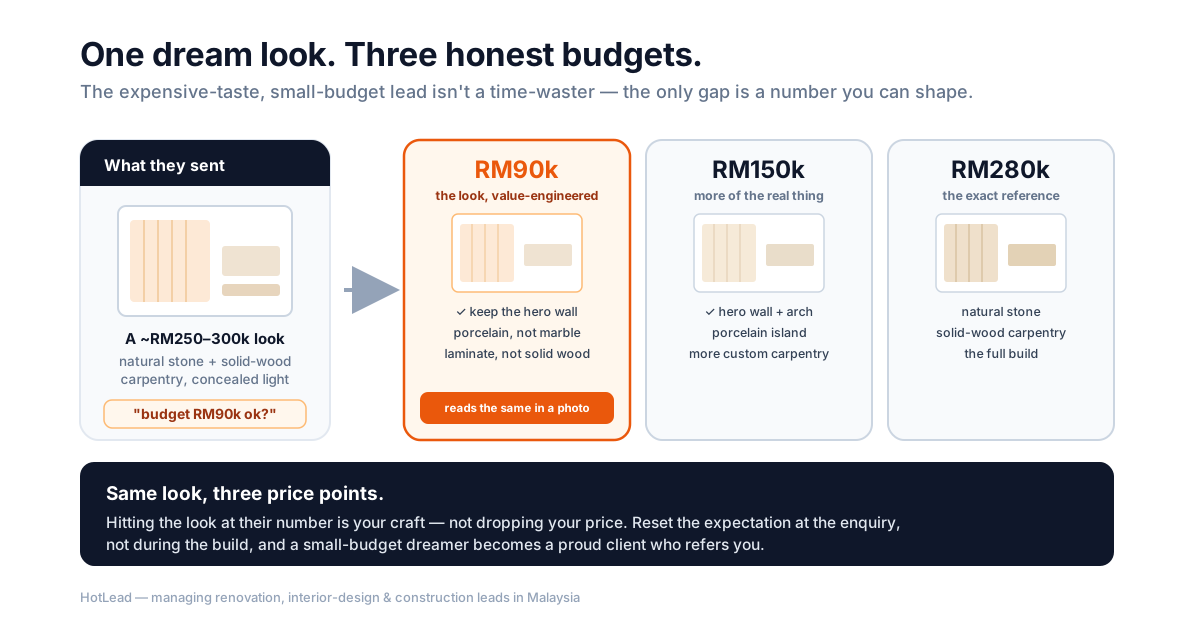
Every interior-design studio owner in the Klang Valley knows this WhatsApp. A photo lands — a saved Instagram reel of a warm, minimalist condo: a travertine-look TV feature wall, full-height fluted wood panelling, a stone island, concealed cove lighting. Under it, one line: "Hi, saw your work on Qanvast. Boleh buat macam ni tak? Budget around RM90k ok?"
The look in that image is a RM250,000–300,000 fit-out. The budget is RM90,000. And in the three seconds it takes to read the message, most owners have already decided how it ends — "budget tak cukup lah, waste of time" — and reply slowly, if at all.
I sat with a Mont Kiara studio owner who'd lost three of these in a row and assumed they were all tyre-kickers. They weren't. One of them signed with a studio down the road for RM95k — the same budget she'd quoted him — because that studio did one thing differently: it didn't argue with his dream or cave to his number. It translated one into the other.
This is the expensive-look, small-budget lead. It's specific to interior design, it's one of the most mishandled leads in a studio's inbox, and it's far more winnable than it looks. Let me break down why, where the money in "the look" actually goes, and the staged way to convert it without touching your margin.
What is the expensive-look, small-budget lead?
It's an enquiry with a crystal-clear, high-end design vision and a budget that's a fraction of what that vision costs. The buyer sends a specific reference — a saved image, a Pinterest board, a Qanvast gallery link — and a number that doesn't match it. They know exactly what they want. They just don't know what it costs.
This is the mirror image of the vague "how much to renovate this?" enquiry. That lead gives you too little — a bare photo and three words, nothing to quote or even qualify. This one gives you too much of the wrong thing — a razor-sharp picture of an outcome, anchored to a budget that can't produce it. Opposite problems, and they need opposite handling. The vague enquiry needs you to draw information out. The dream-on-a-budget enquiry needs you to put reality in — gently, and early.
Why is this lead actually one of your most winnable?
Because the single hardest thing to manufacture in a buyer is already there at full strength: desire. A cold enquiry has to be warmed up, educated, convinced the project is even worth doing. This buyer arrives pre-sold on the outcome — they've watched the reel ten times, they can picture themselves in that living room. What's missing isn't want. It's a path to it they can afford.
That's your job. Not marble-versus-porcelain trivia a homeowner can Google — but the professional skill of landing a look at a price. Shaping an aspiration into a buildable scope on a real budget is the thing clients can't do themselves, and it's exactly why they hire a designer instead of a carpenter. So the studios that slow-walk these leads as time-wasters are throwing away the enquiries where their core skill is worth the most.
There's a speed point too. A serious Malaysian homeowner shortlists up to five firms on Qanvast and is comparing you in parallel, so the dreamer who messaged you also messaged four others. The studio that replies first and makes the look feel reachable gets the visit — the first responder wins a large share of these races. A slow, dismissive reply hands a motivated, ready-to-spend buyer straight to a competitor.
Why does "the look" cost so much more than they think?
Because the most expensive part of the look is the part they can't see as a cost. Ask a homeowner what makes that Instagram living room pricey and they'll point at the marble. They're looking at the wrong thing.
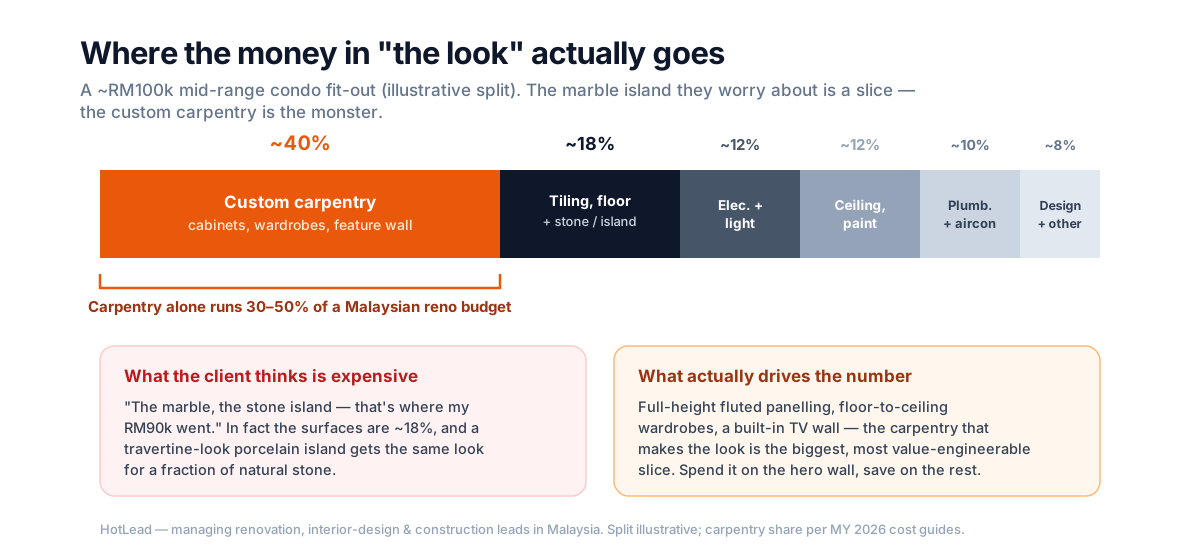
In a Malaysian condo fit-out, custom carpentry runs 30–50% of the whole budget — and it's the single most underestimated line item homeowners carry into a project. The warm, layered, floor-to-ceiling look that photographs so well is carpentry: full-height fluted panelling, built-in wardrobes, a feature TV wall, a timber-wrapped console. A full mid-range kitchen cabinet run alone is RM15,000–35,000, and a built-in wardrobe is RM180–600 per foot depending on material. The marble island they're worried about is a slice of the ~18% that goes on surfaces — real money, but not the monster.
This matters because it tells you where to cut and where to spend. You hold the look by protecting the one or two carpentry elements that define it and value-engineering the material on everything else. The client thinks the stone is the splurge; the stone is the easiest thing to swap.
The two reflexes that lose the lead
Both instinctive replies answer the budget gap the wrong way, and both throw away a winnable buyer.
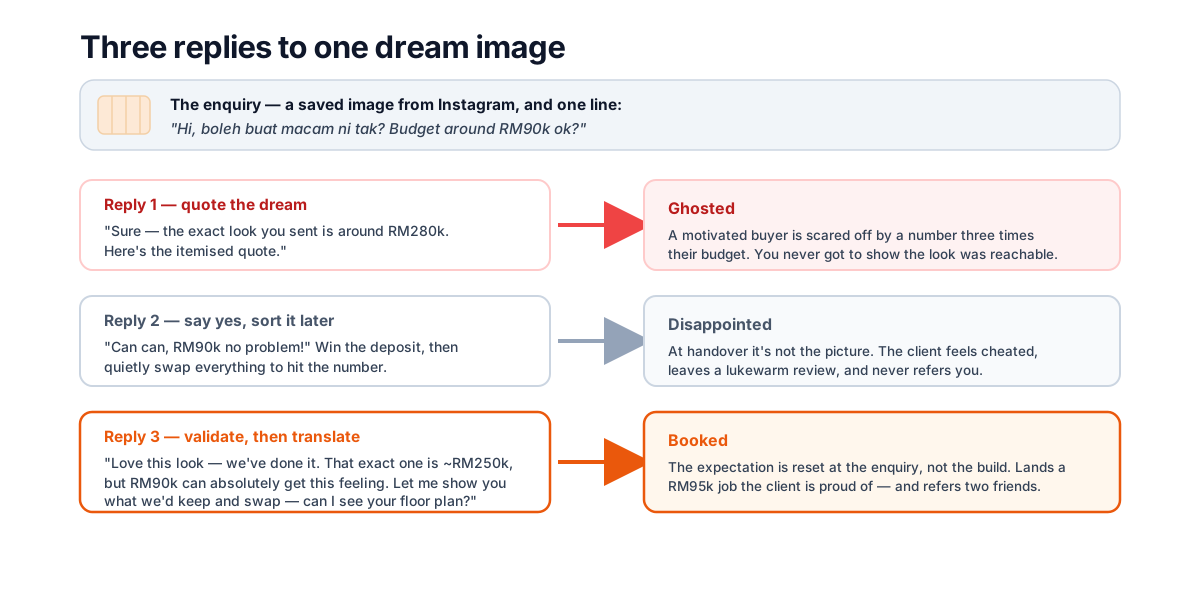
Reflex one — quote the dream. You price the exact reference, send a RM280k itemised quote, and feel honest for it. The buyer, who told you RM90k, reads a number three times their budget and vanishes. You never got to the part where you show the look is reachable. You lost a motivated buyer to sticker shock you could have defused in the first reply.
Reflex two — say "can can, no problem." You're hungry, you don't want to lose them, so you win the deposit and plan to "sort out the budget later." Then, through the build, you quietly swap everything to hit RM90k — laminate where she pictured solid wood, a thinner feature wall, half the lighting. You never explained the trade-offs, because you were afraid she'd walk. At handover it isn't the picture in her head. She feels cheated on work that's actually fine, leaves a lukewarm review, and — this is the real cost — never refers you, in a market where word of mouth is around half of how reno buyers find a firm.
How do you give them the look on their budget?
You translate the look into their budget instead of arguing with either one. Validate the taste, reset the number honestly and early, then hold the look by keeping the hero elements and value-engineering the rest. Here's the sequence that converts.
- Reply fast and validate the look. Desire is your asset — protect it. "Love this — it's a warm travertine style, we've done a few." Never open by crushing the dream or lecturing about budget. You're the studio that gets what they want; that's half the shortlist won before price comes up.
- Reset the number honestly, at the enquiry. In the same message, anchor reality: "That exact reference is around RM250k because it's natural stone and full solid-wood carpentry — but RM90k can absolutely get this feeling. Let me show you what we'd keep and what we'd swap." This is the move the dismissive studio and the "can can" studio both skip. You've told the truth about the number and kept the dream alive.
- Keep the hero, swap the rest. Find the one or two elements that make the look — usually a single feature wall or the arch — and spend there. Value-engineer everything else so it reads the same in a photo:
| Element | The reference (dream) | The look, value-engineered | Why it reads the same |
|---|---|---|---|
| Island / countertop | Natural marble or sintered stone (RM229–474 psf) | Travertine-look porcelain slab (RM110–150 psf) | Printing replicates marble/travertine convincingly; non-porous, better for a wet kitchen |
| Carpentry doors | Solid wood (RM1,200–1,800+/ft) | Plywood carcass with laminate/acrylic doors (RM320–550/ft) | Same tone and grain in a wood-look laminate; the eye reads the colour, not the core |
| Full-height panelling | Floor-to-ceiling fluted timber, every wall | One hero feature wall + paint in the same palette elsewhere | The feature wall is what the camera sees; blank painted walls recede |
| Flooring | Imported large-format stone tile | Porcelain in the same format and tone | Same surface, same joints, a fraction of the cost |
- Qualify the budget band on the first reply. You can't design to a number you haven't confirmed, so ask it early alongside unit type, scope and timeline — the same first-reply qualification that governs every downstream decision. Knowing it's RM90k, not RM150k, decides which version of the look you present at the visit.
- Book the visit on the strength of the reframe. The goal of the whole exchange isn't to quote on WhatsApp — it's to get into the room, where you can show samples of the porcelain next to the marble and let them see the swap for themselves. The reframe earns the visit; the visit earns the job.
When is the gap just too big?
Sometimes the number genuinely can't produce anything you'd put your name to — RM30k for a RM200k whole-home look. Value-engineering has a floor, and pretending otherwise just lands you back at the "can can" trap with a disappointed client. But even here, a flat "cannot" wastes a warm lead.
- Offer a realistic starting scope. Do one hero room properly — the living and dining that the reference is actually about — and phase the rest for later. A great single room beats a thin, compromised whole house, and it gets you a happy client who comes back.
- Reframe the reference, not just the budget. Their RM30k suits a lighter refresh — paint, a feature wall, soft furnishing, one carpentry piece — not a gut renovation. Show them the version of the look their money can buy.
- Park, don't delete. If they're a year and a loan away from the real budget, that's a dated "not now," not a no. Log a follow-up date and keep them warm — the way you'd nurture any not-ready lead. A small-budget dreamer today is often a real client when the keys and the money arrive.
The bottom line
The expensive-look, small-budget lead isn't your problem — the unhandled one is. Quote the dream and you scare off a buyer who was already in love with the outcome. Say "can can" and you manufacture a disappointed client who poisons your referrals. Both reflexes answer a budget gap by ignoring it. The winning move is to translate: validate the look, reset the number honestly at the enquiry, then hold the look at their budget by keeping the hero elements and value-engineering the rest — porcelain for marble, laminate for solid wood, one feature wall instead of ten. That's a scope conversation, not a discount, so your margin stays intact and the client gets the feeling they fell for. Reset the expectation at the enquiry, never at the handover.
For the whole system this sits inside — capture, qualify, follow up and measure — start with the complete guide to managing renovation leads in Malaysia, and see how it connects to the vague "how much to quote?" enquiry, why the quote-to-deposit drop-off happens in ID, and the free-3D-render trap.
How HotLead helps you win the dream-on-a-budget lead
HotLead can't design the look or value-engineer the swaps for you — that's your craft. What it does is make sure the lead gets caught, qualified and owned before the dream goes cold or the budget conversation gets skipped:
- Auto-greeting and capture on every enquiry, so a "boleh buat macam ni tak?" that lands while you're on a site is acknowledged instantly — you stay in the five-firm shortlist without dropping everything to reply.
- Qualify on the first reply, so the budget band, unit type, scope and timeline that decide which version of the look you present get asked up front — not discovered after you've drawn the wrong one.
- One owner per lead with a next action and overdue follow-ups flagged, so the reframe-and-book-the-visit conversation actually happens and nothing goes quiet in the gap.
- A funnel view with per-channel ROI, so you can see which channels — Instagram, Pinterest, Qanvast, referrals — send the dream-big, budget-tight leads, and tune how you handle each at the top of the funnel.
If your studio keeps writing off specific-vision, small-budget enquiries as time-wasters, you're throwing away the leads where your skill is worth the most — and that's the leak a capture-fast, qualify-first, one-owner system closes. See how HotLead works, or read how it fits an interior-design studio or a renovation firm specifically.
Sources: Houz — Condo interior design & renovation cost Malaysia 2026 and FindContractor.my — Interior design cost in Malaysia 2026 (per-sqft finish tiers, ~RM100k for a 1,000 sqft mid-range condo, design fee RM3–8 psf); FindContractor.my — Kitchen renovation cost Malaysia 2026 and EverKitchen — Kitchen renovation hidden costs Malaysia (custom carpentry 30–50% of budget; budget-vs-actual gap RM8k–20k on a mid-range KV kitchen); Cabinetree — Kitchen cabinet cost Malaysia 2026 and Clickbina — Built-in wardrobe cost Malaysia 2026 (cabinet RM180–1,200+/ft by material; wardrobe RM180–600/ft; full kitchen RM15k–35k); Sinnostone — Stone countertop price guide Malaysia 2026 and Sinnostone — Porcelain slab vs quartz (porcelain slab ~RM110–150 psf replicating marble/travertine; sintered stone RM229–474; engineered marble RM60–120). Shortlisting norm (up to 5 firms) and word-of-mouth share as cited in turning Qanvast and Atap enquiries into booked consultations and where renovation leads come from in Malaysia.
Frequently asked questions
How do I handle a client who wants an expensive look on a small budget in Malaysia?
Don't quote the dream and don't dismiss them — both lose a motivated buyer. Validate the look first (they've already decided they want it, which is the hard part), then reset the number honestly and early. Tell them what that exact reference costs and what their budget realistically buys of the same look. The move is to translate, not discount — keep the one or two hero elements that define the look and value-engineer everything else. A client who wants a specific style on a tight budget is one of your most winnable leads precisely because the desire is already there.
Why does "the look" cost so much more than the client expects?
Because the biggest cost driver is usually invisible to them. In a Malaysian condo fit-out, custom carpentry — full-height wardrobes, a feature wall, a built-in TV panel, a fluted-wood console — runs about 30–50% of the whole budget, far more than the marble island they tend to fixate on. The warm, layered, floor-to-ceiling look that photographs so well on Instagram and Qanvast is almost entirely carpentry and composition. So the dream blows the budget on cabinetry, not on the one stone top the client is worried about.
Should I just lower my price to win a small-budget client?
No. Dropping your price to meet the dream destroys your margin and still can't deliver the dream — you end up doing a RM250k job for RM90k and losing money. The answer is value-engineering, not discounting. You change what the money buys, not what you charge. Keep the hero elements that make the look, swap costly materials for ones that read the same (travertine-look porcelain instead of natural stone, laminate carpentry instead of solid wood), and reduce the quantity of custom work. Same visual result, your margin intact.
What's the cheapest way to get a marble or travertine look in a Malaysian kitchen?
A countertop-grade porcelain slab. Printing technology now replicates marble, travertine and concrete convincingly, and porcelain slabs run around RM110–150 per square foot supplied and installed — against roughly RM229–474 for sintered stone and well above that for natural marble. Engineered or compressed marble is cheaper still at around RM60–120 psf but stains easily, so it's a false economy in a wet Malaysian kitchen. For a client chasing the look rather than the actual stone, porcelain is usually the sweet spot.
When should I turn down a small-budget interior design lead?
When the gap is simply too large to deliver anything you'd put your name to — think RM30k for a RM200k whole-home look. Even then, "no" isn't the only option. Offer a realistic starting scope (do one hero room properly and phase the rest), or be honest that their budget suits a lighter refresh than the reference. If they're genuinely not ready, park them with a follow-up date rather than deleting them — a dreamer with a small budget today is often a real client in a year.
Keep reading
- Can AI Route a Fresh Renovation Enquiry to the Right Next Step? We Tried ItMost solo reno owners fire one dead line at every lead — can share more details ah? That single generic reply stalls the buyers who were ready to book. So I asked whether AI can pick the right next step for each enquiry, and draft the reply that gets it there — without committing a slot or a price it cannot know.
- How Much Deposit Should a Renovation Firm Ask For? The Profit-Aware Number, Not a Round OneMost reno firms set their deposit at a round social number — a comfortable 10 percent, or they copy a rival's aggressive 50 percent. Both are wrong. Your deposit is the conversion event of your entire funnel and, at the same time, the only thing standing between your working capital and an unvetted stranger. Here's how to price the deposit from your at-risk cost, why a low deposit is really an interest-free loan to a stranger, and why in Malaysia's scam-scarred, loan-dependent market a high one doesn't just cost margin — it loses the deal.
- The 'Quick Question Ah?' Lead: When a Buyer Uses You as a Free Second Opinion for Someone Else's RenoSome of your busiest WhatsApp threads are with buyers who already have a builder — a cousin, a part-time reno friend — and are messaging you only to sanity-check his price, his tile, his scope. Every question you answer in full is a free consult that de-risks the other guy's job. Here's how to spot the sanity-check lead, why answering everything loses you the work, and how to convert a real doubt without becoming the unpaid QA department.