

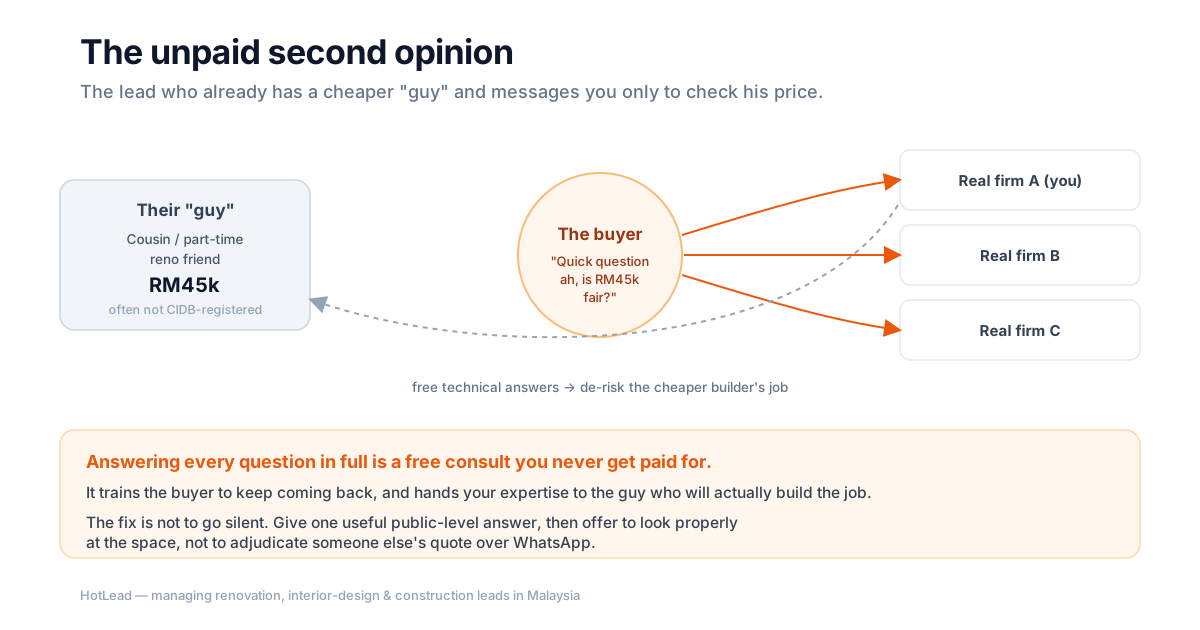
There's a WhatsApp thread I've watched eat an afternoon in more than one KL reno office. It starts friendly: "Hi, saw your work, very nice! Quick question ah — my contractor say need to hack this wall to open up the kitchen, but got another guy say don't need. Which one correct?"
The owner, being decent and proud of what he knows, answers properly. Explains load-bearing versus partition, when you need an engineer's sign-off, what it costs to get it wrong. Twenty minutes of real expertise, typed out on a Saturday. The reply comes back: "Oh ic ic. Then the tile he quote RM120 per sqft, expensive or not?" Another good answer. Then: "He say RM45k for whole kitchen, fair?"
And somewhere around the third question it dawns on him — this person is never going to hire him. They already have a contractor. They're not comparing firms; they're using him as a free technical adviser to check up on someone else's job. Every helpful answer he gives makes the other guy's kitchen safer, cheaper, better. He's doing unpaid QA for a competitor he'll never even meet.
This is the sanity-check lead, and it's one of the most quietly draining threads in a Malaysian reno firm's inbox — because it looks exactly like a warm enquiry right up until it doesn't. Let me break down how to spot it, why answering everything loses you the work, and how to convert the ones that are actually real doubt.
What is a "sanity-check" lead?
It's an enquiry from someone who already has a builder — and is messaging you only to double-check a decision they've half-made with that other party. They want a verdict: is RM45k fair, does that wall really need hacking, is that tile the right spec. They are not shopping for a firm to hire. The job is promised to someone else, usually someone cheaper and more informal, and you are the free second opinion.
It's easy to mistake for a good lead because the interest is genuine — they really do want to know the answer. What's missing is intent to hire you. And in Malaysia this lead is structurally common, not rare. According to ZenWeb's renovation-buyer data, about 49% of buyers find a contractor through word-of-mouth or a friend's referral, and most buyers use three to four discovery channels in parallel. So a huge share of homeowners already have a trusted informal name — a cousin, a colleague's contractor, a "friend who does reno part-time" — before they ever Google you. When they message a real firm, they're often not looking for an alternative. They're looking for a free audit of the name they already trust.
How do you spot a sanity-check lead?
Watch the shape of the questions, not the politeness. A sanity-check lead asks sharp, specific technical questions but goes vague the instant you steer toward anything that would put you on the job — a site visit, a budget band, a timeline. A real buyer wants you to see the space. A free-adviser wants you to rule on someone else's quote without ever letting you near it.
Here's the split I use in my head:
| Signal | Real buyer (comparing you) | Sanity-check lead (has a guy) |
|---|---|---|
| The questions | "Can you do this? How would you approach it?" | "Is his price/tile/scope correct?" — judging a decision already made |
| The visit | Wants you to come and measure | "No need visit la, just tell me roughly" |
| Budget & timeline | Will share a band and a rough date | Dodges — because it isn't theirs to commit |
| Who's named | Talks about their project | Keeps referencing "my contractor said..." |
| What follows a good answer | "When can you come?" | Another technical question |
| The tell | Moving toward an engagement | Moving from question to question, never toward a booking |
The single clearest signal is the loop: you give a solid technical answer, and instead of moving forward, they hand you the next question. A real buyer's questions are a ladder toward "let's do this." A free-adviser's questions are a treadmill — every answer just resets it.
Why does answering every question in full lose you the job?
Because a full answer to a sanity-check lead is a free consult you'll never be paid for — and it does two damaging things at once. First, it improves the other contractor's job: you just told the buyer the wiring gauge is undersized, the wall doesn't need hacking, RM120/sqft is too high — and they'll walk every one of those corrections straight back to the cheaper guy who's actually building it. You've made his quote sharper and his job safer, for free. Second, it trains the buyer to keep coming back. The moment you become the reliable free oracle, there's no reason for them to ever engage you commercially. Why would they? The valuable part — your judgment — is already available at no cost over WhatsApp.
This is the contrarian bit most owners get wrong: being maximally helpful does not build goodwill that eventually wins the job. With a real comparison-shopper, helpfulness converts. With a sanity-check lead, helpfulness entrenches the decision they'd already made — you become a useful utility attached to someone else's project. Generosity is a closing tool aimed at the right lead and a leak aimed at the wrong one.
So should you just ignore them?
No — and this is where owners over-correct. After getting burned a few times, the instinct is to treat every technical question as bait and go cold. That throws away the genuine doubts hiding in the pile, and there are more of those than you'd think — because in Malaysia the doubt is rational.
The "friend who does reno part-time" is very often not a registered contractor at all. Under CIDB's Act 520, any party carrying out construction or renovation work must be registered, and an unregistered contractor faces a fine of RM10,000 to RM100,000 — which tells you how many informal operators are working outside the system. And the risk isn't abstract. Recommend.my and TheMakeover.my document real cases: five Rawang homeowners who lost a combined RM127,000 to a fake contractor, a homeowner whose "friend's contractor" vanished after a RM200,000 upfront payment. The classic pattern is a lowball quote, a big deposit to "buy materials," a bit of hacking, then silence.
So when a buyer messages you "I have a guy but I'm not sure," that uncertainty is frequently well-founded — they can feel that a cheap, informal quote carries risk they can't quite name. That's not a lead to snub. That's a lead to convert — on trust and risk, not on price. The trick is telling a real doubt apart from a pure free-adviser, fast.
How do you convert the doubt without becoming the free QA?
Give one useful public-level answer, then offer to look properly — a visit or a real quote, not a verdict over WhatsApp. A genuine doubt takes the offer, because a proper look removes the exact risk they messaged you about. A pure free-adviser evaporates, because all they ever wanted was the free answer. The test costs you one reply and sorts the two cleanly.
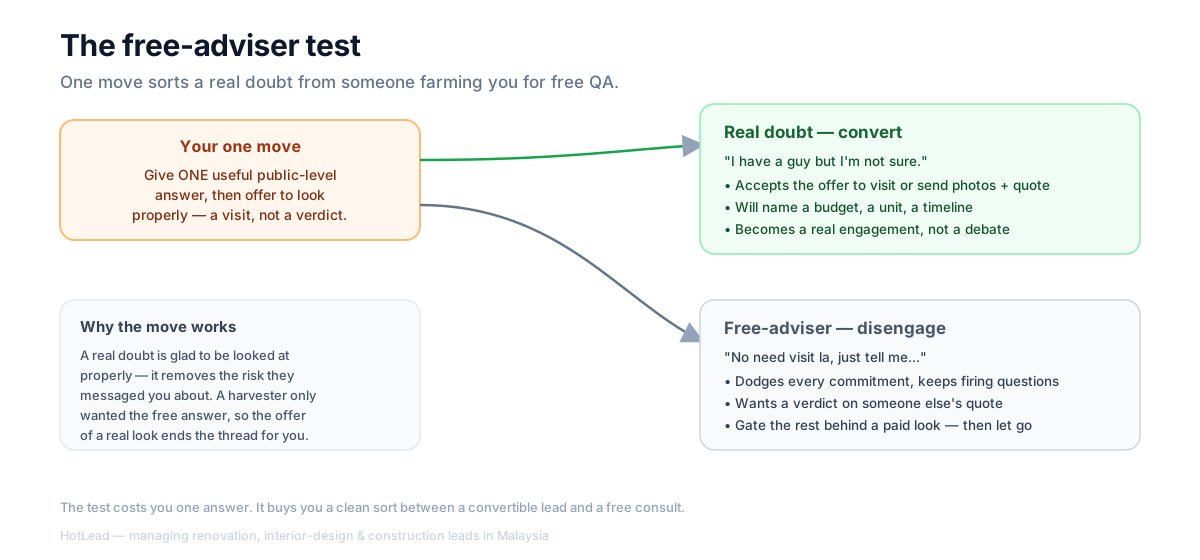
The move in practice, on a real "is RM45k fair?" message:
"A condo kitchen refit like that usually lands around RM18k–RM38k depending on cabinetry and tiling, so RM45k isn't crazy — but honestly I can't tell you if it's fair without seeing the unit and the actual scope your contractor quoted. Send me his quote and a few photos, or let me swing by, and I'll tell you exactly where it's high, low, or missing something. One thing I'd check first: is he CIDB-registered? That's the difference between a warranty you can enforce and a deposit you can't get back."
Look at what that does. You've been genuinely useful (a real ballpark). You've been honest (RM45k isn't necessarily wrong). You've named the one thing that actually protects them (registration) — which quietly reframes the whole comparison from price to risk, where a real firm wins. And you've moved the conversation from "adjudicate his quote for me" to "let me look properly." What you have not done is dissect a competitor's line items for free over chat.
- If it's a real doubt, they'll send the quote or book the look. Now you're in a proper engagement and can win on credibility. This is the same first-reply qualification discipline that decides every downstream number — you're just applying it to a lead that arrived pre-loaded with a competitor.
- If it's a pure free-adviser, the offer of a real look ends the thread — and that's a win, not a loss. You got your Saturday afternoon back and you didn't hand your expertise to someone else's job.
The bottom line
The sanity-check lead isn't a bad person and it isn't always a dead end — but it is a trap if you treat it like a warm enquiry and answer everything. In a market where half of buyers arrive with a referral already in hand, a big chunk of your "enquiries" are really requests to audit someone else's job for free. Answering in full doesn't win them over; it sharpens the cheaper contractor's quote and trains the buyer to keep asking. Don't go cold, and don't lecture. Give one useful public-level answer, name the real risk, and offer to look properly. The genuine doubts — and in Malaysia, with informal builders and real scam losses, there are many — will take the offer. The rest will free up your afternoon.
For the whole system this sits inside — capture, qualify, follow up, and measure — start with the complete guide to managing renovation leads in Malaysia. It pairs closely with knowing when to say no early to a wrong-fit lead, how to handle the mass-blast quote shopper, and how to read a silent site visit — three more leads that look warmer than they are. For the firm-specific version, see how it fits a renovation firm.
How HotLead helps you spend your hours on real leads
HotLead sits on top of your existing WhatsApp and gives you the visibility to tell a convertible lead from a free-adviser before you've poured an afternoon into it:
- Capture and auto-greeting on every enquiry, so nothing is missed while you're on-site — and the first reply that qualifies (unit, scope, budget, timeline) gets asked up front, surfacing the dodgers early.
- One owner per lead with a next action and overdue follow-ups flagged, so a genuine "let me look properly" doubt actually gets the visit booked and chased, instead of drifting off in a busy inbox.
- Source tagging on every lead, so you can see how many of your "enquiries" arrive via referral versus a channel where you're the firm being chosen — and stop treating the two the same.
- A funnel and per-channel view, so you can see where hours go and which sources actually turn into booked, attended, closed jobs — not just chatty threads.
If your inbox is full of people checking someone else's quote, the fix isn't to work harder at answering. It's to sort faster and aim your time. See how HotLead works, or read how it fits a renovation firm or an interior-design studio.
Sources: ZenWeb — how Malaysian renovation buyers find contractors (~49% word-of-mouth; 3–4 channels in parallel); CIDB Act 520 (registration mandatory; unregistered-contractor fine RM10,000–RM100,000 under Section 29); Recommend.my — how to avoid renovation scams in Malaysia and TheMakeover.my — Malaysians lost tens of thousands to renovation scams (Rawang RM127,000; RM200,000 "friend's contractor" case; deposit-and-disappear pattern). Ballpark job values (condo kitchen refit RM18k–RM38k) and shortlisting norms as cited in the complete guide to managing renovation leads in Malaysia.
Frequently asked questions
What is a "sanity-check" renovation lead?
It's an enquiry from someone who already has a contractor lined up — often a cousin, a friend, or a part-time reno contact — and is messaging you only to double-check something they've half-decided with the other party. They want to know if RM45,000 is a fair price, whether a wall really needs hacking, or if a tile is the right spec. They treat you as a free technical adviser, not as a firm they intend to hire. The job is already promised to someone cheaper; you're the second opinion.
How do I know a WhatsApp enquiry is just fishing for free advice?
Watch the shape of the questions, not the politeness. A sanity-check lead asks sharp, specific technical questions ("is this wiring gauge enough?", "RM120 per sq ft for this tile, reasonable or not?") but goes vague the moment you steer toward a site visit, a budget band, or a timeline. A real buyer wants you to see the space; a free-adviser wants you to rule on someone else's quote without ever letting you near the job. If every technical answer you give is met with another technical question and never a "when can you come?", you're the unpaid QA.
Should I just ignore leads who are only after free advice?
No — ignoring them throws away the genuine doubts hiding among them. Plenty of "I have a guy but I'm not sure" messages are real hesitation, and in Malaysia that hesitation is well-founded — a friend-of-a-friend builder is frequently not CIDB-registered, and renovation scams cost homeowners real money every year. The move is a test, not a snub. Answer one thing usefully, then offer to look properly. A genuine doubt takes the offer; a pure free-adviser evaporates. You lose nothing but one answer, and you convert the ones worth converting.
How do I answer a technical question without doing a free consult?
Give a public-level answer, the kind you'd happily put on your website, then attach it to a real next step. "A condo kitchen refit like that usually runs RM18k to RM38k depending on cabinetry and tiling — but the honest answer is I can't tell you if RM45k is fair without seeing the unit and the scope your contractor quoted. Send me the quote and a few photos, or let me swing by, and I'll tell you exactly where it's high or low." You've been useful, you've been honest, and you've moved the conversation from adjudication to engagement. What you don't do is line-by-line dissect a competitor's quote for free over chat.
Is it worth engaging a buyer who clearly wants to use a cheaper contractor?
Sometimes — if the doubt is real. A buyer who's genuinely unsure about a cheap, informal quote is a buyer whose mind isn't made up, and a fair, credible firm that offers to look properly can win that job on trust and risk, not price. But if they've made the decision and just want you to bless it, disengage warmly and quickly. The skill is telling the two apart fast, so you spend your WhatsApp hours on convertible doubt, not on validating jobs that were never yours.
Keep reading
- Did We Already Say RM68k? Using AI to Stop Quote Drift Across a Long Renovation ThreadOver a weeks-long WhatsApp thread with two or three quote revisions, a rep re-states a number that contradicts an earlier promise — and re-opening a settled price quietly invites a discount that eats a whole job's profit. So I pointed AI at the drift. It works beautifully as a flag, and dangerously as an auto-corrector.
- The Warranty as a Closing Lever: Why a Longer Guarantee Beats a Discount on a Renovation DealA quote is stalling and the buyer wants a reason to say yes. Before you drop the price, look at the other lever in your hand — a longer workmanship warranty. It is the same expected-value decision as a discount, but the math runs the opposite way — a price cut costs you thousands with certainty, while extending the defects cover costs you a couple of hundred ringgit in expectation, for arguably more trust with a scam-wary buyer. Here is the EV case for the non-price concession, the trap that turns it into a hidden liability, and which leads it actually moves.
- "Can You Just Build It, My Neighbour Also Did" — Handling the Renovation Lead That Needs Council Approval FirstSome renovation enquiries can't legally start next month, no matter how ready the buyer is — a kitchen extension, a hacked-through wall, a roofed-over air well all need the council's written approval first. Quote a fast build price to win the job and you either lose it to a "boss, can start" cowboy, or win it and inherit the stop-work order, the RM50,000 fine and a client who later can't sell the house. Here's how to spot the permit-first lead and sell the approval as protection.