

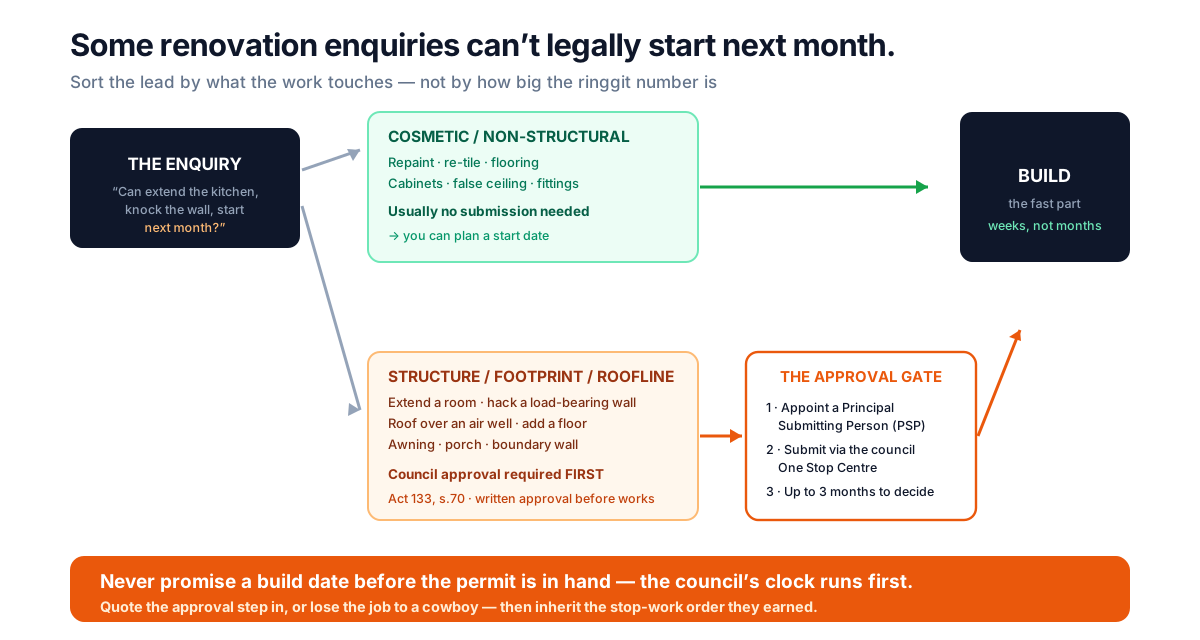
There's a WhatsApp every renovation contractor in the Klang Valley has received some version of: "Bro, I want to extend my kitchen to the back, maybe knock the wall to the dining also, and cover the air well to make a small yard. My neighbour also did last year, no problem one. Can you quote and start next month? Raya before got function." Photos of a tidy PJ terrace, a clear brief, a motivated owner with a deadline. It reads like a clean, winnable job.
I watched a contractor in Petaling Jaya lose about six weeks and a chunk of his reputation on exactly this. He did what you'd do with any hot, decided lead — quoted a good build price, promised the "start next month," took the deposit and got the crew hacking. Three weeks in, the terrace behind complained to MBPJ about the noise and the half-built extension eating into the back setback. A stop-work notice landed. The extension wasn't in any approved plan, there was no submission, no endorsing architect. The job froze with a hacked-open wall and a half-poured slab, the owner was staring at a possible demolition order on work he'd already paid for, and guess who he blamed. Not himself for saying "neighbour also did." The contractor who "should have known."
That's the lead in this piece. An enquiry for an extension, a structural change, or anything that touches the building's footprint or roofline looks like a normal reno job, but it isn't — because that work legally cannot start on the timeline the buyer wants. A council submission sits in front of the build, it runs through a qualified professional, and it takes weeks to months. Quote a fast build price to win it and you get one of two bad endings: you lose the job to a "boss, can start" cowboy who under-respects the gate, or you win it and inherit the stop-work order, the fine, and a client whose house now has a problem the bank won't value.
What makes a permit-first lead different from a normal renovation enquiry?
The work being asked for legally can't start until the local council approves it in writing — so a build-only quote with a start date is a promise the law won't let you keep. On a normal reno enquiry, the homeowner sees the space, agrees the scope and price, pays a deposit, and you start. On a permit-first enquiry, an approval gate sits in front of the build: a submission has to be prepared and endorsed by a qualified person, lodged with the council, and cleared — before a single wall comes down legally.
Under Section 70 of the Street, Drainage and Building Act 1974 (Act 133), you may not erect a building or make a structural alteration without the local authority's prior written approval. And the renovation-permit guides are consistent that the submission isn't something a contractor just files: it goes through a Principal Submitting Person (PSP) — a registered architect, engineer or draughtsman — who prepares and endorses the drawings, per the process built on the Uniform Building By-Laws 1984.
So the enquiry that looks like "quote me a price and start" is actually "engage a professional, submit to the council, wait for approval, then build." Miss that and everything downstream — your timeline, your deposit schedule, your crew booking — is built on a date that can't happen.
Which renovation works actually need approval — and which don't?
The rough rule: if the work changes the building's structure, its built-up area or its roofline, it needs the council's approval; if it's cosmetic and non-structural, it usually doesn't. You don't have to be a lawyer to sort an enquiry on the first read — you have to know which bucket the works fall into so you quote the right thing.
| Usually no submission needed | Needs council approval first | |
|---|---|---|
| Finishes | Repaint, re-tile, new flooring, false ceiling | — |
| Fittings & joinery | New kitchen cabinets, wardrobes, built-ins | — |
| Non-structural | Replacing like-for-like fixtures, plumbing swaps | Moving/removing a load-bearing wall |
| Footprint | — | Extending the kitchen, a room, the back or side |
| Vertical | — | Adding a floor, a mezzanine, a balcony |
| Open space | — | Roofing over or enclosing an air well / open area |
| External | — | Awnings, porches, car porches, boundary walls |
| Roofline | — | Raising or extending the roof |
The exempt column is the "just make it nice" job — painting, re-tiling, flooring and cabinetry generally don't trigger a submission, because approval is triggered by structural, built-up-area or fire-safety changes. The right-hand column is where most terrace-house "can extend the back?" enquiries actually live. When an enquiry mixes both — a fresh interior plus a kitchen extension — the whole job inherits the approval gate for the extension part.
If you're not certain which side a job sits on, the safe move is to treat it as needing approval and confirm with the council before you commit to a start date. The councils publish this: DBKL runs a Building Control department for renovation and A&A permits, MBPJ and MBSA handle Selangor's, and DBKL even refreshed its terrace-house renovation guidelines in 2025 — a sign the rules are getting tighter, not looser.
The two clocks: "next month can start" vs a submission that takes months
A permit-first lead runs on two clocks that don't match — the buyer's expectation clock and the approval clock — and quoting to the wrong one is how you lose money. The buyer thinks in "Raya before can finish?" The law thinks in submissions and statutory windows.
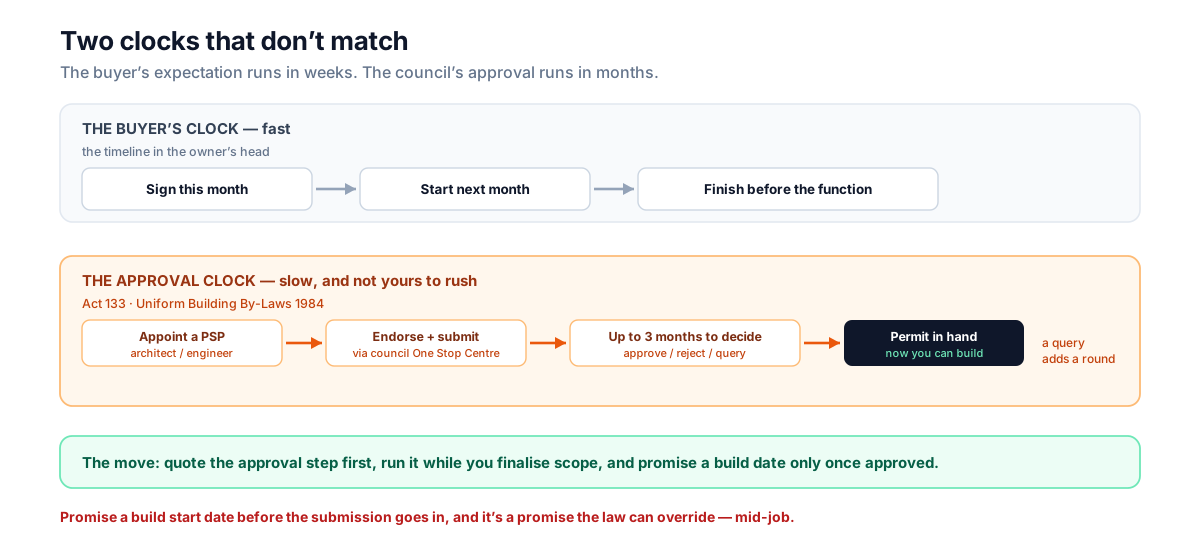
The approval clock has real, published steps. The drawings are prepared and endorsed by your PSP; the submission goes in — in most areas now through the council's online One Stop Centre (Selangor runs OSC 3.0 Plus); and under Act 133 the council has up to three calendar months to approve, reject or raise queries. A query resets part of that. None of it is the contractor's to rush.
That's why the honest answer to "can start next month?" on an extension is "the build is a few weeks once we're approved — but the approval has to come first, and that's the part with the council's clock on it." An owner who hears that up front respects it. An owner who's promised a fast start and then hits the gate three weeks in feels lied to.
Why the firm that "just builds it" to win the job loses
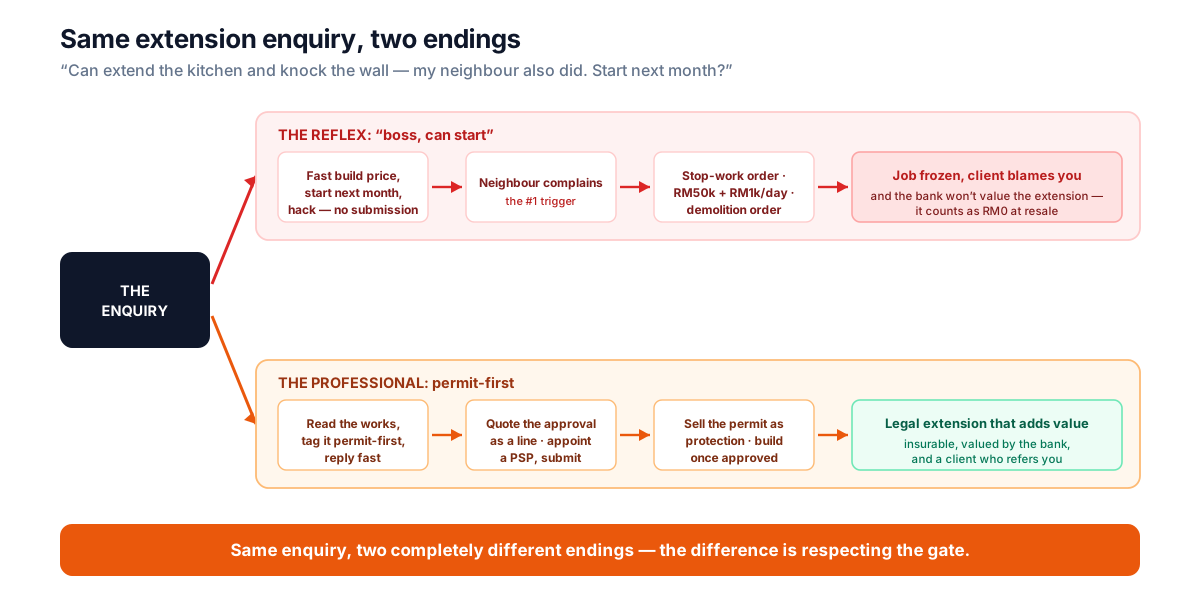
Because winning the job by skipping the gate makes you the contractor on record for an illegal structure — and you inherit every consequence, plus a client who blames you for all of them. This is the contrarian core of the permit-first lead: the "boss, can start next week, no need permit lah" answer wins the deposit and loses everything after it.
Here's the chain the cowboy quote sets off. Enforcement in a residential area is rarely a random patrol — it's overwhelmingly a neighbour's complaint, especially when a crew works past hours or blocks the neighbour's gate, which is exactly what an unannounced extension does. One complaint brings a spot-check, then a stop-work order on a half-built job. Then the penalty under Act 133 — up to RM50,000, up to three years' jail, and RM1,000 a day while it continues — which councils often compound at ten to twenty times the permit fee that was skipped. And the council can order the unauthorised work demolished; if the owner won't pay, the council demolishes it and bills them.
And the damage outlives the job. Banks lend against the approved floor plan and want to see the Certificate of Completion and Compliance, so a valuer excludes an unapproved extension from the valuation — it counts for nothing toward a future buyer's loan. The RM120,000 the owner spent with you becomes invisible to the bank, the house gets harder to sell, and regularising it later means an architect, as-built drawings, and possibly partly demolishing the work to meet current setbacks. Every bit of that lands back on the relationship you thought you'd won.
How should a contractor handle a permit-first enquiry?
You handle it by sorting it early, quoting it honestly, and running it as its own kind of lead — because a job with a months-long approval clock will die in a group chat if you treat it like a fast repair. Five moves:
- Read the works, not the vibe — and tag it a permit-first lead the moment it lands. The instant an enquiry mentions extending, hacking a structural wall, covering an air well, or anything touching the footprint or roofline, it goes into a different lane from a cosmetic refit. That one label stops someone on your team firing back a fast build date on a job that legally can't hit it.
- Reply fast, but don't quote a build start date off the photos. Speed still wins the lead — an owner comparing firms hires the one that answers first and clearest. But your fast reply confirms the works need approval and sets the expectation: the build is quick, the approval comes first. Never anchor them to a start date you can't legally deliver.
- Quote the approval step as a real line — or partner with a PSP. Price the submission, the Principal Submitting Person's fee, and the approval time into the job openly. If you don't have an architect or draughtsman you work with, get one — it's the difference between a firm that can take extension work and one that can only ever do cosmetic jobs. This is the same discipline as charging properly for a real assessment instead of giving the expensive part away free.
- Sell the permit as protection, not red tape. The owner doesn't want a permit; they want an extension that's safe, insurable and adds value when they sell. That's exactly what the approval delivers — so frame it that way. The firm that explains why the gate protects the client's money is the one that looks like the professional, the way the honest "no" or the honest caveat builds more trust than the easy yes.
- Give it one owner and a next action, and keep it visible. A permit-first job runs for weeks across a PSP, the council and an anxious owner, so assign one person by a rule instead of letting it get lost in a group chat where nobody owns it, and keep a dated next action so the chase on the submission actually happens. You want to see at a glance which of these jobs are waiting on approval versus approved and ready to build, so a warm lead doesn't lapse while the paperwork grinds.
Is a permit-first lead worth chasing?
Yes — extension and A&A work is high-value, and the firm that handles the approval properly becomes the one owners trust with the big jobs. Anyone can quote a coat of paint. The contractor who can say "here's what needs council approval, here's who submits it, here's the realistic timeline, and here's why it protects your money" is a different tier of firm in the owner's mind — and that's the firm that gets the RM90k extension, not the RM9k touch-up.
The hassle only bites the firm that treats a permit-first job like a walk-in — quotes a fast start, skips the gate, and ends up with a frozen site and an angry client. It's the same pattern that runs through the hardest leads in this playbook: the commercial fit-out whose real clock is the authority submissions, not the build, the strata job that needs the JMB or MC committee's sign-off first. The enquiry that looks easiest to say "can start" to is often the one where the fast yes costs you the most.
How HotLead helps a contractor handle the permit-first lead
HotLead sits on top of the WhatsApp your enquiries already land in — nothing changes for the person messaging you — and it's built so a slow, multi-party job like an approval-first extension doesn't get fumbled the way a fast repair would:
- Captures and tags every enquiry as it arrives, so a permit-first extension can be marked as its own type and worked on the right clock — approval first, build after — instead of being answered like a cosmetic refit.
- Assigns one owner instantly — round-robin, manual, or a custom rule set during onboarding — so the anxious owner, the PSP and the council are all held by one person, not a group chat where the job goes cold over a months-long submission.
- Keeps a next action and flags overdue follow-ups, so the chase on the drawings, the submission and the approval actually happens across the weeks a permit takes — exactly where a slow process beats a team running on memory.
- Shows your funnel and per-channel ROI, so you can see which extension jobs are stuck waiting on approval versus approved and ready to build, and which channels send the profitable A&A work.
To be straight about it: HotLead doesn't prepare the drawings, submit to the council, or replace your architect — that's your PSP and the local authority. What it does is stop a genuine, high-value extension lead from leaking out of your inbox while everyone waits on the approval.
If your firm is quick on cosmetic jobs but keeps getting caught out on extensions — a stop-work order, a client who blames you, a job that froze halfway — the fix usually isn't your building work. It's that you answered a permit-first lead like a walk-in. Start with the renovation lead-management hub or the contractor hub, read the complete guide to managing renovation leads in Malaysia, or see how HotLead works.
Sources: the requirement for the local authority's prior written approval before erecting or structurally altering a building, and the penalty of up to RM50,000 (or up to three years' jail, or both) plus RM1,000 a day for a continuing offence, from Section 70 of the Street, Drainage and Building Act 1974 (Act 133) and the official Act 133 text (PPJ); the up-to-three-month statutory window for a council to decide on submitted plans, from the same Act; the requirement that renovation submissions run through a Principal Submitting Person under the Uniform Building By-Laws 1984, and that cosmetic works (paint, tiling, flooring, cabinetry) are generally exempt while extensions, structural changes, roofed-over air wells, awnings and boundary walls need approval, from the Uniform Building By-Laws 1984 (KPKT); the DBKL Building Control department's remit and the 2025 DBKL terrace-house renovation guidelines, plus the point that bank valuers exclude unapproved extensions from valuation and banks require the Certificate of Completion and Compliance, from iproperty — 2025 DBKL terrace-house renovation guidelines; the point that councils commonly compound the fine at ten to twenty times the permit fee, that neighbour complaints are the biggest trigger of enforcement spot-checks, and that Selangor submissions now run through the online One Stop Centre (OSC 3.0 Plus), from renovation-permit guidance summarised across Malaysian sources. The Petaling Jaya, Cheras and other contractor scenarios are illustrative; the pattern is one we see repeatedly.
Frequently asked questions
Do I really need council approval to renovate my house in Malaysia?
It depends entirely on the work. Cosmetic and non-structural renovation — repainting, re-tiling, new flooring, kitchen cabinetry, replacing fittings — generally needs no submission. But under Section 70 of the Street, Drainage and Building Act 1974, you cannot erect a new structure or make a structural alteration to a building without the local authority's prior written approval. In practice that catches most of what homeowners actually want — extending the kitchen or a room, adding a floor or a balcony, hacking or removing a load-bearing wall, roofing over or enclosing an air well or open space, and putting up awnings, porches or boundary walls. If the work changes the built-up area, the structure or the roofline, treat it as needing approval and confirm with the council before quoting a build date.
What happens if I renovate without a permit?
The council can issue a stop-work order and, on conviction under the Street, Drainage and Building Act 1974, a fine of up to RM50,000 (or up to three years' jail, or both), plus a further RM1,000 for every day the offence continues. In practice councils often compound the penalty at ten to twenty times the permit fee you skipped. Worse, they can order the unauthorised work demolished — and if the owner won't pay for the demolition, the council does it and bills them. Enforcement is usually triggered by a neighbour's complaint, not a random patrol, so "nobody will notice" is a bad bet in a terrace row.
How long does a renovation permit take in Malaysia?
Plan for weeks to months, not days. You appoint a Principal Submitting Person — a registered architect, engineer or draughtsman — who prepares and endorses the drawings and submits them, in most areas now through the council's online One Stop Centre system. Under the Street, Drainage and Building Act 1974 the council has up to three calendar months to approve, reject or raise queries on submitted plans, and queries can add another round. That timeline is exactly why a build quote promising work starting "next month" on an extension is often a promise the law won't let you keep — the approval clock has to run first.
A homeowner insists I just build it — the neighbour did the same extension and nothing happened. Should I?
No, and it's worth explaining why to the client rather than just refusing. If you build unapproved, you're the contractor on record for an illegal structure — you carry the stop-work and liability risk, your work can be ordered demolished mid-job, and the client will blame you when their bank valuer ignores the extension or a buyer's lawyer flags it years later. The neighbour "getting away with it" only means they haven't been reported yet; a single complaint changes that overnight. The professional move is to quote the approval step in, or partner with a Principal Submitting Person, and sell the permit as what makes the RM120,000 extension a real, sellable asset instead of a demolition risk.
Will an unapproved extension cause problems when the owner sells or refinances later?
Yes, and this is the part homeowners underestimate. Banks lend against the approved floor plan and want to see the Certificate of Completion and Compliance, so a valuer typically excludes an unapproved extension from the valuation — it counts for nothing toward a buyer's loan, which shrinks the pool of buyers and the price. Refinancing hits the same wall. Regularising it afterwards means hiring an architect to submit as-built drawings, and if the structure breaks current setback or height rules the owner may have to alter or partly demolish it to comply. Getting the approval up front is far cheaper than fixing it under a sale deadline.
Keep reading
- Did We Already Say RM68k? Using AI to Stop Quote Drift Across a Long Renovation ThreadOver a weeks-long WhatsApp thread with two or three quote revisions, a rep re-states a number that contradicts an earlier promise — and re-opening a settled price quietly invites a discount that eats a whole job's profit. So I pointed AI at the drift. It works beautifully as a flag, and dangerously as an auto-corrector.
- The Warranty as a Closing Lever: Why a Longer Guarantee Beats a Discount on a Renovation DealA quote is stalling and the buyer wants a reason to say yes. Before you drop the price, look at the other lever in your hand — a longer workmanship warranty. It is the same expected-value decision as a discount, but the math runs the opposite way — a price cut costs you thousands with certainty, while extending the defects cover costs you a couple of hundred ringgit in expectation, for arguably more trust with a scam-wary buyer. Here is the EV case for the non-price concession, the trap that turns it into a hidden liability, and which leads it actually moves.
- You Have 300 Dead Renovation Leads. Can AI Tell You Which 15 Are Worth Reviving?A Cheras reno owner sits on 280 dead WhatsApp contacts, and every Deepavali the reflex kicks in — blast them all a "we have a promo!" message and hope. It wins a handful of jobs, annoys the other 270, and quietly tips his WhatsApp number toward a quality-rating downgrade that throttles the messages he actually needs to send. So the 2026 question lands on my desk — can AI read the dead pile and tell me who's genuinely worth one human re-approach? I built it. The auto-score-and-blast version is a faster way to burn the same goodwill. The version that paid does the opposite of what the pile makes you want to do — it tells you who NOT to contact. Here's the build, and the arithmetic that makes "message fewer" the profitable move.