

There's a scene I've watched play out in a dozen Klang Valley reno offices. It's 8:45am. The owner — let's call him the boss of a small Kepong ID-and-build outfit — is loading a laser measure and a folder into his car for a site visit in Semenyih. A homeowner messaged three days ago: "Hi, interested to renovate my new condo, can come measure?" He said yes, of course. Free site visit, no obligation, that's how everyone does it here.
He gets to Semenyih at 10:15am after an hour of MEX crawl. He calls. No answer. He waits twenty minutes in the car park. Texts. Two grey ticks, no blue. By 11am he drives back — another hour of traffic — and reaches the office at noon having burned half a day and a tank of petrol for a locked door. And here's the part that stings: he does this two or three times a month and treats it as the cost of doing business.
It isn't. The free site visit is quietly one of the most expensive things a Malaysian renovation or interior-design firm gives away — but not for the reason owners think. Let me break down what it really costs, why "just start charging" usually backfires, and how to keep the visit free while stopping the bleed.
What does a free site visit actually cost you?
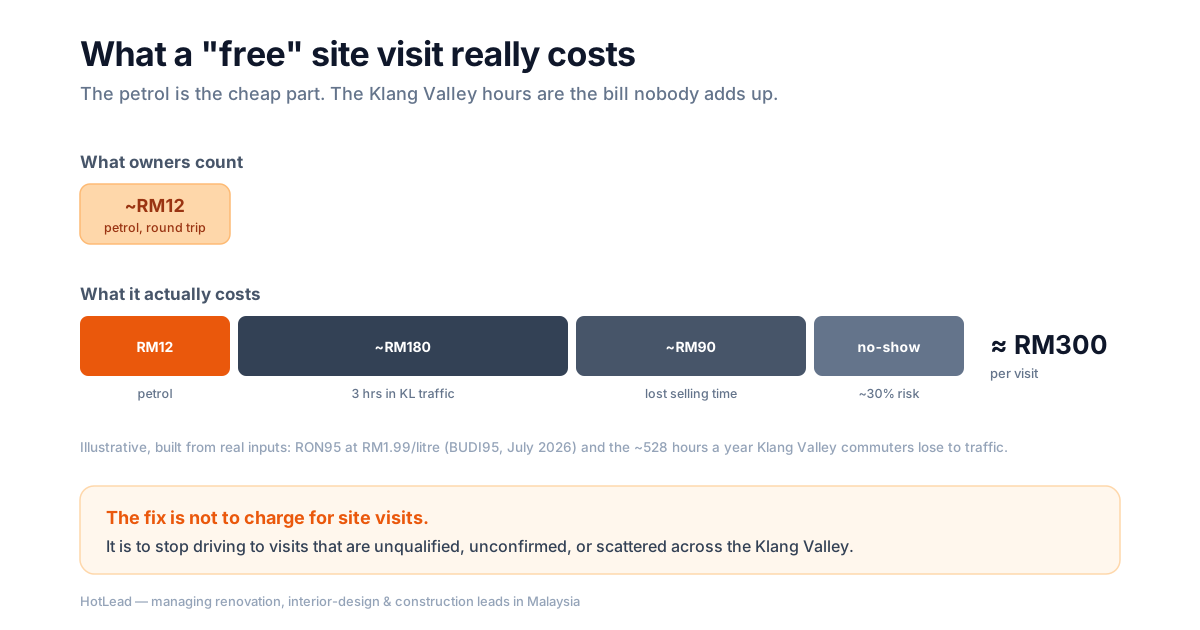
Far more than the petrol — and the petrol is all most owners count. With RON95 at about RM1.99 a litre under BUDI95, a typical Klang Valley round trip is around RM12 of fuel. If that were the whole bill, you'd never think twice. It isn't.
The real cost is time, and in the Klang Valley time is brutal. Commuters here lose an estimated 528 hours a year to congestion, and a UiTM analysis put motorists at roughly 44 hours a month stuck in jams. A single site visit that should take 45 minutes of actual measuring routinely eats three hours or more door-to-door once you add the drive, the wait and the drive back. Those three hours aren't free — they're three hours you could have spent on two more qualified WhatsApp conversations, a follow-up call with a buyer who's ready to sign, or a proper quote.
Here's the honest math, built from real inputs:
| What a single wasted site visit costs | Illustrative amount | Notes |
|---|---|---|
| Petrol (KV round trip) | ~RM12 | RON95 at RM1.99/L, BUDI95 |
| 3 hours in Klang Valley traffic | ~RM180 | owner/designer time at a modest RM60/hr |
| Selling time you didn't spend | ~RM90 | the qualified chats or the quote you skipped |
| No-show risk | ~30% of visits | the purest waste — a locked door |
| Real cost per visit | ≈ RM300 | mostly hours, not ringgit |
So should you just start charging for site visits?
Usually no — and this is where most owners get it backwards after they've been burned. The instinct after a run of no-shows is to put up a wall: "RM100 site-visit fee, refundable if you sign." It feels like justice. In practice it filters out your best buyers as fast as your worst.
Think about how a Malaysian homeowner actually shops a renovation. They're spending RM40,000 on a condo or well past RM100,000 on a landed unit, so they do what anyone does with a big purchase — they get three to five firms in. Qanvast openly recommends up to five firms. A serious, funded buyer comparing five studios is not going to pay five site-visit fees. So a blanket charge doesn't screen out tyre-kickers — the tyre-kicker was never going to sign anyway — it screens out the comparison-shopper who is ready to spend, and hands them to the firm down the road that visits free. That's why most established Malaysian design-and-build firms — KLAAS, AW Builders, Sunsynergy — still advertise the first site visit as complimentary or no-obligation.
There are narrow cases where charging works:
- You have more demand than capacity. An established firm turning work away can afford to filter hard. A hungry firm can't.
- It's a genuine paid deliverable, not a sales call. IKEA Malaysia charges RM295 per room for a design service that includes a professional measuring visit — but that's a product the customer buys, not a gate on getting a quote. Some firms charge a measured-drawing fee that's credited back on signing. That's fine, because the customer gets something concrete.
- Commercial or far-flung jobs where the travel genuinely is a cost centre.
For everyone else, the money isn't leaking through free visits. It's leaking through unqualified and unconfirmed ones. Fix those and the fee problem disappears.
Then why do free site visits leak so much money?
Because most firms drive to every visit blind, unconfirmed, and one lead at a time. There are exactly three leaks, and none of them is "the visit is free":
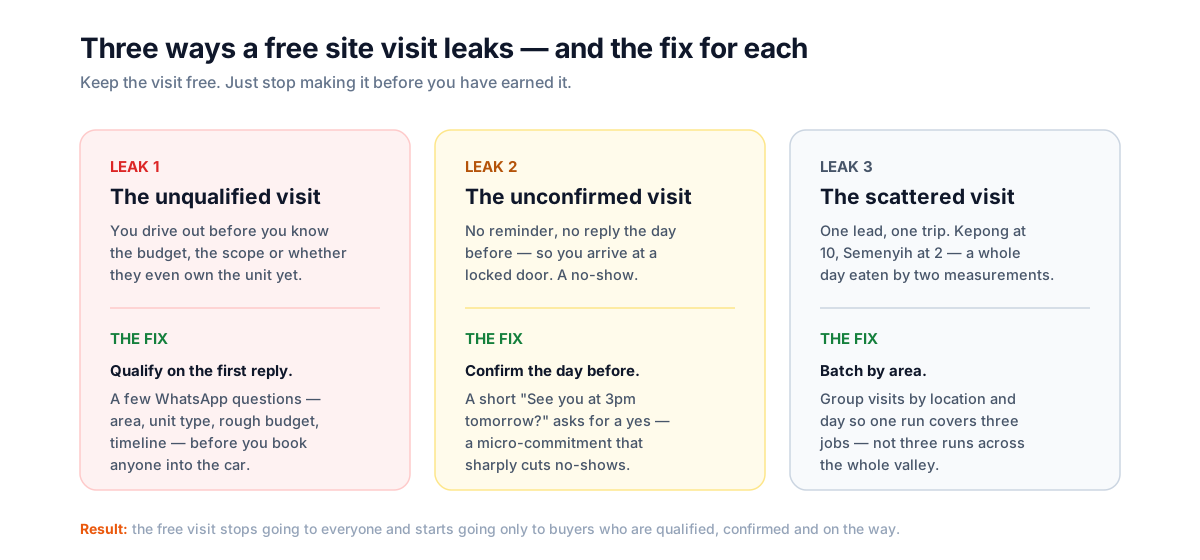
- The unqualified visit. You agreed to measure before you knew the budget, the scope, or whether they've even collected keys. Half the time you drive out and discover the "full condo reno" is a RM8,000 budget for a RM40,000 job, or the unit is still under construction. You can't close what was never real — but you already spent the three hours.
- The unconfirmed visit. You booked it three days ago and never confirmed. That's the Semenyih locked-door story. With sales no-show rates sitting around 30% and higher for consumer bookings, an unconfirmed appointment is a coin-flip you keep losing.
- The scattered visit. One lead, one trip. Kepong at 10am, Semenyih at 2pm, back to Puchong by evening — a whole working day dissolved into the Federal Highway for two measurements that took 90 minutes combined.
How do you fix the free site visit without killing it?
You earn the visit before you make it — qualify, confirm, batch — so the free visit only ever goes to a real, ready buyer who'll be standing at the door. Three moves, in order:
- Qualify on the first WhatsApp reply. Before anyone gets booked into the car, ask three or four quick things: which area and unit type, rough scope, a budget band, and timeline. It's not an interrogation — it's checking there's a funded project at a workable location. This is the same first-reply qualification that decides every downstream number. A lead who won't share any of it isn't a visit; it's a conversation to keep warm.
- Confirm the day before — and make it a micro-commitment. A short "See you at 3pm tomorrow — still good? I'll bring rough costing for your kitchen" does two jobs: it reminds them, and it asks for a yes. Prospects who actively confirm are far less likely to no-show. This is the single cheapest fix in the whole article and it kills the most expensive leak.
- Batch by area. Group visits by location and day so one Semenyih run covers three jobs, not three separate valley crossings. When you qualify and confirm first, you have enough real visits to batch — the unqualified ones were the noise making your calendar look full.
Do those three and the free site visit flips from a day-eating tax into one of the highest-converting things you do — which is exactly why you don't want to fence it off with a fee.
The bottom line
The free site visit isn't your problem — the unearned site visit is. Charging a fee feels like the grown-up fix, but in a market where homeowners routinely shortlist three to five firms, a blanket charge mostly repels the serious buyers and keeps the free-visit habit of your competitors looking generous by comparison. The real waste is the RM300 of Klang Valley hours you pour into visits that were never qualified, never confirmed, and never batched. Qualify on the first reply, confirm the day before, batch by area — keep the visit free, but stop giving it to everyone. Your calendar gets lighter and your close rate goes up at the same time.
For the whole system this sits inside — capture, qualify, follow up, and measure — start with the complete guide to managing renovation leads in Malaysia, and see how it connects to qualifying a lead on the first WhatsApp reply, turning Qanvast and Atap enquiries into booked consultations, and who answers your leads while the team is on-site.
How HotLead protects your site visits
HotLead sits on top of your existing WhatsApp and turns the qualify-confirm-batch discipline into something the system does for you, not something you have to remember on a bad site day:
- Auto-greeting and capture on every enquiry, so a lead that lands while you're measuring in Semenyih is caught, acknowledged and waiting — instead of going quiet before you can qualify it.
- Qualify on the first reply, so the questions that decide whether a lead is visit-worthy — area, unit type, budget, timeline — get asked up front, not discovered in a car park.
- One owner per lead with a next action and overdue follow-ups flagged, so the day-before confirmation actually gets sent and the quiet leads get chased instead of forgotten.
- A funnel view that shows how many enquiries turn into booked-and-attended visits, so you can see whether your leak is qualification, confirmation or something further down — instead of guessing.
If you're getting burned by no-shows and tempted to start charging, try aiming the free visit before you fence it off. See how HotLead works, or read how it fits a renovation firm or an interior-design studio specifically.
Sources: The Vibes — Klang Valley commuters lose over 500 hours a year to traffic and paultan.org / UiTM — ~44 hours a month stuck in KV jams (the time cost behind every visit); paultan.org — Malaysian fuel prices, RON95 under BUDI95 (July 2026) (RON95 RM1.99/L); Intelemark — appointment show rates and no-show statistics (30% no-show norm, confirmation reduces it); IKEA Malaysia — interior design service RM295/room incl. measuring visit; Malaysian design-and-build firms advertising complimentary/no-obligation first site visits — KLAAS, AW Builders, Sunsynergy Contracts. Job-value and shortlisting norms (RM40k condo / RM100k+ landed, up-to-5 firms) as cited in the complete guide to managing renovation leads in Malaysia.
Frequently asked questions
Should I charge for renovation or interior-design site visits in Malaysia?
Usually no — at least not a blanket fee for a first measurement visit. Most Malaysian design-and-build firms (KLAAS, AW Builders, Sunsynergy and many others) advertise the first site visit as free or no-obligation precisely because homeowners shop three to five firms and won't pay three to five fees. A charge filters out the serious comparison-shoppers as much as the tyre-kickers. Charging makes more sense in narrow cases — established firms with more demand than capacity, commercial jobs, or a paid measured-drawing service that's clearly a deliverable, not a sales call. For everyone else, the money isn't lost to free visits; it's lost to unqualified and unconfirmed ones. Fix those first.
What does a wasted site visit actually cost a renovation firm?
Far more than the petrol. With RON95 at about RM1.99 a litre under BUDI95, a Klang Valley round trip is roughly RM12 in fuel. The real bill is time — Klang Valley commuters lose around 528 hours a year to traffic, and a single visit easily eats three hours door-to-door for a 45-minute measurement. Those three hours could have been two more qualified WhatsApp conversations or a meeting with a buyer who's ready to sign. Add a roughly one-in-three no-show risk and an illustrative wasted visit lands closer to RM300 than RM12 — mostly in hours, not ringgit.
How do I stop customers no-showing on site visits?
Confirm the appointment the day before and get a reply. A short "See you at 3pm tomorrow — still good?" turns a soft booking into a micro-commitment, and prospects who confirm are much less likely to bail. General sales data puts no-show rates around 30% (higher for consumer bookings), and immediate confirmation cuts that meaningfully. Pair the confirmation with a clear reason to show up — "I'll bring the measurements and rough costing for your kitchen" — so the visit feels valuable, not optional. If they go quiet after two confirmation attempts, treat it as a soft cancel and reuse the slot rather than driving out on hope.
How do I qualify a renovation lead before agreeing to a site visit?
Ask three or four quick things on WhatsApp before you book anyone into the car — which area and unit type (condo, terrace, commercial lot), rough scope (full unit, kitchen only, defect works), a budget band, and timeline. You're not interrogating — you're checking there's a real, funded project at a workable location. A lead that won't share any of it, or whose budget is a fraction of the scope, is one to keep chatting to, not to drive across the valley for. This is the same qualification step covered in qualifying a renovation lead on the first WhatsApp reply.
Isn't a free site visit a good sales tool anyway?
Yes — that's exactly why you don't want to kill it with a fee. A visit is where you build trust, read the space and close. The problem is never that it's free; it's that firms drive to every visit blind, unconfirmed and one-at-a-time. Aim the free visit at qualified, confirmed buyers and batch them by area, and it becomes one of the highest-converting things you do. Give it away to anyone who asks, unconfirmed, and it becomes a day-eating tax on the Klang Valley's traffic.
Keep reading
- How Much Cash Does a Renovation Firm Actually Need to Run?A renovation firm can be profitable, fully booked, and still run out of money — because every live job ties up your own cash between the deposit and the final payment, and that buffer grows every time you win more work. Here's how to size the working-capital cushion a Malaysian reno firm needs with real numbers, why growth consumes cash faster than it makes it, and why the size of your buffer quietly decides how many leads you can afford to say yes to.
- The Copy-Paste Quote Request: Telling a Real Shortlist Buyer From a Price-Harvester Blasting Ten FirmsAn identical, detailed WhatsApp lands in ten contractors' inboxes at once — "please quote for full renovation" with a copy-pasted brief. It looks like the best kind of lead — specific, thorough, ready. So you spend a Sunday building a full itemised quote, and never hear back. Here's why a detailed brief blasted to ten firms is not a serious buyer, how to tell a genuine shortlist buyer from a price-harvester or a bank-loan document-seeker, and how to give a fast, useful ballpark that protects your estimating hours without looking unhelpful.
- Handing Over a Warm Renovation Lead: Can AI Catch the Next Person Up on a 40-Message Thread Without Dropping the Promise That Wins the Job?A renovation lead starts, goes quiet for six weeks on the buyer's loan-and-keys clock, then comes back — or the person who owned it goes on Raya leave and someone else picks it up cold. Now they have to scroll forty messages to reconstruct what was quoted, promised and left open. So the reflex is to ask AI to "catch me up on this buyer." I tried it. Summarising a long thread is the job AI is genuinely best at — but the reflex build drops the one thing that wins the job. Here's the version that actually paid.