

A waterproofing contractor in Cheras told me about the condo job he's still annoyed about. A WhatsApp came in one morning: "Hi, I'm the JMB chairman at [our condo]. Level 12 has water seepage into two units and the common corridor walls need repainting. Can you quote?" Good job, right in his line. So he answered it the way he answers everything — fast. "Can boss, waterproofing plus repaint around RM45k, when can we start?" Then he chased. Day two, day four, day six. Silence. By the second week he'd marked it dead and moved on.
Three months later he drove past that condo and saw a competitor's banner going up on the scaffolding. Same job. He hadn't lost on price — his number was fine. He hadn't lost on skill. He lost because he'd answered a committee like a homeowner.
That's the trap I want to walk through, because strata building works — repainting, waterproofing, façade, lift upgrades, guardhouse, M&E — are some of the biggest, most repeatable, most recession-proof jobs a Malaysian contractor can win. And the reflexes that win you homeowner jobs are the exact ones that lose you these.
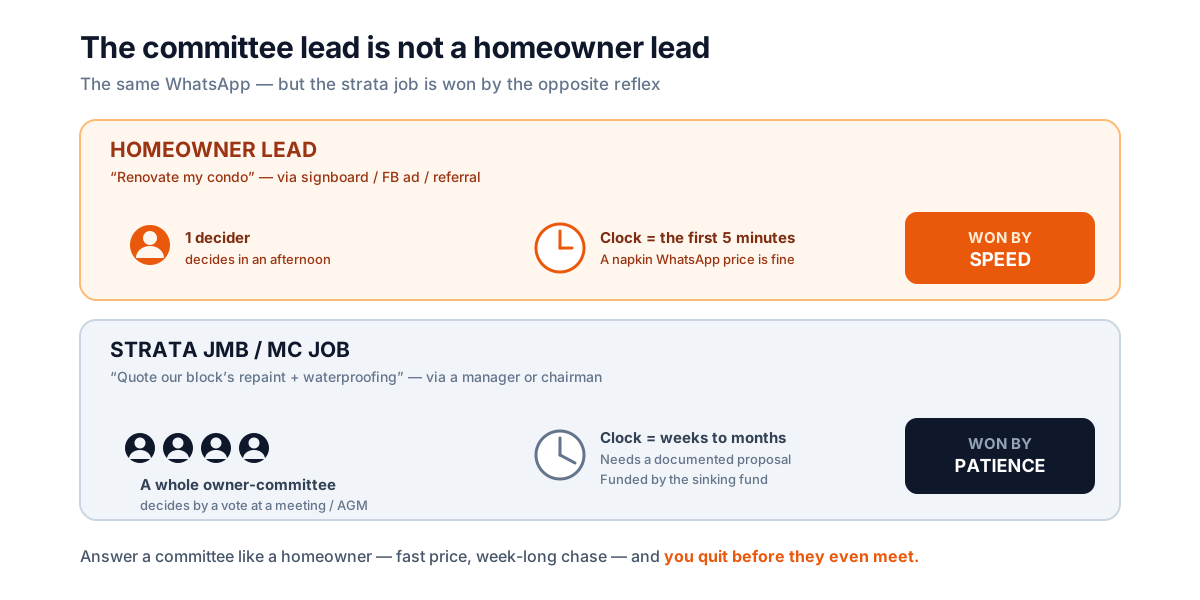
What makes a JMB/MC building-works enquiry different from a homeowner lead?
The buyer isn't a person — it's a committee. The person who WhatsApps you is almost always a relay: a building manager, a managing agent, or one committee member tasked with "getting some quotes". The actual decision is made collectively at a committee meeting and, for larger works, sanctioned by a vote of owners at a general meeting. So the job runs on a calendar of meetings and a fund cycle — not on how the buyer feels this afternoon.
A bit of the plumbing helps here, because it explains who you're really dealing with and why it keeps shifting. Under the Strata Management Act 2013, a developer must convene the first AGM to form a Joint Management Body (JMB) within 12 months of delivering vacant possession. Once strata titles are issued and transferred to owners, a Management Corporation (MC) takes over, and the JMB is dissolved within three months of the MC's first AGM. Both are overseen by the local Commissioner of Buildings (COB). Practically, that means the committee you quote this year may be a different set of volunteers next year — so a relationship that lives only in one chairman's phone dies the moment he steps down.
This isn't a niche corner of the market, either. By 2020, Peninsular Malaysia had over 1.4 million registered strata parcels (Director General of Lands and Mines data, cited in the Planning Malaysia journal) — every stratified block of it needing periodic repainting, waterproofing, lift servicing and repairs, all awarded by exactly this committee process.
Why do your best homeowner-lead reflexes lose the committee job?
Because for a homeowner, the money is in speed — and for a committee, the money is in patience and professionalism. They're opposite reflexes, and the contractors who are sharpest at fast homeowner sales are often the worst at strata work for exactly that reason. Two habits do the damage:
- They send a WhatsApp price instead of a proposal. A homeowner is happy with "RM45k boss, can start next week". A committee physically cannot act on that. The Regulations require them to procure "in a fair and transparent manner", and they have to justify the award to a room of sceptical owners paying for it. A one-line chat quote gives them nothing to defend — so it doesn't make the shortlist.
- They chase hard for a week, then quit. The homeowner playbook is a fast first reply and five follow-ups over a fortnight. Run that on a committee and you'll have marked the lead dead before the committee has even met. The Cheras contractor gave up on day fourteen. The committee's monthly meeting was on day twenty-one.
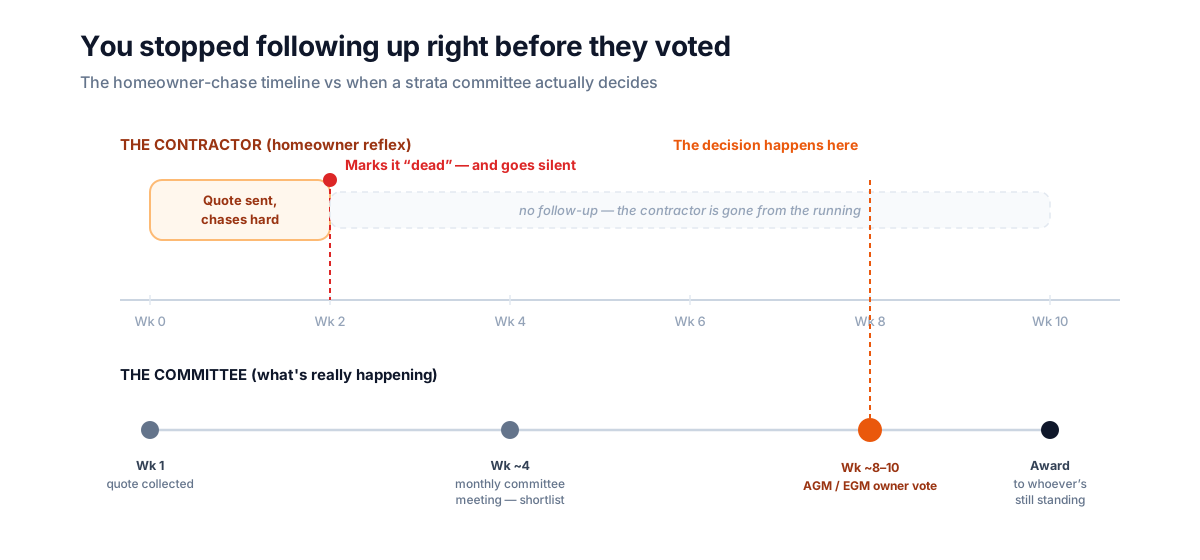
Look at the gap. The contractor's follow-up ends in week two. The decision happens in week eight, ten, sometimes later. He didn't lose the argument in the room — he wasn't in the room, because he'd stopped following up right before they voted.
Isn't this just a government tender by another name?
No — and it's worth being precise, because a strata committee job is a third distinct animal, different from both a homeowner lead and a government tender. We wrote a whole piece on why tenders and direct leads lose each other in one inbox; the strata job adds a third lane with its own rules.
| Homeowner direct lead | Strata committee (JMB/MC) job | Government tender | |
|---|---|---|---|
| Who decides | One person (or a couple) | A volunteer owner-committee, by vote | An anonymous evaluation panel |
| Where it starts | WhatsApp from a signboard/ad/referral | WhatsApp/email from a manager or chairman | ePerolehan / MyProcurement portal |
| The clock | The first 5 minutes | The committee's meeting + fund cycle (weeks–months) | A fixed public closing date |
| What wins it | A fast reply + relentless follow-up | A documented proposal + patient relationship follow-up | A compliant, competitively priced bid on time |
| Can you influence the decider? | Yes — directly | Yes — you can meet the committee | Barely — you're scored on paper |
| Does it repeat? | Rarely (one-off job) | Yes — same building, every few years | Only if re-tendered |
The government tender is scored on paper against a deadline you can't move, and you never really meet the buyer. The strata job is the opposite in the way that matters most: the deciders are people you can actually sit in front of and win over — and the same building will need works again in a few years, so a job won well becomes a relationship, not a one-off.
Where does the money come from — and why does that set the timing?
The fund decides the timeline. Strata bodies run two pots, and which one your job comes from tells you how fast it can move:
- The maintenance (management) fund — the recurring pot for day-to-day running: cleaning, security, minor repairs, servicing. Smaller works here can move relatively quickly.
- The sinking fund — the capital pot, legally earmarked for major periodic works: exterior repainting, waterproofing, façade repair, lift overhaul, roof replacement, structural and spalling-concrete work. These are precisely the jobs a contractor wants — and they almost always need a healthy fund balance and general-meeting approval before they can be awarded.
That's the un-obvious part that changes how you follow up: a strata "not now" is usually dated. It's not "we don't want it" — it's "the sinking fund doesn't have the line this year" or "it's going to the AGM in March". That's a wake-date you can diarise, exactly like the not-ready leads a smart follow-up system parks and revives instead of dropping. A homeowner "not now" is often a polite no; a committee "not now" is a calendar entry.
Why is the committee so slow — and why does that help the patient contractor?
Because it's a volunteer body doing this after work, and Malaysian strata governance is famously sluggish — which, counterintuitively, is good news for the contractor who stays in the game. Committees meet roughly monthly, the AGM is annual, and quorum and paperwork slow everything further. It's so common for the process to drift that an academic study of strata schemes in Majlis Bandaraya Johor Bahru documented dozens of residential schemes failing to hold their AGMs as the law requires.
Most contractors read that silence as rejection and walk away. The smart ones read it correctly — as a slow machine grinding — and keep a warm, professional, scheduled follow-up going through the delay. When the committee finally sits down to decide, there are usually only one or two firms still politely present. Be one of them and you're not competing on price against ten quotes; you're the safe, patient, documented option in a room that just wants the leak fixed and the owners off their backs. This is the same math as the real cost of a lead you stop chasing too early — except here the deal was never dead, just slow.
How should a contractor actually handle a JMB/MC enquiry?
You handle it the opposite way to a homeowner lead — and you can do it as a light layer on top of the same WhatsApp. Five moves:
- Tag the lead type the moment it lands: strata committee, not homeowner. That one label routes it into a patient, professional lane instead of the fast-chase-then-drop lane, so nobody on your team treats it like a walk-in enquiry.
- Reply fast to get shortlisted — then send a real proposal. Speed still gets you onto the list, so acknowledge quickly and warmly. But follow it with a documented proposal: scope, method, warranty, SSM and insurance, and a couple of past strata references. That's what a committee can actually defend to owners.
- Give it one owner who builds the relationship. These jobs are won by a person the committee trusts, not by whoever grabs the chat next. Assign one owner — by a rule, not a group-chat volunteer, which is how these leads get lost — and keep it with them.
- Schedule follow-up to the committee's cycle, not yours. Set the next action for before the next committee meeting or AGM, not tomorrow. A dated, overdue-flagged reminder is the only thing that keeps your quote warm across two or three months so you're still there when they vote.
- Keep it visible in the funnel. Strata jobs are long and high-value; you need to see which committee leads are still live so you keep working the winnable ones instead of quietly letting them lapse.
How HotLead helps a contractor win strata works
HotLead sits on top of the WhatsApp your enquiries already land in — nothing changes for the person messaging you — and it's built to keep a slow, high-value committee job from slipping through the same cracks a fast homeowner lead does:
- Captures and tags every enquiry the moment it arrives, so a JMB/MC job can be marked as its own lead type and handled on the right clock instead of being chased like a walk-in.
- Assigns one owner instantly — round-robin, manual, or a custom rule we set up during onboarding — so a strata enquiry belongs to one person who can build the committee relationship, not a group chat where it goes cold.
- Keeps a next action and flags overdue follow-ups, so the check-in before the AGM actually happens three months later — this is exactly where a long committee cycle beats a team running on memory.
- Shows your funnel and per-channel ROI, so you can see which strata leads are still live, which channels bring the repeatable building-works jobs, and stop letting winnable committee work quietly lapse.
If your firm is great at homeowner jobs but keeps losing the big condo repaint and waterproofing contracts, the leak usually isn't your price or your work — it's that you answered a committee like a homeowner and stopped following up before they met. Start with the contractor lead-management hub, see the complete guide to managing renovation leads in Malaysia, or see how HotLead works.
Sources: Strata governance framework, JMB/MC formation and the Commissioner of Buildings from the Strata Management Act 2013 (Act 757) overview and PropertyGuru — the SMA 2013 and how it affects you; JMB "first AGM within 12 months of vacant possession" and MC handover timeline from MahWengKwai & Associates — strata management hand-over timeline and iProperty — JMB, MC and Sub-MC duties; the requirement to run procurement/tender "in a fair and transparent manner" from the Strata Management (Maintenance and Management) Regulations 2015; maintenance fund vs sinking fund and the works the sinking fund covers (repainting, waterproofing, façade, lift, roof, structural) from Building Maintenance Malaysia — maintenance fee vs sinking fund and PropCashflow — maintenance fee & sinking fund; scale of stratified property (over 1.4 million registered strata parcels in Peninsular Malaysia, DGLM 2020) cited in the Planning Malaysia journal; AGM non-compliance among strata schemes from Strata Governance Challenges — an empirical analysis of AGM non-compliance in Majlis Bandaraya Johor Bahru (IJRISS); government tendering via ePerolehan and MyProcurement. The Cheras and Kajang contractor scenarios are illustrative; the pattern is one we see repeatedly.
Frequently asked questions
What's the difference between a JMB and an MC when I'm quoting strata building works?
A Joint Management Body (JMB) is the earlier body — under the Strata Management Act 2013, the developer must convene the first AGM to form it within 12 months of handing over vacant possession, and it runs the building before strata titles are issued. A Management Corporation (MC) comes into being once strata titles are issued and transferred to owners; the JMB is then dissolved within three months of the MC's first AGM. For you as a contractor it means one thing — the committee you're quoting today may be a different set of volunteers next year, so your relationship has to live in a record, not in one committee member's head.
Who actually decides on a condo repainting or waterproofing contract?
Not the person who WhatsApps you. That's usually a building manager, a managing agent, or one committee member — a relay, not the buyer. The decision is made collectively by the management committee, and for larger works funded from the sinking fund it typically needs the sanction of a general meeting (AGM or EGM) where owners vote. The Strata Management (Maintenance and Management) Regulations 2015 also require the body to run procurement "in a fair and transparent manner", which is why they collect several quotes and award by a documented decision, not a quick yes on chat.
How long does it take a JMB or MC to award a building-works contract?
Usually weeks to several months. A management committee typically meets about once a month, the AGM is annual, and sinking-fund works often wait for a budget line or a general-meeting vote. Slowness is the norm, not a bad sign — Malaysian strata governance is well documented as sluggish (one study of Majlis Bandaraya Johor Bahru found dozens of residential schemes that don't even hold their AGMs on time). The contractor who's still following up warmly when the committee finally meets is the one who wins.
Should I reply to a JMB enquiry as fast as I reply to a homeowner lead?
Reply fast, yes — but the fast reply only gets you shortlisted, it doesn't win the job. For a homeowner, speed is most of the sale. For a committee, speed just puts you on the list; what wins is a proper documented proposal and patient follow-up across the committee's decision cycle. Fire off "can boss, RM45k" the way you would to a homeowner and you look like a contractor the committee can't justify appointing to sceptical owners.
Is a strata committee job the same as a government tender?
No — they're two different animals, and both differ from a homeowner lead. A government tender is anonymous and deadline-scored, submitted through ePerolehan or MyProcurement against a fixed closing date, and you rarely meet the buyer. A strata job is private and relationship-driven — there's no public portal or hard deadline, the deciders are an owner-committee you can actually meet and win over, the money comes from a mandated sinking fund, and the same building needs works again every few years. If you run both through the same reflex as a homeowner WhatsApp, you lose all three.
Keep reading
- The Only Three Ways to Grow a Renovation Firm — and Which Lever to Pull FirstEvery renovation firm's revenue comes down to three levers — how many leads you get, how many you close, and how big each job is. They multiply, so a modest lift on each compounds. But they cost wildly different amounts to pull, and most owners reach first for the one they should reach for last. Here's the ranking, with Malaysian numbers.
- Sight Unseen: Winning the Overseas Malaysian Who Renovates a Unit They Can't VisitA Malaysian working in Singapore collects the keys to a KL condo and messages you to fit it out — but they can't come to a site visit, can't walk your showroom, and will wire a deposit to a firm they've never met. Most firms treat this lead like a walk-in, go quiet when the buyer can't pop by, and lose the highest-budget job in the inbox. Here's why the remote buyer is your hardest-trust but best-paying lead, and how to build a remote lane that actually closes it.
- "Ok, Proceed" Isn't Money in the Bank — I Built an AI to Ask for the Deposit the Moment a Renovation Buyer Says YesA Cheras contractor closes a RM62k job on WhatsApp, the buyer says "ok proceed lah", and then the owner — mid-site, phone in a dusty hand — has to stop, pull the bank details, the agreed deposit and the scope, and type a careful money message. In that gap a hot yes quietly cools back to "let me think." The 2026 reflex is to ask AI to detect the yes and auto-fire the invoice. I built it, and it asked a half-committed buyer for 40% to a personal account two seconds after a soft "ok ok". Here's the version that kills the typing delay without asking for money off a misread.