

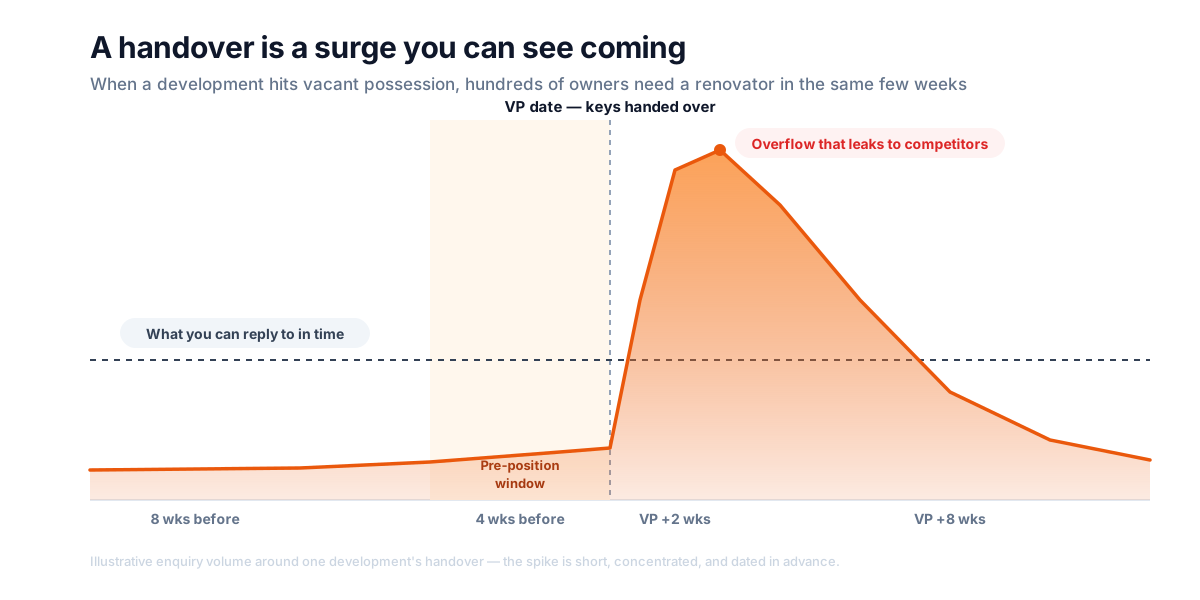
Most renovation owners brace for the festive crush — the pre-CNY and Raya weeks when enquiries pile up. But there's a second kind of surge that's just as big, far more concentrated, and almost nobody plans for it: the handover surge, when a new development hits vacant possession (VP) and hands over keys to every buyer at once.
A block of 800 units doesn't trickle in. It hands over in a window of a few weeks, and suddenly hundreds of owners in the same condo or township all need a renovator at the same time — empty units, fresh keys, fixed move-in dates. If your firm works new developments, this is the most lucrative cluster of leads you'll see all quarter. It's also the one most likely to bury a team that handles leads by memory.
Here's why the handover surge is different from festive busy season, why it's actually the most winnable surge of the year, and how to make sure the flood fills your calendar instead of your competitors'.
What is a handover (VP) surge, and why is it so concentrated?
A handover surge is the short, sharp spike in renovation enquiries that lands when a development reaches vacant possession and releases keys to all its buyers in one window. Because everyone collects keys around the same date, everyone needs a renovator around the same date — so the enquiries arrive bunched, from one building, all wanting roughly the same thing.
The scale is real. Malaysia completed 99,877 residential units in 2025 — a 21.6% jump on the year before, per the National Property Information Centre (NAPIC) — with 22,691 of those in Selangor alone. Every one of those completions is a handover, and the bigger strata projects hand over hundreds to well over a thousand units in a single VP window. If your firm targets new condos and townships, that's not a steady stream — it's a series of floods you can map on a calendar.
What makes the cluster so tight:
- One date drives it all. Owners collect keys within the same few weeks, so the demand isn't spread across the year — it's compressed.
- One project type. Empty new units, mostly the same layouts. The work is similar, which is why the same handful of firms end up quoting the whole block.
- One conversation. Owners in a new development talk — in the building's Facebook and WhatsApp groups, in the lift lobby. A firm with a good (or bad) name spreads fast.
How is this different from festive busy season?
Both are surges, but they behave like opposite problems — and they need opposite responses. Festive season is a slow, broad tide you ride; a handover is a single wave you can see forming.
| Festive busy season | Handover (VP) surge | |
|---|---|---|
| Timing | Gradual ramp over weeks | Sudden spike on a known date |
| Spread | Many areas at once | One development / catchment |
| Predictability | Roughly known (calendar) | Precisely known (VP date set weeks out) |
| Your team's state | Also slammed delivering live jobs | Often has delivery capacity |
| The buyer | Renovating an occupied home, flexible date | Empty new unit, hard move-in deadline |
| What wins | Capacity to acknowledge the overflow | Pre-positioning + knowing the building |
The festive crush is hard because your team is also buried delivering jobs before the holidays — capacity is the enemy (we covered that in why busy season leaks the most leads). A handover surge usually hits when you do have delivery slots — empty new units are exactly the jobs you want. The enemy here isn't a tired team. It's getting caught flat-footed by a wave you could have seen coming.
Why is the handover surge actually the most winnable surge?
Here's the contrarian bit: the VP surge is the easiest surge to win, precisely because it's the only one with a date stamped on it. Most firms treat a handover like chaos. It isn't. It's a scheduled event.
The VP notice goes out to buyers weeks ahead. Property groups, agents and the building's own chat light up with "VP next month" long before keys change hands. That's your pre-position window — the shaded zone in the chart above. While competitors wait for the flood and then drown in it, you can have your reply templates, your routing rule, and your "we know this building" angle ready before the first enquiry lands.
And these are buyers worth winning. An empty new unit usually means a full renovation — flooring, built-ins, kitchen, the works — not a small touch-up. Lose one handover lead and you're not losing a RM5k job; you're losing a whole-unit fit-out, plus the referrals that owner would have passed to their new neighbours.
What do handover buyers actually want — and why does "knowing the building" win?
Speed gets you into the conversation. But with a handover, every owner is comparing the same five firms working their block — so being first isn't enough on its own. The firm that also clearly understands the building is the one that gets shortlisted. And there's a specific sequence these buyers are navigating that most renovators never mention:
The defect list comes before the renovation. Under Malaysia's Housing Development Act 1966, a new-unit buyer has a 24-month defect liability period after VP, during which the developer must fix qualifying defects at its own cost (notify in writing; the developer rectifies within 30 days). The catch: starting renovation before lodging the defect list can forfeit or muddy that claim. A renovator who tells the owner "inspect and lodge your defects first, then we start" instantly sounds like the professional in the chat.
Management says yes before you lift a hammer. Strata buildings require a renovation permit from the JMB or management corporation, and owners typically place a refundable deposit of RM2,000–RM5,000 as a compliance bond. A firm that already has the paperwork handled looks safe; one that gets the owner's deposit forfeited looks like a liability.
The hours are restricted. Most condo house rules cap renovation work to roughly Monday–Friday 9am–5pm and Saturday 9am–1pm, with none on Sundays or public holidays — and noisy work (hammering, drilling) is often squeezed into an even tighter window. An owner racing a move-in date needs a firm that can plan around those hours, not promise a timeline the building won't allow.

How do you keep a handover surge from leaking?
You prepare for the known date, then make sure no enquiry depends on a human happening to see it. Five moves do most of the work:
- Map the VP dates you can serve. Track the developments handing over in your service area this quarter. The VP window is your forecast — staff and stock around it instead of being surprised by it.
- Pre-write the handover reply. A template that acknowledges instantly and shows you know the building — "Congrats on your keys! Quick tip: lodge your defect list before we start, and we'll handle the management permit. When can we view the unit?" — turns a 10-minute reply into 30 seconds and makes you sound like the expert.
- Auto-acknowledge and auto-assign every enquiry. A burst of 40 enquiries from one block should be 40 owned leads, not 40 orphans in a shared number. The second one lands, it gets a one-line acknowledgement and a single owner — by area or round-robin — so nothing waits behind 39 other chats. (This is also how you later see which salesperson is dropping the handover leads.)
- Make follow-up a list the system keeps. Handover buyers shop several firms, so the deal often lands on the third nudge, not the first. Every open lead carries a next-touch date, spaced 2–3 days apart, so follow-up #5 actually happens instead of relying on memory.
- Watch the first funnel gap during the wave. Enquiries → replied in time → quoted → won. In a handover surge the enquiries-to-replied gap blows out first — that's your early-warning light that the wave is outrunning your team.
Do these and the handover stops being a scramble and becomes what it should be: a calendar you filled on purpose. For the full version of this system, see the complete guide to managing renovation leads in Malaysia.
The bottom line
A handover surge isn't a festive crush you brace for — it's a scheduled wave you can prepare for. Hundreds of owners, one building, one tight window, all comparing the same firms. The ones who win it aren't necessarily the cheapest; they're the firms that reply the instant the enquiry lands and obviously know the building's rules — the defect sequence, the deposit, the hours. Miss the wave and you've handed a whole block of whole-unit fit-outs to whoever did pick up. See it coming, and it's the most winnable surge on your calendar.
How HotLead handles the wave
HotLead sits on top of your WhatsApp and catches every incoming enquiry, acknowledges it instantly, and assigns it to one owner automatically — so a handover burst of 40 leads from one development each gets caught and owned the moment it lands. It tracks who's been replied to in time and surfaces the follow-ups that are due, so nothing slips while the wave is cresting. See how it works, or read more about handling renovation leads on WhatsApp and how fast you should reply to a new enquiry.
Sources: National Property Information Centre (NAPIC) / JPPH 2025 residential completion figures (99,877 units; Selangor 22,691); Housing Development (Control and Licensing) Act 1966 and Schedule G/H on the 24-month defect liability period after vacant possession (via Malaysian legal commentary including Lui & Bhullar and VCC Law); iProperty and Houz.my guides on strata (JMB/MC) renovation permits, refundable deposits (RM2,000–RM5,000), and permitted renovation hours; MIT / Dr. James Oldroyd lead-response study on the 5-minute reply window and first-to-respond advantage; DataReportal data on WhatsApp usage in Malaysia.
Frequently asked questions
What is a VP or handover surge for a renovation firm?
It's the sudden spike in renovation enquiries that happens when a new development reaches vacant possession (VP) and hands over keys to all its buyers at once. Hundreds of owners in the same condo or township suddenly need a renovator within the same few weeks, so firms that target new developments get a short, sharp flood of enquiries tied to one VP date.
How is a handover surge different from festive busy season?
Festive busy season is gradual, calendar-driven, and spread across many areas — and your team is also slammed delivering live jobs. A handover surge is sudden, concentrated in one development, and dated in advance. Because you know the VP date weeks out, you can pre-position for it, which makes it more winnable than the festive crush.
Why do handover leads compare so many renovation firms at once?
Because everyone in the block is renovating the same kind of empty unit at the same time, owners talk to each other and to the same handful of firms working their development. So speed gets you in the conversation, but the firm that also clearly knows the building's rules — the defect-first sequence, the management deposit, the permitted working hours — is the one that gets shortlisted.
Should a homeowner renovate before lodging their defect list?
Generally no. Under Malaysia's Housing Development Act, buyers have a 24-month defect liability period after VP, and starting renovation before lodging the defect list can forfeit or complicate that claim. A renovator who understands this sequence — inspect and lodge defects first, then renovate — earns trust fast with handover buyers.
Keep reading
- The Only Three Ways to Grow a Renovation Firm — and Which Lever to Pull FirstEvery renovation firm's revenue comes down to three levers — how many leads you get, how many you close, and how big each job is. They multiply, so a modest lift on each compounds. But they cost wildly different amounts to pull, and most owners reach first for the one they should reach for last. Here's the ranking, with Malaysian numbers.
- Sight Unseen: Winning the Overseas Malaysian Who Renovates a Unit They Can't VisitA Malaysian working in Singapore collects the keys to a KL condo and messages you to fit it out — but they can't come to a site visit, can't walk your showroom, and will wire a deposit to a firm they've never met. Most firms treat this lead like a walk-in, go quiet when the buyer can't pop by, and lose the highest-budget job in the inbox. Here's why the remote buyer is your hardest-trust but best-paying lead, and how to build a remote lane that actually closes it.
- "Ok, Proceed" Isn't Money in the Bank — I Built an AI to Ask for the Deposit the Moment a Renovation Buyer Says YesA Cheras contractor closes a RM62k job on WhatsApp, the buyer says "ok proceed lah", and then the owner — mid-site, phone in a dusty hand — has to stop, pull the bank details, the agreed deposit and the scope, and type a careful money message. In that gap a hot yes quietly cools back to "let me think." The 2026 reflex is to ask AI to detect the yes and auto-fire the invoice. I built it, and it asked a half-committed buyer for 40% to a personal account two seconds after a soft "ok ok". Here's the version that kills the typing delay without asking for money off a misread.