

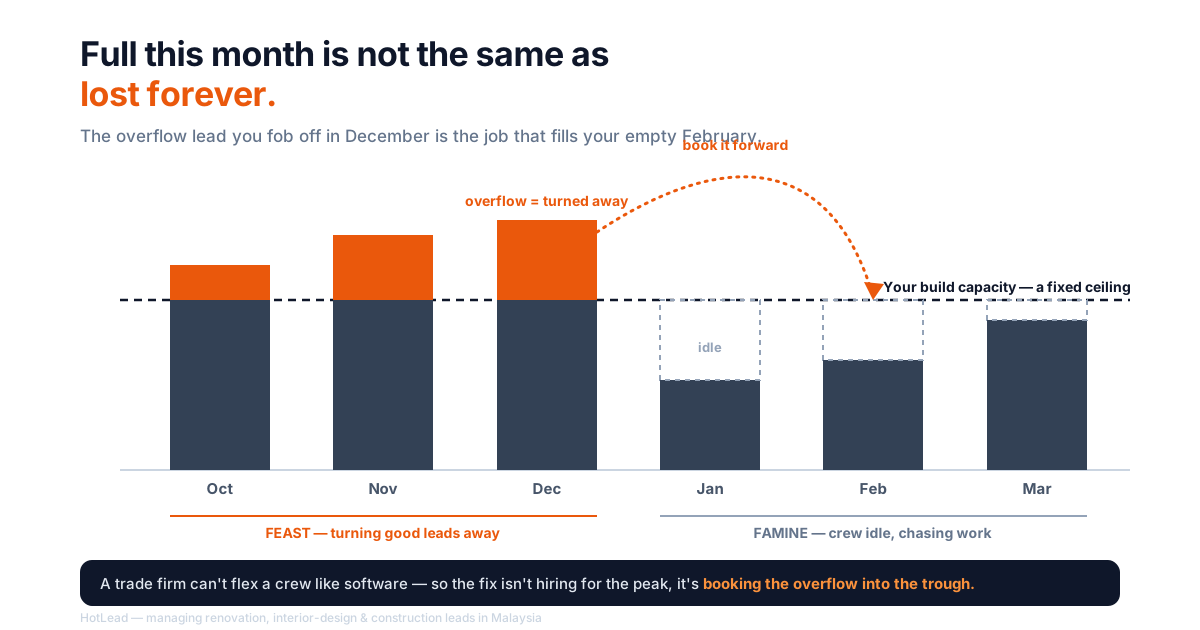
There's a kind of lost renovation job that doesn't feel like a loss at all, because it happens when things are going well. The calendar's full. The phone keeps buzzing with new enquiries. Business is good. So the new leads get whatever's left of your attention after the live sites are handled — which is to say, not much. A reply the next day. A quick "we quite full now ah, maybe next time." Or nothing at all.
Two months later you're staring at a half-empty February calendar, wondering where the work went, chasing quotes and boosting Facebook posts to fill the gap. The work went past you in October — you were just too busy to catch it.
This is the overflow leak, and it's one of the sneakiest in a renovation or construction firm, because it only shows up when you're winning. Every other leak looks like a problem. This one looks like success right up until the slow month arrives.
What is the overflow leak?
It's the winnable work you lose because it arrived when your calendar was already full — so instead of being held and booked forward, it got a slow reply, a half-answer, or a brush-off, and went to a firm with an opening.
It's a distinct leak from the ones renovation owners usually watch for. The slow first reply loses a lead in the first hour because nobody got to it. The busy-season chaos loses leads because you're overwhelmed and dropping balls. The overflow leak is different: you often see the lead clearly, you just decide — consciously or by default — that you don't have room for it, so you let it go. You're not dropping the ball. You're choosing not to pick it up, because your hands are full.
And the thing you let go isn't junk. It's frequently a warm, qualified, ready-to-buy lead — exactly the kind you'd fight for in a quiet month. You're rejecting your best-quality leads at the worst possible time to reject them.
Why is a full calendar actually a leak, not a good problem?
Because "full this month" and "lost forever" are two completely different things — and when you have no system to tell them apart, you treat every overflow lead as the second when most of them are the first.
Think about how a renovation firm's year actually runs. Demand isn't flat. It clusters — around festive seasons, around property-handover waves, around the predictable spikes on the Malaysian reno calendar. So you get feast months where enquiries pile up over your build capacity, and famine months where the crew is standing around and you're anxiously chasing work. Every small trade firm knows this whiplash intimately.
Here's the part owners miss: the overflow from your feast months is the raw material that could fill your famine months — but only if you catch it and move it forward. A condo kitchen takes six to twelve weeks to build once you count hacking, wet works and tiling, and a full condo reno runs eight to twelve weeks for a mid-range job — often longer once JMB or MC approval adds another one to three weeks up front. That lag is your friend. A lead that lands in October wanting a job "sometime early next year" is asking to be booked into the exact window your calendar is empty. You don't have to fit them in this month. You have to hold them for the next.
The leak is that most firms have no "hold" mechanism. A lead you can't start today falls into the same "reply when I'm free" void as everything else, and by the time you're free, they're gone. Full this month quietly becomes lost forever, not because the buyer left, but because you had nowhere to put them.
Isn't the obvious fix just to hire more people?
It feels obvious, and for a small reno or construction firm it's usually the wrong first move — because a trade crew is not a server you can spin up for the busy week and shut down after.
This is where renovation is genuinely different from a software or services business. You can't flex skilled labour on demand. If you hire two more installers to catch every October lead, you're carrying their wages through the February trough too — and if you don't keep them fed, they leave, and you've lost the very capacity you paid to build. Scaling headcount to your peak just swaps a leads problem for a payroll problem, and the payroll problem is worse because it doesn't go away when the phone goes quiet.
On top of that, Malaysian trade labour is structurally scarce, so "just add a crew" isn't even easy to do. CIDB cites a skilled-trade shortfall of around 180,000 workers against the project pipeline through 2028, the sector leans heavily on foreign labour that's been restricted and made more expensive — a February 2025 levy hike and a case-by-case intake policy — and 76.5% of Malaysian SMEs are micro-firms with fewer than five staff, so most reno outfits are working with a couple of crews at most. You're not going to out-hire this. Internationally, construction surveys have found nearly half of contractors turning down work because they can't staff it — this is a whole-industry constraint, not a personal failing.
| When you're full | Hire a bigger crew | Manage the overflow |
|---|---|---|
| How fast it helps | Slow — skilled trades are scarce (CIDB ~180k short) and take months to find and train | Immediate — you can book a lead forward today |
| Cost in the slow month | Wages you carry through the famine trough | None — forward bookings fill the trough |
| Main risk | Over-hiring for a peak you can't sustain year-round | Low — you add no fixed cost |
| When it's the right move | Your booked-forward pipeline is reliably full | Now — any month the calendar is full |
So the lever isn't expanding capacity. It's managing it — smoothing the demand you already have across the calendar you already own.
How you say no when you're full is worth more than the job
Here's the one that costs firms the most and shows up on no dashboard: when you're full and a good lead comes in, the way you decline decides whether you lose one job or something much bigger.
Play out the common version. A warm referral messages you in mid-October — a neighbour used you, they want their condo kitchen redone early next year. You're slammed, so two days later you fire back: "Wah, we quite full now ah. Maybe you try another contractor first." Feels honest. But look at what you just did. The buyer, who wanted you specifically, now hires whoever replies first — and 78% of buyers hire the first firm to respond. Worse, the neighbour who put their own name on the line to refer you is now a little embarrassed, and quietly stops sending people your way. You didn't just lose a kitchen. You nicked the word-of-mouth engine — around 49% of how Malaysian reno buyers find a firm — that fills your calendar in the first place.
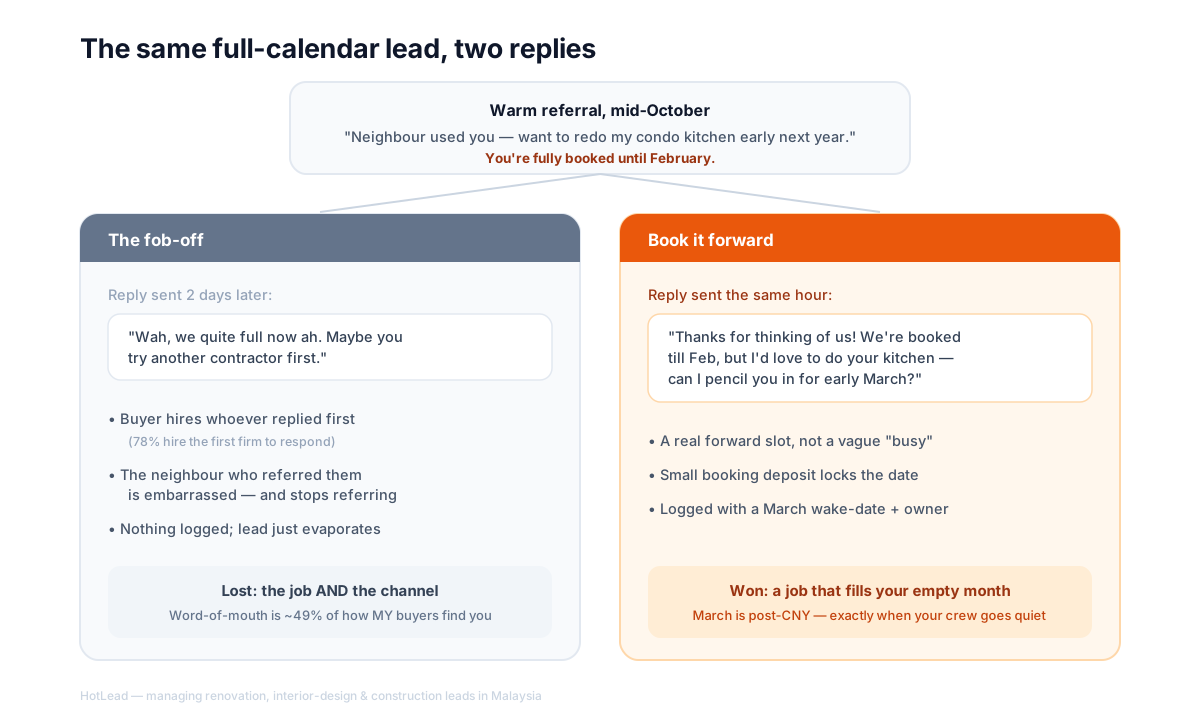
Now the other version. Same lead, but you reply within the hour: "Thanks for thinking of us! We're booked solid till February, but I'd genuinely love to do your kitchen — can I pencil you in for early March? I can hold the slot with a small booking deposit and get you a rough range now." Same availability. Completely different result. You've booked a March job — which happens to land right after Chinese New Year, exactly when your crew usually goes quiet — and the referrer looks good because you treated their friend well. This is the warm-lead instinct applied to a full calendar: the warmer the lead, the more it costs you to fumble the no.
Being full is a scheduling fact. Sounding dismissive is a choice — and it's the expensive one.
What does managing overflow actually look like?
You stop treating "full" as a reason to disengage and start treating it as a reason to book forward. Five moves:
- Reply fast even when you're full. The speed-to-lead edge doesn't switch off because your calendar's packed — you're just competing to be the firm they wait for instead of the firm they start with this week. A same-day, warm acknowledgement keeps you in the game; a two-day brush-off ends it.
- Offer a real forward slot, not a vague "we're busy." "I can't start till after CNY, but I can pencil you in for early March" gives the buyer something concrete to say yes to. Vague busyness gives them a reason to keep shopping.
- Lock genuine interest with a small booking deposit. This is standard practice for booked-out trades everywhere — take a modest deposit to secure a future start date once a current job wraps. It filters the serious from the tyre-kickers and turns "maybe" into a committed slot that fills your trough.
- Keep a waitlist you actually work. Jobs finish early. Slots open. If you have a short list of warm, pre-qualified overflow leads with their start-months noted, you pull one forward instead of scrambling to fill the gap. A waitlist you never look at is just a graveyard.
- Make future-dated leads visible. A lead you can't start for two months can't live in your head — give it a start-month, an owner, and a wake-date that surfaces before then. Otherwise it evaporates exactly like the leads you meant to reply to and never did.
The mirror failure: saying yes to everything
Worth naming the opposite mistake, because the same firms swing between both. When you're proud you "never turn away work," you cram jobs on top of each other, blow past your real capacity, and deliver everything late — then collect the one-star reviews that follow a job that ran two months over. That's the overflow leak inverted: instead of losing jobs by refusing them badly, you lose your reputation by accepting them badly.
The cure is identical. Know your true build capacity, treat your start dates as a booked calendar rather than a hopeful guess, and when you're full, book the next lead into the next genuinely open window instead of squeezing it into a month that's already packed. An honest "I can start you in March" protects your delivery and your reviews far better than an optimistic "we'll fit you in somehow" that turns into a delayed, resented job.
The bottom line
The overflow leak is the one that disguises itself as good times. When you're full, it feels reasonable to let new leads slide — you've got more than you can handle already. But a renovation firm's demand comes in waves, and the overflow from a busy month is precisely what should fill the quiet month behind it. Throw it away with a slow reply or a curt "we're full," and you don't just lose a job — you lose the smoothing that keeps your crew fed year-round, and you chip at the referral channel that feeds you. You almost never need a bigger crew to fix this. You need a way to hold a good lead you can't start today and book it into the calendar you'll be desperate to fill in ten weeks.
For the whole system this sits inside — capture, qualify, reply, book and follow up — start with the complete guide to managing renovation leads in Malaysia, and see how overflow connects to the year-round demand calendar, the busy-season leaks that come with it, and the owner-operator bottleneck that makes every full month feel like drowning.
How HotLead stops overflow from leaking
HotLead can't build your crew or manage your site schedule — the Gantt chart and the trades are yours. What it does is make sure a lead you can't start today doesn't quietly disappear before you can start it later:
- Auto-greeting and capture on every enquiry, so a buyer you're too full to properly reply to is still acknowledged the instant they message — you stay in the game instead of going silent while you're on-site.
- One owner per lead with a next action and a wake-date, so "start this one in March" becomes a tracked forward booking that resurfaces before the slot opens, not a name you forget by the time you're free.
- A funnel view that shows your future-dated and waitlisted leads in one place, so when a job finishes early you can see exactly who to pull forward — instead of scrambling to fill the gap from scratch.
- Team performance, so you can tell who's booking overflow forward and who's fobbing it off with "we're full lah" — the difference between a smoothed year and a feast-and-famine one.
If your busy months are full and your quiet months are empty, the fix usually isn't more workers — it's not throwing away the leads that arrive at the wrong time. See how HotLead works, or read how it fits a renovation firm or a construction contractor specifically.
Sources: CIDB — Navigating Challenges and Embracing Opportunities in Malaysia's Construction Landscape (skilled-trade worker shortfall through 2028) and VietnamPlus — Malaysia's construction industry faces severe shortage of foreign workers (foreign-worker restrictions, February 2025 levy hike, case-by-case intake); McClone — Feast or Famine? Addressing Cyclical Demand in Construction (contractors turning down work for lack of labour — international construction data); Stride — How to avoid the feast or famine cycle (booking clients forward with a deposit to secure a future start); Forbes — Speed To Lead: The Most Profitable KPI For Contractors? (78% hire the first firm to respond); renovation durations from Outbox Design — Condo Renovation Guide Malaysia 2026 and Everkitchen — How Long Does Kitchen Renovation Take in Malaysia?. The ~49% word-of-mouth discovery share, the 76.5% micro-SME figure, and job-value bands are as cited in the complete guide to managing renovation leads in Malaysia and the renovation demand calendar.
Frequently asked questions
What should a renovation firm do with leads when it's fully booked?
Don't go silent and don't brush them off — book them forward. Reply fast and warmly even when you're full, be honest that you can't start until a specific month, and offer a real forward slot rather than a vague "we're busy." For a genuinely interested buyer, offer to pencil them in for your first free window and lock the date with a small booking deposit. A lead you can't start in December but can start in March is not a lost lead — it's a job that fills the slow post-festive month when your crew would otherwise be idle. The only thing that turns it into a lost lead is having nowhere to hold it, so it falls into the "reply later" void and evaporates.
Should I hire more workers so I stop turning renovation jobs away?
Usually not as your first move, and rarely to chase a seasonal peak. A renovation or construction firm can't flex a crew the way a software business flexes servers — you can't hire skilled trades for a three-month rush and shed them in the quiet season without wrecking quality, morale and margin. Malaysian construction labour is also structurally tight (CIDB cites roughly a 180,000-worker skilled-trade shortfall through 2028, and foreign-worker intake has been restricted), so "just add a crew" is slow, expensive and risky. Before you scale headcount, scale your lead handling — book overflow forward into your slow months, keep a waitlist, and stagger start dates. Grow the crew when your booked-forward pipeline is consistently full, not to catch a spike you can't sustain.
Is it bad to tell a customer I'm too busy to take their renovation job?
It's not bad to be full — it's bad to sound dismissive about it. "We quite full now, try another contractor" tells a buyer you don't want their business, and if they came through a referral, it embarrasses the person who recommended you. Compare that with "We're booked till February, but I'd genuinely love to do your kitchen — can I hold an early-March slot for you?" Same availability, completely different outcome — one loses the job and the referral, the other books a future job and keeps your name in good standing. Being full is a scheduling fact; how you communicate it is a lead-management decision.
How do I stop overbooking and delivering renovation jobs late?
The overflow leak has a mirror-image failure — saying yes to everything, cramming jobs on top of each other, then delivering all of them late and collecting bad reviews. The fix for both is the same — know your real build capacity and treat your start dates as a booked calendar, not a wish. When you're full, book new leads into the next genuinely open window instead of squeezing them into an already-packed month. A clear forward booking with an honest start date protects your delivery quality and your reputation far better than an optimistic "we can fit you in somehow."
How do I keep track of renovation leads I can't start for a couple of months?
Give every future-dated lead a start-month, an owner and a wake-date, or it will disappear. A lead you can't touch for eight weeks can't live as a mental note — by the time the slot opens, you've forgotten the name and the buyer has moved on. Log it as a forward booking or a waitlist entry with the month you told them you'd start, one person responsible for it, and a reminder that surfaces before that date so you re-contact them in time. When a current job finishes early, a worked waitlist means you have warm, pre-qualified leads to pull forward instead of scrambling for work.
Keep reading
- Did We Already Say RM68k? Using AI to Stop Quote Drift Across a Long Renovation ThreadOver a weeks-long WhatsApp thread with two or three quote revisions, a rep re-states a number that contradicts an earlier promise — and re-opening a settled price quietly invites a discount that eats a whole job's profit. So I pointed AI at the drift. It works beautifully as a flag, and dangerously as an auto-corrector.
- The Warranty as a Closing Lever: Why a Longer Guarantee Beats a Discount on a Renovation DealA quote is stalling and the buyer wants a reason to say yes. Before you drop the price, look at the other lever in your hand — a longer workmanship warranty. It is the same expected-value decision as a discount, but the math runs the opposite way — a price cut costs you thousands with certainty, while extending the defects cover costs you a couple of hundred ringgit in expectation, for arguably more trust with a scam-wary buyer. Here is the EV case for the non-price concession, the trap that turns it into a hidden liability, and which leads it actually moves.
- "Can You Just Build It, My Neighbour Also Did" — Handling the Renovation Lead That Needs Council Approval FirstSome renovation enquiries can't legally start next month, no matter how ready the buyer is — a kitchen extension, a hacked-through wall, a roofed-over air well all need the council's written approval first. Quote a fast build price to win the job and you either lose it to a "boss, can start" cowboy, or win it and inherit the stop-work order, the RM50,000 fine and a client who later can't sell the house. Here's how to spot the permit-first lead and sell the approval as protection.