

Here's the uncomfortable truth about renovation sales: most jobs aren't won on the first message — they're won on the fifth. And most firms never get there.
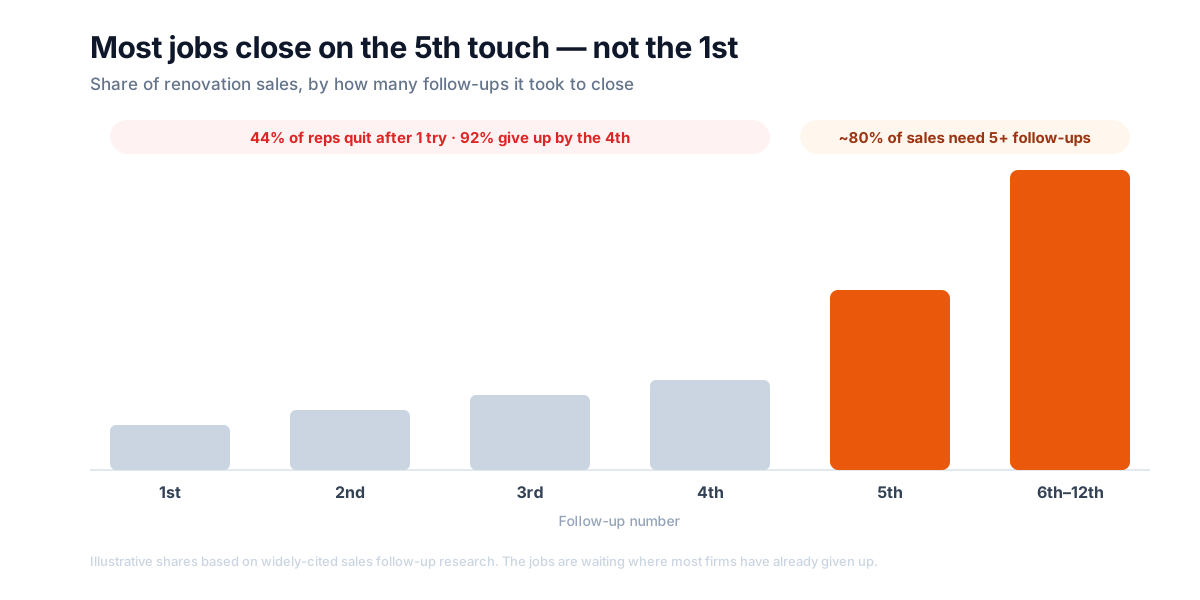
Around 80% of sales require five or more follow-ups, but 44% of salespeople give up after one attempt and 92% quit by the fourth. The renovation job is sitting at follow-up #5, after the homeowner has compared quotes and talked to their spouse — exactly where your competitors have already walked away.
This is the single cheapest way to win more jobs from leads you already have. Here's a system to do it without becoming a pest.
The follow-up gap, in one chart
Look at where renovation sales actually close versus where firms stop trying. The early touches — where everyone competes — convert the least. The later touches, where almost no one bothers, are where the money is.
The lesson isn't "nag harder." It's "simply still be there at touch 5," politely, when the homeowner is finally ready to decide.
Why homeowners go quiet (it's usually not a no)
A renovation is a big, stressful, expensive decision. After the first chat, a Malaysian homeowner typically:
- Collects 2–4 quotes to compare (this is normal and expected).
- Talks it over with family — often the real decision-makers.
- Sorts out budget and timing, sometimes waiting on a bonus, a loan, or vacant possession.
- Gets busy and simply forgets to reply.
None of that is rejection. It's a buying process that takes weeks. Silence almost always means "not yet" — but firms read it as "no" and stop.
A polite follow-up rhythm that works
Space your touches so you stay top-of-mind without crowding. A simple sequence:
| When | Touch | What to send |
|---|---|---|
| Day 0 | Reply | Acknowledge fast, ask 1–2 qualifying questions |
| Day 2 | Follow-up 1 | A relevant past project (similar home/area) |
| Day 4 | Follow-up 2 | Offer a site visit or a rough budget range |
| Day 7 | Follow-up 3 | Answer a likely objection (timeline, process) |
| Day 14 | Follow-up 4 | Light check-in + availability for the month |
| Day 30 | Follow-up 5 | "Still planning? Happy to help when you're ready." |
Spacing touches 2–3 days apart lifts reply rates by around 11% versus daily messages or long silences. The rhythm matters as much as the count.
Make each follow-up welcome, not annoying
The difference between "helpful" and "pest" is what you send:
- Lead with value, not "any update?" A photo of a similar completed kitchen, a quick tip on permits, or a realistic price band gives the homeowner a reason to reply.
- Reference their project specifically. "For a 3-room flat in Cheras like yours…" beats a generic nudge.
- Make the next step tiny. "Want me to drop by this weekend for 15 minutes?" is easier to say yes to than "shall we proceed?"
- Know when to stop. A clear no, or a full sequence with zero engagement, means move on. Persistence isn't harassment — but reading signals matters.
What if a warm lead goes quiet right after your quote?
This is the hardest silence to read — the site visit went well, the homeowner seemed keen, you sent a solid quote, and then nothing. It still usually isn't a no: they're comparing three to five firms, waiting on a loan or a bonus, or talking it over at home. Treat it as one more touch on the calendar, not a verdict — re-open with a reason (a similar completed project, a genuine deadline, a small clarifying question) rather than a bare "any update?", and know that a warm buyer going quiet is normal, not a rejection.
That chase-or-wait decision deserves its own playbook — we break it down, including how to re-open without begging or discounting, in ghosted after a great meeting: do you chase the quiet lead, or wait?.
Why follow-up breaks down (and how to fix it)
Almost no reno firm decides to abandon leads. It happens because follow-up lives in someone's memory:
- The salesperson means to follow up "tomorrow," then a site issue eats the day.
- The lead scrolls out of view in a busy WhatsApp and is never seen again.
- Nobody can tell which open leads are due for a nudge today.
Memory doesn't scale past a handful of leads. The fix is to make follow-up a list the system maintains, not a thing humans try to remember: every open lead has a next-touch date, and someone is reminded when it's due.
How HotLead keeps follow-up #5 from getting forgotten
HotLead tracks every open lead and surfaces who needs a nudge, and when — so the 5th follow-up actually happens instead of dying in a busy inbox. It also shows you which leads have gone quiet at each stage, so nothing slips. See how it works.
Follow-up wins the job; speed gets you into the race in the first place — read how fast you should reply to a renovation lead, or the complete guide to managing renovation leads.
Sources: Widely-cited sales follow-up research (touch counts and rep drop-off rates); studies on follow-up cadence and reply rates. See the complete guide for the full picture.
Frequently asked questions
How many times should I follow up on a renovation lead?
Plan for at least 5 to 8 touches. Around 80% of sales need five or more follow-ups, and roughly half close only after the 5th contact — yet 44% of salespeople stop after one attempt. The job is usually waiting where most firms have already quit.
How do I follow up without annoying the homeowner?
Space your touches 2–3 days apart, lead with value (a tip, a similar project, availability) instead of "any update?", and stop when they give a clear no. Spacing follow-ups a couple of days apart actually lifts reply rates versus daily messages.
When should I stop following up?
When you get a definite no, when the project is clearly dead, or after a sensible sequence (roughly day 1, 2, 4, 7, 14, 30) with no response. "No reply yet" is not a no — most positive replies come after several attempts.
Keep reading
- "We Went With Another Contractor" — I Built an AI to Win Back a Lost Renovation Lead Instead of Slamming the DoorA Shah Alam firm quotes a RM70k job, chases it for three weeks, and finally gets the message every owner dreads — "thanks, we've decided to go with another contractor." The reflex is a terse "ok, all the best 🙏" and a closed chat. The 2026 reflex is to ask AI to detect the rejection and auto-fire a win-back discount. I built it, and it begged. Here's the version that keeps a near-free option on a re-win without ever chasing a no.
- The Only Three Ways to Grow a Renovation Firm — and Which Lever to Pull FirstEvery renovation firm's revenue comes down to three levers — how many leads you get, how many you close, and how big each job is. They multiply, so a modest lift on each compounds. But they cost wildly different amounts to pull, and most owners reach first for the one they should reach for last. Here's the ranking, with Malaysian numbers.
- Sight Unseen: Winning the Overseas Malaysian Who Renovates a Unit They Can't VisitA Malaysian working in Singapore collects the keys to a KL condo and messages you to fit it out — but they can't come to a site visit, can't walk your showroom, and will wire a deposit to a firm they've never met. Most firms treat this lead like a walk-in, go quiet when the buyer can't pop by, and lose the highest-budget job in the inbox. Here's why the remote buyer is your hardest-trust but best-paying lead, and how to build a remote lane that actually closes it.