

There's a message that lands in every Malaysian reno firm's WhatsApp several times a week, and it stops owners cold every time. A photo of a tired kitchen — laminate peeling, an old hob, a sink from another decade — and three words underneath it:
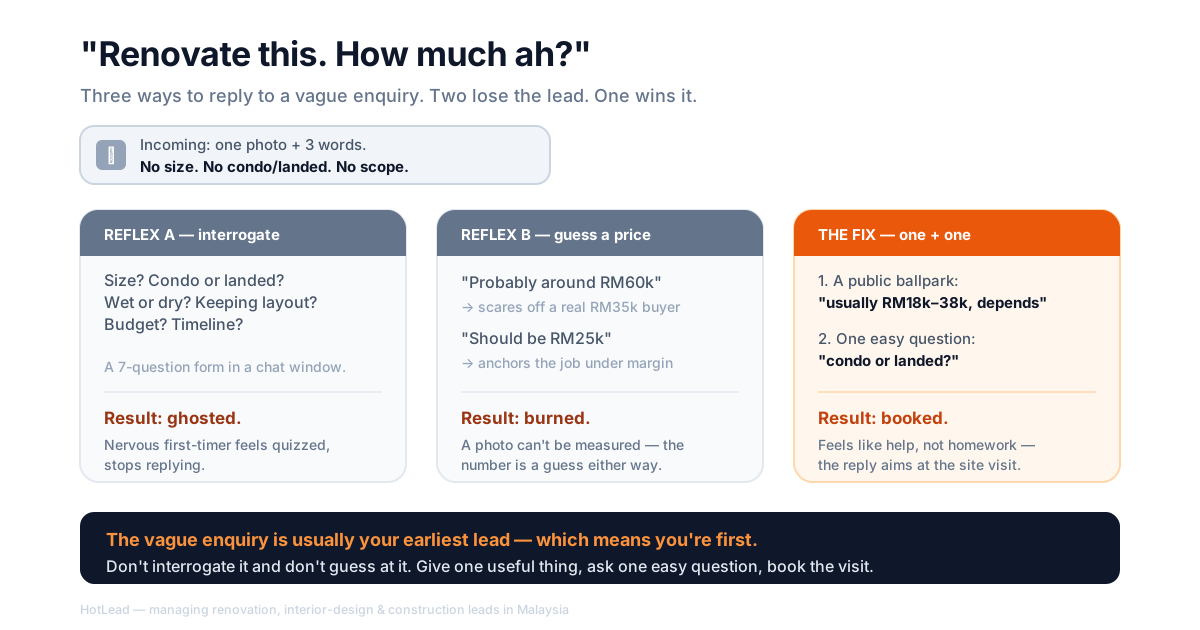
"Renovate this. How much ah?"
No square footage. No condo or landed. No idea whether they want a refresh or a full gut. Just a picture and a price question. And now you're stuck, because the two things your fingers want to type are both wrong.
The first instinct is to fire back the questions you need: What's the size? Condo or landed? Wet kitchen or dry? Keeping the layout? What's your budget? When are you starting? Send that, and watch the two grey ticks sit there forever. The second instinct is to just give them a number so you seem helpful and fast — and then spend the next month regretting whichever number you picked.
This is the vague-enquiry stall, and it's one of the quietest lead leaks in the business. Not because the enquiry is bad — because it's early. I've watched firms treat these one-liners as junk and slow-walk them, when they were often the most winnable leads in the whole inbox. Here's how to handle them.
What is the vague-enquiry stall?
It's the specific dead-end you hit when an enquiry gives you too little to quote and too little to even qualify — so the lead just sits, half-answered, while you decide what to do with it. You can't send a price because you know nothing about the job. But you also can't run your normal qualifying playbook, because that assumes the buyer handed you a few signals to read. Here they handed you a photo and "how much ah?"
This is a different problem from the ones next to it in the funnel. Qualifying a lead in the first reply is about reading a lead that already has some scope in it — property type, stage, rough scope — and deciding how ready they are. The photo-and-floor-plan blind spot is about whether AI can measure an image (it can't). The vague-enquiry stall is the step before both: there isn't enough information yet to qualify or to quote, and your reply has to create that information without feeling like a demand for it.
Why does the vague "how much?" enquiry stall in the first place?
Because the buyer usually doesn't know their own scope yet — and because the channel is built to produce exactly this kind of message. Most people sending "how much to renovate my house?" are first-time renovators. They've never done this before. They don't know that "renovate my kitchen" could mean RM18,000 or RM85,000 depending on whether they keep the layout, what cabinets they pick, and whether the wiring needs redoing. Asking them to specify their scope is like asking someone to order in a language they haven't learned.
The channel makes it worse. Most of these land through a Facebook or Instagram ad with a "Send WhatsApp message" button — tapped on impulse, from the sofa, while scrolling. There's no form in between forcing them to describe the job. So you receive a reflex, not a brief. That's not laziness; it's the structure of the funnel. The WhatsApp-first way Malaysian reno leads arrive all but guarantees a stream of short, unformed questions.
So the enquiry is vague for two innocent reasons — the buyer is early, and the channel invites a one-liner. Which means your reply is doing two jobs at once: getting enough to work with, and not scaring off someone who's nervous and shopping.
Why does firing back a wall of questions lose the lead?
Because a ten-question reply is a form in disguise, and forms get abandoned — the longer they are, the worse. This is the reflex I see most, and it feels responsible ("I need this info to quote properly!"), but it quietly kills the lead.
Look at what happens to any sales form as you add fields. HubSpot's 2024 analysis found conversion falls about 4.1% with every extra field on average, and other studies put the drop as high as 8–50% per field. Once a form hits seven or more fields, roughly 67.8% of people abandon it — and when you ask people why they quit, the single biggest reason (about 37%) is simply that the form was too long. Multi-step forms that ask one thing at a time convert around 14% higher than the same questions dumped on one page.
Now read your interrogation reply again. Size? Condo or landed? Wet or dry? Keeping the layout? Budget? Timeline? That's a seven-field form, delivered to a nervous first-timer, in a chat window. You've recreated the exact thing conversion research tells you people run away from — except worse, because it arrived unbidden and reads like a screening test before they've decided they even like you.
Why is guessing a number even worse?
Because a number you pull from a photo is a guess wearing a decimal point, and both directions of guess burn you. This is the other reflex — the "let me just be helpful and fast" one — and owners fall into it precisely because they know the interrogation kills leads, so they overcorrect.
Here's the trap. You can't measure a single photo — the same kitchen shot up close looks small and shot from the doorway looks large, and nothing in the image tells you which. So whatever figure you type is really a coin-flip, and it lands one of two bad ways:
- You guess high to be safe — "probably around RM60k" — and a genuine buyer with a RM35k job in their head goes quiet and never books the site visit where you'd have shown them a smarter scope. You lost a real lead to a number you invented.
- You guess low to seem competitive — "should be around RM25k" — and now you've anchored the entire job under your own margin. When the site visit reveals it's really a RM40k job, you're the firm that "quoted 25 and now wants 40," and every ringgit above your guess feels to the buyer like you're upselling. You've boxed yourself in before you measured a single wall. (This is how a careless early number quietly wrecks your pricing before you've even built the quote.)
A number given too early doesn't make you look decisive. It makes you look like you don't know your own trade — because a buyer who's read even one Malaysian reno guide knows a real price needs a site visit.
Isn't a vague enquiry just a weak lead?
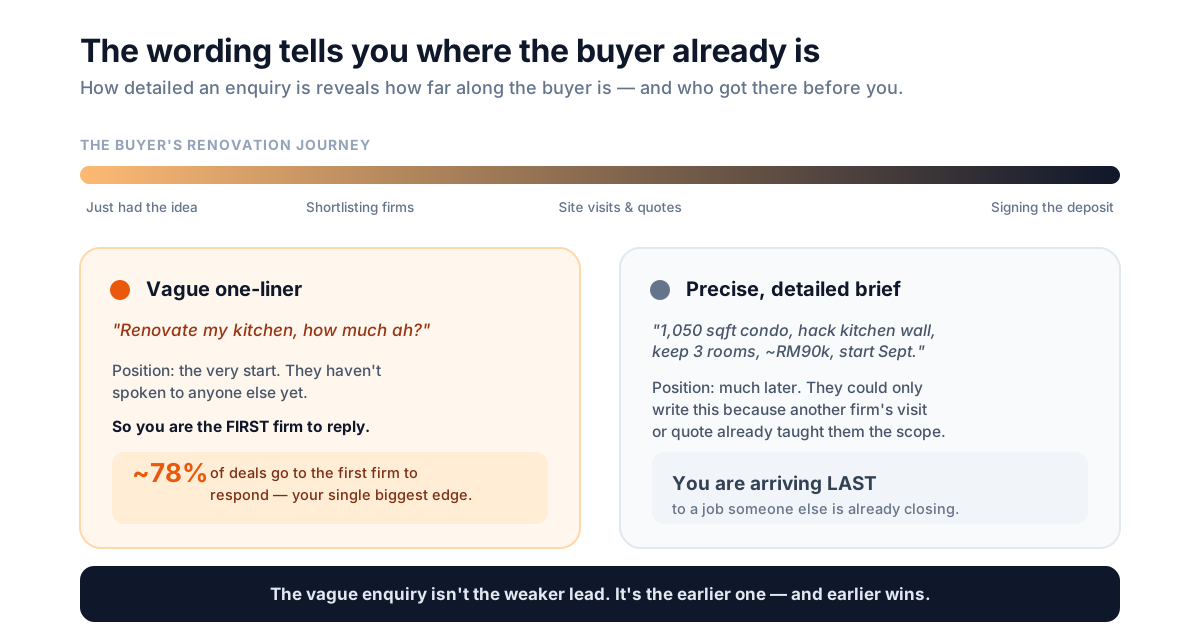
No — and this is the part almost everyone gets backwards. A vague one-liner is often your most winnable lead, not your weakest. The precision of an enquiry tells you less about how serious the buyer is and more about how far along they already are — and further along usually means someone else got there first.
Think about who sends you a crisp, detailed brief: "1,050 sqft condo in Mont Kiara, want to hack the kitchen wall, keep 3 bedrooms, budget around RM90k, starting September." That buyer didn't learn all that from nowhere. They learned it from a site visit another firm already did, or a quote another firm already sent. They can write a precise scope because someone already educated them — which means you're arriving last to a job that's halfway closed.
The person who sends "renovate my kitchen, how much ah?" hasn't spoken to anyone yet. Which means you have the one advantage that matters most in this business: you're first. The first firm to respond wins around 78% of deals, and a raw, unformed enquiry is very often first contact. Slow-walk it as junk and you're throwing away the leads where your edge is biggest.
So how do you move a vague enquiry toward a real quote?
You give one genuinely useful thing and ask one easy question — and you aim the whole message at booking a site visit, not at extracting a spec. Three moves, in order:
- Lead with a ballpark, not a blank. Give a public, honest range with a clear "depends" attached — the kind of number any Malaysian reno cost guide already publishes, so you're sharing knowledge, not committing to a price. "A condo kitchen refit usually runs about RM18k–38k depending on cabinets and finishes." This does three things: it's instantly useful, it shows you know the market, and it starts qualifying them the moment they react to it — without you ever asking "what's your budget?"
- Ask exactly one question, tied to helping them. Not the whole checklist — the single most useful one. In Malaysia that's almost always "is it a condo/strata unit or a landed home?", because that one answer tells you the permit friction, the realistic scope, and the timeline in a single reply. Frame it as service: "so I can give you an accurate range instead of a random number…" One question feels like a conversation. Six feels like a form.
- Point at the site visit as the next step. The vague enquiry can't be quoted from the chat, and it doesn't need to be — it needs to become a measured job. So end by moving there: "I'll confirm the exact figure after a quick 15-minute site visit — would this weekend suit you?" You're not trying to close a price in WhatsApp. You're trying to earn the visit where a real quote becomes possible.
Do it in one message and it reads as help, not homework:
Hi! Thanks for the photo 🙌 A condo kitchen refit like this usually runs about RM18k–38k depending on cabinets and finishes. So I can give you an accurate range instead of a random number — is it a condo/strata unit or a landed home? I'll confirm the exact figure after a quick 15-min site visit. Would this weekend suit you? 🙂
That single reply gives value, asks one easy thing, lets the ballpark start the qualifying, and proposes the next step. Once they answer, you're back on solid ground and can read the four qualifying signals properly — because now the enquiry has something in it.
When is a vague enquiry genuinely not worth chasing?
When they won't give you a single thing after two friendly, useful replies — then deprioritise, don't delete. The method above rescues most vague enquiries, but not all, and the tell is simple: after you've led with a ballpark and asked one easy question twice, a real buyer gives you something — the property type, a "we just got keys", a reaction to your range. A pure window-shopper gives you nothing and drifts off.
That lead isn't worthless; it's just not worth a two-hour quote today. Drop it onto a follow-up date with a light touch, because in this business silence usually means "not yet", not "no" — a "someday" browser nudged at the right time becomes next quarter's job. The point isn't to be cold. It's to spend your careful hours where they'll pay off, and give everyone else a warm, honest, low-effort touch instead of an interrogation or a guessed number.
The bottom line
The vague "how much to renovate ah?" enquiry gets misread as junk when it's usually the earliest, and therefore the most winnable, lead in your inbox. The two reflexes both throw it away — a wall of questions makes a nervous first-timer feel quizzed and they ghost you, and a number guessed off a photo either scares off a real buyer or anchors the job under your margin. Neither is necessary. Give one useful thing, ask one easy question, and aim for the site visit. You don't need the buyer to hand you a brief. You just need to be the firm that made "how much ah?" feel like the start of a conversation instead of the start of a test.
For the whole system this sits inside — capture, qualify, quote and follow up — start with the complete guide to managing renovation leads in Malaysia, then read the first-reply qualifying playbook it hands off to, why a photo can't be measured for a price, and how a good site visit still leaks the job if the quote is slow.
How HotLead helps with the vague enquiry
HotLead can't write the buyer's scope for them — but it makes sure the vague enquiry that's actually your best lead never sits unseen or gets slow-walked as junk:
- Auto-greeting and capture on every enquiry, so even a 3-word "how much ah?" from an FB/IG ad gets acknowledged the instant it lands — buying you the first-responder advantage while a competitor is still ignoring it as junk.
- One owner per lead with a next action, so the vague enquiry that needs a second and third warm touch actually gets them, instead of being forgotten because it "didn't look serious".
- A funnel view across your sources, so you can see whether your FB/IG one-liners are converting or quietly dying at the first reply — the leak this whole article is about.
- Team performance, so you can tell which salesperson turns vague enquiries into booked site visits and which one is copy-pasting an eight-question checklist that scares them off.
If your inbox is full of "how much ah?" messages and you're not sure whether you're losing them to your prices or to your first reply, that's the leak to look at first. See how HotLead works, or read how it fits a renovation firm or an interior-design studio specifically.
Sources: iHome.my — Renovation Cost in Malaysia (2026) and FindContractor.my — Kitchen Renovation Cost Malaysia 2026 (condo kitchen refit RM18k–38k, per-sqft bands); Houz — Condo Interior Design & Renovation Cost Malaysia 2026 (condo cost bands); Neil Patel / HubSpot 2024 — How Form Length Impacts Conversion Rate (~4.1% conversion drop per extra field; 8–50% per-field range) and Digital Applied — Form Conversion Rate Benchmarks 2026 (67.8% abandonment on 7+ field forms; form length as the top abandonment reason ~37%; multi-step forms convert ~14% higher). Speed-to-lead and first-responder figures (5-minute rule, ~78% first responder), the up-to-five-firms shortlisting norm, and per-quote time as cited in the complete guide to managing renovation leads in Malaysia and the first-reply qualifying playbook.
Frequently asked questions
How do I reply to a "how much to renovate?" message with no details?
Don't fire back a list of questions and don't guess a firm price. Do three things in one warm, fast message — acknowledge them, give one genuinely useful thing (a public ballpark range with an honest "depends on finishes" caveat), and ask one easy question tied to helping them, like whether it's a condo or a landed home. That single message gives the buyer value, starts the conversation, and moves you toward a site visit without feeling like an interrogation.
Should I give a price if the customer only sends a photo?
Give a range, never a firm number. A single photo can't be measured — the same kitchen shot close up looks small and shot from the doorway looks large, so any exact figure you pull from it is a guess dressed as a measurement. What you can safely share is a public ballpark ("a condo kitchen refit in Malaysia usually runs about RM18k to RM38k depending on cabinets and finishes") and then ask the one question that gets you to a site visit, where you can measure properly.
Why do renovation customers send such vague enquiries?
Because most of them are first-time renovators who genuinely don't know their own scope yet, and because the channel invites it — a Facebook or Instagram ad's "Send WhatsApp message" button gets tapped on impulse, so you receive a three-word question, not a brief. A vague enquiry is a sign the buyer is early in their journey, not that they're a time-waster. Often it means you're the first firm they've contacted.
Is a vague enquiry a weak lead I should ignore?
Usually the opposite. A buyer who can already write you a detailed, precise scope has typically been educated by another firm's site visit or quote, which means you're arriving last to a job someone else is already closing. The person who sends a vague one-liner hasn't spoken to anyone yet — so you have the first-responder advantage, which wins a large majority of deals in home services. Deprioritising vague enquiries throws away the leads where your edge is biggest.
How do I ask qualifying questions without scaring the customer off?
Ask one at a time, lead with something useful, and tie every question to helping them rather than filtering them. "So I can give you an accurate range instead of a random number — is it a condo or a landed home?" reads as service. A ten-part questionnaire reads as a form, and forms get abandoned. Save the rest of your questions for the site visit, which is exactly what a good first reply is trying to book.
Keep reading
- Did We Already Say RM68k? Using AI to Stop Quote Drift Across a Long Renovation ThreadOver a weeks-long WhatsApp thread with two or three quote revisions, a rep re-states a number that contradicts an earlier promise — and re-opening a settled price quietly invites a discount that eats a whole job's profit. So I pointed AI at the drift. It works beautifully as a flag, and dangerously as an auto-corrector.
- The Warranty as a Closing Lever: Why a Longer Guarantee Beats a Discount on a Renovation DealA quote is stalling and the buyer wants a reason to say yes. Before you drop the price, look at the other lever in your hand — a longer workmanship warranty. It is the same expected-value decision as a discount, but the math runs the opposite way — a price cut costs you thousands with certainty, while extending the defects cover costs you a couple of hundred ringgit in expectation, for arguably more trust with a scam-wary buyer. Here is the EV case for the non-price concession, the trap that turns it into a hidden liability, and which leads it actually moves.
- "Can You Just Build It, My Neighbour Also Did" — Handling the Renovation Lead That Needs Council Approval FirstSome renovation enquiries can't legally start next month, no matter how ready the buyer is — a kitchen extension, a hacked-through wall, a roofed-over air well all need the council's written approval first. Quote a fast build price to win the job and you either lose it to a "boss, can start" cowboy, or win it and inherit the stop-work order, the RM50,000 fine and a client who later can't sell the house. Here's how to spot the permit-first lead and sell the approval as protection.