

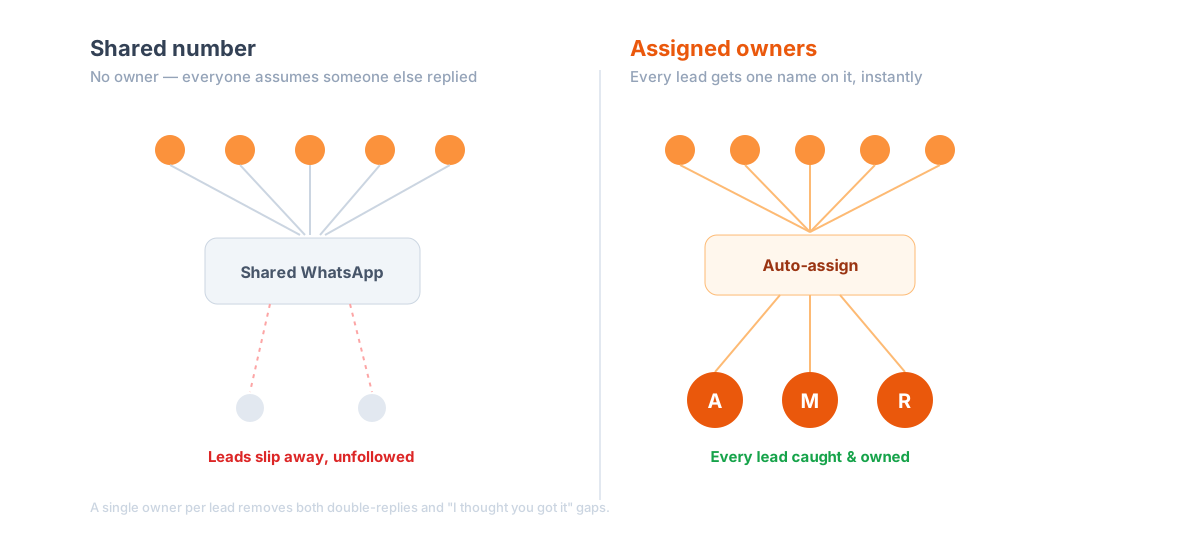
If your renovation leads land in a shared WhatsApp number, here's a question you probably can't answer: which of your salespeople is quietly letting leads go cold?
You can't answer it because a shared inbox hides it. A lead with no owner is everyone's responsibility and therefore nobody's. To find your leak, you first have to make leads ownable — then the answer reveals itself.
Why the shared number hides your worst leak
The shared WhatsApp number feels efficient — one place, whole team, all leads. In practice it creates three expensive blind spots:
- No owner. A lead lands; everyone assumes a colleague replied. Nobody did.
- Double-replies. Two salespeople answer the same homeowner, contradict each other, and the customer loses confidence.
- No accountability. When a lead goes cold, there's no record of who was supposed to handle it — so the same person can drop leads every week and you'd never know.
Industry-wide, as few as 27% of leads ever get contacted — up to 73% wasted. In a shared inbox you simply can't see which slice of that waste is which salesperson. The leak is invisible by design.
Step 1: Give every lead exactly one owner
Accountability starts the moment a lead arrives. Assign each new enquiry to a single salesperson — automatically, by a rule you set in advance:
- By area — leads from Johor go to the JB closer; Klang Valley to the KL team.
- By project type — kitchens to one specialist, full-home to another.
- Round-robin — simplest; leads rotate evenly across the team.
The rule matters less than the principle: one lead, one name, instantly. No group-chat scramble, no "whoever's free."
Step 2: Track two things per lead
Once leads have owners, track just two numbers and the picture sharpens fast:
- Time to first reply — how fast did the owner respond? (Remember the 5-minute rule: speed is decisive.)
- Outcome — did it move to quote, win, or go cold?
Now compare across the team. Within a few weeks you'll see it plainly: who replies in minutes and who lets leads sit for a day; who follows up to touch five and who quits at one; whose leads convert and whose evaporate.
What the scoreboard actually looks like
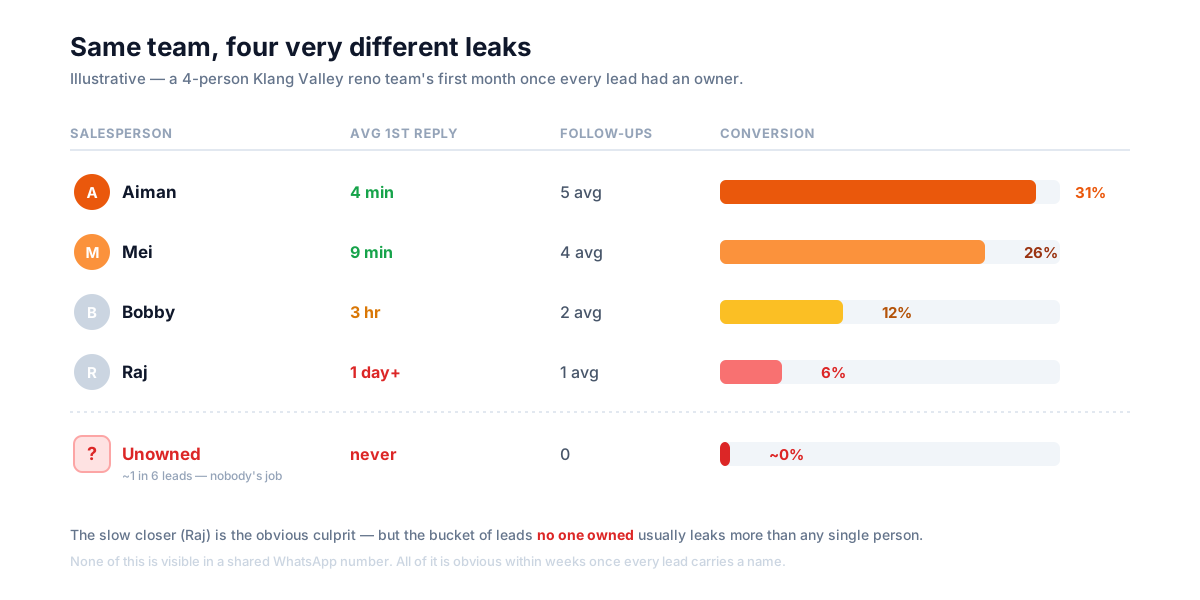
Once every lead has an owner, the picture stops being a feeling and becomes a table. Here's a realistic example — a four-person renovation team in the Klang Valley, one month after they put a name on every enquiry:
| Salesperson | Avg 1st reply | Follow-ups (avg) | Conversion |
|---|---|---|---|
| Aiman | 4 min | 5 | 31% |
| Mei | 9 min | 4 | 26% |
| Bobby | ~3 hours | 2 | 12% |
| Raj | 1 day+ | 1 | 6% |
| Unowned | never | 0 | ~0% |
Illustrative figures, but the shape is the one I see again and again. Look at it and a few things jump out — and only the first is the one most owners expect.
The leak that isn't a person at all
Here's the part owners miss: your single biggest leak is usually the "unowned" row. A slow closer like Raj is the obvious villain — long reply times, one half-hearted follow-up, leads dying on the vine. Fix him and you'll win back jobs. But the leads that nobody picked up — the ones that landed at 9pm, or during a site visit, or in a burst of ad enquiries no one was watching — never converted because no human ever decided they were theirs. That bucket is often bigger than any one person's drop-off, and it's invisible until you make leads ownable.
And there's a second surprise hiding in a shared inbox: your best closer might be quietly hurting you. When leads sit in one number with no rule, a strong salesperson can skim the easy, high-budget enquiries — the Mont Kiara full-home jobs — and leave the RM 8k bathroom touch-ups to rot. Their personal conversion looks brilliant; the firm's overall rate quietly sags. Cherry-picking only shows up when every lead is assigned by a fair rule and you can see conversion per person against the leads they were actually given.
Step 3: Add a reassignment rule
Ownership without a safety net just relocates the leak. Add one rule: if an owner goes quiet on a lead for, say, 24 hours, it moves to someone else. A lead with an unresponsive owner is a lead you're losing — better to reassign than to lose it out of politeness.
You found your slow closer — now what?
Seeing the leak is the easy part. What you do next is where most owners get it wrong — they jump to "this person has to go," when the scoreboard is usually pointing at a fixable gap, not a bad hire. Work through it in this order:
- Plug the unowned bucket first. It's almost always the biggest number and the cheapest fix — a rule that gives every lead an owner the second it lands, even after hours, beats any individual coaching.
- Name the one gap, not the person. Raj isn't "bad at sales" — he's slow to first reply. Bobby isn't lazy — he quits at follow-up two when the job closes at five. Each is a different, specific fix.
- Show them their own numbers, calmly. Put a salesperson's reply time and conversion next to the team's. Most people course-correct fast when the gap is a number on a screen, not an accusation in a meeting.
- Let the system carry the weak spot. If someone's always on-site and slow to reply, a reassignment rule and auto-acknowledgement protect the lead without a confrontation. Fix the structure before you blame the human.
Only after a fair run — real data, a clear gap, honest coaching — does a stubbornly flat scoreboard become a people decision. The difference is you're now deciding on evidence instead of a hunch about who "seems" busy.
How HotLead makes the leak visible
HotLead gives every WhatsApp lead one owner automatically, tracks reply time and outcome per salesperson, and reassigns leads that go quiet — so the scoreboard above builds itself instead of you chasing your team for a status. Its team & accountability view shows reply time, follow-ups and conversion per person, and the funnel shows where leads leak by stage — so you can see who's converting, who's slow, who's cherry-picking, and how many leads had no owner at all. See how it works.
This is one piece of the bigger picture. If you run a reno firm, start with the renovation lead-management hub; to stop the leaks before they start, read why renovation firms lose leads in WhatsApp and the complete guide to managing renovation leads in Malaysia.
Sources: MIT / Dr. James Oldroyd lead-response study, popularised by Harvard Business Review, "The Short Life of Online Sales Leads" (within 5 min vs 30 min → ~100× to connect; first responder advantage); widely-cited sales follow-up research (44% of reps quit after one attempt; ~80% of sales need five-plus touches). Scoreboard figures are illustrative. See the complete guide for full context.
Frequently asked questions
How do I know which salesperson is losing leads?
You can't, until every lead has one named owner and a status. With a shared WhatsApp number there's no accountability — leads with no owner are everyone's job and nobody's. Assign each lead to one person and track reply time and outcome, and the pattern becomes obvious within weeks.
What's wrong with sharing one WhatsApp number across the sales team?
No clear owner, double-replies, and 'I thought you got it' gaps. Leads fall through because responsibility is diffuse. It also hides performance — you can't tell who's fast and who's letting enquiries go cold.
How should I assign renovation leads to salespeople?
Pick a rule and apply it automatically — by area, by project type, or simple round-robin. The key is that assignment happens the moment a lead arrives, one owner per lead, with a reassignment rule if the owner goes quiet.
I found my slow salesperson — should I fire them?
Usually not, at least not first. Most dropped leads come from a fixable gap, not a bad person — they reply slowly because they're on-site, or they quit at follow-up two when the job closes at five. Show them their own numbers next to the team's, coach the one specific gap, and reassign untouched leads automatically. If nothing moves after a fair run with the data in front of them, then it's a people decision — but now you're making it on evidence, not a hunch.
Could my best closer actually be hurting the team?
It happens more than owners expect. When leads sit in a shared number, a strong salesperson can quietly cherry-pick the easy, high-budget enquiries and leave the rest to rot — so their personal conversion looks great while the firm's overall rate sags. A per-person scoreboard plus a fair assignment rule (round-robin or by area) makes cherry-picking obvious and stops it.
Keep reading
- "We Went With Another Contractor" — I Built an AI to Win Back a Lost Renovation Lead Instead of Slamming the DoorA Shah Alam firm quotes a RM70k job, chases it for three weeks, and finally gets the message every owner dreads — "thanks, we've decided to go with another contractor." The reflex is a terse "ok, all the best 🙏" and a closed chat. The 2026 reflex is to ask AI to detect the rejection and auto-fire a win-back discount. I built it, and it begged. Here's the version that keeps a near-free option on a re-win without ever chasing a no.
- The Only Three Ways to Grow a Renovation Firm — and Which Lever to Pull FirstEvery renovation firm's revenue comes down to three levers — how many leads you get, how many you close, and how big each job is. They multiply, so a modest lift on each compounds. But they cost wildly different amounts to pull, and most owners reach first for the one they should reach for last. Here's the ranking, with Malaysian numbers.
- Sight Unseen: Winning the Overseas Malaysian Who Renovates a Unit They Can't VisitA Malaysian working in Singapore collects the keys to a KL condo and messages you to fit it out — but they can't come to a site visit, can't walk your showroom, and will wire a deposit to a firm they've never met. Most firms treat this lead like a walk-in, go quiet when the buyer can't pop by, and lose the highest-budget job in the inbox. Here's why the remote buyer is your hardest-trust but best-paying lead, and how to build a remote lane that actually closes it.