

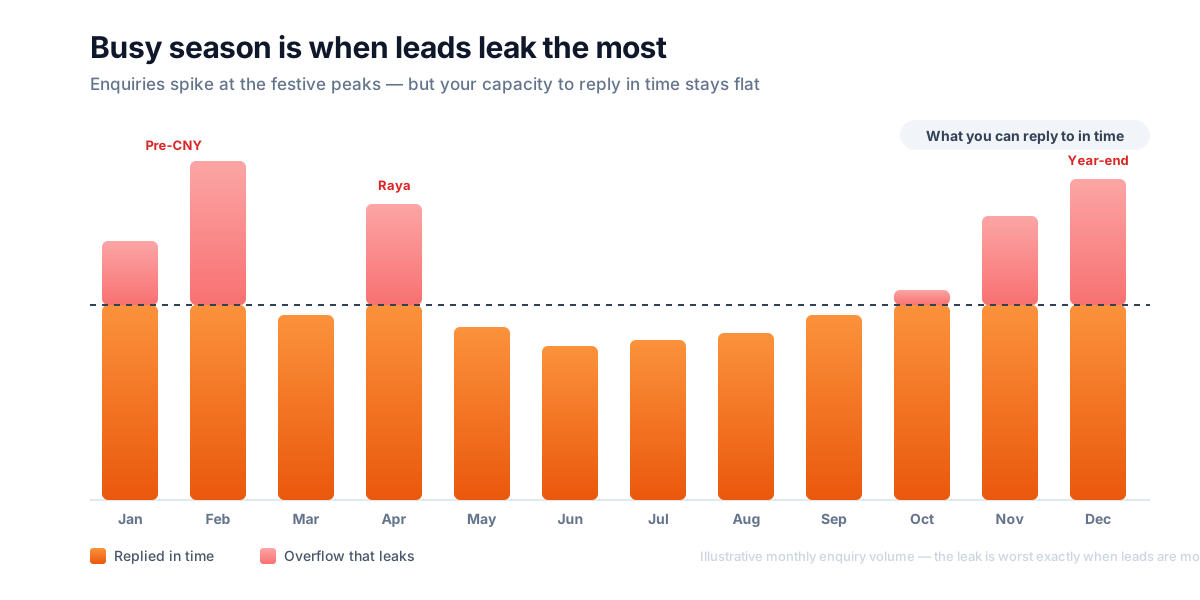
Most renovation owners think their leakiest months are the quiet ones. They're not. Your firm loses the most leads during your busiest weeks — the festive surge before Chinese New Year and Hari Raya — because that's when enquiries spike and your whole team is already buried in live jobs. The result is your worst response times of the year landing on your most valuable leads.
Here's why it happens, why it's so expensive, and how to make the surge fill your calendar instead of overflowing your inbox.
When is busy season for a Malaysian reno firm?
The peaks track the festive calendar. Malaysian households renovate to get their homes ready before the big gatherings, which loads demand into a few predictable windows:
- Before Chinese New Year (Jan–Feb). Cleaning, repairing and upgrading the home before CNY is traditional — it symbolises clearing out bad luck and making space for prosperity before relatives visit. The lead-up is, in builders' own words, an extremely busy period with services in very high demand.
- Before Hari Raya (timing shifts each year). Homes get spruced up for open houses and rumah terbuka. Retailers lean into it — HomePro, for instance, ran a Raya home-improvement promotion in March 2026 with up to 70% off — because that's when households are spending on their homes.
- Year-end (Nov–Dec). A push to finish projects before the holidays and the new year, which then rolls straight into the pre-CNY ramp.
The mid-year months are manageable. The festive peaks are not — and that gap is where the money leaks.
Why do you leak the most leads exactly when you get the most?
Because two things spike at the same time. Enquiries surge and your team is at its busiest delivering the jobs you've already won — everyone wants their reno done before the festival, so your installers, PMs and salespeople are all flat out on-site.
So the worst response times of your year land on the biggest pile of leads of your year. A homeowner messages "Hi, interested in renovation before Raya," and:
- The salesperson who'd reply is on a site visit, racing a festive deadline.
- The enquiry lands in a shared number after hours, behind 40 other chats.
- By the time anyone sees it, the homeowner has already messaged two competitors who replied first.
None of that is laziness. It's arithmetic. Capacity stays flat while volume doubles, so the overflow — the red caps in the chart above — simply falls through.
The cruel twist: busy-season leads are your best leads
A festive-surge lead is the highest-intent lead you'll get all year, which is exactly what makes losing it hurt most.
This homeowner isn't browsing. They have a hard deadline — the house has to be ready before the relatives arrive — so they're ready to commit, decide fast, and pay to hit the date. That's the dream buyer. And speed decides who wins them: MIT research on 15,000+ leads found that replying within 5 minutes makes you about 100× more likely to connect and 21× more likely to qualify than waiting 30 minutes, and the first firm to reply wins around 78% of deals.
On WhatsApp — where about 90% of Malaysian internet users live and 98% of messages are opened within 3 minutes — the channel can absolutely move that fast. The bottleneck is purely whether someone sees the lead and owns it before your competitor does.
Why do manual habits break under volume?
Because the things that quietly hold your lead handling together in a normal week are all human memory — and memory doesn't scale.
A system that works fine at 5 enquiries a week falls apart at 30:
- "I'll reply after this site visit" works when there are two leads waiting. With fifteen, half are forgotten by evening.
- The group-chat "who's got this one?" scramble is fine occasionally. In a burst, it becomes double-replies and dropped leads at the same time.
- A mental follow-up list holds a handful of names. It cannot hold forty across day 2, day 4, and day 7 — so follow-up #5, where most jobs actually close, never happens.
The leak isn't a sign your team is bad. It's a sign you've outgrown manual handling — and busy season is just the first month it shows.
How do you keep busy season from leaking?
You take the remembering off your team and give it to a system, so capacity stops being the ceiling. Four moves do most of the work:
- Auto-acknowledge every enquiry instantly. A one-line "Thanks for reaching out — we'll send details shortly" the second a lead lands stops the homeowner shopping around while your team is on-site. Acknowledging is not the same as quoting; separate the two and you buy hours.
- Auto-assign one owner per lead. No group-chat scramble. The moment an enquiry arrives it gets a single name attached — by area, project type, or round-robin — so a burst of 30 is 30 owned leads, not 30 orphans. (This is also how you later see which salesperson is dropping leads.)
- Make follow-up a list the system maintains. Every open lead carries a next-touch date so nothing relies on memory. Space touches 2–3 days apart to stay welcome, not annoying.
- Watch the funnel weekly, especially in peak months. Enquiries → replied in time → quoted → won. In a surge the first gap (enquiries → replied) blows out first — that's your early-warning light.
Do these and the surge becomes what it should be: the month you fill your calendar, not the month you fund your competitors'. And when the peak genuinely fills your schedule, don't just ghost the rest — here's what to do with the overflow leads you can't take right now so a busy month still builds your pipeline instead of burning it. For the full version of this system, see the complete guide to managing renovation leads in Malaysia.
Plan capacity before the peak, not during it
A little before each festive window, get ahead of the spike instead of reacting to it:
- Pre-write your first replies. Templates for the acknowledgement, the qualifying questions, and "here's how we work" turn a 10-minute reply into a 30-second one.
- Set the routing rule in advance. Decide who owns what before leads arrive, so assignment is automatic when you're slammed.
- Cover after-hours. Festive-season ads run at night and so do enquiries — an instant auto-acknowledgement beats silence until noon.
- Protect your referrals and platform leads. These are your highest-converting sources (here's the full channel picture); a surge is the easiest time to fumble them, so flag them as top priority.
The bottom line
Busy season doesn't expose a motivation problem — it exposes a capacity one. The leads are better and more urgent than any other time of year, but they arrive in bursts your team can't watch manually while racing festive deadlines. Fix it by making sure every enquiry is acknowledged and owned the instant it lands, regardless of how many arrive at once.
How HotLead handles the surge
HotLead sits on top of your WhatsApp and catches every incoming enquiry, acknowledges it, and assigns it to one owner automatically — so a festive-season burst of 30 leads each gets caught and owned even when your whole team is on-site. It tracks who's been replied to in time and surfaces the follow-ups that are due, so nothing slips when you're at your busiest. See how it works.
Speed wins the surge; read how fast you should reply to a renovation lead, or start with the complete guide to managing renovation leads in Malaysia.
Sources: Aathaworld and other Malaysian renovation firms on Chinese New Year as a peak renovation season; HomePro Malaysia / EverydayOnSales on festive (Hari Raya) home-improvement promotions; MIT / Dr. James Oldroyd lead-response study and Harvard Business Review, "The Short Life of Online Sales Leads"; DataReportal data on WhatsApp usage in Malaysia; WhatsApp message open-rate data.
Frequently asked questions
When is the busy season for renovation firms in Malaysia?
The biggest surges come before the festive seasons — the weeks before Chinese New Year and Hari Raya — when homeowners renovate to welcome guests, plus a year-end push to finish before the holidays. Demand for builders and materials runs very high in these windows, so enquiries arrive in bursts.
Why do I lose more leads when I'm busiest?
Because two things spike at once — incoming enquiries and your team's existing workload delivering live projects. With everyone on-site, replies slow down right as volume peaks, so the most leads arrive at the exact moment you can answer the fewest. The leak is a capacity problem, not laziness.
How do I handle a surge of WhatsApp enquiries without dropping any?
Separate acknowledging from replying. Auto-acknowledge every enquiry the second it lands, auto-assign it to one owner, and keep a follow-up list the system maintains. That way a burst of 30 enquiries each gets caught and owned even when your team is flat out on jobs.
Keep reading
- "We Went With Another Contractor" — I Built an AI to Win Back a Lost Renovation Lead Instead of Slamming the DoorA Shah Alam firm quotes a RM70k job, chases it for three weeks, and finally gets the message every owner dreads — "thanks, we've decided to go with another contractor." The reflex is a terse "ok, all the best 🙏" and a closed chat. The 2026 reflex is to ask AI to detect the rejection and auto-fire a win-back discount. I built it, and it begged. Here's the version that keeps a near-free option on a re-win without ever chasing a no.
- The Only Three Ways to Grow a Renovation Firm — and Which Lever to Pull FirstEvery renovation firm's revenue comes down to three levers — how many leads you get, how many you close, and how big each job is. They multiply, so a modest lift on each compounds. But they cost wildly different amounts to pull, and most owners reach first for the one they should reach for last. Here's the ranking, with Malaysian numbers.
- Sight Unseen: Winning the Overseas Malaysian Who Renovates a Unit They Can't VisitA Malaysian working in Singapore collects the keys to a KL condo and messages you to fit it out — but they can't come to a site visit, can't walk your showroom, and will wire a deposit to a firm they've never met. Most firms treat this lead like a walk-in, go quiet when the buyer can't pop by, and lose the highest-budget job in the inbox. Here's why the remote buyer is your hardest-trust but best-paying lead, and how to build a remote lane that actually closes it.