

There's a Saturday I use to teach this, because both messages arrived within an hour of each other and looked identical on the screen.
The first: "Boss can you come today ah? Very urgent, I want to renovate my kitchen." The second, from a landlord in Cheras: "Bro, tenant moving in this Saturday, the bathroom pipe burst and flooded, ceiling downstairs also kena. Can you come today? I pay extra no problem." Same word — urgent — same request. I chased the first one, dropped a booked client's follow-up to do it, drove out, and got "oh actually we still thinking la, just want your idea first." The second I almost brushed off because I was already out. It turned out to be a real burst pipe, a real move-in date on a signed tenancy, and a landlord who paid a premium without blinking and referred me twice since.
That's the whole problem in one Saturday. The word "urgent" tells you nothing. Some "can you come today?" leads are the best-paying, most-decided job you'll take all month. Others are a browser or a queue-jumper who learned that urgent makes contractors move. And the reflex most owners have — treat every urgent lead as either a gift to drop everything for, or a nuisance to ignore — loses money both ways.
Is a "can you come today?" lead worth chasing?
Some are the best lead in your inbox; some are a trap — and you decide which in one WhatsApp, not by driving out to find out. A genuinely urgent buyer is a decided buyer: they've stopped shopping and comparing because a real deadline has forced their hand, which is exactly the buyer you want. But "urgent" is also the easiest word in the language to say, and a browser who says it gets your fastest, most expensive reflex aimed at a job that was never going to sign.
So the question isn't should I move fast for urgent leads — you should, real urgency is the speed-to-lead situation where responding first genuinely wins the job. The question is whose clock is this? And that's readable before you touch the car keys.
First, let me clear up what this isn't, because owners lump three different problems together and treat them the same. A festive or property-handover surge is a known, dated wave of many leads — you plan for it. Being fully booked with overflow is a capacity problem — you hold the lead and book it forward. This piece is neither. This is a single lead weaponising time pressure, and the only job is to read whether that pressure is real before you disrupt a working day for it.
Why is dropping everything for every "urgent" lead a hidden tax?
Because every time you squeeze in a walk-in "emergency," someone already on your books quietly pays for it — and you never see the bill. That's the cost owners miss. When you drop a booked client's site visit or push their quote a day to chase a same-day enquiry, you're not creating time out of nowhere. You're moving it from the client who did commit to the one who's just shouting loudest. Do it once, it's hustle. Do it every week, and your most reliable, good-fit clients slowly become your least-served ones — and those are the people who refer you.
The second cost is worse because it compounds. Jumping the queue for free, with no deposit, trains the market that you'll do it. A buyer who gets a same-day drop-everything response with no commitment learns exactly one thing: saying "urgent" works on you. Word travels — Malaysian reno buyers talk, and "eh that contractor can come same day, don't even need deposit" is precisely the reputation that fills your inbox with queue-jumpers and empties it of patient, well-funded clients. You optimise for the wrong buyer without noticing.
How do you tell genuine urgency from manufactured pressure?
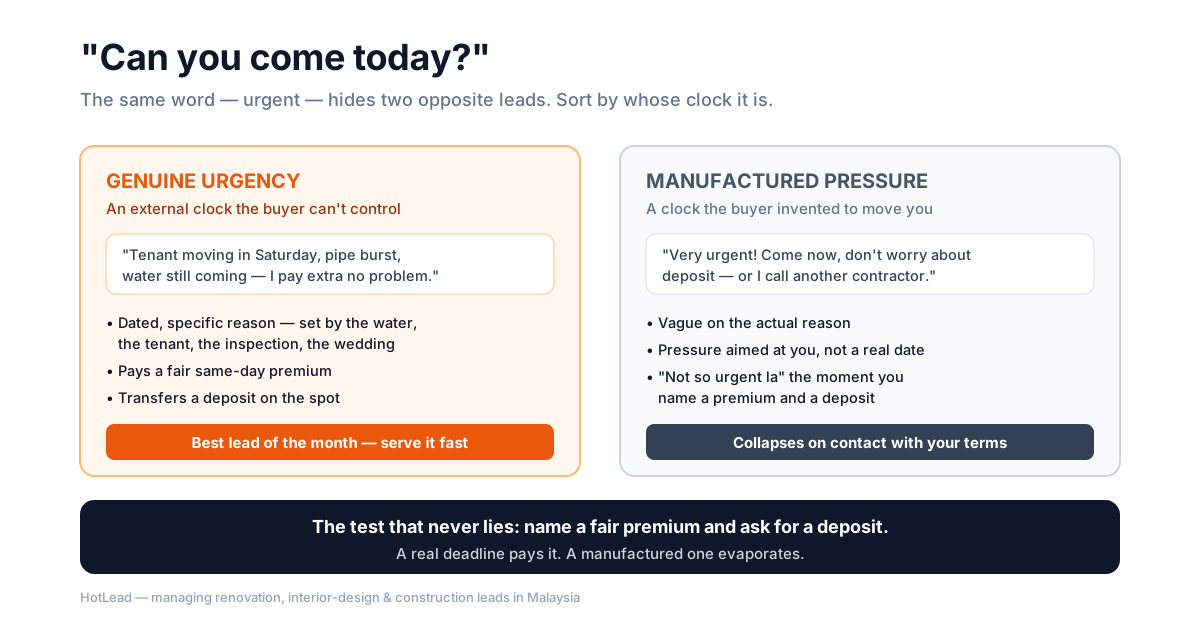
You read two things: what's driving the deadline, and what happens when you add a little friction. Genuine urgency runs on an external clock the buyer doesn't control. Manufactured urgency is a clock the buyer invented to move you — and it can't survive contact with a price and a deposit.
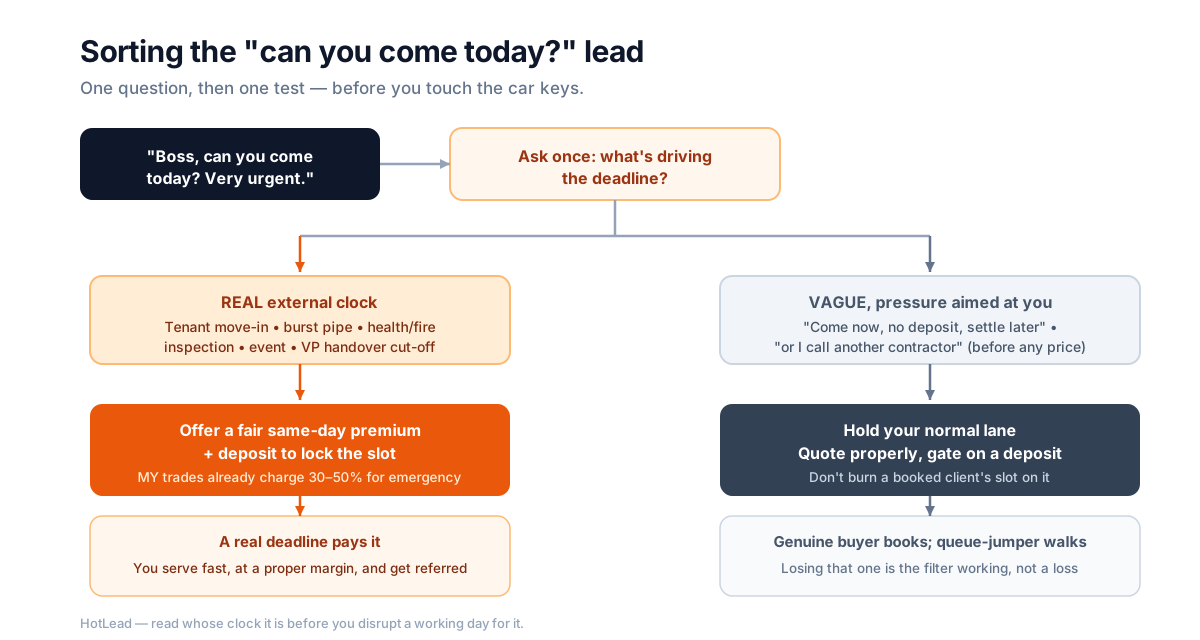
Ask one calm question before anything else: "What's making it urgent — is there a date you're working to?" The answer sorts most leads in seconds.
- Real clock, they don't control it: "Tenant signed, moving in Saturday." "Pipe burst, water still coming." "Health inspection next Tuesday, I can't open the café until the kitchen passes." "My daughter's wedding is the 30th." "VP handover, I only get the keys Friday and reno hours are restricted." These are specific, dated, and caused by something outside the buyer. A burst pipe genuinely does not wait for your calendar.
- Invented clock, aimed at you: vague on why it's urgent, but heavy on pressure directed at you — "can you come now, don't worry about deposit, we settle later", "if you can't come today I call another contractor" fired before any scope or price, "just come first la, we discuss everything later." The urgency is all about getting you to move and skip your process; there's no real external date underneath it.
The second test is the one that never lies. Introduce a fair premium and a deposit. "I can reshuffle and get someone to you today — there's a same-day call-out rate, and I'll need a deposit to lock the slot. That okay?" A real deadline survives this instantly — the landlord with the flooding bathroom says "yes, how much, I transfer now" because the flood is costing him more than your premium every hour. A manufactured deadline collapses on the spot — suddenly "aiya why so mahal, actually not so urgent la, next week also can" — which tells you the pressure was aimed at your process, not at any calendar. As the persuasion research puts it, a false sense of urgency is one of the most common manipulation tells there is (Cialdini's scarcity principle, turned on you); pressure from a stranger with no real reason behind it is a red flag, not a reason to move.
Here's the read side by side:
| Signal | Genuine urgency | Manufactured pressure |
|---|---|---|
| The clock | external, dated — tenant, burst pipe, inspection, event | vague — "very urgent" with no real date behind it |
| Who set it | a landlord, an insurer, a wedding, the water | the buyer, to move you |
| The pressure points at | the problem — "water still coming" | you — "come now, or I call another contractor" |
| Willing to pay a premium | yes — speed is worth it to them | balks the moment money is mentioned |
| Willing to deposit to lock it | yes, transfers on the spot | "settle later la, just come first" |
| What wins the job | responding first, fast, at a fair premium | nothing — it was never a real booking |
| Cost of getting it wrong | you lose a great, well-paid, decided job | you burn a booked client's slot on a browser |
What's the right way to serve real urgency?
With a premium and a deposit-first gate — not a reflexive drop-everything. That single change does three jobs at once: it pays you properly for the disruption, it protects your booked clients, and it filters out the manufactured cases automatically, because the buyers who were only pressuring you drop off the moment terms appear.
Start by knowing that an urgency premium is already normal in the Malaysian trades — you're not inventing anything, you're catching up to how emergency plumbers and electricians already price. One KL emergency electrician lists roughly RM200 for a standard call-out, RM250 after hours, and RM300 on public holidays (Prime Electrician); others quote out-of-hours surcharges of RM50–150 and a 20% public-holiday loading on labour (Fastlink Fix), with emergency rates commonly running 30–50% above standard and a plain call-out fee of RM30–100 for the trip and inspection (Listing.my). A same-day reno interruption reshuffles your crew and bumps your booked jobs — pricing that is not gouging, it's costing the disruption honestly.
Then run the same discipline you'd run on any lead, just faster:
- Acknowledge instantly, promise nothing yet. A same-day lead that sits unanswered for an hour is already gone to whoever replied first — real urgency is the textbook speed-to-lead case. But "I've got your message, let me check the crew" is not "I'll be there at 3." Buy yourself the ninety seconds to read the clock.
- Ask what's driving the date — once. One question sorts most leads. If the answer is a real external clock, move. If it's vague pressure, slow down to your normal pace without guilt.
- Quote a premium out loud and gate on a deposit. "Same-day squeeze-in is [rate], deposit to lock the slot." This is your filter and your fair pay in one sentence. A deposit before you move is standard practice, not an insult — and it's the single cleanest test of whether the urgency is real.
- Protect the booked client. If serving the emergency means moving someone already on your calendar, tell that client honestly and reschedule with them — don't silently push them. Your reliable clients are the ones you can least afford to quietly punish.
- Log it and follow up either way. A genuine "not so urgent after all" is still a lead — park it on a real follow-up date rather than deleting it. Around 80% of sales need five or more follow-ups and 44% of firms quit after one (Invesp).
What about the "I'll call another contractor" line?
Treat it as information, not a threat — because it points both ways. From the flooding-bathroom landlord, "if you can't come today I'll find someone else" is just a true statement: the water isn't waiting, and if you can't serve it, he genuinely should call the next firm. That's a real buyer stating a real constraint, and you either serve it on fair terms or you refer it on cleanly.
But when that line lands before any scope, price or deposit has been discussed, it's usually leverage — the buyer racing you against a competitor to move you off your process. Hold your terms calmly: offer a real slot or an honest same-day premium, and ask for the deposit to lock it. If the deadline is real, they book. If it was pressure, letting them call the next firm is often you dodging a job — the buyer who fights you on a deposit before you've started is the same buyer who'll fight every variation and hold the final payment, which is exactly the wrong-fit lead worth saying no to early. Losing that one isn't a loss. It's the filter working.
The bottom line
"Can you come today?" is not a question about your calendar — it's a question about the buyer, and the word "urgent" answers none of it. Genuine urgency runs on an external clock the buyer doesn't control, and it's one of the best leads you'll get: a decided buyer who'll pay a fair premium for speed and referral you afterward. Manufactured urgency is a clock the buyer invented to push you into an unpriced yes, and it can't survive a premium and a deposit. So stop sorting these leads by how loud they are and start sorting them by whose clock they're on — ask what's driving the date, name a fair premium, gate on a deposit, and protect the client you already booked. The real emergencies will thank you and pay you. The manufactured ones will filter themselves out. And you'll stop giving your fastest, most expensive reflex to the buyers least likely to sign.
For the whole system this sits inside — capture, read, price, and follow up — start with the complete guide to managing renovation leads in Malaysia, and see how it connects to how fast you really need to reply, the handover and festive surge, and what to do when you're fully booked.
How HotLead helps you serve real urgency without dropping everything
HotLead sits on top of your existing WhatsApp. It can't set your premium or take the deposit for you — that's your call and your bank — but it makes sure an urgent lead is caught, read, and handled on your terms instead of by reflex:
- Auto-greeting and capture on every enquiry, so the "can you come today?" message is acknowledged the moment it lands — you win the speed-to-lead race on the real emergencies without promising a slot before you've read the clock.
- One owner per lead, with custom routing, so a genuinely urgent lead can be tagged and sent straight to whoever can actually respond fast — not lost in a group chat while the crew's on site.
- Next actions and overdue follow-ups flagged, so the "actually not so urgent" lead gets parked on a real follow-up date and resurfaced later, instead of deleted or forgotten — and the booked client you rescheduled doesn't slip through the cracks.
- A funnel and per-channel view, so you can see which sources send you decided, deposit-paying urgent buyers versus which ones send queue-jumpers who evaporate at the word "deposit."
If your week keeps getting hijacked by whoever shouts "urgent" loudest, the fix isn't to stop moving fast — it's to move fast on the right ones, on your terms. See how HotLead works, or how it fits a renovation firm or an interior-design studio specifically.
Sources: InsideSales.com / Dr James Oldroyd (MIT) via the speed-to-lead literature (78% of buyers go with the first firm to respond; 5-minute rule and the ~100× drop after 24 hours); Prime Electrician Malaysia (call-out ~RM200 standard, RM250 after-hours, RM300 public holiday); Fastlink Fix — emergency service KL & Selangor (out-of-hours surcharge RM50–150, 20% public-holiday loading on labour); Listing.my — plumbing service costs in Malaysia (standard call-out RM30–100; emergency rates typically higher; regional variation); Small Business Development Corporation WA — high-pressure sales tactics (false urgency as a manipulation red flag; Cialdini's scarcity principle); Invesp — the importance of follow-ups (80% of sales need 5+ follow-ups, 44% quit after one). Deposit norms and Klang Valley visit-cost figures as cited in the renovation deposit and progressive payment terms guide, the free site-visit trap, and the complete guide to managing renovation leads in Malaysia.
Frequently asked questions
How do I tell a genuinely urgent renovation lead from a fake one?
Read what is driving the deadline and what happens when you add friction. Genuine urgency runs on an external clock the buyer does not control — a signed tenancy with a move-in date, water actively damaging the unit, a health or fire inspection, a wedding or event, a VP handover cut-off. Manufactured urgency is vague about the reason and instead pushes on you — "come now, don't worry about deposit, we settle later" — and often uses "if you can't come today I call another contractor" as leverage before any price is discussed. The cleanest test is to introduce a fair premium and a deposit. A real deadline survives that; a manufactured one evaporates, because the pressure was aimed at your process, not at a calendar.
Should I drop everything to serve an urgent renovation enquiry?
Not automatically. Dropping everything for every "urgent" lead has two hidden costs owners rarely count. First, the booked good-fit client whose slot you quietly pushed a day to squeeze in the walk-in — do that often and your reliable clients become your least-served ones. Second, jumping the queue for free with no deposit trains the market that you will, so you attract more queue-jumpers. Serve genuine urgency, but serve it on terms — a premium for the disruption and a deposit before you move, so the decision protects your schedule instead of eroding it.
Is it fair to charge more for an urgent or same-day renovation job in Malaysia?
Yes, and the trades already do it openly. Malaysian emergency electricians and plumbers commonly charge an after-hours or same-day premium — one KL provider lists roughly RM200 for a standard call-out rising to RM250 after hours and RM300 on public holidays, and out-of-hours surcharges of RM50–150 plus a 20% public-holiday loading on labour are typical, with emergency rates often 30–50% above standard. A same-day interruption reshuffles your crew and your booked jobs, so pricing it is normal, not gouging. A genuinely urgent buyer expects to pay for speed; the one who balks at any premium was usually testing whether you'd drop your process.
What if the buyer says they'll call another contractor if I don't come today?
Treat it as information, not a threat. Sometimes it is a genuinely urgent buyer stating a real constraint — a burst pipe does not wait for your calendar. But when that line arrives before any scope, price or deposit has been discussed, it is usually leverage — the buyer is trying to move you off your process by racing you against a competitor. Answer calmly and hold your terms — offer a real slot or an honest premium for a same-day squeeze-in, and ask for a deposit to lock it. If the deadline is real they will book; if it was pressure, letting them call the next firm is often you dodging a job that would have fought you on the deposit, the variations and the final payment.
How is an urgent single lead different from a busy-season or handover surge?
A surge is a known, dated wave of many leads arriving at once — a festive rush or a property handover, which you plan for in advance. Being fully booked is a capacity problem you solve by holding overflow and booking it forward. An urgent single lead is neither — it is one enquiry weaponising time pressure, and the job is to read whether that pressure is real before you disrupt a working schedule for it. The surge and overflow problems are covered separately in this series; this piece is only about the single "can you come today?" message and the judgment it demands.
Keep reading
- Did We Already Say RM68k? Using AI to Stop Quote Drift Across a Long Renovation ThreadOver a weeks-long WhatsApp thread with two or three quote revisions, a rep re-states a number that contradicts an earlier promise — and re-opening a settled price quietly invites a discount that eats a whole job's profit. So I pointed AI at the drift. It works beautifully as a flag, and dangerously as an auto-corrector.
- The Warranty as a Closing Lever: Why a Longer Guarantee Beats a Discount on a Renovation DealA quote is stalling and the buyer wants a reason to say yes. Before you drop the price, look at the other lever in your hand — a longer workmanship warranty. It is the same expected-value decision as a discount, but the math runs the opposite way — a price cut costs you thousands with certainty, while extending the defects cover costs you a couple of hundred ringgit in expectation, for arguably more trust with a scam-wary buyer. Here is the EV case for the non-price concession, the trap that turns it into a hidden liability, and which leads it actually moves.
- "Can You Just Build It, My Neighbour Also Did" — Handling the Renovation Lead That Needs Council Approval FirstSome renovation enquiries can't legally start next month, no matter how ready the buyer is — a kitchen extension, a hacked-through wall, a roofed-over air well all need the council's written approval first. Quote a fast build price to win the job and you either lose it to a "boss, can start" cowboy, or win it and inherit the stop-work order, the RM50,000 fine and a client who later can't sell the house. Here's how to spot the permit-first lead and sell the approval as protection.