

Every interior-design studio owner in the Klang Valley has this message sitting in their WhatsApp right now: "Hi, saw your work on Qanvast, very nice. Boleh bagi 3D dulu? Then I decide."
I sat with a Petaling Jaya studio owner who told me how one of these ended. A homeowner — lovely, chatty, clearly had taste — asked for a 3D of her condo living and dining before committing to anything. The studio, hungry and not wanting to lose her to the firm down the road, said yes. A designer spent the better part of three weeks on it: site measure, layout options, a photorealistic render, two rounds of revisions on the TV feature wall. The client loved it. "Perfect, exactly what I imagined." Then she went quiet.
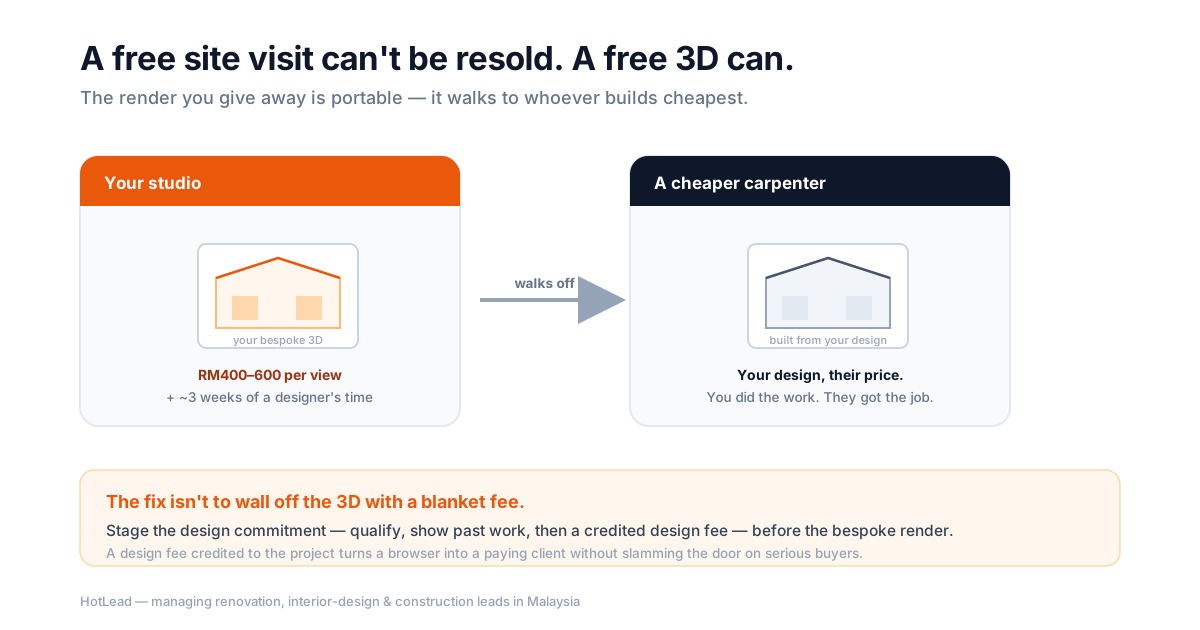
Two months later they found out she'd taken the render — their render — to her husband's uncle, a carpenter in Rawang, who built it for about 30% less. The studio didn't lose that job on price, or on design, or even on follow-up. They lost it the moment they handed a stranger their actual product for free.
This is the free-3D trap, and it's specific to interior design. A contractor gives away a site visit; a studio gives away the design itself. Let me break down why that's a worse deal than it looks, why "just charge a design fee" usually backfires here, and the staged fix that keeps you competitive without giving the design away.
What is the free-3D trap in interior design?
It's giving away your most expensive deliverable — the design itself — to a lead who has committed to nothing. A renovation contractor's free giveaway is a site visit: a measurement and a chat. An interior designer's free giveaway is the 3D render, the mood board, the layout — the actual creative product a client hires a designer for. When you produce a bespoke render for a cold "boleh bagi 3D dulu?" enquiry, you're not doing a sales call. You're doing the job, for free, for someone who hasn't said yes to anything.
The design industry has a blunt name for this: spec work — speculative work done free in the hope of getting paid. It's the practice professional design bodies like the AIGA formally advise designers against, because it "devalues the profession" and shifts all the risk onto the person doing the work. A free 3D for an unqualified lead is exactly that — spec work with a Malaysian accent.
Why is giving free 3D worse than giving a free site visit?
Because of two things a site visit doesn't have: it's your creative product, and it's portable. Both make the free 3D a far more expensive giveaway than the drive to a condo.
First, it's the product, not a sales call. A 3D render in Malaysia runs from around RM400 to RM600 per view, and a design-only package — space planning, material selection and visualisation — is commonly RM3 to RM8 per square foot. That's real money and real hours, usually your senior designer's, and a single render can take one to three weeks with a couple of revisions built in. When you give that away, you're not spending RM12 of petrol. You're spending the most expensive hours in your studio.
Second, and this is the part that stings — the design walks. A site visit can't be resold. Once you've driven to Semenyih and measured, that visit is spent; a competitor can't use it. But a 3D render is portable. A homeowner can screenshot it, WhatsApp it to a cheaper carpenter, and have your layout built at a fraction of your price. You did the creative work and someone else collected the job. This is the leak that's genuinely unique to interior design, and it's why the free-3D habit bleeds studios in a way the free site visit never quite does.
Put the two together and the "free 3D to win the enquiry" instinct looks a lot worse: you're giving away your product, to a stranger, in a form they can hand straight to whoever builds cheapest.
So should you just charge a design fee upfront?
This is where most owners get it backwards after they've been burned — and it's the same mistake reno firms make with charging for site visits. The instinct after the Rawang-carpenter story is to slam the door: "From now on, RM1,500 design fee before any 3D, full stop." It feels like justice. In a market this competitive, it usually loses you the wrong people.
Think about how a Malaysian homeowner shops an interior. They're spending RM60,000 to RM150,000 on a standard condo fit-out, so they do what anyone does with a big purchase — they shortlist. Qanvast openly shortlists a homeowner with up to five firms in one request. A serious, funded buyer comparing five studios is not going to pay five design fees to see who they like. So a hard upfront fee doesn't screen out the tyre-kicker — he was never signing anyway — it screens out the comparison-shopper who is ready to spend, and hands her to the studio next door still advertising "free 3D drawing."
Here's the honest comparison of the three ways studios handle it:
| Approach | What it filters | Your cost | Portability risk | The problem |
|---|---|---|---|---|
| Give free 3D to anyone | Nothing | Highest — full design hours on strangers | Highest — render walks to a cheaper builder | You do the job for free; some of it gets built by someone else |
| Hard design fee upfront | Everyone, including serious shortlist buyers | Lowest | Lowest | You fall out of the shortlist before you can show your taste |
| Stage the commitment (the fix) | Only the uncommitted | Design hours go only to qualified, paying clients | Low — a paying client rarely walks the work | Requires a process, not a reflex |
What does the design commitment ladder look like?
You climb from cold enquiry to bespoke render in steps, and each step earns the next — so your expensive design hours only ever land on a qualified, committed client. Never jump straight from "boleh bagi 3D dulu?" to a custom 3D.
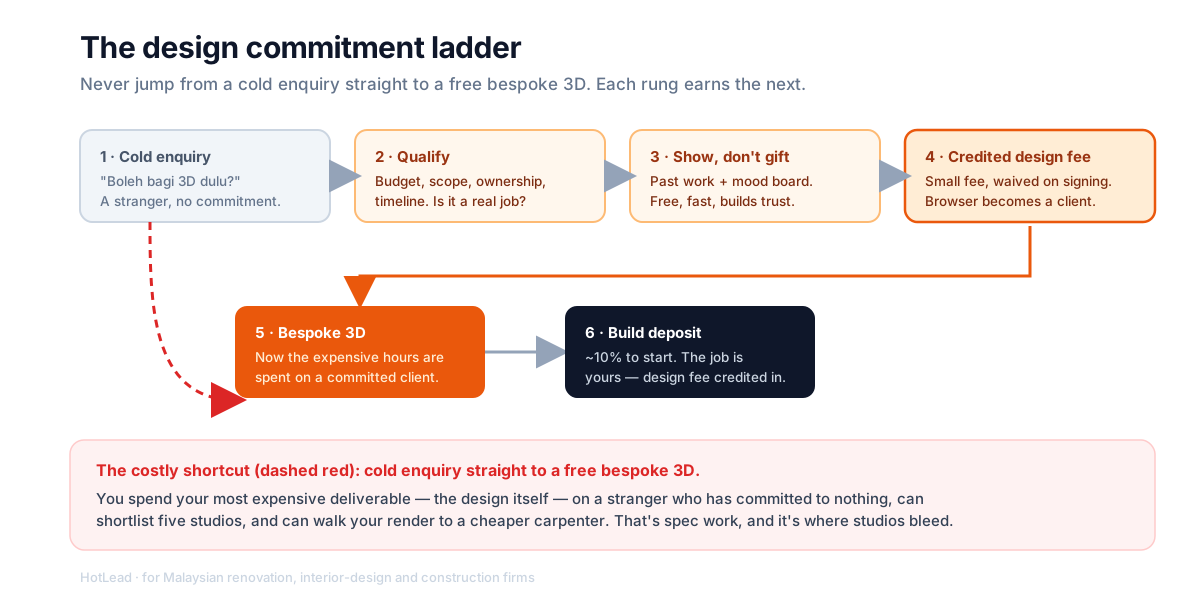
- Qualify first — warmly, fast. Before any design work, check there's a real, funded project: area and unit type, rough scope, a budget band, timeline, and whether they've collected keys. This is the same first-reply qualification that decides every downstream number — and if the enquiry arrived as a bare photo or a floor plan with no detail, that's its own image-enquiry problem to work through before you quote or design anything.
- Show, don't gift. A serious buyer wants proof of your taste, not necessarily their render on day one. Send relevant past projects, a mood board, a similar completed condo in their layout. It's free, it's fast, it costs you almost nothing to reuse — and it wins the "do I like this studio" comparison without giving away bespoke work.
- Introduce a credited design fee. Once the lead is qualified and keen, this is where a small design fee earns its keep — figures in the market start around RM400–600 a view or RM3–8 per square foot, credited back to the project when they sign the build. That's the move: it's not a wall, it's a commitment. It turns a browser into a paying client, and a paying client is far harder to ghost — and far less likely to walk your render to a carpenter, because they've bought it as part of a relationship with you.
- Now produce the bespoke 3D. With a qualified, paying, committed client, your senior designer's three weeks are an investment, not a gift.
- Build deposit. Commonly around 10% to start, with the rest staged against milestones. The design fee folds in, so the client feels no penalty for having committed early.
When does giving a free 3D actually make sense?
In a few narrow cases — the same logic as when charging for a site visit is fine, just inverted. Free 3D is a deliberate loss-leader, not a default:
- You're a package or template firm where a render is cheap and fast. If your 3D comes off a library of standard condo layouts and takes an afternoon, not three weeks, the economics are completely different — a free render is genuine marketing, not spec work.
- The lead is already qualified and hot, and the render is your closing move. For a buyer who's engaged, funded and comparing you against one other studio, a free render can be the thing that wins the deposit. That's a closing tool aimed at a real opportunity — not a giveaway to a cold stranger.
- You have more demand than capacity and want a top-of-shortlist edge. An established studio turning work away can afford to give a free render as a differentiator. A hungry studio giving it to everyone is just bleeding.
The test is simple: is this free 3D aimed at a qualified, real opportunity as a deliberate move — or are you reflexively handing your product to anyone who asks? The first is marketing. The second is the trap.
The bottom line
The free 3D isn't your problem — the unearned 3D is. Give your product away to every "boleh bagi 3D dulu?" and you're doing spec work for strangers who can walk your design straight to a cheaper builder. But slam the door with a blanket design fee and you drop out of the five-studio shortlist before a serious buyer ever sees your taste. Neither reflex works. Climb the ladder instead: qualify fast and warm, show past work for free, then charge a small design fee that's credited on signing — so your most expensive hours only ever land on a committed client. Speed belongs on the reply. Patience belongs on the render.
For the whole system this sits inside — capture, qualify, follow up, and measure — start with the complete guide to managing renovation leads in Malaysia, and see how it connects to why the quote-to-deposit drop-off happens in ID, the free site-visit trap, and turning Qanvast and Atap enquiries into booked consultations.
How HotLead helps you protect your design hours
HotLead can't produce your 3D — the design is yours. What it does is make sure the enquiry gets qualified and owned before a designer pours a week into a render, so the ladder becomes something the system enforces instead of something you have to remember on a busy day:
- Auto-greeting and capture on every enquiry, so a "boleh bagi 3D dulu?" that lands while you're on-site is caught and acknowledged instantly — you stay in the shortlist without dropping everything to reply.
- Qualify on the first reply, so the budget, scope, unit type and timeline that decide whether a lead is design-worthy get asked up front — not discovered after the render is done.
- One owner per lead with a next action and overdue follow-ups flagged, so qualified leads get chased through the design-fee conversation and nothing goes quiet in the gap.
- A funnel view with per-channel ROI, so you can see how many Qanvast or Atap enquiries turn into paid design commitments — and stop measuring a channel by free-3D requests it never converts.
If your studio keeps handing out renders and watching some of them get built by someone else, the leak is the unearned 3D — and that's the leak a qualify-first, one-owner system closes. See how HotLead works, or read how it fits an interior-design studio or a renovation firm specifically.
Sources: AIGA — Position on Spec Work (speculative/unpaid design work and why the profession advises against it); IDEE 3D Drawing & Design Malaysia (3D render pricing ~RM400–600 per view, incl. site visit); Spaciz Design — Interior design cost in Malaysia and FindContractor.my — Interior design cost in Malaysia 2026 (RM3–8 psf design fee, design fee credited/waived on signing, ~10% deposit norm); Recommend.my — The interior design process in Malaysia (render timing 1–3 weeks and revisions); Houz — Condo interior design & renovation cost Malaysia 2026 (RM60k–150k standard condo, RM80–450+ psf build). Shortlisting norm (up to 5 firms) as cited in turning Qanvast and Atap enquiries into booked consultations.
Frequently asked questions
Should an interior design studio give free 3D renders in Malaysia?
Not to a cold, unqualified enquiry. A bespoke 3D is your actual product — market rates run from around RM400 to RM600 per view, or RM3 to RM8 per square foot for a design package, and a render takes one to three weeks of a designer's time. Giving that away to a stranger who has committed to nothing is spec work, and it's easy to walk to a cheaper builder. That said, a blanket refusal or a hard upfront fee isn't the answer either, because serious buyers shortlist several studios and won't pay several fees. The workable middle is a ladder — qualify first, show past work and a mood board instead of a custom render, then charge a small design fee that's credited to the project when they sign.
What is a design fee, and should it be credited to the project?
A design fee is a small charge for the design work itself — space planning, material selection and the 3D visualisation — separate from the build. In Malaysia it commonly runs around RM3 to RM8 per square foot, or a per-view price for renders. Crediting it to the project (so it's effectively waived if the client signs the build with you) is the key move — it turns a free browser into a paying client without feeling like a wall. Many Malaysian firms already do this, and it does two jobs at once — it filters out people who were never going to commit, and it locks in the ones who are.
How is giving free 3D different from giving a free site visit?
Two ways, and both make free 3D more dangerous. First, a site visit is a measurement and a sales conversation; a 3D is your creative product — the actual thing a client is paying a designer for. Second, a render is portable. A homeowner can take your beautiful 3D to a cheaper carpenter or contractor and have it built, so you did the expensive creative work and a competitor collected the job. A free site visit can't be resold like that. So while both should be earned before you give them, the 3D needs a real commitment behind it, not just a confirmed appointment.
Won't charging for 3D make me lose leads to studios that give it free?
Some, yes — which is exactly why the answer isn't a hard, blanket fee. It's a ladder. You stay competitive at the top of the funnel by replying fast, qualifying warmly, and showing past work and a mood board for free, so a serious buyer sees your taste and responsiveness before any money is discussed. The design fee only appears once there's a real, qualified project, and it's credited back on signing. That keeps you in the shortlist against the free-3D studios while making sure your most expensive hours only ever go to someone who's committed.
How do I move a "boleh bagi 3D dulu?" enquiry forward without either giving free work or scaring them off?
Answer fast and warm, then climb the ladder instead of jumping to the render. Reply quickly, ask the qualifying questions (area, unit type, rough budget, scope, timeline), and offer something free that isn't spec work — relevant past projects, a mood board, a ballpark range. When the client is qualified and keen, introduce a small design fee that's credited to the build. Most serious buyers accept it once they've seen you're responsive and good; the ones who vanish at the mention of any fee were usually the ones who'd have ghosted after the free 3D anyway.
Keep reading
- The 'Quick Question Ah?' Lead: When a Buyer Uses You as a Free Second Opinion for Someone Else's RenoSome of your busiest WhatsApp threads are with buyers who already have a builder — a cousin, a part-time reno friend — and are messaging you only to sanity-check his price, his tile, his scope. Every question you answer in full is a free consult that de-risks the other guy's job. Here's how to spot the sanity-check lead, why answering everything loses you the work, and how to convert a real doubt without becoming the unpaid QA department.
- Did We Already Say RM68k? Using AI to Stop Quote Drift Across a Long Renovation ThreadOver a weeks-long WhatsApp thread with two or three quote revisions, a rep re-states a number that contradicts an earlier promise — and re-opening a settled price quietly invites a discount that eats a whole job's profit. So I pointed AI at the drift. It works beautifully as a flag, and dangerously as an auto-corrector.
- The Warranty as a Closing Lever: Why a Longer Guarantee Beats a Discount on a Renovation DealA quote is stalling and the buyer wants a reason to say yes. Before you drop the price, look at the other lever in your hand — a longer workmanship warranty. It is the same expected-value decision as a discount, but the math runs the opposite way — a price cut costs you thousands with certainty, while extending the defects cover costs you a couple of hundred ringgit in expectation, for arguably more trust with a scam-wary buyer. Here is the EV case for the non-price concession, the trap that turns it into a hidden liability, and which leads it actually moves.