

Watch a renovation-firm owner on a slow afternoon and you'll often catch the same reflex: refreshing the online banking app, or scrolling the month's invoices again. It feels like staying on top of the business. It's actually the single least useful thing they could be looking at.
The number you check most is usually the one you can do least about. Revenue and the bank balance are lagging numbers — results that have already been decided by work you did weeks ago. The numbers you can still change today — who hasn't been replied to, which follow-ups are overdue, how fast this morning's enquiries got answered — are the ones most owners never systematically look at. Fixing that isn't about tracking more; it's about reading each number at the right frequency.
Why is the number you check most the one you can do least about?
Because the numbers that feel most important are almost all lagging ones. In the language of Franklin Covey's 4 Disciplines of Execution, a lag measure — revenue, profit, jobs won — tracks the goal, but by the time you see it move, the performance that drove it has already passed. A lead measure tracks the activities that predict the result and that your team can directly influence. Those two qualities, predictive and influenceable, are what make a leading number worth your attention today.
Renovation makes the gap especially wide because the sale is slow. A home-services sale runs on roughly a 60-day cycle, and full renovations run longer still — clients compare quotes, sort financing, align the family on scope. So this month's revenue is mostly an echo of quotes you sent and leads you handled a month or two ago.
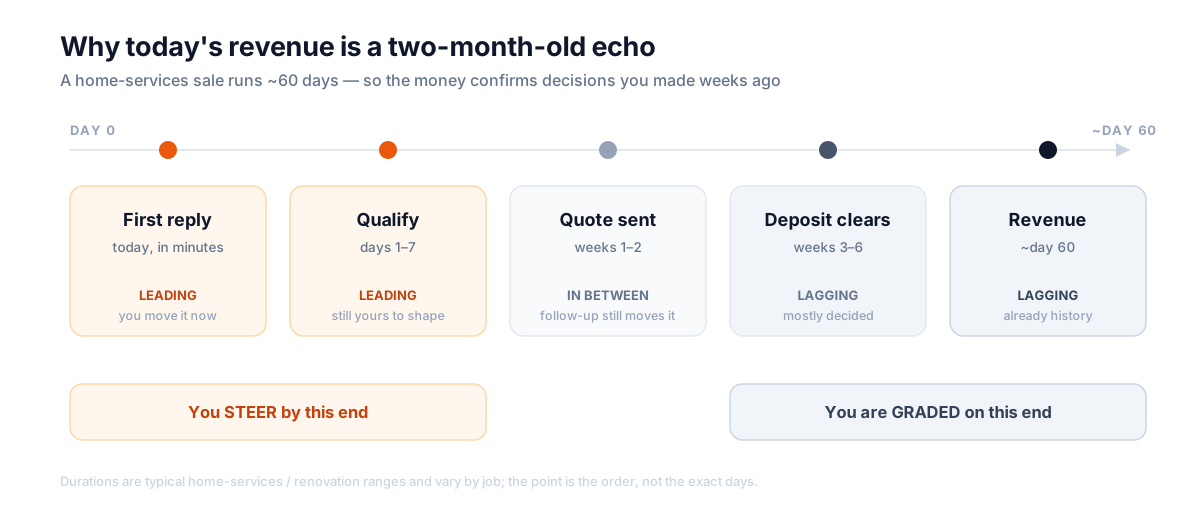
As the marketing analysts at WebFX put it, you steer by the leading indicator and you're graded on the lagging one. Most owners run that backwards — they stare at the number they're graded on and ignore the ones they could steer with. That's why they can feel genuinely busy "watching the numbers" every day and yet never change them.
What actually decides the right review frequency?
Two tests, applied to every number before it earns a slot in your calendar:
- How fast can it move? A number that can change in an hour (unanswered enquiries) needs a far more frequent look than one that barely moves inside a month (margin).
- Can you act on it this week? If the honest answer is no, a daily check just manufactures anxiety. You can't un-send last month's slow quotes by looking at the revenue they produced.
Put those together and a clean rule falls out: check a number as often as you can act on it — not as often as it worries you. The faster a number moves and the more you can do about it, the more often it deserves a glance. Revenue scores low on both, so it's reviewed last, not first.
What should you check daily (in five minutes)?
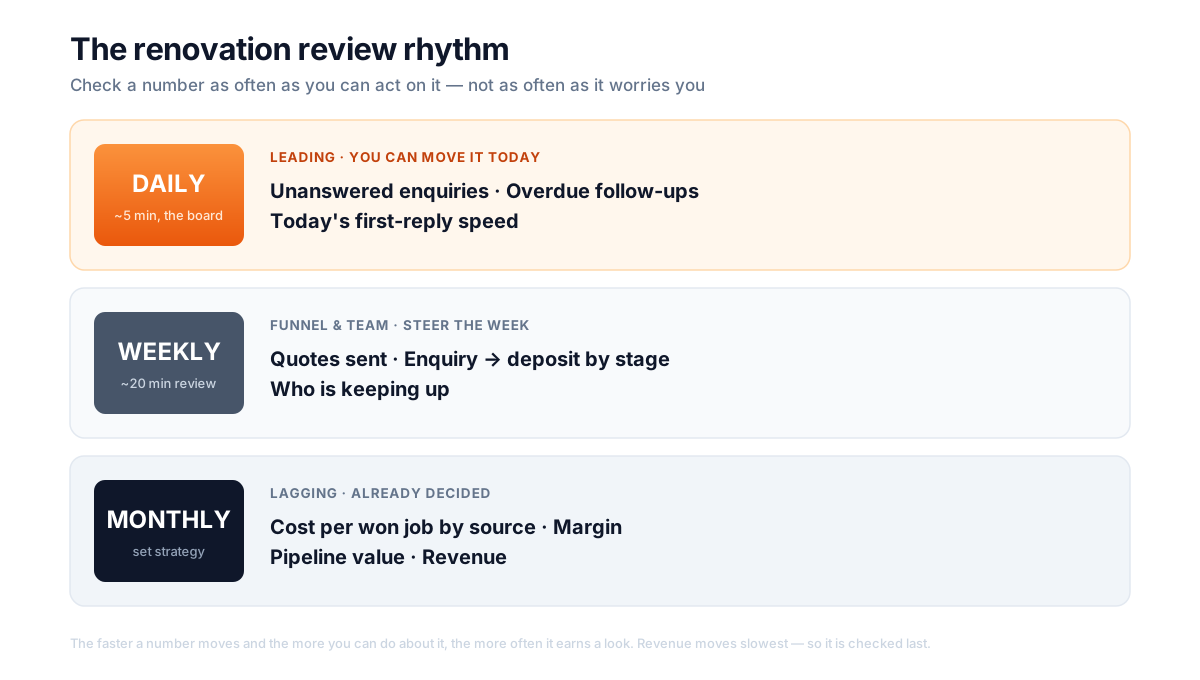
Only the numbers you can still act on before the day ends. There are three, and together they're a quick scan of a live board — not a report you build:
- Unanswered enquiries right now. Every new WhatsApp message with no owner and no reply. This is your speed leak in real time, and the firm that answers first wins most of the deals — replying within five minutes lifts your odds of connecting by roughly 100× versus waiting half an hour.
- Overdue follow-ups. Quotes and warm leads whose next contact has slipped past its date. These are jobs mid-decision, not lost — but only if someone is reminded to pick them back up.
- Today's first-reply speed. Did this morning's leads get a human reply in minutes, or are they still sitting?
All three are leading indicators: fast-moving, fully in your control, and decisive today. None of them is revenue, and none of them takes longer than a coffee to read.
What should you check weekly (in about 20 minutes)?
The funnel and the team — numbers that need a week of data to mean anything but still let you steer the next one. This is the renovation version of the 4DX weekly accountability session: short, a set agenda, no longer than 20 to 30 minutes, focused on the handful of numbers you can move.
- Quotes sent this week. Your output number — if it drops, the leak is upstream (speed, qualifying, site visits), not at the price.
- Enquiry-to-deposit by stage. Where in the six-stage funnel leads are dropping — reply, qualify, consult, quote, follow-up, close.
- Who's keeping up. A simple per-person view of leads handled and dropped, so you can see which salesperson is quietly letting leads go cold before it becomes a monthly surprise.
What should you check monthly (and not more often)?
The lagging money numbers — the ones that set budget and strategy, not this week's actions. They move slowly and reward a calm, zoomed-out look:
- Cost per won job, by source. Not cost per lead — cost per won job, because the cheap lead that never closes is your most expensive channel. This decides where next month's marketing ringgit goes.
- Margin and jobs won. The scoreboard you're ultimately graded on — reviewed to confirm the leading numbers are working, not to react to a single slow week.
- Pipeline value. What the live pipeline is realistically worth right now, so you can see a dry month coming while there's still time to fill it.
The renovation review cadence, in one table
| Number | Type | Check | Why that frequency | The decision it triggers |
|---|---|---|---|---|
| Unanswered enquiries | Leading | Daily | Moves hourly; fully in your control | Reply now, before a competitor does |
| Overdue follow-ups | Leading | Daily | A one-day slip loses a mid-decision job | Pick the lead back up today |
| First-reply speed | Leading | Daily | The leak before price is ever discussed | Fix the handoff that's slowing replies |
| Quotes sent | Leading | Weekly | Needs a week to read; still steerable | Find the upstream leak if it dips |
| Conversion by stage | Lead/lag | Weekly | Shows where the funnel leaks | Fix the leakiest stage next |
| Who's keeping up | Lead/lag | Weekly | Catches a dropping rep early | Coach or rebalance the load |
| Cost per won job | Lagging | Monthly | Slow-moving; sets budget | Shift spend to the channel that pays |
| Margin & jobs won | Lagging | Monthly | Already decided; the scoreboard | Confirm the leading numbers are working |
| Pipeline value | Lagging | Monthly | A forecast, not a daily lever | Fill a dry month before it arrives |
The two cadence mistakes that cost renovation firms jobs
Checking the lagging numbers too often. Staring at daily revenue on a 60-day sales cycle means reacting to noise — one quiet week triggers a panic discount or a rushed boosted post, both expensive answers to a problem that was normal variation. You over-steer a number you can't actually move today.
Checking the leading numbers too rarely — or never. This is the quieter, costlier mistake, because the damage is invisible. An unanswered enquiry doesn't show up as a loss anywhere; it just silently never becomes a job.
Why "in memory and WhatsApp" quietly breaks every cadence
Here's the honest catch that no cadence survives without a fix. A documented pattern in Malaysian SME research is that owners of practically all small businesses store the records in their heads — sales, follow-ups, costs, all held in memory rather than written down (HRMARS, on financial-management practices among Malaysian SMEs). Layer on that 90.7% of Malaysian users are on WhatsApp, where most reno enquiries actually land, and the raw numbers you'd want to review are scattered across dozens of chat threads and one busy owner's recollection.
That's why a daily board or a weekly review so often starts well and dies by the second busy month: it depends on someone reconstructing the week from WhatsApp history and memory, which is exactly what collapses when the firm is slammed — precisely when the numbers matter most. Running on feel isn't a discipline problem; it's a data-access problem.
How HotLead fits in
HotLead is built so the leading numbers in this cadence read themselves, for Malaysian renovation, interior-design and construction firms, on top of the WhatsApp you already use. It:
- Captures every enquiry with one clear owner and timestamps the first reply, so your daily board — unanswered enquiries, overdue follow-ups, today's speed — is live, not reconstructed from memory.
- Shows the funnel and per-channel ROI, so your weekly and monthly numbers (stage conversion, cost per won job by source, pipeline value) are read off a screen instead of pieced together from chat history.
- Keeps the next follow-up in front of your team with overdue nudges, and surfaces team performance so "who's keeping up" is a glance, not a guess.
Start with the complete guide to managing renovation leads in Malaysia, see which four numbers are worth tracking in the first place, or read the renovation lead playbook.
Sources: Franklin Covey, The 4 Disciplines of Execution — lead vs lag measures (predictive and influenceable), and Discipline 4's weekly cadence of accountability / WIG session (20–30 minutes); WebFX, "Leading vs. Lagging Indicators" (you steer by the leading indicator, you're graded on the lagging one); WebFX home-services benchmarks on sales-cycle length (60 days); MIT / Dr. James Oldroyd and InsideSales on the five-minute response-time advantage (100× odds of qualifying); DataReportal / Digital Malaysia on WhatsApp reach (90.7% of users); HRMARS, "Financial Management Practices and Challenges for SMEs in Malaysia" (owners store records in memory; weak record-keeping). House figures (sales-cycle length, response-time odds, conversion bands) are used for consistency across this series and labelled as typical, not firm-specific.
Frequently asked questions
How often should a small business owner review their numbers?
Match the frequency to the number, not your anxiety. Leading operational numbers you can influence today — unanswered enquiries, overdue follow-ups, first-reply speed — deserve a daily glance of a few minutes. The funnel and team belong in a short weekly review of about 20 minutes. The lagging money numbers like revenue, margin and cost per won job are monthly, because they move slowly and you can't change this month's figure by staring at it. Checking a slow number daily just adds noise and panic.
What numbers should a renovation firm look at every day?
Only the ones you can still act on before the day ends. In practice that's three — how many enquiries are still unanswered right now, how many follow-ups are overdue, and how fast you replied to today's new leads. All three are leading indicators, all three decide whether a winnable job is saved or lost today, and none of them take more than a few minutes to scan on a live board. Revenue and total lead count are not daily numbers.
Why shouldn't I check revenue every day?
Because revenue is a lagging indicator you can't move today. A home-services sale runs on roughly a 60-day cycle, so this month's revenue mostly reflects quotes you sent and leads you handled weeks ago. Watching it daily is like driving while staring at the rear-view mirror — it tells you where you've been, not what to do next, and it tends to trigger over-steering (a panic discount, a rushed ad spend) in response to normal week-to-week swings. Review it monthly, and spend your daily attention on the leading numbers that still decide it.
What's the difference between a leading and a lagging number?
A leading number moves before the result and you can influence it directly — first-reply speed, follow-ups done, quotes sent. A lagging number moves after and only records what already happened — revenue, margin, jobs won. The practical rule from execution research is that you steer by the leading numbers and you're graded on the lagging ones. Most owners do the opposite, which is why they feel busy watching numbers but never seem to change them.
Do I need software to keep a review rhythm?
Not to start, but it's what makes the rhythm survive a busy month. The honest problem in most Malaysian reno firms is that the raw numbers live in a shared WhatsApp thread and the owner's head, so a daily board or a weekly review depends on someone reconstructing the week from chat history — which is exactly what collapses when work gets busy, precisely when the numbers matter most. A lightweight system captures the leading numbers automatically (timestamps, overdue flags, a funnel by source) so the rhythm runs even when you're on site.
Keep reading
- The Lead Who Can't Say Yes: Selling a Renovation When the Decider Isn't in the ChatThe person messaging you about the renovation often isn't the one who signs off the job — it's a wife gathering quotes while the husband holds the budget veto, an adult child sourcing for aging parents, one sibling of a jointly-owned unit. So you pour your whole pitch, quote and follow-up into someone who can't actually say yes, and the deal dies in a family discussion you were never invited to. Here's how to spot the messenger early and get the real decider into the room — without insulting the one who chose you.
- "Can Discount Ah?" Can AI Spot a Price-Shopping Renovation Lead — and Should It Decide the Next Move?A Puchong contractor gets "another firm quoted me RM55k, can match or not?" at 10pm and does what a tired owner does — he knocks RM6k off to not lose it. He's trained that buyer, and the ten after her, to push. So the 2026 reflex is to ask AI to read the thread, flag the price-shoppers, and either auto-discount to win them or bin them as tyre-kickers. I built it. It mislabels your best buyer as a time-waster and your margin as negotiable — because the signal is in the chat but the right move never is. Here's the build that earns its keep, and why "can discount ah?" is the start of a conversation, not a verdict.
- What a Referred Lead Is Actually Worth — and Why Your Best Ringgit Protects ItA referral isn't just a "free" lead — it wins on cost, close rate and lifetime value at the same time, and those three advantages multiply. Here's what a referred renovation lead is really worth against a paid one, why owners under-fund their single best channel, and why the highest-return marketing ringgit protects the referral engine instead of buying more cold strangers.