

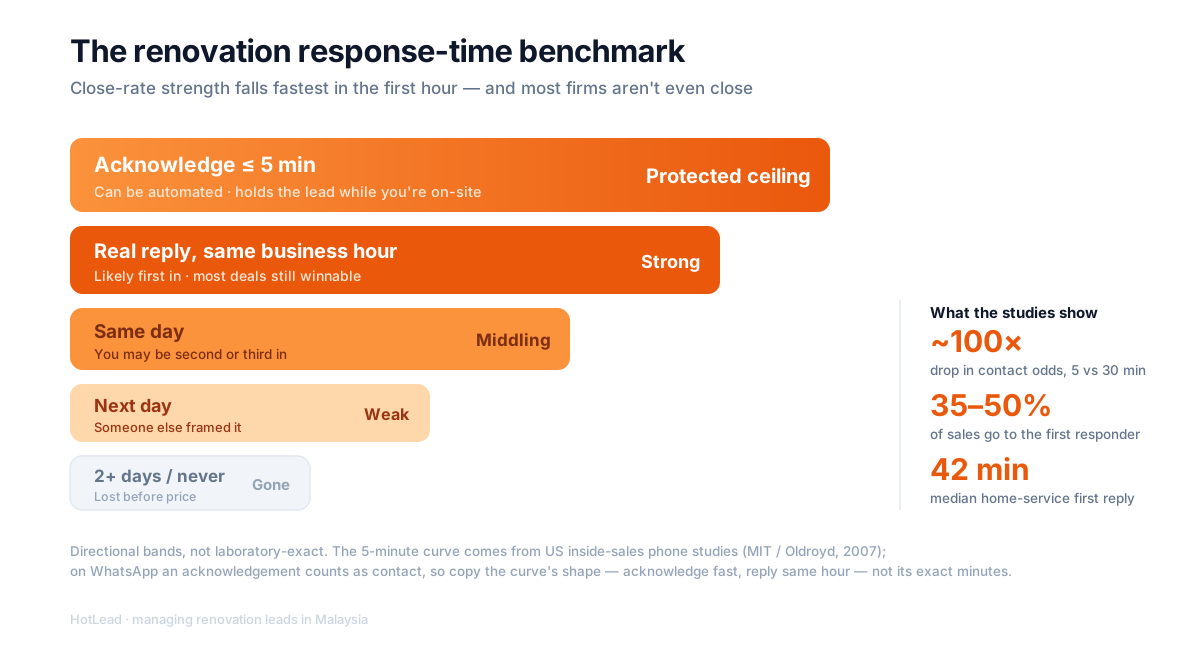
Here is the most uncomfortable number in renovation sales: the odds of even contacting a lead fall by roughly 100× between replying in 5 minutes and replying in 30, and by more than 10× inside the first hour (Dr. James Oldroyd's 2007 MIT Lead Response Management study). Response time and close rate are not loosely correlated — early on, they're nearly the same number.
But the popular version of this — "reply in 5 minutes or you've lost the deal" — was measured on US inside-sales teams cold-phoning online leads. That's a different sales motion to a Malaysian homeowner messaging your firm on WhatsApp about a RM80,000 kitchen. This article is the benchmark translated for renovation: what the data actually says, where the close-rate curve bites hardest, and the realistic response-time ladder a busy reno firm should hold itself to.
What does the data actually say about response time and close rate?
The relationship is real, large, and front-loaded — the steepest losses happen in the first few minutes and the first hour, then the curve flattens. The headline findings, with their real sources:
- The first hour is the cliff. Oldroyd's MIT study (over 100,000 call attempts, six companies, three years) found the odds of contacting a lead drop about 100× from a 5-minute to a 30-minute reply, and over 10× within the first hour. Qualifying odds fall about 21× over the same 5-vs-30-minute gap.
- First responder takes the lion's share. The same body of research found 35–50% of sales go to the vendor that responds first, and in competitive markets that rises to roughly 78%. Note the word competitive — a homeowner who pinged three firms off a Qanvast shortlist is the definition of a competitive market.
- The field is slow, which is your opening. A Harvard Business Review audit of 2,241 US firms found an average first response of about 42 hours, with 23% never responding at all. For home services specifically, recent benchmarks put the median first reply near 42 minutes, with averages stretching to several hours.
Read those together and the strategy writes itself. The curve is brutal at the start, and most of your competitors are nowhere near the start. You don't need to be perfect — you need to be early, in a field that mostly isn't.
Is the famous 5-minute rule actually right for renovation?
The shape is right; the literal minutes are borrowed from the wrong sales motion. The 5-minute / 100× number comes from inside-sales reps phoning web-form leads, where "contact" means catching someone live on a call before they go cold. A renovation enquiry is different in three ways that matter:
- The channel is asynchronous. On WhatsApp you don't need to catch the homeowner live — a message lands and waits. So the punishing "they didn't pick up" decay that drives the phone studies is softer. An instant acknowledgement already holds the lead.
- The ticket is high and the decision is slow. Nobody signs an RM80k renovation in the first five minutes. The full sales cycle for home services averages around 60 days, and renovations often run longer. The first reply doesn't close the deal — it buys you a seat at the table.
- The buyer is comparing. They messaged several firms. The one who replies first frames the conversation, sets the questions, and books the site visit before the others have looked at their phone.
So the honest renovation reading is: the first five minutes decide whether you're in the running; the first day decides whether you stay in it. Speed gets you onto the shortlist. It does not, by itself, win the job — that's follow-up depth's job.
The renovation response-time benchmark: a ladder, not a single number
Because acknowledgement and a full reply are two different acts, the benchmark is a ladder. Each rung maps to a rough close-rate band — directional, not laboratory-exact, blending the studies above with home-service field data.
| First-response time | What it signals to the buyer | Rough close-rate strength |
|---|---|---|
| Acknowledge < 5 min (can be automated) | "This firm is on it." Holds the lead while you're on-site | The protected ceiling — you keep the first-responder edge |
| Real human reply, same business hour | Attentive and professional; you're likely first | Strong — most deals are still winnable here |
| Same day | Acceptable, but you may be second or third in | Middling — you're now competing, not leading |
| Next day | Looks slow; the buyer has probably engaged others | Weak — you're chasing a conversation someone else framed |
| 2+ days / never | Effectively lost before price is discussed | The 23%-never-respond zone — most of this is gone |
Two field numbers anchor why the top of the ladder pays. One home-service dataset reports firms replying within 2 minutes booked about 62% of inbound leads against roughly 28% at a 42-minute reply; another found text replies under 60 seconds booked appointments at ~73% versus about 4% after 30 minutes. Treat those as appointment/booking rates from specific operators, not your deposit-conversion — but the direction is unmistakable, and it's the same direction as the MIT curve.
Why the close-rate leak survives even in fast firms
Most reno firms aren't slow because they don't care — they're slow because of structure, and structure beats good intentions every busy season. The three usual causes:
- The shared number with no owner. The enquiry lands in a number five people watch, so everyone assumes someone else has it. That diffusion of responsibility is how a lead sits unread for a day inside a "responsive" team.
- The on-site reality. Your best closer is up a ladder in a half-demolished condo. The five-minute window passes not because nobody would reply, but because the right person physically can't.
- The after-hours gap. Ads run at night; enquiries arrive at 11pm and get buried under 40 other chats by morning.
None of these is a "try harder" problem. They're all the same structural gap: no system decides, instantly, who owns this lead and acknowledges it. Which is exactly why the fix is to separate the two acts on the ladder — automate the acknowledgement and the assignment, and let the human reply follow when they're off the ladder.
This is also why your median first-reply time is the number to track, not the average — one salesperson on leave skews an average into nonsense, while the median tells you what a typical lead actually experiences.
How do you actually hit the top of the ladder?
You don't glue yourself to your phone. You build the ladder into the system:
- Auto-acknowledge in seconds. A one-line "Hi, thanks for reaching out to [firm] — I'll send details shortly" holds the lead the moment it lands, day or night. This is the rung that protects your first-responder edge while the team is on-site.
- Auto-assign one owner instantly. Not "whoever's free" — a rule by area, project type, or round-robin, so a named person is responsible and nobody double-replies. Malaysia's WhatsApp reality makes this realistic: around 90% of internet users are on WhatsApp and 98% of messages are opened within 3 minutes, so the channel was never the bottleneck — the ownership gap was.
- Reply properly the same business hour. The real questions, availability, a rough next step. The acknowledgement bought you the time to do this well instead of fast-and-sloppy.
- Schedule the next touch before you close the chat. The first reply gets you onto the shortlist; the planned follow-up keeps you there across the 60-day decision. A quote that goes quiet for a week hasn't been rejected — it's been forgotten, by you.
How HotLead fits in
HotLead is built to hold the top of that ladder for Malaysian renovation, interior-design and construction firms, on top of the WhatsApp you already use. It captures every enquiry and auto-acknowledges it so nothing sits unseen, assigns one clear owner instantly by round-robin, manual or custom rule so the first-responder edge is never lost in a group chat, and timestamps the first reply so your median response time becomes a number you can see and manage rather than guess at. Then it keeps the next follow-up in front of the team so quotes don't go quiet, and surfaces team performance so you can see who's keeping up.
Start with the complete guide to managing renovation leads in Malaysia, see the renovation lead playbook, or go deeper on the argument for speed in how fast you should reply to a renovation lead and the six-stage funnel these numbers measure.
Sources: MIT / Dr. James Oldroyd, Lead Response Management Study (2007, with InsideSales.com — 100,000+ call attempts; 100× drop in contact odds 5 vs 30 min, ~21× qualify, >10× decay in the first hour, 35–50% first-responder win rate, ~78% in competitive markets); Harvard Business Review, "The Short Life of Online Sales Leads" (2,241-company audit; ~42-hour average first response, 23% never respond); home-service lead-response benchmarks 2025–2026 (median first reply ~42 minutes; booking-rate gaps of ~62% at 2 min vs ~28% at 42 min, and ~73% under 60s vs ~4% after 30 min — operator datasets, appointment/booking rates); WebFX on home-services sales-cycle length (60 days); DataReportal on WhatsApp usage in Malaysia (~90% of internet users); WhatsApp message open-rate data (98% opened within 3 minutes); Qanvast Malaysia (homeowner shortlisting behaviour).
Frequently asked questions
What is a good lead response time for a renovation business?
Acknowledge every enquiry within 5 minutes and have a real human reply within the same business hour. On WhatsApp the acknowledgement can be near-instant, so the practical bar is higher than for email or phone leads. The benchmark to beat is low — the median first response across home-service firms is around 42 minutes, and many take hours or never reply at all — so same-business-hour already puts you ahead of most competitors.
How does response time affect close rate?
Sharply, and most steeply at the very start. The MIT / Oldroyd study found the odds of contacting a lead drop about 100× between a 5-minute and a 30-minute reply, and over 10× within the first hour. The first firm to respond wins roughly 35–50% of deals, and up to about 78% in competitive markets. After the first hour the curve flattens, but the renovation leak then shifts to the follow-up — quotes that go quiet for days.
Is the 5-minute rule real, or marketing?
The underlying data is real but often misapplied. The 100× and 5-minute figures come from Dr. James Oldroyd's 2007 MIT Lead Response Management study of over 100,000 call attempts by US inside-sales teams phoning online leads. That's a different sales motion to a homeowner messaging a renovation firm on WhatsApp. The shape of the finding — faster is dramatically better, and the first hour matters most — holds; treating "5 minutes or you've lost" as a literal law for a high-ticket reno job does not.
What is the average lead response time, and why is it so slow?
A Harvard Business Review audit of 2,241 US companies found an average first-response time of about 42 hours, with 23% never responding at all. For home services specifically, more recent benchmarks put the median first reply around 42 minutes and average closer to several hours. The cause is rarely laziness — it's structural. The enquiry lands in a shared WhatsApp number, everyone assumes a colleague has it, and the salesperson who should reply is on a site visit.
Does replying faster matter more than having a lower price?
Early in the funnel, usually yes. Most renovation leads are lost before price is ever discussed — at the reply and follow-up stages, not the negotiation. The first firm into the conversation frames it and often wins it. Price matters once you're competing on a shortlist; speed decides whether you make the shortlist at all.
Keep reading
- Can AI Write the Weekly Lead Report a Renovation Owner Will Actually Act On? I Built It, Then Killed ItYou've finally got the dashboard — funnel, per-channel numbers, who's fast. You look at it on Sunday night and think, now what? So the 2026 reflex is to ask AI to read it all and write you a weekly report. I built that bot, ran it for a month, and killed it. Here's why an AI-narrated report is a trap for a small reno firm — it restates what you can see, invents causes it can't know, and calls random noise a trend — and the boring version that actually moved something.
- How Long Does It Take to Close a Renovation Lead in Malaysia? The Sales-Cycle Clock Owners Never WatchMost owners track their conversion rate and ignore the other half of the picture — how long a deal actually takes. In home improvement the sales cycle has doubled from 30 days to 60-plus, and a Malaysian reno runs longer still because of loan approval and vacant-possession keys. Here is what a healthy time-to-close looks like, why you should not try to shorten the buyer's half of it, and how deal age tells you a stalled lead from one that is simply marinating.
- The JMB Enquiry Isn't a Homeowner Lead — Why Contractors Lose Strata Building WorksA WhatsApp from a JMB chairman asking you to quote a condo repaint or waterproofing job looks like any other lead — so contractors answer it like a homeowner, and lose. The buyer is a committee that votes over months, not a person deciding this afternoon. Here's how to win the strata job.