

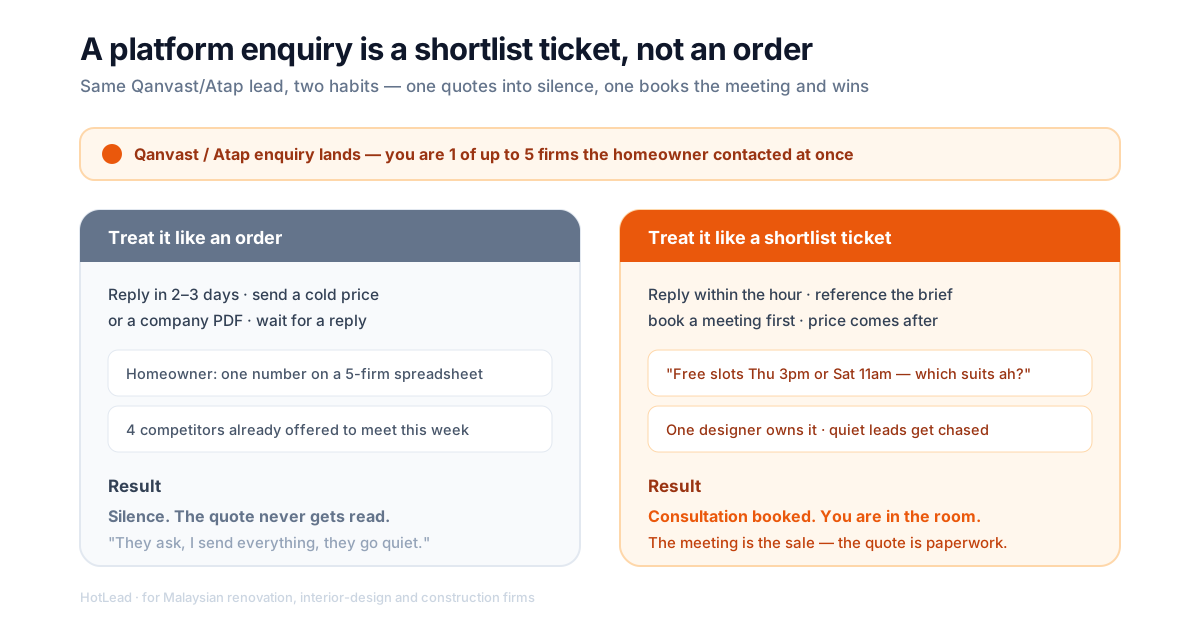
I sat with an interior-design studio owner in PJ who could not work out why her Qanvast leads "never converted." She showed me her WhatsApp. A homeowner had enquired about a full-home design for a condo in Mont Kiara. Her reply, sent the next afternoon, was a polished PDF — company profile, past projects, and a per-square-foot price range. Then nothing. "They all do this," she said. "They ask, I send everything, they go quiet."
Here is what actually happened. That homeowner did not enquire with her. They enquired with five firms in one sitting — because that is exactly how Qanvast works — and by the next afternoon three of the others had already offered to meet. She had not lost on price or portfolio. She had lost because she treated a shortlist ticket like an order, and quoted into a room that already had four other people in it.
This is the specific, fixable way Malaysian ID studios burn their best-sourced leads. Let me walk through it.
Why is a Qanvast or Atap enquiry different from a normal WhatsApp lead?
Because it arrives pre-shortlisted. A referral comes warm and alone — someone already trusts you. A Qanvast or Atap enquiry is the opposite: the homeowner is comparing you against several firms in parallel, on purpose, on a platform built to make that easy.
On Qanvast (a renovation platform running in Malaysia since 2013), a homeowner submits a short request and gets matched with up to five interior firms that fit their brief. A Qanvast Guide then helps them shortlist, and those firms all contact the homeowner. On Atap.co (Malaysia's other big ID platform, operating since 2017), a homeowner can enquire with one designer directly or fire a single brief — property type, budget, size, style, unit status, location, target completion — to Atap's team, who route it to firms that fit. Either way, one enquiry becomes a small competition.
Two things follow from that, and both change how you should reply:
- The platform already did your trust-building for you. Both platforms vet firms and show verified reviews; Atap adds a "Verified" badge, Qanvast monitors firms against real homeowner reviews. That is good — it is why the lead is high quality. But it also means "we're reliable and experienced" is not a differentiator here. Everyone on the shortlist is reliable and experienced. The platform said so.
- The homeowner feels safe shopping around. Qanvast automatically enrols enquirers in a free Trust Programme that includes the Qanvast Guarantee — protection of up to RM50,000 (50% of contract value, whichever is lower) if an engaged firm becomes insolvent. When a buyer feels protected, they browse longer and compare harder. That is great for them and it means you cannot count on being the only firm they take seriously.
What are you actually competing to win — the quote or the consultation?
The consultation. Not the quote. This is the piece most studios get backwards, and it is worth saying plainly: on a platform lead, the meeting is the sale, and the quote is just paperwork you do afterwards.
Think about the homeowner's real problem. They do not want a price yet — they cannot even use one, because five firms will scope the same condo five different ways. What they want is to meet a few designers, get a feel for who they'd trust with their home for the next four months, and then compare properly. Qanvast reports that most homeowners meet at least three firms before they engage one. So the funnel that actually matters looks like this:
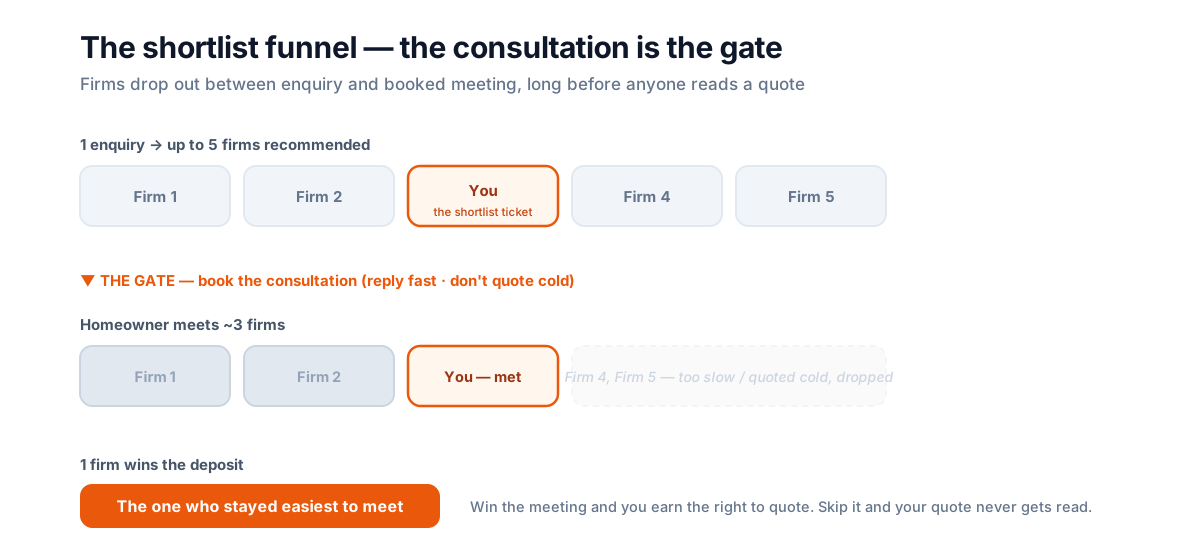
Notice where firms drop out. Not at the quote — long before it. They drop out between enquiry and booked consultation, because they either replied too slowly, or they replied with a price instead of an invitation. If you are not in the "met with roughly three firms" group, your quote never gets read. You are competing to be one of those three meetings. Win that, and you have earned the right to quote. Skip it, and your quote is just a number on a comparison someone else is winning.
Why do studios lose a platform enquiry before the first meeting?
They lose it in the first reply, usually in one of four ways. Each one is a habit that made sense for a referral and quietly kills a shortlist lead.
- They reply too slowly. Atap tells homeowners to expect a reply within three working days. If your competitors are hitting that and you reply in an hour, you look fast. If you take three days, you have handed the first two consultations to the firms who answered while the homeowner was still on their phone. The 5-minute rule that makes you ~100× more likely to connect is not a renovation-only thing.
- They quote cold. A per-square-foot range or a full PDF before understanding the space turns a relationship into a price line. On a five-way shortlist, being a naked number is how you become the "too expensive" one — or worse, the "suspiciously cheap" one.
- They ask for too much before earning the meeting. A wall of questions, or "please fill in this form," when the homeowner already filled in Atap's form. It reads like effort you are asking them to make, before you have given them a reason to.
- The lead has no owner. The enquiry lands in a shared studio WhatsApp, everyone assumes a colleague has it, and it sits. On a lead you are sharing with four competitors, an hour of "who's got this one?" is an hour you lose the meeting in. (This is the same lost-in-the-group-chat problem that leaks leads everywhere.)
How do you turn a Qanvast or Atap enquiry into a booked consultation?
You reply fast, warm, and personal — with one goal, which is a meeting on the calendar, not a price in the chat. The homeowner handed you a brief; use it to prove you read it, then make saying yes to a consultation the easiest thing in the conversation. Here is the shift, side by side:
| The reflex (treat it like an order) | The fix (treat it like a shortlist ticket) |
|---|---|
| Reply "within 3 working days" | Reply within the hour — beat the platform's own floor |
| Send a price range or a company PDF | Book the consultation first; quote after the meeting |
| "Please share your requirements" | Reference their condo type, style and timeline from the brief |
| Ask ten qualifying questions | Ask one or two, then offer two meeting slots |
| Leave it in the studio group chat | One designer owns it the moment it lands |
| Forget the ones who don't reply | Next-action date on every quiet lead — the shortlist is still open |
A good first reply on a Qanvast or Atap lead is short, references the brief, and offers a low-friction way to meet. In natural Manglish, something like:
"Hi! Thanks for reaching out about your Mont Kiara condo 🙂 A full-home design for a 3-room — that's right in what we love doing. Rather than send you a random price, can we do a quick 20-min call or a showroom visit this week so I can understand your space first? Free slots Thu 3pm or Sat 11am — which suits ah?"
That reads like a person who read the brief and wants to help, not a firm sending a catalogue. It also does the qualifying quietly — a serious buyer picks a slot, a browser drifts off — the same principle as qualifying in the first reply, just aimed at a meeting instead of a budget.
What about the enquiries that don't book a consultation straight away?
You keep chasing them — because the shortlist stays open for days, and "no reply yet" almost never means "no." The homeowner is busy meeting the other firms, consulting a spouse, or waiting for the weekend. That is not a dead lead; it is a lead in the middle of exactly the comparison you are trying to win.
The numbers back the boring truth here: around 80% of these sales need five or more follow-ups, while 44% of firms give up after one. So the studio that sends one message and moves on is handing the job to whoever sent the fifth. The trick is to follow up with value, not "any update?" — a photo of that similar Bangsar unit, an offer to hold a slot, a quick note on a material they mentioned. Every warm nudge in the quiet window is you staying on the shortlist while a competitor falls off it. Once you do win the consultation and the deposit conversation starts, the next leak is the long quote-to-deposit gap — a different fight, same discipline.
The catch is that none of this survives on memory. Five platform enquiries a week, each needing a same-hour reply, one owner, and five follow-ups, is more than any designer juggling live projects can hold in their head. That is where the leak really comes from — not a lack of skill, but a lack of a system.
How HotLead helps studios win the consultation
HotLead sits on top of your existing WhatsApp — nothing changes for the homeowner — and makes the shortlist fight winnable by making sure every platform enquiry gets caught, owned, and chased:
- Captures every enquiry and tags the source — Qanvast, Atap, Instagram, referral — so a lead never sits unseen in a shared inbox, and you can finally see which platform actually produces deposits, not just enquiries.
- Routes each lead to one designer instantly, even after hours, so the 9pm Atap brief has an owner by 9:01 instead of a "who's got this?" scramble the next morning.
- Keeps a next action on every lead and flags overdue follow-ups, so the enquiries that did not book a consultation on day one still get the second, third and fifth nudge while the shortlist is open.
- Shows your funnel — enquiries, consultations booked, quoted, won — so you can see whether you leak at the meeting or at the deposit, plus per-channel ROI so you know if Qanvast or Atap is really paying its way.
If your platform leads "never convert," the leak is almost always before the first meeting — you are quoting when you should be booking. Fix that one habit and the same Qanvast and Atap enquiries start turning into consultations. See how HotLead works, read the complete guide to managing renovation leads in Malaysia, or see how it fits an interior design studio specifically.
Sources: Qanvast Malaysia — how it works / request quotes and Qanvast — Trust Programme & why Qanvast and Qanvast Guarantee (up-to-five firm recommendations, Qanvast Guide, vetting, RM50,000 Guarantee at 50% of contract value, platform since 2013, homeowners meeting multiple firms before engaging); Atap.co — About Us and Atap.co — FAQ and Atap.co coverage, Vulcan Post (two enquiry paths, request-quote fields, reply within three working days, Verified badges, operating since 2017, ~500 leads / RM15mil monthly); MIT / Dr James Oldroyd lead-response study on the 5-minute window; follow-up figures (80% of sales need 5+ follow-ups, 44% quit after one) as cited in the complete guide to managing renovation leads in Malaysia.
Frequently asked questions
How is a Qanvast or Atap enquiry different from a normal WhatsApp lead?
It arrives pre-shortlisted. When a homeowner requests quotes on Qanvast they are matched with up to five firms, and Atap lets them send one brief to multiple designers at once. So a platform enquiry is not a private conversation — it is you against up to four other studios the homeowner is talking to in parallel. The platform has already vetted everyone and, on Qanvast, backed the homeowner with a guarantee, which means trust is off the table as your edge. Speed, warmth and how easy you are to meet are what decide who gets booked.
Should I send a quote or a price list when a Qanvast lead comes in?
Not first. A cold quote before you understand the space, the scope or the person is how studios lose platform leads. The homeowner is comparing up to five firms and a bare number just makes you the cheapest or the most expensive on someone's spreadsheet. Your goal on the first reply is to book the consultation — the meeting or video call where you actually win the job. Acknowledge fast, ask one or two useful questions, and offer two slots. Price comes after you are in the room.
How fast should an interior design studio reply to a Qanvast or Atap enquiry?
Within minutes if you can, and certainly within the hour. Atap itself tells homeowners to expect a reply within three working days, so that is the bar your competitors are being measured against — clearing it by hours, not days, is how you stand out. The homeowner just tapped enquire on several firms in one sitting and is in shopping mode. The studio that replies while they are still on their phone usually gets the first consultation, and the first consultation is a big share of the win.
What information do Qanvast and Atap give me about a lead?
More than a walk-in gives you. Atap's request form captures property type, budget, size, preferred style, status of the unit and target completion date before it reaches you, and Qanvast profiles carry your reviews and portfolio so the homeowner has already seen your work. Use it — reference their condo type and timeline in your first reply so it reads like you actually read the brief, not a copy-paste. That personal touch is often the difference between a booked consultation and being ignored.
How do I stop losing interior design leads that come from platforms?
Give every enquiry one designer the moment it lands so nothing sits in a shared inbox, reply fast with the goal of booking a meeting rather than sending a price, and put a next-action date on the ones who do not book straight away so you keep chasing while the shortlist is still open. Track how many platform enquiries actually turn into consultations, and how many consultations turn into deposits, so you can see where you leak. That is exactly the visibility a lightweight lead system on top of WhatsApp gives you.
Keep reading
- The Only Three Ways to Grow a Renovation Firm — and Which Lever to Pull FirstEvery renovation firm's revenue comes down to three levers — how many leads you get, how many you close, and how big each job is. They multiply, so a modest lift on each compounds. But they cost wildly different amounts to pull, and most owners reach first for the one they should reach for last. Here's the ranking, with Malaysian numbers.
- Sight Unseen: Winning the Overseas Malaysian Who Renovates a Unit They Can't VisitA Malaysian working in Singapore collects the keys to a KL condo and messages you to fit it out — but they can't come to a site visit, can't walk your showroom, and will wire a deposit to a firm they've never met. Most firms treat this lead like a walk-in, go quiet when the buyer can't pop by, and lose the highest-budget job in the inbox. Here's why the remote buyer is your hardest-trust but best-paying lead, and how to build a remote lane that actually closes it.
- "Ok, Proceed" Isn't Money in the Bank — I Built an AI to Ask for the Deposit the Moment a Renovation Buyer Says YesA Cheras contractor closes a RM62k job on WhatsApp, the buyer says "ok proceed lah", and then the owner — mid-site, phone in a dusty hand — has to stop, pull the bank details, the agreed deposit and the scope, and type a careful money message. In that gap a hot yes quietly cools back to "let me think." The 2026 reflex is to ask AI to detect the yes and auto-fire the invoice. I built it, and it asked a half-committed buyer for 40% to a personal account two seconds after a soft "ok ok". Here's the version that kills the typing delay without asking for money off a misread.