

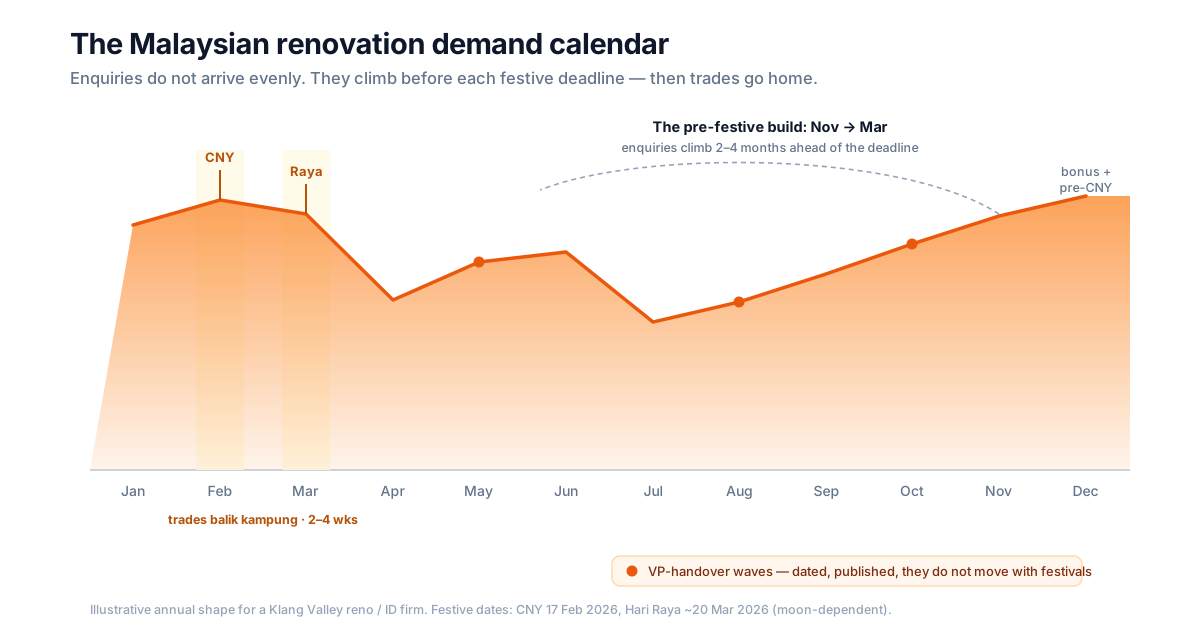
Ask most renovation-firm owners when their busy season is and you will get a shrug and a vague "end of year, and before the festivals, lah." They are not wrong — but "before the festivals" is doing a lot of quiet work in that sentence, and getting it slightly wrong is the difference between a booked-out quarter and a month of enquiries you can't actually serve.
Renovation demand in Malaysia is seasonal and predictable — it runs on a repeating calendar of festive deadlines, bonus cash and property handovers. The mistake is reading it as a festival calendar when it is really a lead calendar: the enquiries you can win arrive one full renovation before the festive peak everyone can see. This piece maps the whole-year pattern, shows why the visible February rush is mostly unservable, and points your capacity and ad spend at the part of the year that actually pays.
When do renovation enquiries actually spike in Malaysia?
Renovation enquiries cluster around four things that repeat every year: the two festive deadlines, year-end bonus and ang-pow cash, the post-festive restart, and property vacant-possession handovers. None of them is a surprise. Together they make a demand curve you can draw twelve months ahead — which is exactly what most firms never do.
Here is the shape of a typical year for a Klang Valley reno or interior-design firm:
| Window | What drives it | Demand signal |
|---|---|---|
| Nov – Dec | Year-end bonus lands (average ~2 months' pay, 82% of firms paying one in 2025, per MEF); people plan "next year we renovate" | Rising |
| Dec – Feb | The pre-CNY push — get the home ready for visitors; ang-pow and bonus cash funds deposits | Peak |
| Feb – Mar | The pre-Raya push, back-to-back with CNY in the mid-2020s | Peak |
| The festive weeks | Homeowners celebrating; trades balik kampung 2–4 weeks | Dip (supply and demand) |
| Apr – Jun | Post-festive restart; deferred jobs re-enquire | Moderate |
| All year | Property handovers (VP waves) — dated, concentrated bursts | Steady, spiky |
Two features of this calendar matter more than the rest, and they are the ones firms get wrong. First, in the mid-2020s the two festive peaks sit unusually close together — Chinese New Year fell on 17 February in 2026 and Hari Raya around 20 March — so instead of two separate rushes you get one long pre-festive build from roughly November to March. Second, and more important, that build peaks before the festival, not on it. Here is why that single fact should change how you spend.
Why does the enquiry peak arrive before the festival, not on it?
Because a renovation takes weeks to finish, so buyers working backwards from a festive deadline must start early — and the ones who start late can't be served in time. A full home renovation runs about 8 to 16 weeks, and a full condo job 8 to 14 weeks; even a kitchen-only job is 2 to 4. Work that backwards from a late-March Raya and the maths is unforgiving.
An enquiry that lands in November can be quoted, booked and built with room to spare before the festival. An enquiry that lands in February — in the middle of the rush everyone can see and feel — usually cannot be finished before Raya at all, and it will run straight through the festive shutdown on top of that.
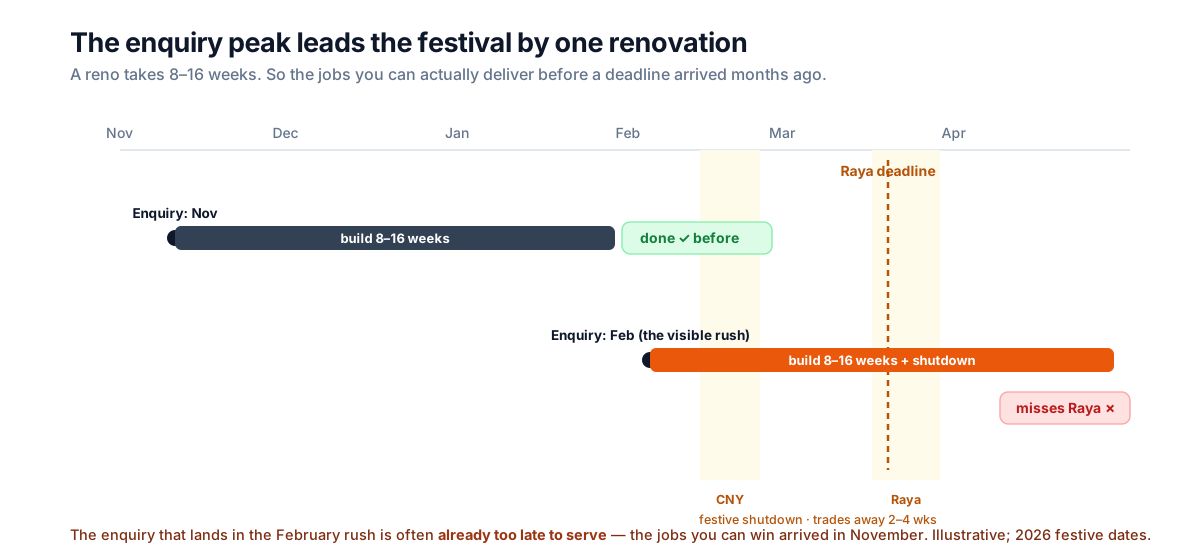
This is the trap in the demand calendar. Owners feel the rush when it is loud — February — and that is when they scramble to reply faster, boost a post, or wish they had more staff. But by February the winnable in-time jobs are already gone; the loud rush is the deadline-driven latecomers. The firms that quietly book out their festive quarter did their fast first replies and follow-up in November and December, against a much smaller pool of much better-timed leads.
Why is the festive rush the hardest spike to serve?
Because the weeks your enquiries peak are the same weeks your capacity to build collapses. Around both Chinese New Year and Hari Raya, many trades and general workers return to their hometowns for two to four weeks, so on-site progress slows or stops. You get the worst possible combination: demand up, supply down, at the same moment.
Most seasonality advice treats a demand spike as pure upside — more leads, good, staff up. In renovation it is not that simple, because the spike is really a squeeze:
- Demand climbs as the festive deadline nears and buyers panic-shop.
- Delivery capacity falls as workers head to their kampung for the same festival.
- Any job started too late runs through the shutdown and finishes even later than its already-tight timeline suggested.
There is a related demand signal worth watching, because it moves earlier than the reno rush and tips you off: home-cleaning services. Demand for home cleaning in the Klang Valley typically rises 20 to 30% ahead of Hari Raya, with slots booked from February, before Ramadan even starts. When the cleaning firms are booking out, the deliverable renovation window has usually already closed — another sign that by the time the festive prep is visible, you are looking at next-quarter work.
Which spike can you actually plan for?
The one with a published date: a property handover. This is the part of the calendar most firms under-use, and it is the most plannable of all, because — unlike the festivals — it does not move.
Festive dates drift. Chinese New Year shifts around within late January and February, and Hari Raya Aidilfitri moves roughly 11 days earlier every year, because the Islamic calendar is about 11 days shorter than the Gregorian one. That is why the two festive deadlines are converging through the late 2020s and will pull apart again after. Planning your whole year around a moving target is hard.
A vacant-possession (VP) handover is the opposite. A development's completion and handover date is fixed and announced, and the wave is huge and concentrated: Malaysia handed over 99,877 residential units in 2025, with 22,691 in Selangor alone (NAPIC). Every one of those is a household that just got keys to an empty unit and needs it renovated — a dated, mappable burst of demand you can literally mark on a calendar months in advance. Our sibling piece on the property-handover enquiry surge goes deep on how to work a single VP wave; the calendar point here is simpler:
How should this change your ad spend and staffing?
Plan the year as a lead calendar, not a festival calendar: put money and capacity in the weeks before each wave, and cap intake to what you can deliver before the deadline. The demand pattern is knowable, so the response can be deliberate instead of reactive. Four moves:
- Advertise ahead of the wave. If enquiries peak in the two months before CNY and Raya, your ad spend and lead-capture should ramp in October–December, not February. Spending during the visible rush means paying the most for the least-servable leads.
- Cap festive intake to your delivery window. Once a job physically cannot finish before the festival, sell it honestly as an after-festival booking rather than over-promising. Protecting your delivery reputation is worth more than one more rushed job — and a well-managed pipeline tells you when you are full.
- Pre-book trades around the shutdown. Treat the 2–4 week festive absence as a known fixed cost in your schedule, not a surprise. Jobs that must run over the period get planned around it up front.
- Aim your best effort at the dated waves. VP handovers are where planning pays off most, because the date is certain. That is where campaign lead time, source-tagged tracking and standby capacity earn their keep.
None of this works if you can't see the calendar in your own numbers. Most firms feel the rush but never measure it, because a shared WhatsApp number and a memory don't produce a chart of enquiries-per-week by source. You can't plan ad spend against a wave you can only sense.
How HotLead helps you read the calendar
HotLead is built so a Malaysian renovation, interior-design or construction firm can see its own demand calendar — on top of the WhatsApp buyers already message — instead of just feeling the rush. It gives you the inputs this kind of planning needs:
- Every enquiry captured and time-stamped by source — so week-on-week volume, and the spikes before each festive and handover wave, show up as data you can plan against, not a vibe.
- The funnel and per-channel ROI in ringgit — so you know which channels to ramp before a wave and which to pause, rather than boosting blindly during the rush.
- Next-action and overdue flags on every lead — so the well-timed November enquiries get the fast reply and follow-up that win them, instead of being lost while the loud February pile gets all the attention.
Start with the complete guide to managing renovation leads in Malaysia, then read the property-handover surge playbook or why busy-season leads leak. Or see the renovation, interior-design and construction playbooks for your niche.
Sources: festive dates (Chinese New Year 17–18 February 2026; Hari Raya Aidilfitri ~20–22 March 2026, moon-dependent) — PublicHolidays.com.my and Malaysia Calendar 2026; the ~11-day annual drift of Islamic holidays follows from the Hijri year being ~11 days shorter than the Gregorian year. Year-end bonus prevalence and size (average ~2 months' pay, ~82% of firms paying a bonus in 2025) — Malaysian Employers Federation (MEF) survey via The Edge Malaysia. Renovation durations (full home ~8–16 weeks, full condo ~8–14 weeks, kitchen ~2–4 weeks) — Outbox Design and Recommend.my contractor listings and guides. Contractors returning to their hometowns for 2–4 weeks around CNY and Raya, pausing on-site work — Recommend.my and Malaysian renovation-timeline guides. Pre-Raya home-cleaning demand rising 20–30% in the Klang Valley with slots booked from February — Sinar Daily. Property handover scale (99,877 residential units completed in 2025; 22,691 in Selangor) — National Property Information Centre (NAPIC) / JPPH. The demand-curve shape and the illustrative worked examples are directional, drawn from these drivers plus the house figures (renovation duration, ~7–8% conversion, WhatsApp lead capture) used across this series — plot your own enquiries-per-week by source for your real calendar.
Frequently asked questions
When is the busiest season for renovation in Malaysia?
Demand is highest in the run-up to the two big festive deadlines — Chinese New Year (17 February in 2026) and Hari Raya Aidilfitri (around 20 March in 2026) — when homeowners want the house ready for visitors, plus the year-end period when bonuses land and people plan the next year's job. But the enquiry peak arrives before the festival, not on it — because a renovation takes roughly 8 to 16 weeks, the jobs that can realistically be finished in time send their enquiries two to four months ahead. There is a second, quieter driver all year round — property vacant-possession handovers, which arrive in dated waves whenever a development hands over keys.
Do renovation contractors in Malaysia stop working during Chinese New Year and Hari Raya?
Largely, yes. Many trades and general workers return to their hometowns for two to four weeks around each festival, so on-site progress slows or pauses in the weeks surrounding Chinese New Year and Hari Raya. This is why the festive period is a demand-and-supply squeeze — enquiries are peaking at exactly the time your capacity to build and deliver is lowest. It also means any job started too close to a festival will run through the shutdown and finish later than the buyer expects.
Why do renovation enquiries spike before a festival rather than during it?
Because homeowners are working backwards from a deadline they can see. They want the home ready for Raya or Chinese New Year visitors, so they start looking for a contractor once the festival feels close. The problem is timing — a full home renovation takes about 8 to 16 weeks and a full condo job 8 to 14, so an enquiry that arrives four to six weeks before the festival cannot be finished in time. The genuinely winnable enquiries are the earlier ones, which is why the visible rush is often a wave of jobs you can only book for after the festival.
How should a renovation firm plan its ad spend around the year?
Spend ahead of the wave, not on it. If enquiries peak in the two months before Chinese New Year and Hari Raya, your advertising and follow-up capacity need to be ready before that — bidding for leads during the visible rush means paying peak prices for enquiries you may not be able to deliver before the deadline anyway. The most plannable spend is around property handovers — a development's vacant-possession date is fixed and published, so you can aim campaigns and site presence at a specific catchment on a specific date rather than guessing at a moving festive target.
Are renovation seasonal spikes the same every year?
The pattern repeats, but the dates move. Chinese New Year shifts within late January and February, and Hari Raya Aidilfitri moves about 11 days earlier each year because the Islamic calendar is shorter than the Gregorian one — so through the mid-2020s the two festive deadlines are unusually close together, creating one long pre-festive build from around November to March. Property handover waves do not follow this at all; they land whenever developers complete and hand over, which is why they are the easiest part of the calendar to plan against.
Keep reading
- "Boss, Berapa?" The Renovation Lead That Lands on the Wrong ChannelYour hottest organic leads often arrive where they found you — a comment under a project post, or a DM to your personal account — not the business WhatsApp you actually watch. Here's why those leads leak at the capture step, why an ignored public comment costs more than a missed message, and how to catch a lead no matter which door it walks in.
- "We Went With Another Contractor" — I Built an AI to Win Back a Lost Renovation Lead Instead of Slamming the DoorA Shah Alam firm quotes a RM70k job, chases it for three weeks, and finally gets the message every owner dreads — "thanks, we've decided to go with another contractor." The reflex is a terse "ok, all the best 🙏" and a closed chat. The 2026 reflex is to ask AI to detect the rejection and auto-fire a win-back discount. I built it, and it begged. Here's the version that keeps a near-free option on a re-win without ever chasing a no.
- The Only Three Ways to Grow a Renovation Firm — and Which Lever to Pull FirstEvery renovation firm's revenue comes down to three levers — how many leads you get, how many you close, and how big each job is. They multiply, so a modest lift on each compounds. But they cost wildly different amounts to pull, and most owners reach first for the one they should reach for last. Here's the ranking, with Malaysian numbers.