

A contractor I know in Petaling Jaya almost lost the account that carried his firm through a quiet year — by treating it like a kitchen reno.
The WhatsApp looked ordinary: "Hi, need to fit out a unit — flooring, ceiling, some partition, a small pantry. Can quote?" Mid-year, homeowner work slow, he was about to fire back his usual "sure, send me the address and we'll arrange a site visit, no rush." Then two more lines came through: "It's a shop lot in [a PJ commercial block]. We're signing the lease next week and we want to open by 1 October."
That wasn't a homeowner. That was a business owner — a café, as it turned out — the "unit" was a leased shop they'd be trading from, and "1 October" wasn't a hopeful wish. It was a date with a lease behind it: a landlord's rent-free fit-out window that was about to start ticking, then rent running whether the doors were open or not, staff already being hired, an opening they'd told their followers about.
He caught it, stopped himself firing off the homeowner reply, and handled it as what it was. He won the fit-out — and more importantly he won the owner, who opened a second outlet eighteen months later and sent him two other F&B friends. That's the lead I want to walk through, because in Malaysia the commercial fit-out enquiry arrives wearing a homeowner costume, and firms that are brilliant at home renos fumble it in the first reply.
What is a commercial fit-out lead, and how is it different from a home reno?
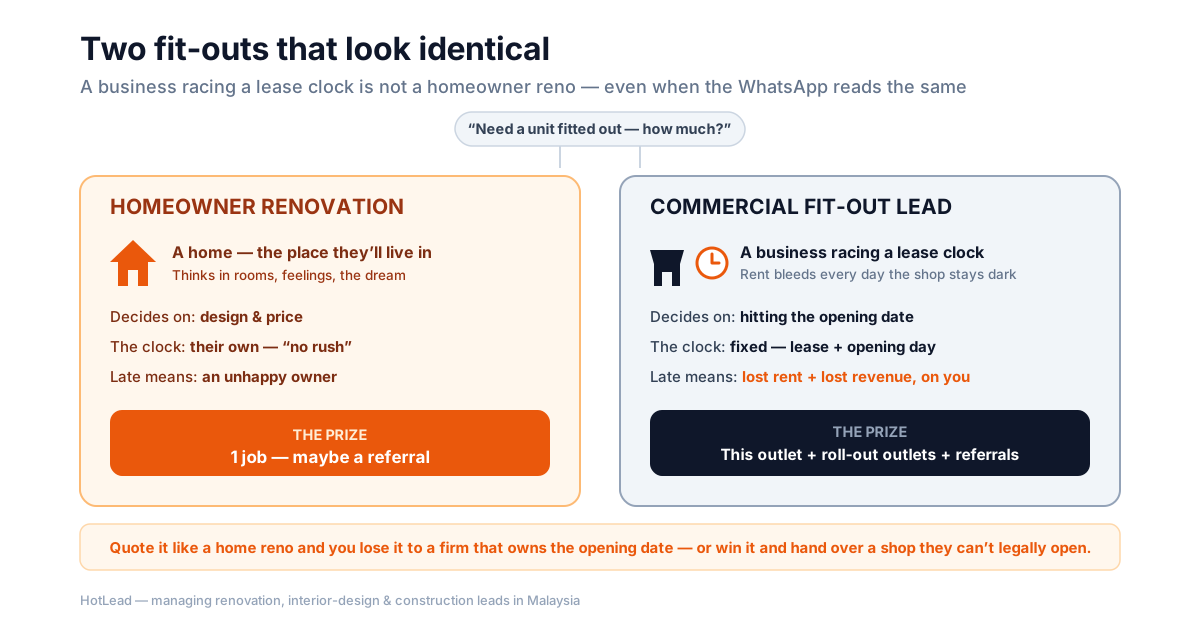
A commercial fit-out lead is a business — a café, boutique, clinic, salon, office or franchise — asking you to fit out a leased unit they need trading from by a fixed date. It's a distinct lead type with a different buyer, a different way of winning, and a completely different clock from a homeowner renovation.
A homeowner is renovating the place they'll live in. They think in rooms, feelings and their family's routine; the decision is emotional; the timeline flexes ("when can you start?"); and it's one job. A business tenant is building a place to make money, and it sits on top of a lease. Commercial leases in Malaysia commonly run two to three years, and landlords typically grant a rent-free fit-out period — often around two weeks to a month for a standard unit, longer only for large spaces — after which rent runs whether the shop is open or not. The whole fit-out is a race against that clock.
And it's a big, constant market. NAPIC counted 17.3 million square metres of retail space across 988 shopping complexes at end-June 2025, running at about 79% occupancy, with nearly a thousand malls now open and dozens more in the pipeline — before you even count standalone shop lots, offices and F&B units. Every one of those tenancies is a fit-out on a clock.
Why does a commercial fit-out enquiry read like a normal renovation?
Because it comes through the same channel, in the same plain words, and often doesn't announce itself as a business job until the second or third message. A shop owner types "need a unit fitted out" the same way a homeowner does.
Three things keep the disguise on. First, the channel is identical — a business owner messages the same signboard, the same Facebook page, the same Qanvast or Atap profile, the same WhatsApp a homeowner would. Second, the early words overlap almost perfectly: "unit," "fit-out," "flooring, ceiling, partition," "how much." Third, a firm that lives on homeowner renos is pattern-matching to its bread and butter, so it reads "unit" and reaches for the home playbook before the words shop lot, lease, opening date or mall have even registered.
So the very signals that should make you sit up — a lease being signed, a handover date from a landlord, a target opening, a business name instead of a couple — are the ones a busy firm skims past. You end up answering a lease-clock commercial lead with a homeowner reflex, the same way firms misread a landlord with several units as one homeowner, a government tender as a direct project lead, or a developer's show unit as a walk-in condo reno.
Why is a commercial fit-out won on the opening date, not the price?
Because the tenant is losing money from the day they take the keys, and no fit-out cost saving comes close to covering a delayed opening. They're not shopping for the cheapest quote. They're buying certainty that they'll be trading on the date.
Think about what's running the moment a business takes possession. The rent-free fit-out period is short, then rent runs on a shop that isn't earning. Staff have been hired against the opening. Stock or equipment has been ordered. If it's a mall unit, the pressure is sharper still: tenants take the premises "as is where is" on the handover date, must start fit-out within a few days, and must finish within a strict fit-out period or face hefty daily liquidated-damages penalties, with a fit-out deposit held over their heads. Every day the job drags past the opening date is real money gone — and it doesn't come back.
That's why the pitch that wins a homeowner — the nicest design at the keenest price — is the wrong pitch here. What a business owner is really asking, underneath the brief, is: "Can you get me open and trading on my date?" The firm that answers with a schedule counted backwards from opening day, a clear plan for the approvals, and one calm, senior point of contact beats the firm that answers with a lower number and a vague "should be about six weeks." A cheap quote that opens two weeks late has cost the tenant far more than it saved.
The part that actually blows the opening: two clocks, not one
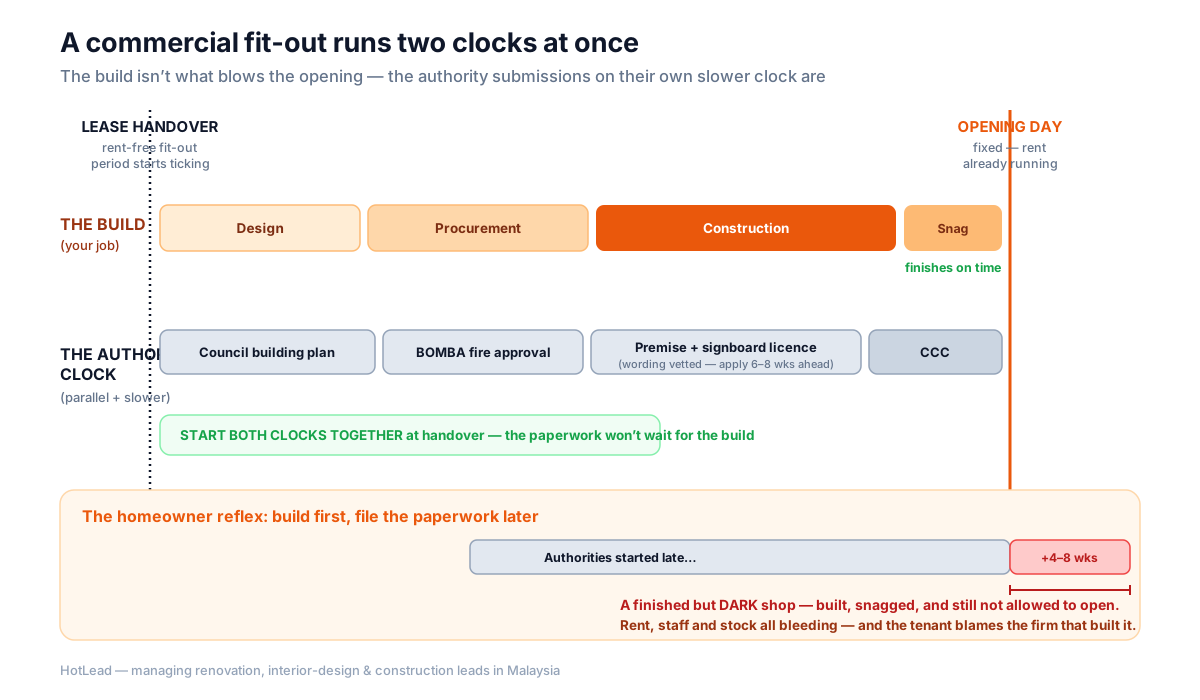
What sinks a Malaysian commercial opening is almost never the building work — it's the authority submissions running on their own, slower clock, in parallel with the build. A firm that treats the paperwork as an afterthought is the firm that finishes the shop and then can't open it.
Here's the trap. A home reno needs, at most, a simple management or council renovation permit. A commercial fit-out that changes layout, services or fire safety triggers a stack of approvals, each on its own timeline:
- Local council building plan. Structural work, partitions, changes to the built-up space go to the local authority — DBKL, MBPJ, MBJB and so on — for building-plan approval before you start.
- BOMBA fire approval. Work affecting escape routes, fire-rated materials, alarms or sprinklers needs BOMBA sign-off, and commercial premises fall under the Fire Services Act 1988, with a fire certificate renewed annually. You submit the modified plans to BOMBA before work, and they inspect after.
- Premise and signboard licence. To legally trade, the business needs a premise licence and a signboard licence from the local council — often a composite licence — with processing typically two to four weeks and applications recommended six to eight weeks before opening; in KL, the signboard wording is vetted by Dewan Bahasa dan Pustaka before DBKL approves it.
- CCC. For the works themselves, the certificate of completion and compliance closes out the build.
None of these waits politely for your construction to finish. Authority submission alone typically runs 3–8% of the fit-out budget and, crucially, weeks of calendar time. The homeowner reflex — build first, sort the paperwork later — is exactly what produces the license-sequencing gap that commonly costs an F&B operator four to eight weeks of delayed opening: a finished, snagged, beautiful shop sitting dark because the licence hasn't come through and the rent is running.
Home reno versus commercial fit-out — the reflexes that flip
Run a commercial fit-out through your homeowner reflexes and you'll pitch the wrong things and miss the clock that matters. Here's how the two differ, and why nearly every winning move flips — the same pattern you see on a strata committee job or a takeover of an abandoned renovation.
| Homeowner renovation | Commercial fit-out lead | |
|---|---|---|
| Who's buying | A resident, for themselves | A business owner, franchise or their consultant |
| What it's for | A home to live in | A shop to trade and earn from |
| The clock | Flexible — "when can you start?" | Fixed — lease + rent-free period + opening date |
| What they optimise | Design, feel, price | Hitting the date, certainty, staying legal |
| What wins it | A beautiful bespoke quote | A schedule to the opening + a plan for approvals |
| The paperwork | A simple reno permit | Council plan, BOMBA, premise + signboard licence, CCC |
| What a delay costs | An unhappy owner | Rent + revenue lost daily — and the liability's on you |
| The real prize | This job, maybe a referral | Roll-out outlets + a network of business referrals |
Who's actually asking — the owner, a chain, or a consultant?
Ask early, because a first-time café owner, an established franchise rolling out its Nth outlet, and a project consultant appointed by a tenant are three different clients with three different needs. The words in the enquiry can be identical; who signs off, who funds it and how much hand-holding they need is not.
A first-time business owner — the café, the boutique, the new clinic — often doesn't know the approval stack even exists, is the most anxious about the date, and is the highest risk on funding and indecision. First-generation F&B operators consistently underestimate the true capex to reach opening day by 20–35%, so they need honest guidance early, not a low quote that sets a trap. An established chain or franchise is the prize: they've done this before, they want a reliable roll-out partner who can repeat the same fit-out across outlets, and one good job earns you the next. A consultant or project manager acting for the tenant is a B2B relationship with an extra layer between you and the party whose money it is. Either way, your first questions are the same discipline as separating a tender's rules from a direct lead's: who is the client I'm contracting with, who signs off, who's funding it, and how hard is the opening date?
The hidden prize: how one shop becomes a roll-out relationship
The margin on a single fit-out is the smaller half of the deal — the real value is repeat outlets and a network of business-owner referrals. A commercial fit-out lead is the front door to a relationship, and firms that only see the one shop leave the bigger half on the table.
Businesses that work, grow. A café that opens well opens a second branch; a boutique becomes a chain; a clinic group adds locations; a company that likes its office fit-out uses you again when it moves or expands. Get a business owner trading on time, and you become their default — repeat, predictable work, quoted faster each time because you already know their spec. And business owners talk to other business owners far more than homeowners talk about renos: one happy F&B operator in a neighbourhood is a warm introduction to the next three, a network of buyers most reno firms never reach. That's why a commercial fit-out is worth pricing to win the relationship, not to squeeze margin on outlet one — the same logic that makes a developer's show unit worth far more than the gallery fee.
How do you spot and handle a commercial fit-out lead?
Catch the lease-clock language on the first reply, tag it as its own lead type, and hand it to one senior person who builds the schedule around the opening date and the approvals. Five moves:
- Read for the tells before you reach for the homeowner playbook. "Shop lot," "unit in [a mall]," "lease," "handover from the landlord," "fit-out period," "opening date," "we're signing next week," a business or brand name instead of a couple, an F&B, retail, office or clinic use. Any of those means stop — this isn't a home reno.
- Qualify the clock first. When does the lease and the rent-free period start? What's the target opening date, and how firm is it? Is it a mall unit (with the landlord's fit-out guidelines, deposit and daily-penalty period) or a standalone shop lot? The date is the product, so it's the first thing you scope, not the last.
- Qualify the approvals — and own the sequencing. Does the tenant know they need the council building plan, BOMBA, and the premise and signboard licence? Position yourself as the firm that maps the submissions to the build so nothing lands late. You don't have to file everything yourself, but you own the plan.
- Price it for the obligations, not like a home. Fit-out deposit, reinstatement at lease end, commercial-grade M&E, authority submissions at 3–8% of budget, and loose furniture and IT usually quoted separately. Under-quote a commercial job and you eat the difference — and the delay liability.
- Give it one senior owner and an opening-backwards schedule. Assign your most experienced person as the single point of contact, present a schedule counted backwards from opening day with the approval timelines overlaid, lock it with staged payment terms, and treat the client as a roll-out relationship — not a lead that gets lost in a team WhatsApp with no clear owner.
When is a commercial fit-out lead not worth taking?
Walk away when you genuinely can't hit the opening date, when the tenant wants commercial quality at homeowner prices, or when the use is one you can't legally or technically deliver. A blown commercial opening is a business's launch failed, and the delay liability lands on you.
Take it when the date is real and reachable, you can navigate or resource the approvals, the client and funding are clear, and the relationship is worth pricing for. Be honest, fast, when the opening date is already impossible against the build plus the weeks the licences need — winning that job means failing publicly, in front of a business's customers. Be wary of the first-timer who's under-funded and won't hear the real timeline, and of a heavy F&B kitchen — grease traps, exhaust, gas — you're not equipped to build to code. As with any lead you're better off declining early, the discipline is to protect your reputation and your schedule, and to say a fast, honest no when the clock can't be met.
How HotLead helps you catch commercial fit-out leads before you quote them like home jobs
HotLead sits on top of the WhatsApp your enquiries already land in — nothing changes for the business owner messaging you — and it's built so a lease-clock commercial lead gets handled on the right process instead of the homeowner reflex:
- Captures and tags every enquiry the moment it arrives, so a "shop lot fit-out, opening 1 October" message can be marked as its own lead type and routed into the lease-clock-and-approvals lane, not the bespoke-home-quote lane.
- Assigns one owner instantly — round-robin, manual, or a custom rule we set up during onboarding — so a business owner deals with one senior, accountable point of contact who owns the opening date, not a rotating cast in a group chat.
- Keeps a next action and flags overdue follow-ups, so the opening-backwards schedule, the authority-submission chase, and the next-outlet conversation months later all get tracked rather than forgotten.
- Shows your funnel and per-channel ROI, so you can see commercial fit-out as a lane — which openings are live, what the roll-out-and-referral value is worth, and whether business-tenant work is a pipeline worth building.
HotLead doesn't file your BOMBA submission or build the shop — that's your craft, your operations, and your submitting consultant, and on a commercial fit-out the opening date is the whole game. What it does is make sure the lead that arrived looking like a walk-in unit gets caught, tagged and owned by the right person before someone fires back a homeowner quote and loses a roll-out relationship worth years of work.
If your firm keeps quoting "unit fit-outs" that turn out to be businesses racing a lease clock — jobs you lose, or win and then struggle to open on time — the leak usually isn't your pricing. It's that you answered a commercial tenant like a homeowner and never saw the lease behind the unit. Start with the interior-design lead hub, the contractor hub or the renovation hub, read the complete guide to managing renovation leads in Malaysia, or see how HotLead works.
Sources: Commercial lease terms and the rent-free fit-out period (commonly around two weeks to a month for a standard unit, longer for large spaces), from MyOfficeSpace / Hartamas — Rent-Free Period to Commercial Tenants. Mall fit-out mechanics — possession "as is where is" on handover, a strict fit-out period with daily liquidated-damages penalties, and a fit-out deposit — from Donovan & Ho — 8 Things to be Aware of before Renting that Mall Space. Fit-out cost ranges (roughly RM80 per sq ft basic to RM450-plus premium in KL) and authority-submission cost at about 3–8% of budget from Kuala Lumpur Interior Design — Office Fit-Out Cost 2025 Guide, with regional benchmarking in the JLL Asia Pacific Fit-Out Cost Guide 2025. Council building-plan, renovation-permit and approval requirements from NextSix — Renovation Permits & Council Approvals in Malaysia (DBKL, MBPJ, MBJB); BOMBA fire approval and the Fire Services Act 1988 fire-certificate requirement from GetFoundation — Fire Certificate Commercial Building Malaysia: BOMBA Guide; premise and signboard licence process, timelines and DBP signboard vetting from MISHU — The Complete Guide To DBKL Signboard License Requirements. Retail-space scale — 17.3 million sqm across 988 shopping complexes at ~79% occupancy (mid-2025) — from PropertyGenie / NAPIC Q1 2025 market review and The Rakyat Post — nearly 1,000 shopping centres. The license-sequencing delay of four to eight weeks, and first-generation operators underestimating capex by 20–35%, from the MenuBase State of Malaysian F&B Operators Report 2026. The Petaling Jaya and KL scenarios are illustrative; the lease clock, the authority-approval sequencing and the roll-out-and-referral pattern are the real mechanics of a commercial-tenant relationship.
Frequently asked questions
How do I tell a commercial fit-out lead from a normal homeowner renovation?
Listen for a business, a lease and an opening date instead of a home and a family. A homeowner talks about their kitchen, their family's routine and how they want the place to feel, on a flexible timeline. A commercial fit-out lead talks about a shop lot, a unit in a mall, a lease they are about to sign, a handover date from the landlord, a fit-out period, and above all an opening or trading date — and it comes from a business owner, a franchise, or a consultant acting for a tenant. If the enquiry is about a leased space someone will trade from, on a date tied to a lease, you are looking at a commercial fit-out on a clock, not a home reno.
Why is a commercial fit-out won on the opening date rather than price?
Because the tenant is bleeding money from the day they take the keys. Commercial leases in Malaysia usually grant only a short rent-free fit-out period — commonly around two weeks to a month for a standard unit — and the moment that ends, rent runs whether the shop is open or not. In a mall, the fit-out period is stricter still, with daily penalties for overrunning it. So every day the fit-out drags past the opening date is rent on a dark shop, plus staff hired and stock ordered with no sales coming in. Against that, saving a few thousand ringgit on the fit-out is meaningless. The tenant is buying certainty that they will be trading on the date, not the lowest number.
A business owner wants me to fit out their shop. Should I just quote it like a big renovation?
No — quoting it like a scaled-up home job is how firms lose it or get hurt by it. A commercial fit-out carries obligations a home reno does not — a fit-out deposit held by the landlord or mall, reinstatement at the end of the lease, commercial-grade mechanical and electrical work, and authority submissions that typically add a few per cent of the budget. And you are now on the hook for a business's opening date, where a delay is not an unhappy homeowner but a tenant losing rent and revenue every day, who can rightly come after you. Price it for those obligations, put the opening date at the centre of the schedule, and take it only if you can honestly hit the clock and navigate the approvals.
What paperwork does a commercial shop fit-out need in Malaysia that a home reno doesn't?
Several approvals that run on their own clock, and this is where openings are usually lost. Structural or layout changes need a building-plan submission to the local council (DBKL, MBPJ, MBJB and so on). Work that affects fire safety — escape routes, fire-rated materials, alarms or sprinklers — needs BOMBA approval, and commercial premises fall under the Fire Services Act 1988 with a fire certificate renewed annually. To actually open and trade, the business needs a premise licence and a signboard licence from the local council, and in Kuala Lumpur the signboard wording has to be vetted before DBKL approves it. These take weeks and must be started alongside the build, not after it. A firm that only knows home renos often does not even know they exist.
Is a commercial fit-out worth more than a normal renovation?
Usually far more, but the value is in the relationship, not the single shop. A business owner you get trading on time trusts you with outlet two, three and four — franchises and growing brands roll out repeatedly — and refers other business owners, who are a network of buyers most reno firms never reach. So a commercial fit-out lead is really the front door to a roll-out relationship, which is why it is worth building the muscle to handle the lease clock and the authority submissions, and worth pricing to win the client rather than to squeeze margin on the first outlet.
Keep reading
- "We Went With Another Contractor" — I Built an AI to Win Back a Lost Renovation Lead Instead of Slamming the DoorA Shah Alam firm quotes a RM70k job, chases it for three weeks, and finally gets the message every owner dreads — "thanks, we've decided to go with another contractor." The reflex is a terse "ok, all the best 🙏" and a closed chat. The 2026 reflex is to ask AI to detect the rejection and auto-fire a win-back discount. I built it, and it begged. Here's the version that keeps a near-free option on a re-win without ever chasing a no.
- The Only Three Ways to Grow a Renovation Firm — and Which Lever to Pull FirstEvery renovation firm's revenue comes down to three levers — how many leads you get, how many you close, and how big each job is. They multiply, so a modest lift on each compounds. But they cost wildly different amounts to pull, and most owners reach first for the one they should reach for last. Here's the ranking, with Malaysian numbers.
- Sight Unseen: Winning the Overseas Malaysian Who Renovates a Unit They Can't VisitA Malaysian working in Singapore collects the keys to a KL condo and messages you to fit it out — but they can't come to a site visit, can't walk your showroom, and will wire a deposit to a firm they've never met. Most firms treat this lead like a walk-in, go quiet when the buyer can't pop by, and lose the highest-budget job in the inbox. Here's why the remote buyer is your hardest-trust but best-paying lead, and how to build a remote lane that actually closes it.