

There's a visit I still think about, because on paper it was perfect.
A homeowner in Kota Damansara messaged on a Monday — keen, fast replies, "free this Saturday? Come see my condo, we want to renovate." No hesitation, no haggling over the appointment. I drove out Saturday afternoon, the unit was real, keys collected, a genuine 900-something sqft condo that needed work. Good so far.
Then the visit started, and something was off. Every time I asked what they actually wanted done — kitchen? the whole unit? built-ins? — I got a shrug and "not sure yet la, you suggest." Budget? "See first." Timeline? "No rush." They walked me around, nodded at everything I said, took a couple of photos of my sample folder, thanked me warmly, and said "okay we discuss and let you know." An hour of my Saturday, a Klang Valley round trip, and my best consultative selling — poured into someone I knew, walking back to the car, was never going to sign.
That's the silent site visit. Not the lead who never replies, and not the one who ghosts your quote — I've written about that one already. This is the reverse: the lead who books eagerly, turns up, and reveals nothing. And it's a leak most owners never name, because it doesn't look like a leak. Someone showed up. It felt like work.
Why is a silent site visit worse than a no-show?
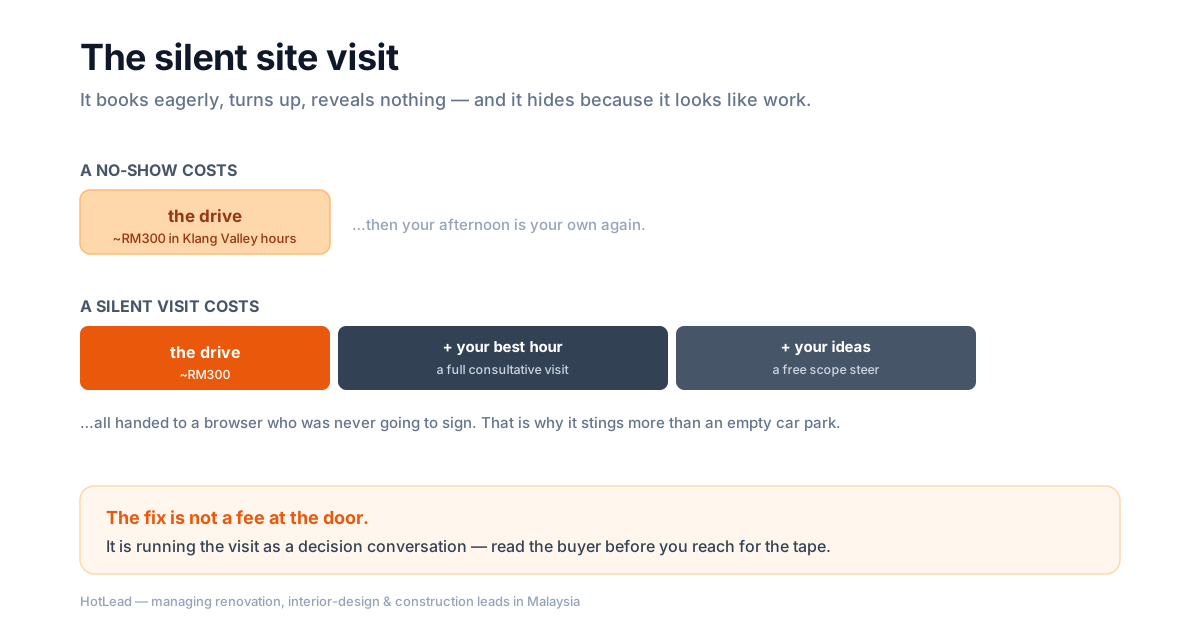
Because a no-show gives you your afternoon back, and a silent visit doesn't. That sounds backwards, so let me walk it.
When someone no-shows, it stings — but the moment you realise no one's coming, you're free. You drove out, you drove back, you lost the trip. Bad, but bounded. I costed that out in the free site-visit trap: a wasted Klang Valley visit runs around RM300, and almost all of it is hours, not the RM12 of petrol owners fixate on.
The silent visit costs you all of that plus the thing a no-show never touches: a full hour of your best selling. You didn't just drive — you sat in someone's living room and gave them your read on their space, your ideas, a rough steer on what's possible, maybe a ballpark. All of it to a person who had already decided against you, or was never deciding at all. And here's the cruel part: it feels productive. A human was there, nodding. So instead of logging it as a loss, you go home and build a quote nobody asked for, then wonder three weeks later why they went quiet.
Why doesn't qualifying harder on WhatsApp fix it?
Because the silent visit isn't a qualification failure — it's a decision failure, and those two live at different stages.
When we talk about qualifying a lead on the first WhatsApp reply, we're checking whether there's a real, funded project at a workable location: right unit type, keys collected, a budget in the same postcode as the scope. That filter is doing real work — it stops you driving out to a RM8,000 budget for a RM40,000 job. But the silent visitor passes it. The Kota Damansara condo was real. The keys were collected. The budget, if I'd pushed, was probably fine. What was missing wasn't a project. It was a decision to act on it — and no WhatsApp qualifier can read that, because the buyer themselves often hasn't made it yet.
That's why the fix for the free site-visit trap — qualify, confirm, batch, so you only drive to real projects — doesn't catch this one. The silent visit is a real project. It's just not a ready buyer. Two different leaks, two different fixes, and mixing them up is why owners keep tightening their pre-visit questions and still lose the Saturday.
What are the four kinds of silent visitor?
There are four, and they need four different responses — which is the whole point, because giving all of them your full consultative hour is how you lose. Here's how to tell them apart.
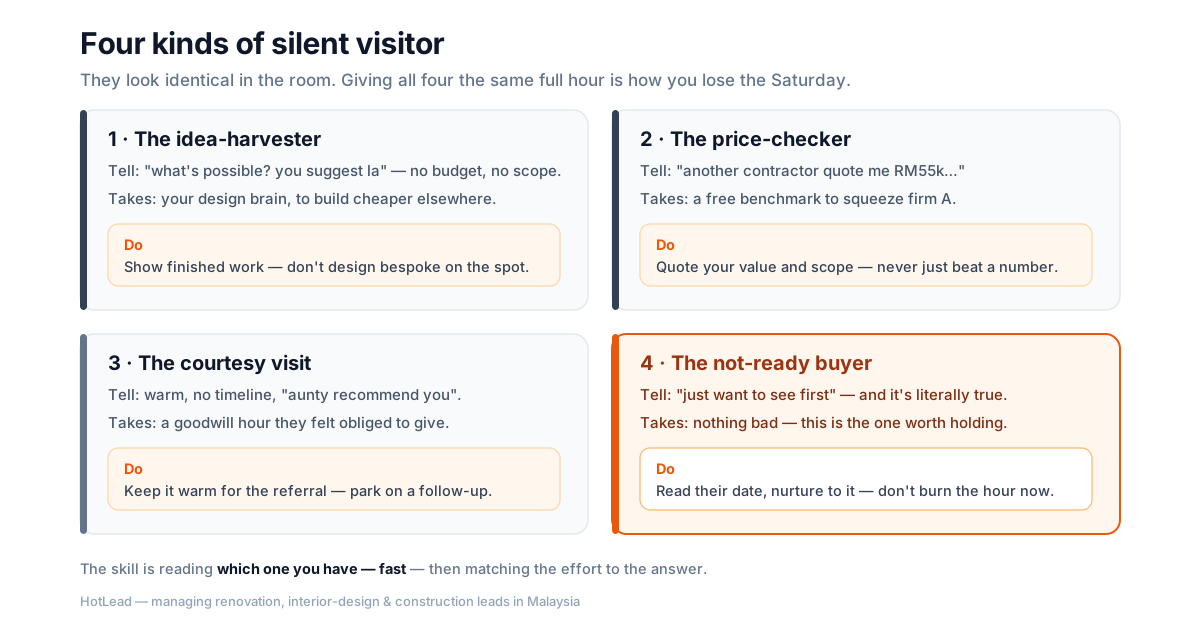
- The idea-harvester. A Mont Kiara enquiry who wants your design brain — "what would you do with this space, what's possible?" — and every answer is a shrug on budget and scope. They'll take your ideas to a cheaper carpenter in Rawang and build them. Cousin to the free-3D-render trap, but at the visit stage. Handling: show finished work from your folder, don't design bespoke on the spot, and gate any real design behind a committed next step.
- The price-checker. A Puchong homeowner who, twenty minutes in, mentions "another contractor quote me RM55k, I just want to compare." You're not a candidate; you're the benchmark they'll use to squeeze firm A. Handling: find out where they are early, and quote your value and scope — never just a number aimed at beating someone else's.
- The courtesy visit. An aunty, an agent, a friend recommended you, so they felt they had to let you come. Warm, no timeline, no real urgency. Handling: read it fast, keep it warm for the referral's sake, don't pour an hour in — park them on a follow-up.
- The genuinely-not-ready buyer. In Setia Alam, "just want to see first" is literally true — six to twelve months out, loan not applied, still dreaming. Handling: this is the good one. Don't burn the hour selling now; read their real date and nurture them to it. Around 63% of enquirers won't buy for three months and 20% take over a year (Marketing Donut) — plenty of your future jobs are sitting in exactly this pile.
The sin isn't that these leads exist. It's treating all four — plus the genuine ready buyer — the same way, with the same full-length consultative visit, because you couldn't tell them apart in the moment.
How do you spot a silent visit before you drive out?
You can't always — and that's the honest answer. Some silent visits only reveal themselves once you're in the room. But the pre-visit WhatsApp usually leaves tells, and reading them decides whether you drive out at full effort or keep your guard up.
The strongest early signal is a lead who is eager to book but vague on everything else. A genuine buyer, even a cautious one, gives you something when you ask — "condo, kitchen and the two bathrooms, hoping to start after Raya." The silent visitor books instantly but answers every scope question with "see first la" or "you come first, then we talk." When the enthusiasm is all about getting you there and none of it is about the actual work, that gap is the tell.
How do you run the visit so it moves the deal or ends fast?
You run it as a decision conversation, not a measuring job. The default script — arrive, measure everything, go home, quote, chase — is exactly what lets a silent visit drain a full hour, because measuring keeps your head down and your mouth shut while the clock runs. Flip the order. Five moves:
- Read before you measure. Open with a decision question, not the laser. "Before I measure up — are we the first firm you're speaking to, or are you comparing a few? And if the numbers work, when would you want this done?" You learn in ninety seconds what a full measure-and-quote wouldn't tell you for a week.
- Trade one idea for a signal. Give a single specific, useful idea — "this wall could come down to open the kitchen" — and watch. A ready buyer builds on it ("oh, and can we move the door?"). A browser nods and says "nice." The reaction, not the nod, is your read.
- Ask for the next commitment at the visit, not after. "I'll have rough costing to you Thursday — can we get fifteen minutes Friday to walk through it together?" Genuine interest converts to a yes. A browser won't book the follow-up, and that refusal is the cleanest signal you'll get all day.
- Give yourself permission to downgrade. If it reads as a browser, you're allowed to not measure the whole unit and not go home to build a quote nobody asked for. Cut it to a warm fifteen-minute walk. Protecting that afternoon is a skill, not rudeness.
- Log where they actually are. Tag the lead — ready, price-check, courtesy, not-ready — with a real follow-up date. A "see first" becomes a held lead pinned to their milestone, not a lost Saturday. About 70% of homeowners don't buy after a first visit but roughly half buy within a year (Builder Prime), and around 80% of sales that close need five or more follow-ups while 44% of firms quit after one (Invesp) — the not-ready pile is only wasted if you don't hold it.
Here's the read, side by side, for the visit itself:
| At the visit | The browser ("tengok dulu") | The ready buyer |
|---|---|---|
| Scope questions | deflects — "not sure la, you suggest" | engages — "can we also do the yard?" |
| Timeline | vague — "no rush, see first" | dated — "want to start after CNY / once keys come" |
| Decision-makers | "I check with husband later" (never resolves) | brings the spouse, or calls them on the spot |
| Your ideas | polite nods, no follow-up questions | builds on them, pushes back, negotiates |
| Next step | won't book a follow-up | commits before you leave |
| Other firms | "another contractor quote me RM X" (checking) | "you're the first" or names a real shortlist |
The bottom line
The silent site visit is the leak that hides because it looks like work. Someone booked, someone turned up, someone nodded — so you treat it as a lead that got away rather than an hour you gave away. But a no-show costs you the drive, and a silent visit costs you the drive plus your best consultative hour, handed to a browser. You don't fix it with a fee at the door, and you don't fix it by tightening your WhatsApp questions — because the silent visitor passes all of that. You fix it by running the visit as a decision conversation: read where the buyer is before you measure, trade one idea for a real signal, ask for the next commitment before you leave, and give yourself permission to keep a browser to a fifteen-minute walk. Not every silent visitor is a waste — some are genuine buyers who are simply months early — but you can only hold the right ones if you stop pouring the same full hour into all of them.
For the whole system this sits inside — capture, qualify, run the visit, follow up, and measure — start with the complete guide to managing renovation leads in Malaysia, and see how it connects to qualifying a lead on the first WhatsApp reply, the free site-visit trap, and what to do when a warm lead ghosts your quote.
How HotLead helps you run the visit, not just book it
HotLead sits on top of your existing WhatsApp. It can't read a homeowner's face for you — that's your job in the room — but it does make sure the read you take actually turns into a tracked lead instead of a forgotten Saturday:
- Auto-greeting and capture on every enquiry, so the eager-to-book lead is caught and acknowledged the moment it lands — and you can start reading the tells on WhatsApp before you ever commit the drive.
- One owner per lead with a next action and overdue follow-ups flagged, so the "see first" browser you correctly downgraded gets parked on a real follow-up date and resurfaced when their milestone comes — not lost because it "wasn't serious."
- A funnel view that shows how many booked visits actually advance to a quote and a deposit, so you can see whether your leak is silent visits, slow quotes, or something further down — instead of guessing.
- Team performance, so you can see who's turning visits into next steps and who's driving out, measuring, and coming home empty.
If your Saturdays keep dissolving into visits that go nowhere, the fix isn't fewer visits — it's reading them faster and holding the right ones. See how HotLead works, or how it fits a renovation firm or an interior-design studio specifically.
Sources: Marketing Donut — why you must follow up leads (63% of enquirers won't buy for 3+ months, 20% take over a year); Builder Prime — closing more sales with the leads you already have (~70% don't buy after the first visit, about half buy within a year); Invesp — the importance of follow-ups (80% of sales need 5+ follow-ups, 44% quit after one); Qwilr — buying signals to spot before the moment passes and RedRover Sales & Marketing — buying signals help avoid overselling (politeness is not a buying signal; the free-consultant risk; test with an action request); Qanvast Malaysia (up-to-five-firm shortlist) and PropertyGuru — hiring a renovation contractor in Malaysia (multi-firm comparison, deposit norms). Klang Valley visit-cost and job-value figures as cited in the free site-visit trap and the complete guide to managing renovation leads in Malaysia.
Frequently asked questions
What is a "silent site visit" in the renovation business?
It's a lead who books a site visit quickly and eagerly, but once you arrive gives you almost nothing to work with — deflects every scope question, won't talk timeline or budget, keeps saying "just want to see first" — so you spend a full visit and drive nothing forward. It's distinct from a no-show (they do turn up) and from a normally cautious buyer (who still engages with the actual project). The silent visit consumes your most expensive selling hour and leaves you unable to tell whether the deal is alive.
Why is a silent site visit worse than a no-show?
Because a no-show, painful as it is, gives you your afternoon back the moment you realise no one's coming — the cost is the drive. A silent visit costs you the drive plus a full hour of consultative selling, and often your ideas and a rough steer on scope, given to someone who was never going to sign with you. It feels productive because a human was standing there nodding, which is exactly why firms keep pouring their best hour into visits that were decided against before you arrived.
How do I tell a genuine renovation buyer from someone just collecting free ideas at the visit?
Read engagement with the actual project, not politeness. A ready buyer reacts to scope — "can we also do the yard?", "is hacking this wall possible?" — gives a dated timeline ("after we get keys in Sept"), and will commit to a next step before you leave. A browser deflects scope ("not sure la, you suggest"), keeps the timeline vague ("no rush, see first"), and won't book a follow-up. The fastest test is an action request — "if the numbers work, can we get fifteen minutes Friday to walk through the costing?" Genuine interest converts to a yes; politeness finds a reason to stay vague.
Should I stop giving free site visits to avoid wasting time?
No — charging a blanket fee mostly repels serious comparison-shoppers, which is a separate problem covered in the free site-visit trap. The silent visit isn't fixed by a gate at the door; it's fixed by how you run the visit. Read where the buyer is before you start measuring, trade one idea for a signal, and give yourself permission to cut a browser's visit to a short walk instead of a full consultative hour. Keep the visit free — just stop giving your best hour to everyone equally.
A homeowner said "just want to see first" — is the lead dead?
Usually not — but it's not ready either, and the mistake is treating "see first" as a yes or a no when it's a "not yet". Around 63% of people who enquire won't buy for at least three months and 20% take more than a year (Marketing Donut), so "see first" is often literally true. The move is to read how far out they are, keep it warm, and park them on a real follow-up date pinned to their milestone — keys, loan, festive season — rather than burning a full quote-and-chase cycle on someone who told you they're browsing.
Keep reading
- What a Referred Lead Is Actually Worth — and Why Your Best Ringgit Protects ItA referral isn't just a "free" lead — it wins on cost, close rate and lifetime value at the same time, and those three advantages multiply. Here's what a referred renovation lead is really worth against a paid one, why owners under-fund their single best channel, and why the highest-return marketing ringgit protects the referral engine instead of buying more cold strangers.
- "Boleh Buat Macam Ni Tak?" — The Expensive-Look, Small-Budget ID Lead in MalaysiaA homeowner sends a saved Instagram image of a RM250k penthouse look and asks for it on a RM90k budget. Most Malaysian ID studios either quote the dream and scare them off, or say "can can" and disappoint them later. Here's why this lead is actually one of your most winnable — and the "same look, three budgets" way to convert it without touching your margin.
- Can AI Route a Fresh Renovation Enquiry to the Right Next Step? We Tried ItMost solo reno owners fire one dead line at every lead — can share more details ah? That single generic reply stalls the buyers who were ready to book. So I asked whether AI can pick the right next step for each enquiry, and draft the reply that gets it there — without committing a slot or a price it cannot know.