

There's a firm in Puchong I've known for years — good carpenters, tidy sites, the kind of outfit that gets rebooked. The owner told me once, half-proud, that he barely spends on ads anymore: "All my jobs come from old customers and their friends." Then in the same breath he complained that a lead had gone cold on him last month. I asked which one. It was a referral — a past client's colleague, ready to renovate a condo in Bandar Puteri. The message had sat in his WhatsApp for two days. When he finally replied, the colleague had already signed with someone else.
Here's the part that stuck with me. When I asked why that one waited two days, he said the thing every owner says: "Aiya, that one referral mah, I thought no rush — they already trust us, sure they'll wait for me."
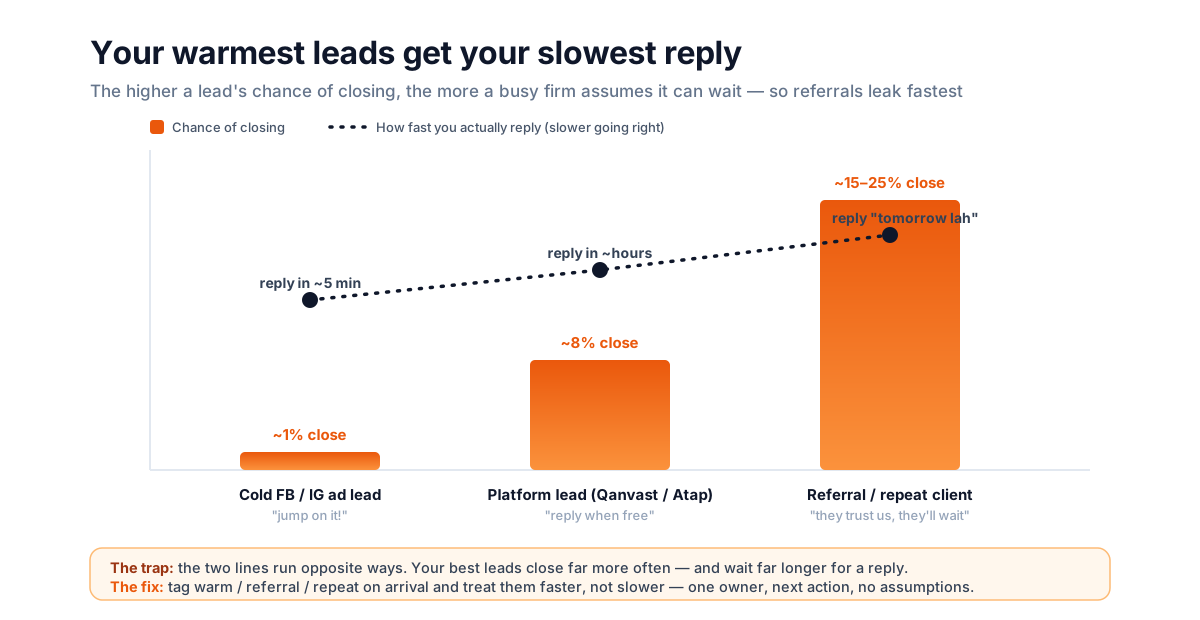
That single sentence is the leak. His warmest, highest-closing lead — the one most likely to become a job — got his slowest reply, precisely because it felt safe. Meanwhile a cold Facebook enquiry that same week got a reply in twenty minutes, because that one felt like it might slip away. He had it exactly backwards, and he's not alone. I see this in reno and ID firms constantly: the better the lead, the more casually it gets treated.
Why do referral and repeat-client leads leak the fastest?
Because they feel safe, and safe things get put last. A cold Facebook or Instagram enquiry triggers urgency — you know that buyer is messaging three other firms, so you pounce within minutes. A referral triggers the opposite: "My regular client sent them, they already trust us, no rush." So the anxious cold lead gets serviced first and the warm one gets left for "when I have a proper moment" — which, on a busy site week, never comes.
It's not laziness. It's a misread of where the risk is. The owner thinks the risk sits with the cold lead, so that's where the attention goes. But the numbers say the opposite: the referral is the lead most likely to actually become money.
And warm leads are quietly everywhere in this trade. It's not just the classic "friend of a friend." It's the past client coming back for their second property. It's the neighbour in the same condo WhatsApp group who saw your work. It's the contractor who sends you the interior job while he keeps the structural. These leads don't announce themselves as precious — they slide into the same inbox as everything else, wearing no label. So they blend in, and blending in is how they get deprioritised.
Aren't warm leads supposed to be patient?
No — usually the opposite. This is the assumption that does the damage: "They trust us, so they'll wait." A referred buyer is actually less forgiving of a slow reply, for two reasons.
First, they arrive expecting to be looked after. Their friend told them you're good and that you'd take care of them. So when your reply lands the next day — or lands vague — it doesn't just read as "busy," it reads as "this firm doesn't think I'm worth the effort," which clashes hard with the VIP welcome they were promised. Silence to a stranger is disappointing; silence to someone who was told you'd be great is insulting.
Second, warm leads still shop. A referral in Malaysia rarely comes alone — it comes as "my friend used this guy, very good, but also check this other one my neighbour used." The trust gives you an edge, not a monopoly. And modern buyers are less patient than ever: customer-experience research shows 88% of customers now expect faster responses than they did a year ago, and once a firm earns a reputation for slow or flaky replies, that reliability is very hard to win back. The warmth buys you goodwill; it doesn't buy you two days of silence.
| Lead type | How the firm feels about it | What actually happens |
|---|---|---|
| Cold FB/IG ad lead (~1% close) | "Might slip away — jump on it!" | Gets the fastest reply, lowest chance of closing |
| Platform lead — Qanvast/Atap | "Reply when I get a moment" | Gets a middling reply; buyer is comparing up to 5 firms |
| Referral / repeat client (15–25% close) | "They trust us, they'll wait" | Gets the slowest reply — your best lead, treated worst |
Read that table top to bottom and the backwardness is obvious: effort goes up as the odds of closing go down. You're spending your fastest reflexes on your worst leads.
What does a leaked referral actually cost you?
Two relationships, not one — and your single biggest lead channel. When you let a cold lead go cold, you lose a job. When you let a referral go cold, you lose the job and you quietly damage the person who sent it.
Think about what a referral really is in Malaysia. Someone renovated their home, was happy, and then put their own name on the line to recommend you to a friend, a colleague, a relative. That's not a lead source — it's a person vouching for you, spending their own social credit. When their friend messages you and gets ignored for two days, that friend goes back and says "eh, that firm you recommended, never even reply me properly." Now your past client is embarrassed — malu — for having recommended you. And embarrassed people stop recommending. You didn't just lose a lead; you switched off a lead source.
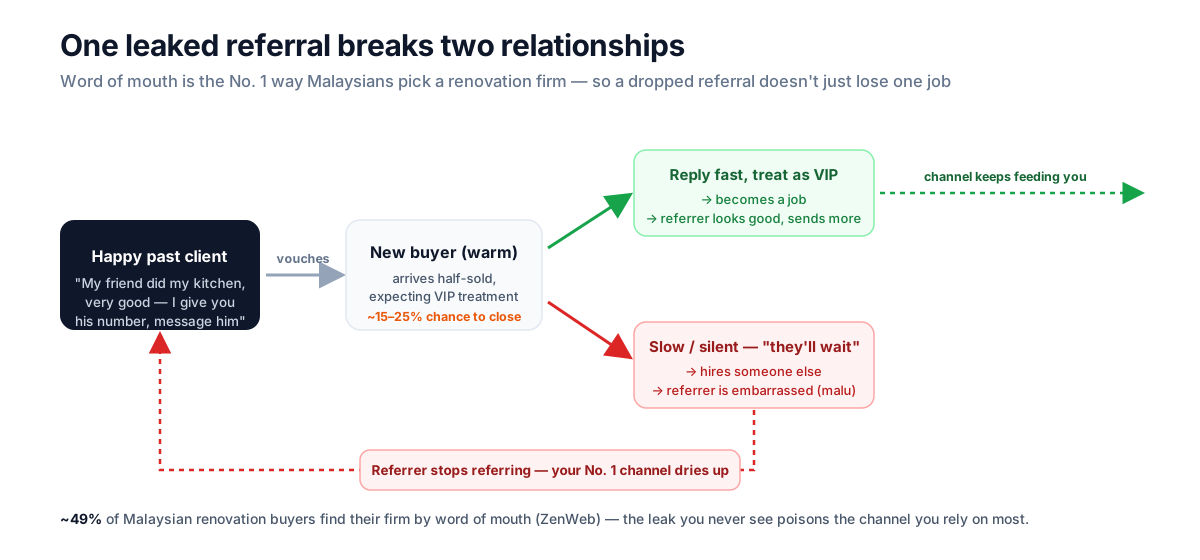
This is why the cost is so much bigger than one lost enquiry — and why it never shows up on a dashboard. Around 49% of Malaysian renovation buyers find their firm through word of mouth, according to ZenWeb's renovation buyer discovery data — one of the top discovery channels, close behind Google and Facebook. That channel runs entirely on happy past clients staying willing to vouch for you. Every dropped referral chips away at the exact thing your low ad spend depends on.
And it's not only the volume — it's the quality. Wharton School research (Schmitt, Skiera and Van den Bulte) found referred customers deliver roughly 16–25% higher lifetime value and churn about 18% less than customers won through other channels. In renovation terms: the referral is more likely to close, more likely to pay a fair price without grinding you, and more likely to come back for the next property and send the next friend. It's the best lead in your inbox on every axis — and it's the one you left on read.
How do you stop treating your best leads worst?
You make "warm" a visible label instead of a private feeling, and you flip the rule so your best leads get served first. The problem isn't that owners don't know referrals are valuable — it's that a referral looks identical to every other message in a busy WhatsApp inbox, so the "they'll wait" assumption fills the gap. Four moves close it:
- Tag every lead by source the moment it lands. Referral, repeat client, cold ad, platform. Once a lead is visibly flagged "referral — from Mrs Tan's job," it stops blending into the pile and your team can see, at a glance, that this is a priority lead — not a maybe.
- Make the rule: warm leads get replied to first and fastest — never slower. Reply to everyone quickly, but a referral or repeat client should never wait longer than a cold enquiry. If anything, they jump the queue. Flip the instinct from "they'll wait" to "this is the one I can't afford to lose."
- Give every warm lead one clear owner — usually whoever holds the relationship. A referral from your regular client should land with the person that client already knows and trusts, not get lost in a team group chat where everyone assumes someone else has it. Warm leads especially can't survive the "who's got this?" limbo.
- Put a next-action date on it and treat it like the VIP it is. Warm doesn't mean it closes itself — a referral still needs the same steady follow-up as any lead, and it's the one you'd most regret forgetting. A system that surfaces "this referral is overdue for a follow-up" catches exactly the lead your gut wrongly filed under "no rush."
The bottom line
The leads you fight hardest for are rarely the ones that close. Your cold Facebook leads get your fastest reflexes and convert at maybe 1%. Your referrals and repeat clients — the ones that close at 15–25%, pay fairly, and feed your biggest channel — get your slowest reply, because "they already trust us, they'll wait" feels like a safe bet. It isn't. Warm leads are less patient, not more; a dropped referral breaks two relationships instead of one; and every one you leak quietly poisons the word-of-mouth engine that roughly half of Malaysian reno buyers use to find you.
You don't fix this with guilt or a resolution to "be better with referrals." You fix it by making warm leads visible the moment they arrive and treating them best, not casually — tag the source, reply first and fastest, one owner, a next action. For the full system this sits inside — capture, speed, ownership and follow-up — start with the complete guide to managing renovation leads in Malaysia, see why the first minutes matter so much, and understand where your leads actually come from so you know which ones to guard hardest. If you want the economics of why a referral is worth so much more than a cold lead, Izzat breaks down cost per lead vs cost per won job across channels.
How HotLead stops your best leads getting your worst treatment
HotLead sits on top of your existing WhatsApp and makes sure a referral never gets buried under a pile of cold enquiries:
- Capture and tag every lead by source — referral, repeat client, ad, platform — so your warmest, highest-closing leads are flagged the moment they land instead of blending into the inbox.
- Auto-greeting on every new enquiry, so a referral that lands while you're on-site gets an instant, warm acknowledgement — the buyer feels looked after from the first second, exactly as their friend promised.
- Automatic routing to one owner — round-robin, manual, or by your own rule — so a referral can go straight to the person who holds the relationship, not into a group chat where "they'll wait" quietly kills it.
- Next action on every lead and overdue follow-ups flagged, so the referral you'd most regret losing never slips into the "no rush" pile.
- A funnel and per-channel view that shows how each source actually converts — so you can see that your word-of-mouth leads close far better than your cold ones, and start guarding them accordingly.
If your work is good enough to run on referrals, don't let those referrals be the leads you treat most casually. See how HotLead works, or read how it fits a renovation firm or an interior-design studio specifically.
Sources: ZenWeb — Malaysian renovation buyer discovery channels (~49% of buyers find their firm by word of mouth — nearly half, one of the top channels alongside Google ~58% and Facebook/Instagram ~53%); Wharton School research on referred customers, via GrowSurf (referred customers ~16–25% higher lifetime value, ~18% lower churn — Schmitt, Skiera and Van den Bulte, Journal of Marketing); warm-referral vs cold-lead conversion research (Rhythm of Business, warm referrals converting several times better than cold leads), consistent with the house figure of ~15–25% referral close vs ~1% cold; timetoreply — impact of response time on customer satisfaction (88% of customers expect faster responses than a year ago) and SuperOffice — customer service response times (a reliability reputation is hard to win back once lost); follow-up figures (80% of sales need 5+ follow-ups, 44% quit after one) as cited in the complete guide to managing renovation leads in Malaysia.
Frequently asked questions
Why do referral leads get a slower response than cold leads?
Because a firm feels no urgency about them. A cold Facebook or Instagram enquiry feels precarious — you know they're messaging three other firms, so you pounce. A referral feels safe — "my regular client sent them, they already trust us, they'll wait for me." So the busy owner services the anxious cold lead first and leaves the warm one for later. The instinct is backwards — the referral is your highest-closing lead and deserves the fastest reply, not the most relaxed one.
Aren't warm and referral leads more patient than cold ones?
No, usually less. A referred buyer arrives half-sold and expecting to be looked after — their friend told them you're good, so a slow or vague reply doesn't just cost you time, it clashes with the VIP treatment they were promised. Warm leads also still shop around; a referral in Malaysia often comes with two or three other names attached ("ask him, and also this one my neighbour used"). Silence to a warm lead stings harder and gets punished faster, not slower.
What does losing one referral lead actually cost a renovation firm?
More than one job. You lose the buyer, who was your likeliest close of the week. You also embarrass the past client who vouched for you — in Malaysia that person put their own face on the line, and when their friend gets ignored, they feel it. That referrer stops sending people. Since roughly 49% of Malaysian renovation buyers find their firm through word of mouth (ZenWeb), dropping referrals quietly poisons one of your biggest lead channels — a cost you never see on any dashboard.
How do I stop my team from taking warm leads for granted?
Make "warm" a visible label, not a feeling. Tag every enquiry by source the moment it lands — referral, repeat client, cold ad, platform — so a referral is flagged as your priority lead instead of blending into the pile. Then set the rule that warm leads get replied to first and fastest, assign one clear owner so nobody assumes someone else has it, and put a next-action date on it. The goal is to remove the quiet "they'll wait" assumption and replace it with a system that treats your best leads best.
Should I really reply to a referral faster than a paying enquiry from an ad?
Yes — reply to everyone fast, but never let a referral wait longer than a cold lead. A referral has several times the chance of closing, is cheaper to win, and tends to become a longer, higher-value client (Wharton research puts referred customers at meaningfully higher lifetime value and lower churn). Letting your highest-value, highest-probability lead sit while you chase a 1%-close cold lead is the most expensive habit in a small reno firm's inbox. If anything, warm leads should jump the queue.
Keep reading
- Did We Already Say RM68k? Using AI to Stop Quote Drift Across a Long Renovation ThreadOver a weeks-long WhatsApp thread with two or three quote revisions, a rep re-states a number that contradicts an earlier promise — and re-opening a settled price quietly invites a discount that eats a whole job's profit. So I pointed AI at the drift. It works beautifully as a flag, and dangerously as an auto-corrector.
- The Warranty as a Closing Lever: Why a Longer Guarantee Beats a Discount on a Renovation DealA quote is stalling and the buyer wants a reason to say yes. Before you drop the price, look at the other lever in your hand — a longer workmanship warranty. It is the same expected-value decision as a discount, but the math runs the opposite way — a price cut costs you thousands with certainty, while extending the defects cover costs you a couple of hundred ringgit in expectation, for arguably more trust with a scam-wary buyer. Here is the EV case for the non-price concession, the trap that turns it into a hidden liability, and which leads it actually moves.
- "Can You Just Build It, My Neighbour Also Did" — Handling the Renovation Lead That Needs Council Approval FirstSome renovation enquiries can't legally start next month, no matter how ready the buyer is — a kitchen extension, a hacked-through wall, a roofed-over air well all need the council's written approval first. Quote a fast build price to win the job and you either lose it to a "boss, can start" cowboy, or win it and inherit the stop-work order, the RM50,000 fine and a client who later can't sell the house. Here's how to spot the permit-first lead and sell the approval as protection.