

A restoration contractor I know in Shah Alam nearly did RM35,000 of work for free on what looked like the best lead of the monsoon season. The WhatsApp came in the morning after a flash flood: "Bro, my whole ground floor kena, water up to the knee, kitchen cabinet, flooring, wall all rosak. I'm claiming insurance so budget no problem. Can you come today and start? Need to fix fast before mould." Photos attached — a waterline on the wall, warped laminate lifting off the floor, a ruined kitchen. A big job, a motivated customer, and the magic words: insurance, budget no problem.
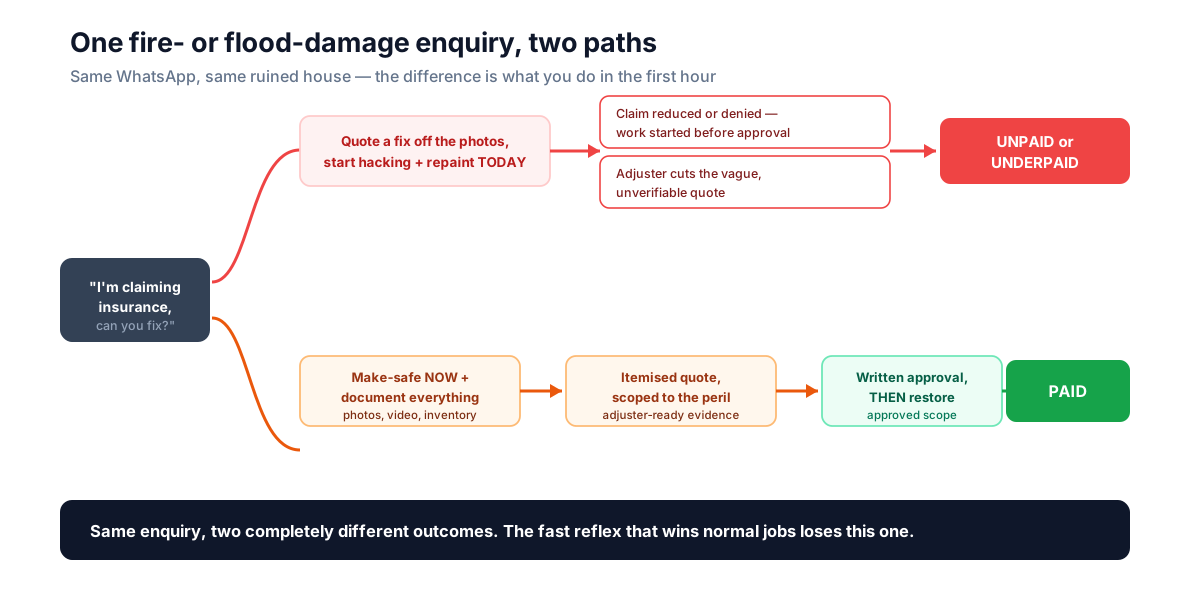
So he did what he'd do with any hot, well-funded lead: replied fast, drove out, and by afternoon his crew was hacking out the kitchen and stripping the flooring — "we start now, claim the amount later." Then it unravelled. The insurer's loss adjuster hadn't inspected yet. The homeowner had a basic fire policy with no flood extension — the flood damage might not be covered at all — and even the parts that were, the insurer wasn't going to pay for work that had already been torn out before anyone assessed it. The homeowner, who genuinely believed "insurance will cover everything," had no RM35,000 of his own. My contractor was standing in a gutted house holding a bill nobody had agreed to pay.
That's the trap in this piece. After a fire or a flood, "can you fix this, I'm claiming insurance" reads like the dream lead — big, urgent, already funded. It's actually the one job where your fast quote-and-fix reflex can leave you unpaid, or paid a fraction, on work you've already done. Because an insurance-claim restoration isn't a normal repair. The person messaging you isn't the one paying, your quote is evidence before it's a price, and in Malaysia, starting the repair before the insurer approves can void the very claim that was supposed to fund you.
Why isn't an insurance-claim repair just a normal repair job?
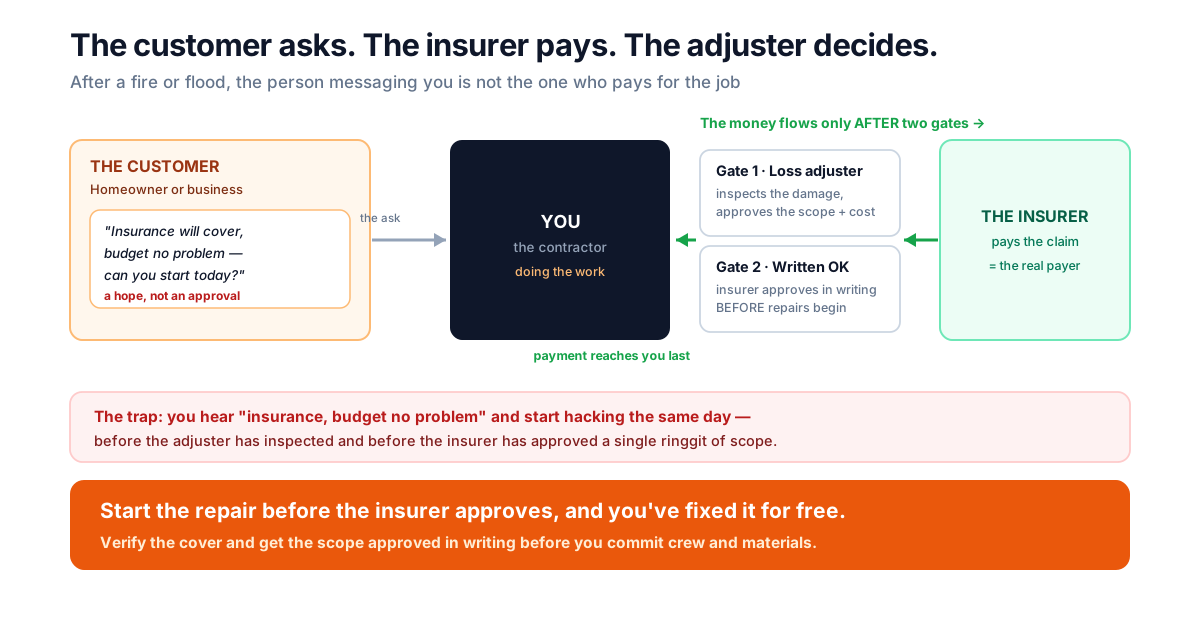
Because the money doesn't come from the person in front of you — it comes from a claim, capped at what a loss adjuster approves, and usually only after the insurer has inspected and agreed. On a normal repair, your customer sees the damage, agrees the price, pays a deposit and you start. On an insurance job, three parties sit between you and getting paid: the policyholder (your client), the insurer (the payer), and the independent loss adjuster the insurer appoints to verify the damage and approve the repair scope and cost.
That changes everything about how you handle the enquiry. According to the General Insurance Association of Malaysia (PIAM), a property claim runs like this: the owner notifies the insurer as soon as reasonably practicable, provides supporting documentation and photographs, and — depending on severity — the insurer appoints a loss adjuster to assess. Crucially, the owner should get written approval before repairs begin, because unauthorised work may not be covered. Fire the fast quote-and-fix reflex and you've marched straight past the one gate that guarantees payment.
That's the whole lesson of the diagram at the top of this piece: the customer asks, the insurer pays, and the loss adjuster decides how much. Your customer saying "budget no problem, insurance will cover" is not the same as money being approved — it's a hope, and often an uninformed one. Until the adjuster has inspected and the insurer has approved the scope in writing, there is no confirmed payer for your work.
The two clocks: mould won't wait, but the claim takes weeks
The hardest part of a restoration lead is that the damage clock and the claim clock run in opposite directions — and the wrong move on either loses you money. Water damage is unforgiving: under the right conditions, mould begins to grow within 24 to 48 hours, and every hour of standing water and soaked material makes the eventual job bigger. The restoration industry splits this into two things: mitigation (drying and making safe to prevent further damage — IICRC standard S500) and remediation or restoration (fixing and rebuilding what's already ruined — S520). Mitigation cannot wait.
But the claim clock is slow. The owner reports it, the insurer appoints an adjuster, the adjuster inspects, the scope gets approved — that's typically weeks, not days. So you're caught: do nothing and the damage (and the eventual cost) balloons while mould sets in; do the full repair now and you've worked before approval and risked the claim.
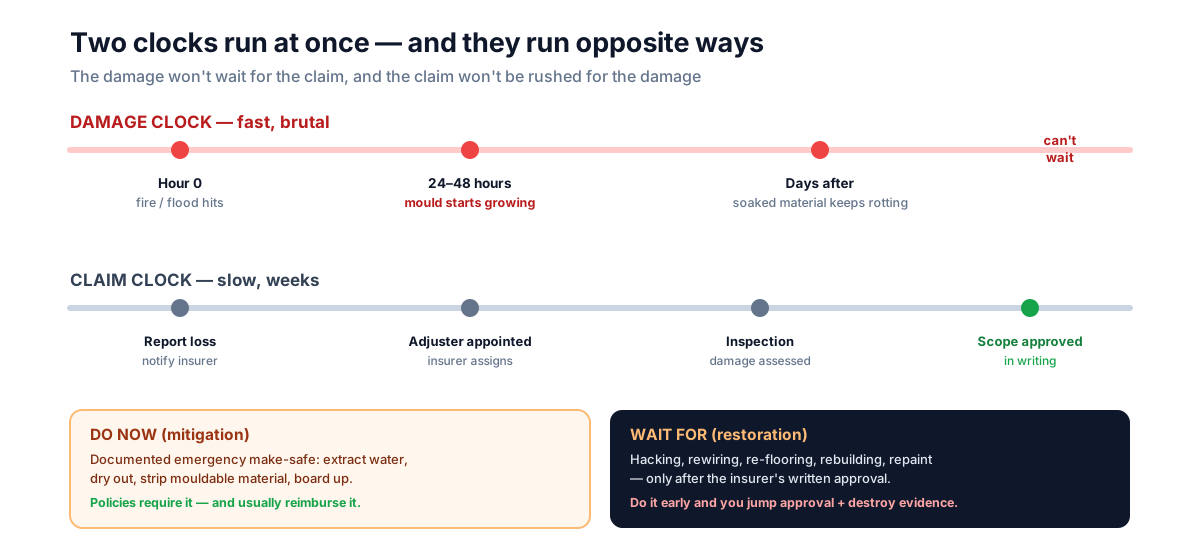
The resolution is to separate the two jobs:
- Emergency make-safe now — documented. Extract standing water, dry the structure, strip out materials that will grow mould, board up, isolate power. Malaysian policies expect the owner to take reasonable steps to prevent further damage, and those mitigation costs are generally claimable — so this protects both the building and the claim. But photograph and video everything before you touch it, and keep every receipt.
- Full restoration only after written approval. The hacking, rewiring, re-flooring, rebuilding and repainting waits until the adjuster has inspected and the insurer has approved the scope and cost.
Your quote isn't a price — it's claim evidence
On an insurance job, the quote is the single most important document you produce, because a loss adjuster reads it as evidence and decides what the insurer pays off the back of it. The PIAM claims process turns on documentation — photographs, reports, and detailed inventories of the damage. Your quote is part of that evidence chain. An itemised quote, scoped line by line to what the peril actually caused, gets understood and approved. A vague lump sum gets queried, cut, or bounced back for detail — and every bounce delays the settlement that pays you.
This is the exact opposite of a normal fast homeowner lead, where a quick round number and a good price win the job. Here, the number that wins is the one the adjuster can defend. That means:
- Itemise everything — strip-out, drying, materials by area, labour, disposal — not one "restoration" figure.
- Scope it to the peril. Separate what the fire or flood caused from pre-existing wear or an upgrade the owner wants slipped in. Adjusters catch the upgrade, and it makes your whole quote look padded.
- Document the damage to match. Every line should map to a photograph or an inventory item, so the adjuster can tick it off.
The Malaysian catch: is the damage even covered?
"I have insurance" is not the same as "this is covered," and in Malaysia the gap between the two is enormous. Two things trip up restoration contractors who assume a policy means guaranteed money.
First, a standard fire policy doesn't cover flood. Flood, storm and similar perils are a special-perils extension that many homeowners never bought — adding it typically raises the premium by 15–40%, so plenty skip it. It's also worth knowing which policy is in play: a houseowner policy covers the structure (walls, roof, wiring, fittings), while a householder policy covers the contents. A flooded home may need both — or the owner may have neither.
Second, even where the peril is covered, underinsurance is rampant, and the average clause punishes it. If a property is insured for less than its actual value, the insurer pays out in proportion — claim payment = (sum insured ÷ actual value) × loss. Insure a RM600,000 home for RM300,000 and a RM40,000 claim can settle at RM20,000. This isn't a rare edge case: after the December 2021 floods, Bank Negara noted significant underinsurance of flood risk, and the Malaysian Insurance Highlights 2021 put total losses at around RM6.1 billion with only about 36% insured — 82% of that commercial. Most flooded households were on their own. A relief agency at the time estimated each flood-hit home needed roughly RM5,000 to RM10,000 in repairs, much of it uninsured.
For you, this means one question before you scope a big restoration: what's actually covered — which peril, which policy, and does the sum insured reflect the real value? Scope a RM40,000 job on the assumption the claim will cover it, and you can find the owner has a RM15,000 approval and no way to fund the rest.
Normal repair lead vs the insurance-claim restoration lead
They can arrive in the same inbox, but almost every reflex flips.
| Normal repair lead | Insurance-claim restoration lead | |
|---|---|---|
| Who's the buyer | The person messaging you | The person messaging you — but they're not the payer |
| Who pays | The customer, from their own pocket | The insurer, capped at what the adjuster approves |
| Your quote is | A price to win the job | Evidence the adjuster uses to decide the payout |
| The clock | Reply fast, quote, start | Mitigate now; restore only after written approval |
| What you do first | Quote the fix | Document the damage, make safe, verify cover |
| What wins it | Speed and a fair price | A defensible, itemised, adjuster-ready quote |
| Cost of getting it wrong | An unhappy customer | A big job done unpaid — or paid a fraction |
How should a contractor handle an insurance-claim restoration enquiry?
You handle it fast on the make-safe, slow on the money — and you can run it as a light layer over the same WhatsApp. Five moves:
- Tag it as an insurance-claim restoration lead the moment it lands — not a normal repair. That one label routes it into a lane where nobody on your team fires back a fix-price and starts hacking. The whole failure begins with treating a claim job like a walk-in repair.
- Reply fast and act on the emergency — but don't do the full repair or quote a final fix off a photo. Get there quickly for documented make-safe (extract, dry, strip mouldable material, board up), because the 24-to-48-hour mould window is real. Then stop at mitigation until the claim is approved.
- Document everything before you touch it — you're building evidence. Photos and video of every damaged area, an inventory of what's ruined, receipts for the make-safe work. This protects the customer's claim and is the basis of your quote. It's real, chargeable work — treat it the way you'd charge for a proper assessment rather than give away a free site visit.
- Verify cover, then write an itemised, adjuster-ready quote and wait for written approval. Ask which peril is covered and whether an adjuster is appointed. Quote line by line, scoped to the damage, and hold off on the restoration until the insurer approves — the same money-first discipline that separates a lead you can actually close from one that just feels warm.
- Give it one owner and keep it visible in the funnel. A claim runs for weeks across an adjuster, an insurer and an anxious customer, so assign one person by a rule instead of letting it get lost in a group chat where nobody owns it, and keep a next-action with a date so the follow-up actually happens. You want to see at a glance which claim jobs are live (approved, ready to restore) versus stuck (waiting on the adjuster) so real work doesn't lapse while the paperwork grinds.
Is it worth the hassle?
Yes — if you treat it as its own kind of lead. Fire and flood restoration is high-value, recurring work, and the firm that documents damage properly, writes quotes an adjuster can approve, and patiently works the claim becomes the contractor that gets claims paid. That reputation wins the job now and referrals later, because a family who's just watched their home ruined remembers exactly who steadied them through it. The hassle only bites the firm that treats a claim like a walk-in — quotes off a photo, starts before approval, ends up unpaid.
The pattern is the same one that runs through the hard leads in this playbook — the abandoned-job rescue, the condo inter-floor leak: the enquiry that looks easiest is often the one where the fast reflex costs you the most, and the money question has to be settled before the tools come out.
How HotLead helps a contractor handle the claim lead
HotLead sits on top of the WhatsApp your enquiries already arrive in — nothing changes for the person messaging you — and it's built so a slow, multi-party job like a claim doesn't get fumbled the way a fast repair lead would:
- Captures and tags every enquiry as it lands, so an insurance-claim restoration can be marked as its own type and worked on the right clock — make-safe fast, restore only after approval — instead of being answered like a walk-in.
- Assigns one owner instantly — round-robin, manual, or a custom rule set up during onboarding — so the anxious customer, the adjuster and the insurer are all handled by one person who holds the thread, not a group chat where it goes cold.
- Keeps a next action and flags overdue follow-ups, so the chase on the adjuster, the approval, and the deposit actually happens over the weeks a claim runs — exactly where a slow process beats a team running on memory.
- Shows your funnel and per-channel ROI, so you can see which claim jobs are live and approved versus stuck on paperwork, and which channels send the profitable restoration work.
To be straight about it: HotLead doesn't file the claim, deal with the loss adjuster, or verify what's covered — that's the insurer, the adjuster, and your own expertise. What it does is stop a genuine, high-value restoration lead from leaking out of your inbox while everyone waits on the claim.
If your firm is quick on normal repairs but keeps getting burned on insurance jobs — unpaid, underpaid, or started before approval — the fix usually isn't your restoration work. It's that you answered a claim like a repair. Start with the renovation lead-management hub or the contractor hub, read the complete guide to managing renovation leads in Malaysia, or see how HotLead works.
Sources: December 2021 flood losses of roughly RM6.1 billion with only about 36% insured (82% of that commercial) from the Malaysian Insurance Highlights 2021 / Malaysian Re, via BERNAMA; Bank Negara's finding that the floods highlighted significant underinsurance of flood risk from The Edge Malaysia; the estimate that each flood-hit home needed roughly RM5,000–10,000 in repairs from Malay Mail (Dec 2021); a standard fire policy excluding flood (flood/storm as a special-perils extension, +15–40% premium) and the houseowner-vs-householder distinction from the Tokio Marine guide to houseowner and householder insurance; the PIAM property-claim process — notify promptly, document with photographs, an independent loss adjuster is appointed, and written approval before repairs begin (unauthorised work may not be covered) — from PIAM via Insurance Business Asia and The Edge Malaysia — PIAM on flood claims; the 24–48-hour mould window and the mitigation (IICRC S500) vs remediation (S520) distinction from Insurcomm — how fast does mould grow after water damage and the US EPA mould guidance. The Shah Alam, Klang and other contractor scenarios are illustrative; the pattern is one we see repeatedly.
Frequently asked questions
Can I start repairs straight away if the customer is desperate after a flood or fire?
Not the full repair. In Malaysia, insurers generally require written approval before repair works begin, and unauthorised work may not be covered — so if you hack, rewire and repaint the day you arrive, you risk the customer's whole claim being reduced or denied, and then nobody funds your job. What you can and should do is documented emergency make-safe to prevent further damage — extract standing water, dry out, remove soaked materials that will grow mould, board up, isolate power — because policies expect the owner to take reasonable steps to mitigate, and those costs are usually claimable. Photograph and video everything before you touch it, keep every receipt, and keep it to mitigation, not restoration, until the adjuster has inspected and the insurer has approved the scope.
Who actually pays me on an insurance-claim job — the homeowner or the insurer?
Your client is the person who messaged you, but the money comes from the claim, and the amount is what the loss adjuster approves — not what you quote. On a big fire or flood restoration the homeowner usually can't fund it out of pocket, so you're effectively working against an insurance claim, not a customer's ready cash. That's why you confirm the claim is real and the scope is approved before you commit crew and materials. Treat "I'm claiming insurance" as a reason to slow down and verify, not a green light that the money is guaranteed.
Why does my quote matter so much on an insurance job?
Because it's evidence, not just a price. An independent loss adjuster scrutinises your quote against the actual damage to decide what the insurer pays. An itemised quote scoped to the peril — what the fire or flood specifically caused, line by line — gets understood and approved. A vague napkin number ("restoration around RM40k") gets queried, cut, or sent back, which delays the settlement and makes you look like you're guessing. On a claim, the detailed, defensible quote isn't bureaucracy — it's how the job gets funded.
The customer says "I have insurance" — is the damage definitely covered?
Not necessarily, and assuming it is can burn you. A standard Malaysian fire policy does not cover flood — flood, storm and similar are a special-perils extension many homeowners never added. Even where the peril is covered, underinsurance is common, so the average clause reduces the payout in proportion to how under-insured the property is. After the December 2021 floods, only about a third of the roughly RM6.1 billion in losses was insured, and most of that was commercial — most flooded households had no cover at all. So before you scope a large restoration, ask which peril is covered, whether an adjuster has been appointed, and whether the sum insured actually reflects the property's value.
Is an insurance-claim lead worth chasing, or is it too much hassle?
It's worth it if you handle it as its own kind of lead. Fire and flood restoration is high-value work, and the firm that documents damage properly, writes adjuster-ready quotes and patiently works the claim becomes the contractor that gets claims paid — which wins the job now and referrals later, because a burned or flooded owner tells everyone who helped them through it. The hassle only bites the firm that treats it like a walk-in repair — quotes off a photo, starts work before approval, and ends up unpaid. Tag it, document before touching, quote itemised, wait for written approval, and give it one owner who can work a claim that runs for weeks.
Keep reading
- Did We Already Say RM68k? Using AI to Stop Quote Drift Across a Long Renovation ThreadOver a weeks-long WhatsApp thread with two or three quote revisions, a rep re-states a number that contradicts an earlier promise — and re-opening a settled price quietly invites a discount that eats a whole job's profit. So I pointed AI at the drift. It works beautifully as a flag, and dangerously as an auto-corrector.
- The Warranty as a Closing Lever: Why a Longer Guarantee Beats a Discount on a Renovation DealA quote is stalling and the buyer wants a reason to say yes. Before you drop the price, look at the other lever in your hand — a longer workmanship warranty. It is the same expected-value decision as a discount, but the math runs the opposite way — a price cut costs you thousands with certainty, while extending the defects cover costs you a couple of hundred ringgit in expectation, for arguably more trust with a scam-wary buyer. Here is the EV case for the non-price concession, the trap that turns it into a hidden liability, and which leads it actually moves.
- "Can You Just Build It, My Neighbour Also Did" — Handling the Renovation Lead That Needs Council Approval FirstSome renovation enquiries can't legally start next month, no matter how ready the buyer is — a kitchen extension, a hacked-through wall, a roofed-over air well all need the council's written approval first. Quote a fast build price to win the job and you either lose it to a "boss, can start" cowboy, or win it and inherit the stop-work order, the RM50,000 fine and a client who later can't sell the house. Here's how to spot the permit-first lead and sell the approval as protection.