

A waterproofing contractor I know in PJ nearly lost a Saturday and a chunk of goodwill on what looked like the easiest job of the week. A WhatsApp came in at 8am: "Bro my bathroom ceiling dripping, water coming from upstairs unit, very bad, can you come today ah? How much?" Photo attached — a brown bloom on a plaster ceiling, a bucket underneath. Clear problem, desperate customer, small job. So he did what he always does with a hot repair lead: replied fast, quoted off the photo — "can, ceiling waterproofing and repaint around RM2,800, I come this afternoon" — and drove out.
He walked into a mess that had nothing to do with waterproofing. The water was coming from the unit above, not his customer's. The upstairs owner was renting the place out, wasn't answering anyone, and hadn't given anyone access. The building management had been told but hadn't inspected. Nobody — not the customer, not upstairs, not the JMB — had agreed who was paying. His customer just wanted the ceiling to stop dripping and assumed the RM2,800 was someone else's problem to settle later.
He had two bad options standing in that bathroom. Fix the visible ceiling now and hope somebody pays him — and watch it leak again in two months because the source was still upstairs, untouched. Or turn around and drive home having burned the morning. Either way, the "easy" job had turned into a liability tangle he'd quoted a firm number on before he understood any of it.
That's the trap in this piece. In a landed house, "my ceiling is leaking" is a repair. In a Malaysian condo, it's inter-floor leakage — and inter-floor leakage isn't a repair, it's a liability question with a legal process bolted to the front of it. Answer it like a normal waterproofing lead and it's the one job that can leave you unpaid, blamed, and back on site for free.
Why isn't a condo ceiling leak just a normal waterproofing job?
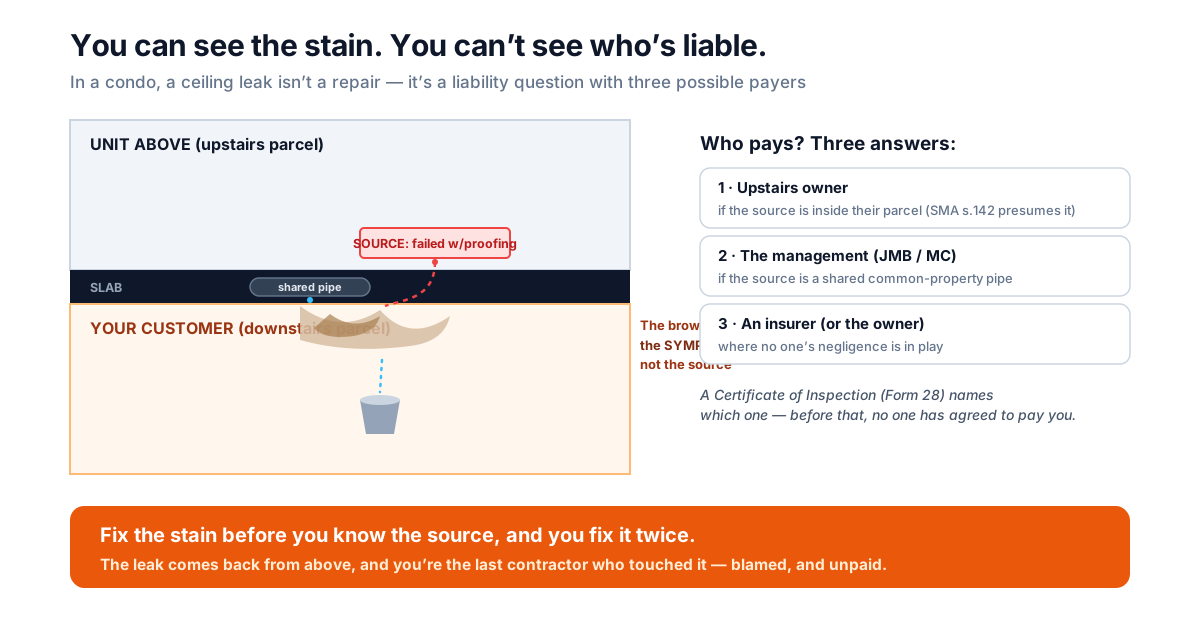
Because it's inter-floor leakage, and Malaysian strata law puts a whole process in front of the repair. In a strata block the water on your customer's ceiling has crossed a legal boundary — from one owner's parcel, or from shared common property, into another owner's parcel — and the law decides who has to fix it and who pays before the tools come out.
The starting point is a presumption most contractors have never heard of. Under Section 142 of the Strata Management Act 2013, if a leak appears on a ceiling, it is presumed to originate from the parcel directly above — unless that upstairs owner can prove it doesn't. That single rule is why "water coming from upstairs" isn't your customer's problem to pay for by default. But it's only a starting point: the Strata Management (Maintenance and Management) Regulations 2015 then set out an actual procedure to establish the real cause:
- Once a leak is reported, the management body must inspect within 7 days to determine the cause and the party responsible (regulation 57).
- Within 5 days of that inspection, it issues a Certificate of Inspection (Form 28) stating the cause of the leak and who is responsible to rectify it.
- The party doing the inspection or the repair gets a right of access to the affected parcel on 7 days' written notice — waived only in a genuine emergency where damage or danger is escalating.
And crucially, the source changes who owns the problem. If it's the upstairs parcel (their failed bathroom waterproofing, their concealed pipe), that owner rectifies. If it's common property — a shared water, drainage, sewerage or gas pipe serving more than one unit — it's the management body's job. Same brown stain on the same ceiling, three different people who might be paying you.
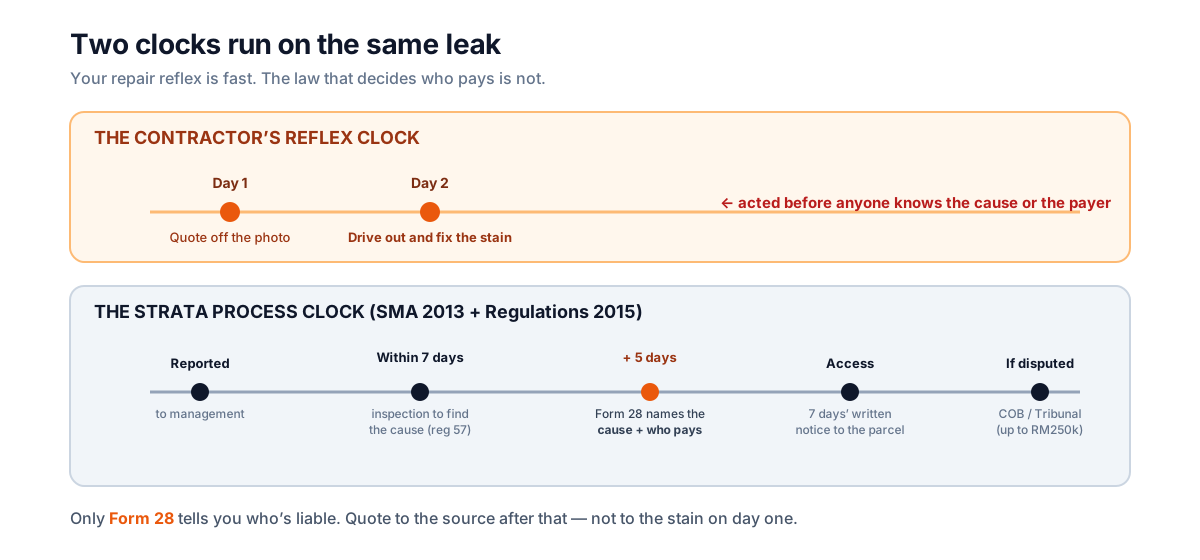
The two clocks are the whole problem in one picture. Your repair reflex wants to quote on day one and fix on day two. The law's clock — inspect, certify, grant access — has barely started by then. Fire the fast quote-and-fix and you're acting before anyone has established the cause or the payer.
Who actually pays — and why guessing wrong costs you?
The payer is genuinely contested, and there are at least four candidates. Before you quote, one of these has to be settled — and it usually isn't when the WhatsApp first lands:
- The upstairs owner — if the source is inside their parcel (the default presumption for a ceiling leak).
- The management (JMB/MC) — if the source is common property, like a shared pipe or duct in the slab.
- An insurer — some owners or the building have coverage that responds to water damage.
- Your own customer — sometimes it really is their own unit's fault, or they just want it fixed now and to argue about money later.
Here's the part that bites contractors: if you quote a number and start work before the Certificate of Inspection has named a responsible party, you're doing the job on trust with no established payer. The customer downstairs is happy to let you fix their ceiling — but when your invoice arrives, they point upstairs, upstairs points at the management, the management points at the certificate that was never issued, and you're the one holding an unpaid bill for work already done. This is the same money-first discipline that separates a lead you can actually close from one that just feels warm: a leaking-ceiling enquiry isn't a paid job until someone with the authority to pay has agreed to.
Why is fixing the visible leak the fastest way to get blamed?
Because the stain is the symptom and the source is almost always somewhere else — usually up. Water travels. It appears on a ceiling far from where it entered the structure, seeping along the slab and finding the lowest point to drip. So the brown bloom your customer photographs is where the water comes out, not where it gets in. Patch, skim and repaint that ceiling without stopping the source and you've treated a bruise while the artery keeps bleeding — it comes back in weeks.
And when it comes back, look at who's standing there. Not the runaway who caused it. You — the last contractor who touched it. This is the exact same blame-migration that makes rescuing an abandoned renovation so dangerous: the moment your hands are the last on the job, a fault that was never yours becomes yours in the customer's eyes. Repaint a leaking ceiling before the source is stopped and proven dry, and you've volunteered to own a leak you didn't cause.
There's a second reason not to rush in: you can disturb the evidence the inspection needs. If the management or a neighbour later argues about cause, a ceiling that's already been hacked and re-skimmed by you has lost the very signs — where the water tracked, how wet the slab was — that a Certificate of Inspection relies on. Slow down, let the cause be established, then fix the source.
Normal repair lead vs the inter-floor leakage lead
They arrive in the same inbox, worded almost identically. Nearly every reflex flips.
| Normal repair lead | Inter-floor leakage lead (condo) | |
|---|---|---|
| Who's the buyer | The person messaging you | Often a relay — the real payer may be upstairs, the JMB, or an insurer |
| Who pays | The customer, clearly | Contested until a Certificate of Inspection names them |
| Where's the fault | Where the problem shows | Usually somewhere else — the source is up, the stain is down |
| The clock | Reply fast, book, fix | A legal process — inspect, certify, grant access — runs first |
| What you do first | Quote the fix | Read the situation, then gate a paid investigation |
| What wins it | Speed and a fair price | Getting the cause and the payer settled before you commit |
| Cost of getting it wrong | An unhappy customer | Unpaid work, a recurring leak, and the blame for both |
How should a contractor handle a leaking-ceiling enquiry?
You handle it warm but slow — and you can run it as a light layer on top of the same WhatsApp. Five moves:
- Tag it as an inter-floor leakage lead the moment it lands — not a normal repair. That one label routes it into a lane where nobody on your team fires back a fix-price off a photo. The whole failure starts with treating it like a walk-in bathroom job.
- Reply fast and warm, but don't quote the fix — qualify the situation. They're stressed and living with a bucket, so acknowledge quickly. Then ask the three questions that decide everything: Where's the water coming from — your unit or above? Have you reported it to the building management, and is there a Certificate of Inspection yet? Who's agreed to pay — the upstairs owner, the management, insurance, or yourself? You'll often learn it's not ready to be a paid job, which is worth knowing before you drive out.
- Gate a paid leak investigation — quote to the source, not the stain. Moisture mapping, a PU/ponding test, tracing the entry point — that's real diagnostic work, so charge for it the way you'd charge for any deliverable rather than give away a free site visit. It filters the tyre-kickers, and it's the only honest basis for a fix quote, because until you've found the source you're guessing at both the scope and the price.
- Give it one owner who can work a slow, multi-party job. These drag across the 7-day inspection, the 5-day certificate, an access notice, sometimes a Tribunal filing — with an anxious owner, an evasive neighbour and a slow JMB all in the mix. Assign one person by a rule so it doesn't get lost in a group chat where nobody owns it, and keep a next-action with a date so the follow-up before the inspection actually happens.
- Keep it visible in the funnel. You want to see, at a glance, which leak leads are live (someone's agreed to pay, source found, ready to book) versus stuck (waiting on the certificate, or a neighbour who won't give access) — so you work the winnable ones and stop letting genuine jobs quietly lapse while the paperwork grinds.
When is it actually a fast job worth grabbing?
When the source is inside your own customer's unit and they're plainly the payer. Not every condo leak is a liability tangle. If their own bathroom waterproofing has failed and it's leaking down to the neighbour below, or the whole problem sits within their own walls and floor, then there's no argument to settle — your customer owns it, they're paying, and it's a normal re-waterproof you should quote and book quickly. A full condo bathroom re-waterproof runs roughly RM1,500–3,500 without hacking, or RM4,500–9,000 with, depending on scope — a clean, well-understood job.
The trap is only the contested version — water arriving from above, or a shared pipe, where who-pays isn't settled. Same enquiry wording, two completely different leads. So the very first thing you establish, before anything else, is simply: where is the water coming from? That one answer tells you whether to move fast or move carefully.
How HotLead helps a contractor handle the leak lead
HotLead sits on top of the WhatsApp your enquiries already arrive in — nothing changes for the person messaging you — and it's built so a slow, multi-party job like this doesn't get fumbled the way a fast repair lead would:
- Captures and tags every enquiry as it lands, so an inter-floor leakage lead can be marked as its own type and worked on the right clock — read-the-situation-first — instead of being answered like a walk-in.
- Assigns one owner instantly — round-robin, manual, or a custom rule we set up during onboarding — so the anxious owner, evasive neighbour and slow JMB are all handled by one person who holds the thread, not a group chat where it goes cold.
- Keeps a next action and flags overdue follow-ups, so the check-in before the inspection or after the Certificate of Inspection actually happens weeks later — exactly where a legal timeline beats a team running on memory.
- Shows your funnel and per-channel ROI, so you can see which leak leads are live and ready to book versus stuck on paperwork, and which channels send the profitable waterproofing work.
To be straight about it: HotLead doesn't detect the leak, write the Certificate of Inspection or decide who's liable — that's your expertise, the building's management, and the COB or Tribunal. What it does is stop a genuine, high-value repair lead from leaking out of your inbox while everyone argues about who pays.
If your firm is quick on normal repairs but keeps losing money on condo leak jobs — unpaid, redone, or blamed — the fix usually isn't your waterproofing. It's that you answered a liability question like a repair. Start with the renovation lead-management hub or the contractor hub, read the complete guide to managing renovation leads in Malaysia, or see how HotLead works.
Sources: The statutory presumption that a ceiling leak originates from the parcel above (Section 142, Strata Management Act 2013) and the framework overview from the Strata Management Act 2013 (Act 757) and iProperty — water leak in a condo and inter-floor leakage; the inter-floor leakage procedure (inspection within 7 days, Certificate of Inspection / Form 28 within 5 days naming the cause and responsible party, right of access on 7 days' written notice waived in emergencies, common-property vs parcel responsibility) from the Strata Management (Maintenance and Management) Regulations 2015 (Third Schedule) and Conventus Law — dealing with inter-floor leakage; who-is-responsible and escalation to the Commissioner of Buildings and the Strata Management Tribunal (disputes up to RM250,000) from Recommend.my — leaking from an upstairs neighbour, who's responsible; real Malaysian repair pricing — bathroom re-waterproofing RM1,500–3,500 (non-hacking) to RM4,500–9,000 (with hacking) from FindContractor.my — bathroom renovation cost Malaysia 2026, waterproofing rates and the 20–40% condo premium for JMB/MC rules, restricted hours and multi-floor liability from ClickBina — waterproofing cost Malaysia 2026. The PJ, Cheras and KL contractor scenarios are illustrative; the pattern is one we see repeatedly.
Frequently asked questions
Who is legally responsible for an inter-floor leak in a Malaysian condo?
It depends on where the water actually comes from, and there's a legal process to establish that. Under Section 142 of the Strata Management Act 2013, if the leakage shows on a ceiling it is presumed to originate from the parcel directly above, unless the upstairs owner proves otherwise. But if the source is common property — a shared pipe, drainage, sewerage or gas duct serving more than one unit — it becomes the management body's (JMB or MC) responsibility to rectify. So the three possible payers are the upstairs owner, the management, or, where negligence isn't in play, the affected owner's own insurance or pocket. As the contractor, you don't want to start work until it's clear which one it is.
What is a Certificate of Inspection and why should a contractor care?
Under the Third Schedule of the Strata Management (Maintenance and Management) Regulations 2015, once a leak is reported the management body must inspect to determine the cause and the responsible party, and issue a Certificate of Inspection (Form 28) naming both. This is the document that says who pays. If you quote and fix before it exists, you're doing the work on trust with no established payer — which is how contractors end up chasing money after the leak is already fixed. It's not your job to produce the certificate, but knowing whether one exists tells you whether this lead is ready to become a paid job or is still a dispute.
The upstairs neighbour won't let anyone in to check — what happens?
This is common, and it's why the leak lead drags. The Regulations give the party carrying out the inspection or rectification a right of access to the affected parcel on seven days' written notice (waived in a genuine emergency where damage or danger is escalating). If a neighbour still refuses, the affected owner can escalate to the Commissioner of Buildings (COB) or file at the Strata Management Tribunal, which hears strata disputes up to RM250,000. For you that means the job may be weeks away from starting — so you hold the lead with a scheduled follow-up instead of quoting a fix you can't yet carry out.
Should I just repaint the stained ceiling to make the customer happy?
Not before the source is stopped. The stain on the downstairs ceiling is the symptom; the water is almost always coming from above — a failed bathroom waterproofing layer, a concealed pipe, or a common-property line. Patch or repaint the ceiling without fixing the source and it will bleed through again in weeks, except now you're the last contractor who touched it, so you inherit the blame and often a redo you can't charge for. Stop the source first, let it dry and prove it's dry, then make good the finish.
When is a condo leak enquiry actually a simple, fast job I should grab?
When the source sits inside your own customer's unit — their own bathroom waterproofing has failed and it's leaking down to the neighbour below, or it's a leak entirely within their own walls and floor. Then your customer is clearly the payer, there's no liability argument to settle, and it's a normal re-waterproof you should quote and book quickly. The trap is only the contested version — water arriving from above, or a shared pipe, where who-pays isn't settled. Same enquiry wording, two completely different leads, so the first question is simply this — where is the water coming from?
Keep reading
- Did We Already Say RM68k? Using AI to Stop Quote Drift Across a Long Renovation ThreadOver a weeks-long WhatsApp thread with two or three quote revisions, a rep re-states a number that contradicts an earlier promise — and re-opening a settled price quietly invites a discount that eats a whole job's profit. So I pointed AI at the drift. It works beautifully as a flag, and dangerously as an auto-corrector.
- The Warranty as a Closing Lever: Why a Longer Guarantee Beats a Discount on a Renovation DealA quote is stalling and the buyer wants a reason to say yes. Before you drop the price, look at the other lever in your hand — a longer workmanship warranty. It is the same expected-value decision as a discount, but the math runs the opposite way — a price cut costs you thousands with certainty, while extending the defects cover costs you a couple of hundred ringgit in expectation, for arguably more trust with a scam-wary buyer. Here is the EV case for the non-price concession, the trap that turns it into a hidden liability, and which leads it actually moves.
- "Can You Just Build It, My Neighbour Also Did" — Handling the Renovation Lead That Needs Council Approval FirstSome renovation enquiries can't legally start next month, no matter how ready the buyer is — a kitchen extension, a hacked-through wall, a roofed-over air well all need the council's written approval first. Quote a fast build price to win the job and you either lose it to a "boss, can start" cowboy, or win it and inherit the stop-work order, the RM50,000 fine and a client who later can't sell the house. Here's how to spot the permit-first lead and sell the approval as protection.