

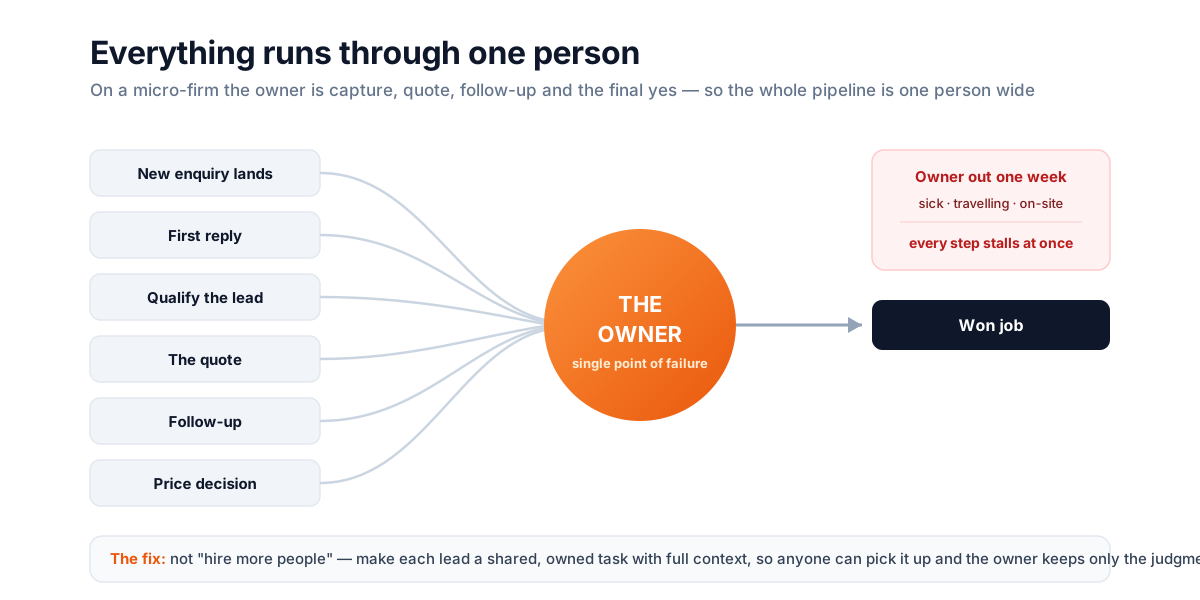
I know a contractor in Klang — good firm, second generation, does solid landed-property renovation and small commercial fit-outs. The father built it; the son runs it now. And "runs it" means he personally does everything that touches a customer. He answers the first WhatsApp himself. He decides on the spot whether an enquiry is worth a site visit. He drives out, measures, works out the price in his head on the way back, types the quote, and chases it himself when it goes quiet. His team — a PM, two installers, an admin girl — build beautifully. But not one of them can move a lead, because every lead lives in his phone and his head.
Last year he had knee surgery. Two weeks off his feet. When he came back and finally opened WhatsApp properly, he had thirty-one enquiries sitting cold. A handful had messaged twice — "Hi, still keen, are you free?" — and gone silent. Two were people he'd quoted the week before surgery who'd since signed with someone else. His team had seen the messages come in. They just had no way to answer them, because they didn't know the prices, didn't know the history, and didn't want to quote wrong in the boss's name.
He didn't have a staff problem. He had a bottleneck problem — and it's the most common one I see on Malaysian reno and contracting firms. Let me lay out what it actually is, why "just delegate" doesn't fix it, and what does.
What is the owner-operator bottleneck?
It's when one person — nearly always the founder — is personally the entire lead funnel: the first reply, the qualifying, the site visit, the quote, the follow-up and the final price. Every lead has to pass through that one person to move, so the whole sales pipeline is exactly one person wide. When the owner is free, it works. When they're not, everything stops.
The reason it hides so well is that it looks like good management. The owner is hands-on, knows every job, protects quality, keeps prices sharp. On a two-man or five-man firm that personal grip is often the whole competitive edge — it's why the client trusts them over a faceless bigger outfit. So nobody sees a problem. Until the pipeline meets the one thing every human runs into: the owner is not always available.
Why is this the norm for Malaysian reno firms, not the exception?
Because most of these firms are tiny — by design and by statistics. According to the Department of Statistics Malaysia's Economic Census 2023, MSMEs are 96.1% of all business establishments in the country, and 76.5% of those SMEs are micro-enterprises. A micro-enterprise, per SME Corp's definition, has fewer than five full-time employees (or turnover under RM300,000).
Fewer than five people. That's not a firm with a sales department — that's a firm where the owner is the sales department, plus the PM, plus half the site supervision. Construction alone counts around 69,000 establishments in the census, and the vast majority of them are exactly this shape: an owner, a couple of skilled hands, maybe an admin.
So when I say the owner-operator bottleneck is the default, I mean it literally. Three in four Malaysian small firms are structured so that one person carrying the whole customer-facing load is unavoidable. It's not a failure to build a team — it's the size of the business. Which is precisely why the fix can't be "become a big firm with a sales floor". It has to work at five people.
Why isn't "I'm just too busy" the real problem?
Because being busy is a symptom, and if you treat the symptom you fix nothing. Almost every owner in this trap describes it as a time problem — "I don't have enough hours", "I need to be more disciplined", "I'll reply faster from now on." But the actual problem isn't the number of hours the owner has. It's that the business has exactly one point of failure, and it's a human being who gets sick, sleeps, drives, takes calls, and occasionally wants a holiday.
This is a continuity risk, not a productivity gap — the same risk that shows up in the succession data. PwC's Family Business Survey found only about 15–16% of Malaysian family businesses have a robust, documented and communicated succession plan, and roughly 62% flag succession as a key challenge for the coming years. A firm where 100% of sales depends on one person, with no plan for their absence, is one hospital visit away from a frozen pipeline — and, further out, from a business nobody else can run.
Why doesn't "just hire someone" or "delegate" fix it?
Because you can't delegate what only lives in one head and one personal phone. This is the mistake that costs owners the most money: they finally accept they're the bottleneck, so they hire a salesperson or pull their son into the business — and six months later they're still the bottleneck, now with an extra salary attached. The new person can't actually carry a lead, because every lead's context — what was discussed, what was quoted, what the client is nervous about — is locked in the owner's memory and his WhatsApp. So the "help" spends the day relaying questions back to the boss.
Look at every reflex fix and you'll see they all leave the same dependency intact:
| The reflex fix | Why it still bottlenecks on the owner |
|---|---|
| "I'll just be more disciplined" | Discipline can't be in two places at once; it collapses the first bad week or the first day off |
| "Hire a salesperson" | Adds a salary but not context — the hire still has to ask the boss for every price and history |
| "Bring my son / a junior in" | Same problem — they can see the messages but can't act on a lead they know nothing about |
| "Post leads in the team WhatsApp group" | A lead owned by everyone is owned by no one — it sits (the lost-in-the-group-chat problem) |
| "I'll clear WhatsApp every night" | Still one person, still the single point of failure — and gone entirely the moment they're out |
The common thread is that the context is the bottleneck, not the labour. Add people all you like — until the lead and its full history live somewhere the team can actually see and act on, everything still routes back through one person.
How do you break the bottleneck without losing the personal touch?
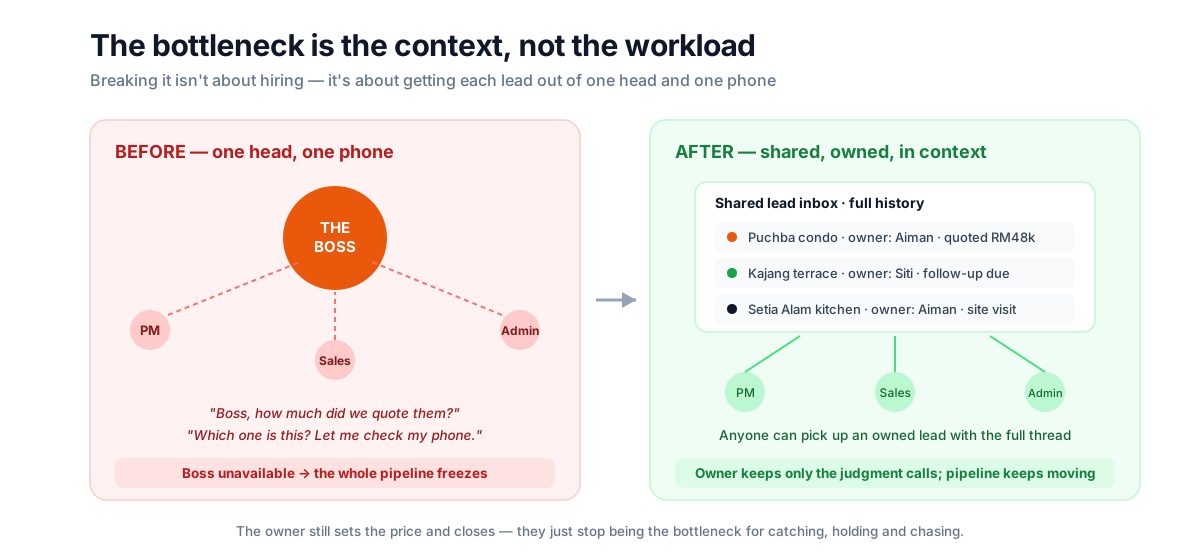
You separate the two things the owner is currently doing at once: the judgment (which only they should do) and the carrying (which anyone should be able to do). The goal isn't to remove the owner from the deals — it's to stop the owner being the single point of failure for catching, holding and chasing leads. Four moves do it, and none of them require growing the firm:
- Get every lead off the personal phone into a shared space. The moment a conversation lives somewhere the team can see it — the full thread, the quote, the notes — a lead stops being "the boss's secret". Anyone can open it and understand where it's at without a single "boss, which one is this?". This one move is what makes every other fix possible.
- Give each lead one named owner — by a rule, not a volunteer. Round-robin, by area, or by project type. Ownership isn't the same as the owner doing it: it means one specific person is accountable for the lead, visible to everyone, so it's never waiting for the boss to notice. If that person is out, it's reassigned in seconds because the context travels with the lead.
- Auto-acknowledge every new enquiry, instantly, 24/7. So a lead that lands while the owner is on-site, asleep, or in a hospital bed still gets a warm "Got your message — we'll be in touch shortly" and doesn't go shopping elsewhere. The first response stops depending on one person being awake and reachable. (More on why the first reply can't wait for whoever's free.)
- Keep a next-action list the system remembers. Renovation deals need five or more follow-ups, yet 44% of firms give up after one — and an owner running on memory forgets the second nudge first, especially when swamped. A shared list of what's due means the follow-ups happen even during the two weeks the boss is off his feet.
Notice what the owner keeps: the price, the design call, the negotiation, the final yes. Those are the judgment calls that genuinely need their expertise, and they should stay with the boss. What changes is that a stalled quote is no longer invisible to the team, a new enquiry no longer waits on one phone, and a fortnight away no longer means a frozen pipeline. The personal touch survives on the decisions that matter; it just stops being the choke point on everything that doesn't.
The bottom line
The owner-operator bottleneck is the quietest lead leak in Malaysian renovation, because it looks like the owner doing their job well. But a pipeline that's one person wide isn't control — it's a single point of failure that stops selling the day that person is unavailable, and on a country where three in four small firms run on fewer than five people, that's most of the industry. You don't fix it by working harder, and you don't fix it by hiring before the context is shareable. You fix it by getting every lead out of one head and one phone into a shared, owned, remembered system — so anyone can catch and carry a lead, while you keep only the calls that actually need you.
For the full system this sits inside — capture, speed, ownership, follow-up and funnel — start with the complete guide to managing renovation leads in Malaysia, and see the closely-related who-answers-leads-while-the-team-is-on-site trap and the real cost of a lost renovation lead.
How HotLead breaks the owner bottleneck
HotLead sits on top of your existing WhatsApp — nothing changes for the homeowner — and takes the whole pipeline off one person's phone:
- A shared lead inbox with full history, so every enquiry, quote and note is visible to your team instead of trapped in the boss's handset — anyone can pick up a lead and know exactly where it stands.
- Automatic routing to one owner — round-robin, manual, or by your own rule — so each lead is a clearly owned task, and reassigning it when someone's out takes seconds because the context travels with it.
- Auto-greeting on every new enquiry, day or night, so a lead never waits on the owner being awake and reachable to know they've been heard.
- Next action on every lead and overdue follow-ups flagged, so the chasing keeps happening even during the week the boss is on leave or laid up — no deal dies in one person's memory.
- A funnel and team view that shows where leads leak and who's carrying what — so the owner can step back from being the choke point and still see everything.
If your pipeline freezes the moment you're unavailable, the leak isn't your effort — it's that everything runs through one person. Close that one gap and your firm can keep selling whether you're on-site, on leave, or off your feet. See how HotLead works, or read how it fits a renovation firm or a construction contractor specifically.
Sources: DOSM — Economic Census 2023: Profile of Small and Medium Enterprises (MSMEs 96.1% of establishments; 76.5% of SMEs are micro-enterprises; ~69,000 construction establishments); SME Corp Malaysia — SME Definition (micro-enterprise = fewer than 5 full-time employees or turnover under RM300,000); PwC — Malaysian family business succession survey and The Edge Malaysia — nearly a third of Malaysia's family businesses lack a succession plan (only ~15–16% have a robust, documented succession plan; ~62% flag succession as a key challenge; ~54% expect to bring in non-family professionals); follow-up figures (80% of sales need 5+ follow-ups, 44% quit after one) and the expected-value cost of a lost lead as cited in the complete guide to managing renovation leads in Malaysia.
Frequently asked questions
What is the owner-operator bottleneck in a renovation business?
It's when one person — usually the founder — personally handles every step of the lead journey — the first WhatsApp reply, the qualifying, the site visit, the quote, the follow-up and the final price decision. It feels like control and it protects quality, but it means the whole sales pipeline is exactly one person wide. Every lead waits on that one person being free, awake and reachable. The day they're sick, travelling, or buried on a difficult site, new enquiries go unanswered and stalled quotes stop being chased — the business simply stops selling until the boss is back.
Isn't the owner handling everything just good, hands-on management?
Up to a point. The owner's personal involvement is often exactly why a family reno firm is trusted and does good work — they know every price, every client and every job. But that same personal touch is what caps the firm's growth and puts every lead at risk. There's a difference between the owner making the judgment calls that need their expertise — pricing, design direction, the final yes — and the owner being the only person who can even see or hold a lead. The first is good management. The second is a bottleneck disguised as diligence.
Why doesn't hiring a salesperson fix the owner bottleneck?
Because on its own it just moves the problem. If every lead's context — what was discussed, what was quoted, what the client is worried about — lives in the owner's head and personal phone, a new hire can't actually act on a lead. They still have to interrupt the boss for every detail, so you've added a salary without removing the dependency. Hiring only helps after the context is shared — once every lead sits in a common inbox with its full history and a clear owner, a second person can genuinely carry leads instead of relaying questions to the boss.
How do I take leads off my personal phone without losing control?
Move the conversations into a shared workspace that sits on top of WhatsApp, so the thread and its history are visible to your team instead of trapped in your handset — but keep the decisions yours. Assign each lead one named owner by a rule so nothing is "everyone's job", let an automatic acknowledgement catch new enquiries the instant they arrive so nothing waits on you being reachable, and keep a follow-up list the system remembers. You still set every price and close every deal. You just stop being the single point of failure for catching, holding and chasing.
What happens to my pipeline when I go on leave or fall sick?
On an owner-run firm with everything in one phone, it usually freezes — new enquiries sit unread, quoted clients hear nothing, and warm leads quietly hire whoever replied. Most owners only discover the true cost when they come back to a fortnight of cold chats. The protection is structural, not heroic — an auto-acknowledgement so every new lead is caught 24/7, one assigned owner per lead so someone other than you can act, and a shared next-action list so the follow-ups due while you were out still happen. Then a week away costs you a rest, not a quarter of your pipeline.
Keep reading
- The Only Three Ways to Grow a Renovation Firm — and Which Lever to Pull FirstEvery renovation firm's revenue comes down to three levers — how many leads you get, how many you close, and how big each job is. They multiply, so a modest lift on each compounds. But they cost wildly different amounts to pull, and most owners reach first for the one they should reach for last. Here's the ranking, with Malaysian numbers.
- Sight Unseen: Winning the Overseas Malaysian Who Renovates a Unit They Can't VisitA Malaysian working in Singapore collects the keys to a KL condo and messages you to fit it out — but they can't come to a site visit, can't walk your showroom, and will wire a deposit to a firm they've never met. Most firms treat this lead like a walk-in, go quiet when the buyer can't pop by, and lose the highest-budget job in the inbox. Here's why the remote buyer is your hardest-trust but best-paying lead, and how to build a remote lane that actually closes it.
- "Ok, Proceed" Isn't Money in the Bank — I Built an AI to Ask for the Deposit the Moment a Renovation Buyer Says YesA Cheras contractor closes a RM62k job on WhatsApp, the buyer says "ok proceed lah", and then the owner — mid-site, phone in a dusty hand — has to stop, pull the bank details, the agreed deposit and the scope, and type a careful money message. In that gap a hot yes quietly cools back to "let me think." The 2026 reflex is to ask AI to detect the yes and auto-fire the invoice. I built it, and it asked a half-committed buyer for 40% to a personal account two seconds after a soft "ok ok". Here's the version that kills the typing delay without asking for money off a misread.