

There's a specific kind of quiet that keeps renovation owners up at night, and it isn't the lead who never replied at all.
It's the one who did everything right. The homeowner in Puchong messaged, you replied fast, you drove out, you spent an hour walking the condo and talking through the kitchen and the hall. They were warm. They nodded at your ideas, asked good questions, said "okay, send me the quote and we discuss." You went home, built a clean quote, sent it over. Two grey ticks.
Then nothing. A day. Three days. A week. Your quote is sitting on read and you're staring at your phone doing the maths on a job you were sure you had.
And now you're stuck. Chase them, and you feel like you're begging — desperate, needy, the kind of contractor who messages "hello, any update?" three times and gets ignored. Wait, and you can feel the job slipping to whoever did follow up. So you freeze. And a week later: "Hi, thanks so much, we've decided to go with another contractor. All the best!"
Here's the thing nobody tells you: chase or wait is the wrong question. Both of those choices lose. The firms that win these deals are doing a third thing entirely.
Why did a warm renovation buyer suddenly go silent?
Because they're in the middle of deciding — not because they've decided against you. The silence feels like a rejection, but after a good site visit it's far more often a pause while life and money and other people catch up.
Put yourself in the homeowner's shoes for a second. They liked you. They also liked two other firms they met the same fortnight, because a Malaysian homeowner shops a reno across three to five firms — Qanvast openly shortlists up to five, and Recommend.my tells them to compare at least three. On top of that, the ones who genuinely want to hire you still have to clear things that have nothing to do with you:
- The loan. A home-improvement or top-up loan doesn't approve overnight — pre-approval, application, approval and disbursement stack up over weeks. A buyer who's waiting on the bank literally cannot say yes yet, and often won't tell you that's why.
- The spouse, the parents, the co-owner. A RM80k decision rarely gets made by one person on WhatsApp. "Let me discuss with my wife" is real, and that discussion happens on a family's timeline, not yours.
- The keys, the money, the timing. They're waiting on vacant possession of a new unit, or on a bonus, or they've just come out of a festive month and cash is tight. The intent is there; the when isn't now.
Notice what's missing from that list: your price. In sales generally, price is rarely the reason a prospect goes silent after they've shown real interest — the far more common causes are internal discussion, waiting on a decision-maker, and simple "replying feels like work right now" procrastination. That matters enormously, because the two things owners instinctively do about a silent quote — give up, or drop the price — are both answers to a problem the buyer usually doesn't have.
Should I chase or should I wait?
Neither. That's a false choice between two ways of losing, and once you see it that way the real answer becomes obvious.
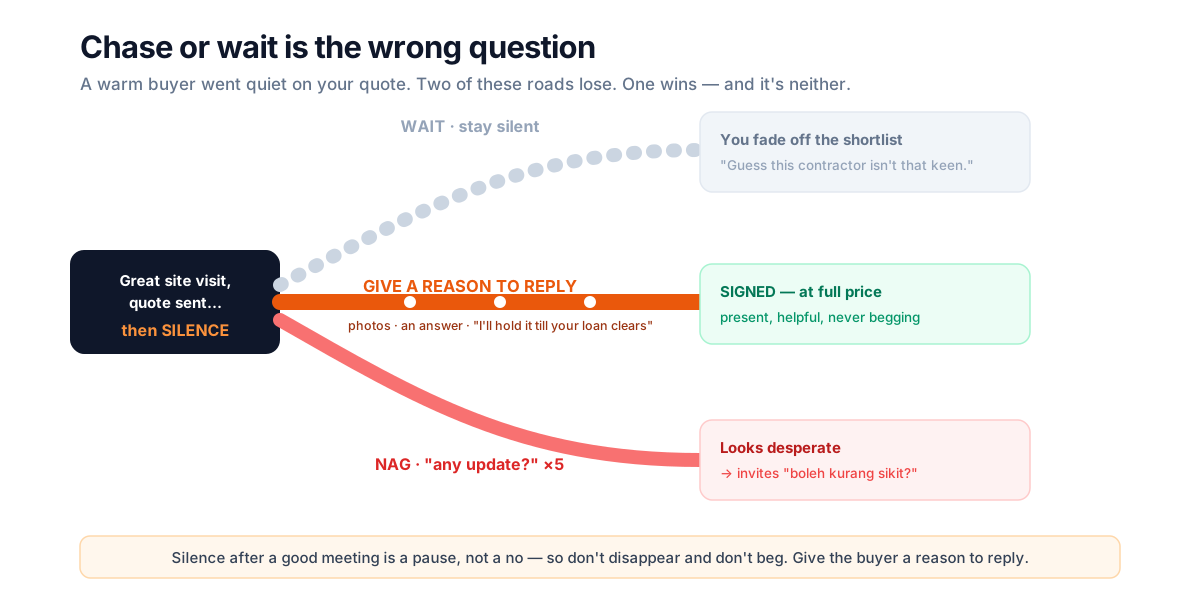
Look at what each pole actually does. Wait — stay silent, "give them space," don't want to seem pushy — and you quietly disappear from a shortlist the buyer is still actively working. They're not sitting with only your quote; they're holding several, and the firm that stays gently present is the one they think of when the loan clears. Silence reads to them as this contractor isn't that bothered. You didn't respect their space; you just left.
Chase hard — "any update?", "have you decided?", "still keen or not?" — and you look desperate, which does two ugly things at once. It signals you need the job more than they need you, which weakens you before a single number is discussed. And it very often flips the conversation to price: a buyer who feels you chasing will test it, and "boleh kurang sikit?" is the reply you've invited. Now you're defending your margin on a deal that was never quiet about price in the first place.
The third road — the one in the diagram at the top of this article — is the one that wins: you follow up, but every message gives the buyer a reason to reply, not a request for one. That's not a semantic trick. It's the whole difference between a follow-up that works and one that gets you muted.
How do I follow up without looking desperate?
Change what the message does. A needy follow-up asks the buyer for something — an update, a decision, reassurance. A confident one gives the buyer something — a piece of value that moves them forward. Same person, same deal, opposite result.
The numbers on this are stark. Follow-ups that add new value reply at roughly five times the rate of "just checking in" reminders — one widely-cited breakdown puts a bare check-in at about a 0.8% reply rate versus 5.1% for a value-add message. Gong's research on follow-ups lands in the same place: the check-in message is the single most common and least effective follow-up there is. For a reno firm, "value" is easy and cheap — you're sitting on it already:
| The desperate touch (asks for something) | The confident touch (gives something) |
|---|---|
| "Hi, any update on the quote?" | "Just finished a kitchen very close to yours in Bandar Puteri — sending a couple of photos so you can picture the finish." |
| "Have you decided ah?" | "You mentioned worrying about the wet-kitchen waterproofing — here's exactly how we'd handle it, no extra cost." |
| "Still interested or not?" | "Heads-up: our tile supplier's raising prices next month, so locking the order in the next two weeks keeps your quote as-is." |
| "Hello… 😅" | "No rush at all while you sort the loan — whenever your keys come through, I'll hold this quote and slot you in." |
Every message in the right column keeps you present, moves the deal, and gives the buyer an easy reason to reply — without once asking them to justify their silence. And the last one does something extra: it tells the buyer you understand their real clock (the loan, the keys), which is exactly the reassurance that turns a warm stall into a yes.
How many times do I follow up, and how do I know when it's actually dead?
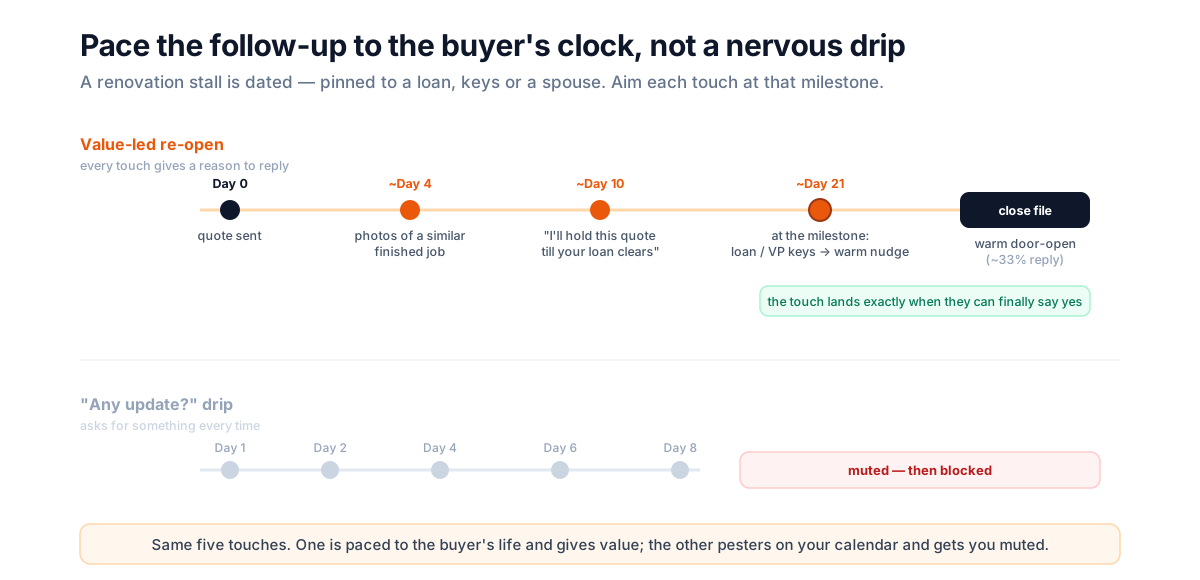
Follow up more than you're comfortable with, pace it to the buyer's real timeline, and read the signal rather than the silence. Most firms quit far too early: around 80% of sales that eventually close take five or more follow-ups, while about 44% of salespeople give up after one. If you stop at touch two, you're abandoning deals that are, statistically, still yours to win.
But "follow up five times" doesn't mean pinging every two days until they block you. A renovation stall is almost always dated — pinned to a real event on the buyer's calendar — so the smart cadence tracks that event, not a generic drip. If they're waiting on a loan, a nudge a week or two out, timed to when approvals usually land, beats five nags in ten days. If they're waiting on VP keys in September, you don't chase in July — you park it and land warmly in late August. This is the difference between a follow-up system and a follow-up reflex.
To tell a stall from a dead deal, stop staring at the silence and look for signals:
- Alive: they open and read, they answer one small question you ask, there's a real dated reason to wait (loan, keys, a trip), or they reply warmly but vaguely. Keep going, paced to the clock.
- Soft no: the polite Manglish fade — "will consider first ah", "let me discuss with my wife" that never resolves across a couple of genuine touches, "we'll get back to you." In Malaysian buyer-speak this is usually a gentle no, not a maybe. Don't nurture it on a timer — close it warmly and free yourself.
- Genuinely cold: several spaced, value-led touches, zero engagement, no dated reason. It's run its course.
The point of reading signals is that it stops you doing the two wrong things at once — abandoning a live loan-waiter at touch two, and chasing a polite soft-no for a month.
The graceful exit: the "I'll close your file" message
When you've genuinely reached the end, don't fade into silence and don't send a tenth check-in — send one warm door-open message. Counter-intuitively, it's the highest-replying follow-up you'll send: sales teams routinely see breakup or "close the loop" messages pull reply rates around 33%, far above another nudge.
It works because it flips the pressure. Every previous message asked them to move forward; this one tells them you're moving on. That small removal of pressure — plus simple loss aversion, the quiet realisation that the option is about to close — is exactly what prompts a stalled buyer to finally reply. For a reno lead it sounds like: "Totally understand timing might not be right — I'll close off your enquiry for now so I'm not cluttering your WhatsApp. Whenever you're ready to pick the kitchen back up, just message me and I'll dust off your quote. All the best either way!"
One of two good things happens. Either the buyer who was genuinely stalled panics a little and re-engages — "no no, still keen, just was waiting for…" — and you're back in a live deal. Or they let it go, and you've cleanly freed your attention for a lead that will actually close instead of carrying a dead one in your head for a month. Both outcomes are wins. Silence gives you neither.
Chase, wait, or re-open — what each one actually costs you
| Wait it out (silent) | Chase hard (nag) | Value-led re-open | |
|---|---|---|---|
| How you look | Uninterested; you fade from the shortlist | Desperate; you weaken your own position | Helpful and organised; still in the running |
| What it invites | Nothing — you're forgotten | A "boleh kurang?" discount test | A reply, and a reason to say yes |
| Deals it wins | The ones with no competition (rare) | Some, at a cut price | The stalled-but-warm majority |
| The cost | A lost job you never fought for | Donated margin on a deal that wasn't about price | A few thoughtful messages |
Every enquiry a small reno firm loses is worth around RM1,280 in expected gross profit once you account for job value, margin and conversion — and a warm buyer who went quiet after a good meeting is worth far more than a cold one, because you've already spent the reply, the qualifying and the whole site visit on them. Losing that lead to a shrug ("guess they went elsewhere") is the most expensive kind of giving up there is.
The bottom line
The next time a warm renovation buyer goes quiet on your quote, don't ask yourself "should I chase or should I wait?" — that's a choice between two ways to lose. The buyer almost certainly hasn't rejected you; they're mid-loan, mid-discussion, or mid-comparison, and price is rarely the reason they've gone dark. So stay present, but earn the reply: send value, not check-ins; pace it to their real clock, not a nervous drip; never lead with a discount; and when it's genuinely over, close the file warmly instead of fading away. Do that, and the deals that used to slip away in silence become the ones you quietly win while your competitors are still deciding whether to bother them.
For the whole system this sits inside — capture, qualify, visit, quote and follow up — start with the complete guide to managing renovation leads in Malaysia. This piece is about the owner's judgment call on a quiet deal; for how to actually word the message so it lands, see drafting the quote follow-up without re-opening the price, and read it alongside the slow-quote leak that happens one step earlier and the interior-design quote-to-deposit drop-off.
How HotLead keeps a quiet deal from dying
HotLead doesn't write the follow-up for you or decide whether a deal is alive — that judgment is yours. What it does is make sure a quiet quote never dies from being forgotten instead of being lost:
- One owner per lead with a next action and a wake-date, so "follow up when her loan clears in three weeks" becomes a scheduled task with an owner — not a thing you swear you'll remember and don't.
- Overdue follow-ups flagged, so the warm buyer who went silent surfaces back to the top before they cool, instead of quietly aging out of your memory while you fight live-site fires.
- A funnel view that shows every quote-sent-then-silent lead and how long each has sat, so the stalled-but-winnable deals are a visible list you work, not a feeling you have.
- Team performance and per-source tracking, so you can see who patiently re-opens warm deals and who lets them fade — and which channels send buyers that actually come back.
If your site visits go well but too many warm buyers drift off into silence, the leak usually isn't your price — it's that nobody owned the quiet deal long enough to be there when the buyer was finally ready. See how HotLead works, or how it fits a renovation firm or an interior-design studio specifically.
Sources: Invesp — The Importance of Sales Follow-Ups (Statistics) (~80% of sales need 5+ follow-ups; ~44% give up after one); HubSpot — Sales Statistics and HubSpot — The Power of Breakup Emails (value-add vs "just checking in" reply rates; ~33% breakup-email reply rate); Gong — Scientific Tips for Writing the Perfect Follow-Up Email (why "just checking in" underperforms; add new value each touch); Janek Performance Group — What Are Your Options When Prospects Go Silent? (price is rarely why a warm prospect goes quiet; internal-decision and decision-maker delays are the common causes). Job-value bands, expected gross profit, the up-to-five-firms shortlisting norm and the Malaysian home-loan timeline as cited in the complete guide to managing renovation leads in Malaysia, the real cost of a lost renovation lead and how long it takes to close a renovation lead.
Frequently asked questions
My renovation quote got no reply — should I chase or just wait?
Neither extreme. Waiting silently means you quietly drop out of a shortlist the buyer is still working through, and hard chasing makes you look desperate and often triggers a discount ask. The move that wins is to follow up, but to give the buyer a genuine reason to reply each time — a photo of a similar job you just finished, an answer to something they hesitated on, a note that a material price is about to change — rather than a bare "just checking in." You keep yourself present without begging, and you find out whether the deal is alive without cheapening it.
Why did a warm renovation buyer go silent after a good site visit?
Usually because they're mid-decision, not because they've rejected you. A Malaysian homeowner is typically comparing three to five firms, and the ones who liked you still have to wait on a home-loan approval, talk it over with a spouse or parents, get keys on a new unit, or free up cash after a festive month. Any of those goes quiet on your WhatsApp for one to three weeks while nothing is actually wrong. Price is rarely the reason a warm buyer stops replying — silence is far more often a logistics pause than a no.
How many times should I follow up on a renovation quote before giving up?
More than once, and more than most firms do. Around 80% of sales that eventually close need five or more follow-ups, yet roughly 44% of people give up after a single one — so the average firm quits while the deal is statistically still winnable. The catch is that the follow-ups only help if each one carries something new. Pace them to the buyer's real timeline — a week or two apart, aimed at when their loan clears or their keys come — and stop when they've given you a clear soft no or gone cold across several genuine, value-led touches.
How do I follow up on a quote without looking desperate or annoying?
Change what the message does. A desperate follow-up asks the buyer for something ("any update?", "have you decided?"). A confident one gives them something — a reference photo, an answer to an objection, a heads-up on timing, an offer to walk the space again. Value-add follow-ups reply at several times the rate of "just checking in" nudges, and they read as helpful rather than needy. Keep the tone warm and low-pressure, never lead with a price cut, and put a real reason to reply in every message.
When should I stop chasing a renovation lead and close the file?
When you've sent a few genuine, spaced, value-led follow-ups and still have no signal — no replies, no small questions answered, no dated reason to wait — or when the buyer has given you a polite Manglish soft no ("will consider first", "discuss with my wife") that never resolves. At that point, send one warm door-open message saying you'll close their file for now but you're happy to pick it up whenever they're ready. It re-opens a surprising number of deals through simple loss aversion, and for the ones it doesn't, it frees your attention for leads that will actually close.
Keep reading
- Can AI Catch a Renovation Deal Going Cold Before You Lose It? I Built a Silent Watchdog — and Its Best Feature Is Staying QuietThe most winnable lead in your pipeline — a sent quote, a warm thread — rarely dies from a bad decision. It dies from silence nobody noticed while you were on a site. So the 2026 reflex is to point AI at your pipeline and say "watch for deals about to die and alert me." I built exactly that. It barked all day, because most quiet renovation deals aren't stalling — they're marinating on the buyer's clock. Here's the version that paid, and why its whole job is to stay silent until it has one thing worth saying.
- How Much of Your Price Should a Renovation Firm Publish? The Pricing-Page Decision That Filters Your LeadsMost renovation firms treat their website, Qanvast profile and Facebook page as a "show prices or hide them" coin-flip — and both answers leak leads. Hide everything and the researching buyer never messages a black box. Slap up one bare "from RM120 psf" and you either scare people off or under-anchor them into feeling bait-and-switched at the real quote. Here's the data on why both extremes cost you, and the scoped-band approach that turns your published price into a lead filter instead.
- Fully Booked but Still Losing Jobs: The Overflow Leak When You Win More Reno Work Than You Can BuildYour calendar is full through December and the enquiries keep coming, so you do what every busy reno firm does — reply late, half-ignore them, or wave them off with "we quite full now ah." Then you spend February chasing work. The overflow lead you fobbed off is the job that should have filled your slow month. Here's the capacity leak nobody fixes, and why hiring a bigger crew is usually the wrong answer.