

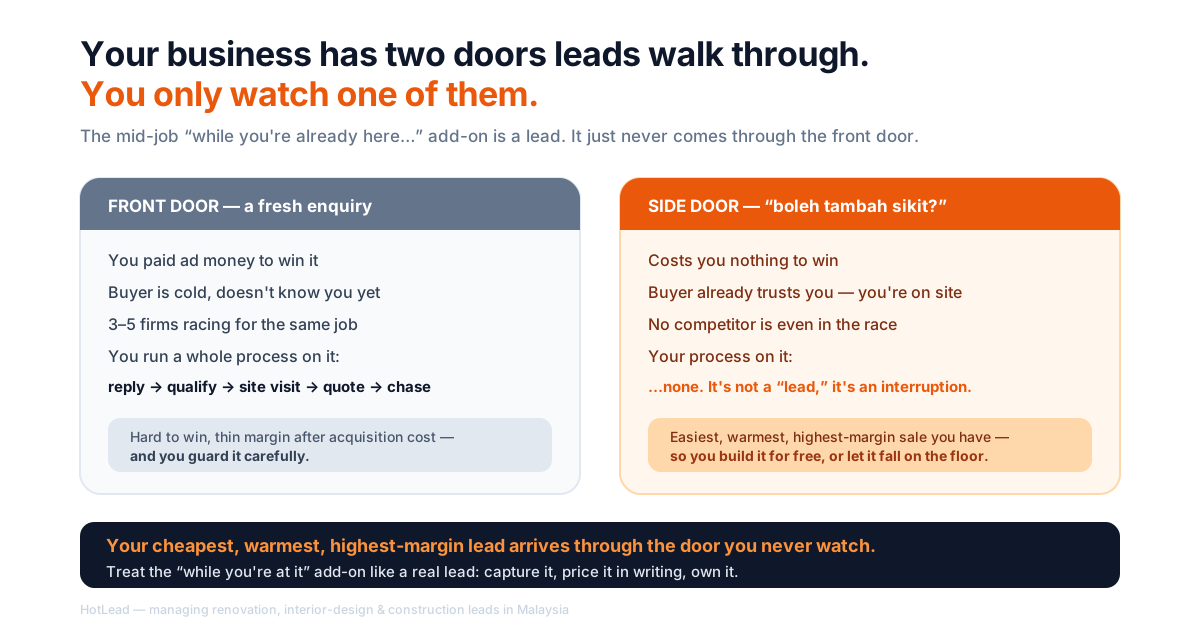
There's a lead that walks into your renovation firm almost every week, and most owners don't even see it as a lead.
You're three weeks into a condo job in Ampang. The kitchen's coming along, the client's happy, and one evening she messages: "Eh, while you're already here — can you also help me redo the balcony? And maybe a feature wall in the living room?"
Now watch what most firms do with that message. One kind of owner reads it as a distraction from the job in hand — let me finish this first, I'll think about it later — and by "later" the client has asked her cousin's contractor or lost interest. The other kind fires back "boleh boleh, no problem, we settle later", does the balcony, and then on invoice day gets "wait, I thought the balcony was included?" — and eats it, or fights for the money at the worst possible moment.
Both owners just fumbled the easiest sale in the entire business. Because that message wasn't an interruption. It was a lead — the warmest, cheapest, highest-margin lead you will ever get — and it came through a door you don't watch.
What is a variation-order lead?
It's a request for extra work that arrives inside a job you're already doing, instead of as a fresh enquiry. In construction language it becomes a variation order — a change to the agreed scope. But before it's a variation on paper, it's a sales opportunity in a WhatsApp message: "since you're already here, can you also…"
The problem is where it arrives. Your firm has a process for the front door — a fresh enquiry gets a reply, a qualify, a site visit, a quote, a follow-up. You built that process because those leads are hard-won and you can't afford to drop them. But the add-on comes through the side door: a text from a client you're already working for, or a verbal ask while your installer is on a ladder. There's no process waiting for it. So it gets handled by reflex — brushed off, or waved through with a "boleh" — instead of run like the opportunity it is.
Why is the add-on request actually your best lead?
Because it beats a fresh enquiry on every axis that matters. Line them up and it isn't close.
A front-door lead is expensive and cold. You paid for it — a boosted post, a Google click, a Qanvast listing fee — and even then the buyer doesn't know you, is comparing three to five firms, and might ghost you after the site visit. You'll spend a reply, a qualify, a whole Klang Valley site visit and a quote you might not send fast enough just to be in the running.
The add-on lead has none of that friction:
| Fresh front-door enquiry | The in-job add-on lead | |
|---|---|---|
| Cost to win the lead | Ad spend, platform fees, sales time | Zero — they messaged you |
| Does the buyer trust you? | Not yet — you're a stranger | Yes — you're already delivering |
| Competitors in the race | 3–5 firms quoting the same job | None — you're the only one on site |
| Site visit needed? | Yes, a full trip | No, you're already there |
| Margin | Thin after acquisition cost | Highest in the business |
That's why fumbling it stings so much. You will drive across the Klang Valley and quote blind to win a cold RM40k kitchen, then let a RM6k balcony add-on — from a client standing next to you, with no competitor and no acquisition cost — evaporate because it felt like an interruption. It's the highest-margin ringgit in your whole pipeline, and it's the one you treat most casually.
So why do firms keep fumbling it?
Two reflexes, opposite directions, both lose. One loses the sale; the other loses the margin.
Reflex one: treat it as a nuisance. You're heads-down finishing the main job, so "while you're here, can you also…" reads as scope creep threatening your timeline. You brush it off — "let's finish this first, we discuss later" — and later never comes. The client, who was ready to spend more today, cools off, or mentions it to another contractor, or just decides not to bother. You didn't say no. You just didn't say yes fast enough, and a warm buyer with cash in hand quietly closed her own wallet.
Reflex two: the verbal yes. This is the more common one, and the more expensive. The client asks, you want to keep her happy, so you say "boleh boleh, nanti settle" and get on with it. No re-quote, no message, no agreed number. You build the balcony. Then on invoice day comes the sentence every contractor dreads: "Eh, I thought that was included in the price?" Now you're stuck. Eat the cost, or argue for the money at the exact moment you need her to release the final payment and leave you a five-star review.
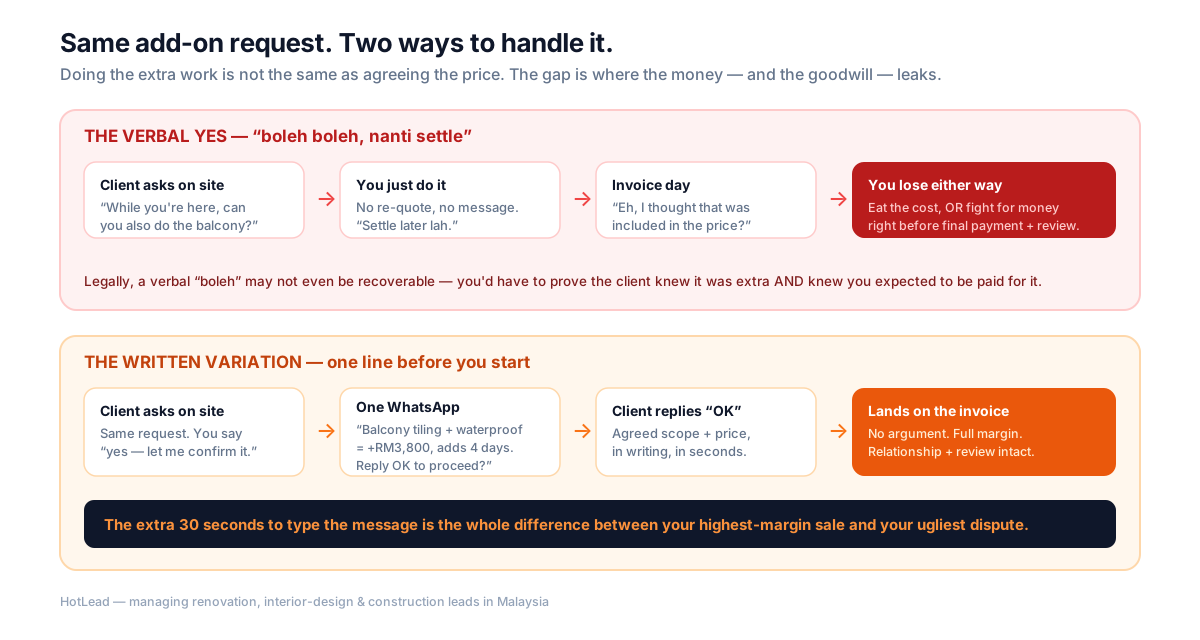
The verbal-yes trap: doing the work isn't the same as agreeing the price
Here's the part that turns a fumbled add-on into a genuine dispute. In law, carrying out extra work and agreeing on what it costs are two separate things. A verbal "boleh" on a noisy site covers the first and not the second.
If a client refuses to pay for unrequested extra work, a Malaysian contractor's fallback is a quantum meruit claim — a legal principle that lets you recover the fair value of work done. But it's not automatic. To succeed, you generally have to prove the client both knew the work fell outside the original scope and understood that you expected to be paid for it — and that you kept records of the work, materials and cost. Try proving all that from a half-remembered "boleh boleh" over the sound of a tile cutter. Meanwhile, if the client wants to dispute the bill, they can take it to the Tribunal for Consumer Claims for anything up to RM50,000 — cheap and simple for them.
This isn't a fringe problem. When Malaysian researchers studied variation orders in terrace-housing projects across nine districts in Selangor, they found the top causes were "change of scope by owner," "substitution of materials by owner" and "changes of specification by owner" — and concluded plainly that the owner is the major source of variation orders. On the projects they measured, those variations pushed costs up 14% and stretched the timeline 63%, from 18 months to more than 30. That's the scale of "extra work" flowing through jobs — and on a homeowner reno with no formal contract administration, almost all of it is riding on verbal agreements that may never be recoverable.
When should you say yes — and when should you hold?
Running the add-on lead well doesn't mean saying yes to everything. Sometimes the right move is to capture it and schedule it, not build it now. The test is whether it fits the job you already promised.
| Say yes now | Hold or schedule as a separate phase |
|---|---|
| Uses the trades already on site (feature wall while the carpenter's there) | Needs a trade you'd have to remobilise and pay to bring back |
| Doesn't blow the handover date you committed to | Delays a handover the client is counting on |
| Client can fund it on top of the current job | Balloons the job past what they've actually budgeted or financed |
| Small, contained, clearly scoped | Vague or expanding — "and maybe also…" with no end |
Notice that "hold" is still winning the lead. "Yes, I'd love to do the balcony — let's do it as a second phase right after we hand over the kitchen, so we don't hold up your move-in" captures the opportunity, prices it, and protects your main job. What you're avoiding is the death-by-a-thousand-"can you also" that quietly turns a clean, profitable job into a sprawling, late, thin one — the scope creep that eats your margin without you noticing.
How to run the add-on like a real lead
Same discipline as a front-door lead, compressed into a WhatsApp message. Four moves:
- Capture it the moment it's said. A verbal ask on site vanishes by the time you're back in the car. Turn it into a written record the same day — even just a note against that client: "wants balcony + feature wall." If it isn't captured, it isn't a lead, it's a maybe you'll forget.
- Re-quote it in one line, before you touch it. This is the whole game. "Yes — balcony tiling and waterproofing is about RM3,800 and roughly four extra days. Reply OK and I'll slot it in." Scope, price, timeline, and an explicit yes. Thirty seconds of typing replaces the entire invoice-day argument.
- Give it an owner and a next action. The add-on needs someone responsible for confirming it, pricing it and getting the OK — the same one-owner discipline that stops front-door leads dying in a group chat. On a busy site the add-on is exactly the thing that falls between people if nobody owns it.
- Make it visible on the funnel. An add-on that's been asked-for-but-not-yet-confirmed is a live opportunity sitting at risk. If you can see it — with an owner and a status — you close it. If it only lives in one person's head, it leaks like every other unmanaged lead.
The bottom line
The add-on lead is a rare thing in a renovation firm: a sale with no acquisition cost, no competitor and a buyer who already trusts you. It should be the easiest, fattest ringgit you make all month. It leaks anyway — not because it's hard to win, but because it doesn't come through the front door, so it never meets the process that protects your other leads. Fix that with one habit: treat every "while you're already here, can you also…" as a lead, and never build a single extra thing on a verbal "boleh." Say yes warmly, put the number in writing, get the OK, then pick up the drill.
For the whole system this sits inside — capturing, qualifying, quoting and following up every kind of lead — start with the complete guide to managing renovation leads in Malaysia. Then see how the add-on connects to the slow-quote leak right before it, the owner-operator bottleneck that makes side-door requests fall through the cracks, the deposit and progressive-payment terms that govern how the extra work gets paid, why warm, trusting clients quietly get your worst response, and how much line-item detail that written re-quote should carry.
How HotLead helps you catch the add-on lead
HotLead can't price your variation — the takeoff and the number are yours. What it does is make sure the add-on request is treated like the lead it is, instead of a verbal note that dies on a noisy site:
- Capture and auto-greeting on every message, so a client's "can you also…" lands in one place with the rest of that lead's history, not lost in a personal phone during a busy day on site.
- One owner per lead with a next action and overdue follow-ups flagged, so "send the balcony re-quote and get the OK" becomes a tracked task someone owns — not a thing you'll remember to do "later."
- A funnel view that shows add-ons that have been asked-for-but-not-yet-confirmed, aging by day, so a live extra-work opportunity is visible before it goes cold or gets built for free.
- Team performance, so you can see which of your people are confirming and pricing add-ons versus waving them through with a "boleh" that costs you on invoice day.
If your jobs keep finishing with great reviews but thinner margins than you quoted, the leak is almost certainly the add-ons nobody re-quoted. See how HotLead works, or read how it fits a renovation firm or a construction contractor specifically.
Sources: Mohammad et al. — Causes and Effects of Variation Orders in the Construction of Terrace Housing Projects: A Case Study in the State of Selangor, Malaysia (owner is the major source of variation orders; variations added 14% to cost and 63% to timeline across 61 projects in 9 Selangor districts); Simply Malaysia — Is There an Entitlement to Reimbursement Without a Contract Under Quantum Meruit? (what a contractor must prove to recover for unrequested extra work); PropertyGuru Malaysia — Hiring a Renovation Contractor in Malaysia (Tribunal for Consumer Claims, RM50,000 ceiling; written agreement guidance); BERNAMA / CIDB — Owner-Contractor Agreement Crucial Before Starting a Project; Qanvast — Renovation Contracts in Malaysia: Terms to Look Out For (scope-of-work and variation clauses). Job-value bands, expected gross profit and the up-to-five-firms shortlisting norm as cited in the complete guide to managing renovation leads in Malaysia.
Frequently asked questions
A client asked for extra work mid-renovation — should I just do it to keep them happy?
Do it happily, but never silently. The instinct to "just do it" to protect goodwill is exactly what destroys goodwill later, because doing the work is not the same as agreeing the price. Before you touch the add-on, send one WhatsApp confirming the scope, the added cost and any extra days, and ask them to reply OK. It takes thirty seconds, it feels a little formal, and it is the single thing that turns an add-on into your highest-margin sale instead of an argument on invoice day. A client who genuinely values the work will happily agree to pay for it; a client who balks at a clear, fair number was going to dispute the bill either way — better you find out before you build it, not after.
How do I charge for extra work without looking greedy or petty?
Frame it as a confirmation, not a bill. "Yes, we can add the balcony tiling and waterproofing — that's about RM3,800 and roughly four extra days, reply OK and I'll slot it in" reads as a professional who is on top of the job, not someone nickel-and-diming. What looks greedy is the opposite — staying quiet, doing the work, then surprising them with a bigger number at the end that they never agreed to. Malaysian homeowners are primed by years of renovation-scam warnings to distrust surprise charges, so a clear price up front actually builds trust. The petty-looking move is the ambush, not the quote.
The client says "I thought that was included" when I invoice for the add-on. What now?
This is the trap of the verbal yes, and by invoice day your options are all bad — eat the cost, or fight for the money right when you need their final payment and their online review. Legally you're on weak ground too. A contractor can sometimes recover for unrequested extra work under quantum meruit, but only by proving the client both knew the work was outside the original scope and knew you expected to be paid for it — hard to prove from a verbal "boleh" on a noisy site. The real fix is upstream and permanent — never build an add-on without a one-line written OK first, so "I thought it was included" can never happen.
The add-on is small — is it really worth writing a whole variation for?
The smaller it feels, the more likely it is to bite you, because small add-ons are exactly the ones people skip the paperwork on — and they add up. You don't need "a whole variation"; you need one WhatsApp message. The point isn't legal formality, it's a clear agreed number the client has said OK to, so it lands on the invoice without a discussion. A firm that confirms even the small ones also trains its clients that scope and price move together, which quietly stops the death-by-a-thousand-"can you also" that eats a job's margin.
Should I always say yes to a mid-job add-on request?
No — and knowing when to hold is part of running the lead well. Say yes to an add-on that fits the trades already on site and doesn't blow the timeline you promised (adding a feature wall while the carpenter is there). Hold, or schedule it as a separate phase, when it drags in a trade you'd have to remobilise, when it delays a handover you committed to, or when it balloons the job past what the client has actually financed. Saying "yes, but as a second phase after handover" is still winning the lead — you've captured it, priced it and kept your main job on track, instead of derailing a good job to chase an add-on.
Keep reading
- Did We Already Say RM68k? Using AI to Stop Quote Drift Across a Long Renovation ThreadOver a weeks-long WhatsApp thread with two or three quote revisions, a rep re-states a number that contradicts an earlier promise — and re-opening a settled price quietly invites a discount that eats a whole job's profit. So I pointed AI at the drift. It works beautifully as a flag, and dangerously as an auto-corrector.
- The Warranty as a Closing Lever: Why a Longer Guarantee Beats a Discount on a Renovation DealA quote is stalling and the buyer wants a reason to say yes. Before you drop the price, look at the other lever in your hand — a longer workmanship warranty. It is the same expected-value decision as a discount, but the math runs the opposite way — a price cut costs you thousands with certainty, while extending the defects cover costs you a couple of hundred ringgit in expectation, for arguably more trust with a scam-wary buyer. Here is the EV case for the non-price concession, the trap that turns it into a hidden liability, and which leads it actually moves.
- "Can You Just Build It, My Neighbour Also Did" — Handling the Renovation Lead That Needs Council Approval FirstSome renovation enquiries can't legally start next month, no matter how ready the buyer is — a kitchen extension, a hacked-through wall, a roofed-over air well all need the council's written approval first. Quote a fast build price to win the job and you either lose it to a "boss, can start" cowboy, or win it and inherit the stop-work order, the RM50,000 fine and a client who later can't sell the house. Here's how to spot the permit-first lead and sell the approval as protection.