

There's a version of losing a renovation job that stings more than the others, because on paper you did everything right.
The reply was fast. You qualified the lead, drove out to the condo in Sri Petaling, spent 45 minutes measuring and talking through the kitchen, and left feeling good — the homeowner was warm, the scope was clear, it's a job you'd love. Then you got back to the office and three live sites needed you: a tiling problem in Cheras, a client in Kajang chasing a delivery date, a supplier who shorted an order. The quote went on the mental to-do list. I'll do it this weekend.
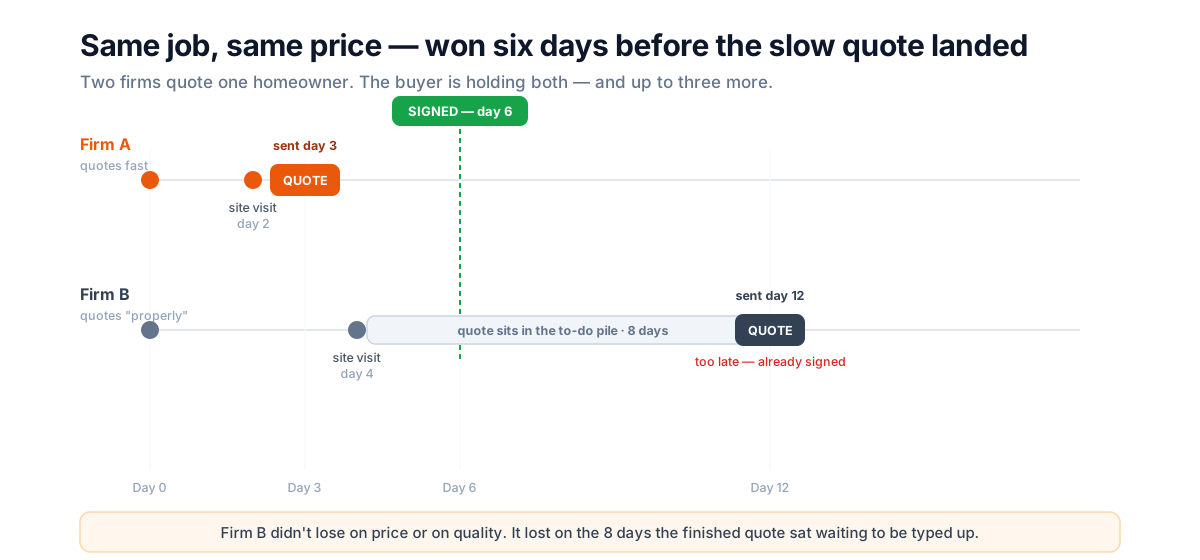
Ten days later you finally sit down to build it — proper takeoff, supplier prices, a clean itemised number — and send it over. Two grey ticks. Then: "Hi, thanks so much, but we've already confirmed with another contractor. All the best!"
You stare at the number you just spent two hours on and think: was I too expensive? So next time, you shave the margin.
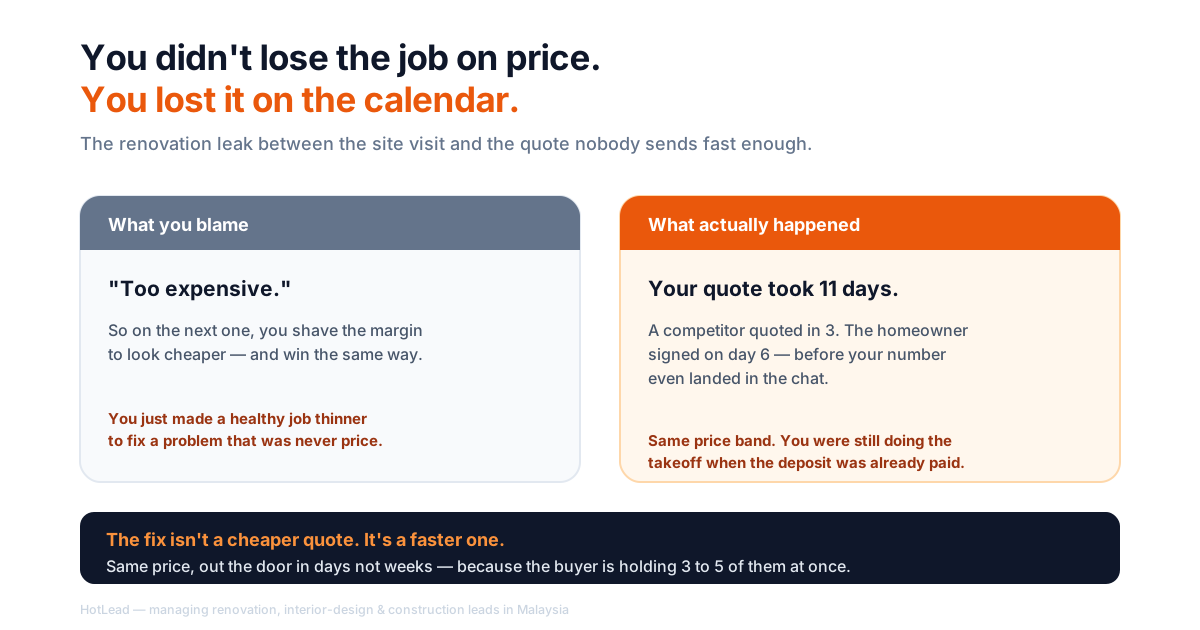
That's the trap. You weren't too expensive. You were too slow — and not slow to reply, slow to quote. This is the quietest leak in a renovation firm, and it hides in plain sight because it sits inside a job you thought you did well.
What is the slow-quote leak?
It's the work you lose in the gap between a good site visit and the quote actually leaving the building. You replied fast, you qualified, you visited — and then the finished-in-your-head quote sat in a to-do pile for a week or more while you ran live jobs. By the time it went out, the buyer had already signed with a firm that quoted days earlier.
This is a different leak from the ones renovation owners usually watch for. The slow first reply loses you the lead in the first hour. The free site visit burns your Klang Valley hours on the wrong prospects. The slow quote is sneakier than both, because it strikes after you've already spent the reply, the qualifying and the whole site visit. You've paid almost the full cost of winning the job — and then leaked it at the one step that converts all that effort into a number the buyer can say yes to.
Why do I keep losing jobs I thought went well?
Because the homeowner isn't sitting patiently with only your quote. They're holding three to five of them, and the clock started the day they enquired — not the day you got around to replying.
Think about how a Malaysian homeowner actually shops a reno. They post on Qanvast or Recommend.my, or message a few firms off Instagram, and Qanvast openly shortlists them with up to five firms. Recommend.my tells them to compare at least three quotes. So the moment you leave that site visit, you're in a race you can't see — four other vans are driving to the same condo that week, and whoever gets a clear, complete number in front of the homeowner first has an enormous edge.
It's commonly reported in home-services sales that the first firm to deliver a professional, itemised quote wins the job a majority of the time — even when it isn't the cheapest. Not because buyers love paying more, but because the first real number becomes the one everything else gets compared to, and a homeowner who's ready to move signs with the firm that let them move. Your perfect quote on day twelve isn't competing on price. It's competing with a signed deposit.
Isn't the quote supposed to take time to do properly?
Yes — the estimating takes real time. The waiting is what kills you, and they're not the same thing.
A proper renovation quote isn't a number you pull from the air. It's material takeoffs, current supplier pricing for tiles and sanitaryware, subcontractor estimates for the wiring and plumbing, then labour, overhead and margin layered on top. Industry norms put a kitchen or bathroom remodel quote at one to two weeks and a whole-home job at two to four weeks, precisely because of that legwork. None of that is laziness.
But be honest about where your ten days actually went. For most small reno and ID firms, the estimating itself is a few hours of focused work. What stretches it to ten days is that the person who does the estimating — usually the owner — spends every daylight hour on live sites, so the quote waits for an evening that keeps getting eaten by the next fire. This is the owner-operator bottleneck showing up at the quote stage: the quote isn't slow because it's hard, it's slow because it's stuck behind one very busy person's to-do list.
A quote is perishable — treat it like one
Here's the number that should change how you feel about that to-do pile. In contractor sales data, quotes that convert close in about two days, while quotes that end up lost linger for around 29. A quote that's a week old with no response isn't "pending" — it's almost certainly gone, along with the site visit and estimating hours already sunk into it. The median contractor only wins about 38% of quotes in the first place, so you can't afford to hand away the ones you've already done the work for.
Treat a quote the way you'd treat fresh food, not a filing task. The value is highest the day the buyer is still warm from your site visit, and it drops every day it sits. A quote you send on day three is a live sales tool. The identical quote sent on day twelve is a receipt for a job someone else already got.
| The job you visit on Monday | Quote out by Wednesday | Quote out in 10 days |
|---|---|---|
| Buyer still warm from your visit | Yes — you're fresh in mind | Cooled; moved on mentally |
| Competitors' quotes already in | Maybe one; you're early | All in; you're last |
| Your effort so far | Converts into a live number | Sunk into a dead one |
| Likely outcome | In the running to close | Polite "we went with someone else" |
How do you actually fix the slow-quote leak?
You split the quote into two moves and you make the second one a tracked task, not a memory. Three things, in order:
- Acknowledge and range on the same day as the visit. Before you leave the condo, or that evening at the latest, send a short message: "Thanks for having me over — for a kitchen this size, similar jobs we've done run around RM18k–24k depending on finishes. I'll get you the full itemised quote by Thursday." You've now given the buyer a real number while your competitors are silent, and you've bought yourself a few honest days to do the detail. A rough range isn't a commitment to a price — it keeps you present in the shortlist.
- Get the detailed quote out in days, not weeks — and put a date on it. For a straightforward job, aim for two to three working days. The way you actually hit that is to stop treating the quote as "something I'll do tonight" and start treating it as a task with a deadline and an owner, the same way you'd treat a follow-up you can't afford to forget.
- Make the quote backlog visible. You can't fix a leak you can't see. If nobody can pull up a list of "leads we've visited but not yet quoted," aging by day, then quotes rot silently. The moment that list exists — and someone owns each line — the ten-day quote becomes an overdue flag you clear this week instead of a lost job you explain next month.
The bottom line
The slow-quote leak is the one that gets misdiagnosed as a pricing problem, and misdiagnosis is expensive — every time you shave a margin to fix a speed problem, you make a healthy job thinner and leave the real leak running. A homeowner comparing three to five firms rarely picks the cheapest quote; they pick the first firm that gave them a real number and made saying yes easy. If your reply is fast and your site visits go well but jobs keep drifting off after the visit, stop looking at your price and start counting the days between the visit and the quote. That gap is where the money is going.
For the whole system this sits inside — capture, qualify, visit, quote and follow up — start with the complete guide to managing renovation leads in Malaysia, and see how the slow quote connects to your clock versus the buyer's clock in the sales cycle, the free site-visit trap right before it, and chasing the quote once it's finally out.
How HotLead stops the quote from rotting
HotLead can't build your quote for you — the takeoff and the supplier pricing are yours. What it does is make sure the quote never quietly rots in a to-do pile while a competitor closes the job:
- Auto-greeting and capture on every enquiry, so the buyer is acknowledged the moment they message and never sits in silence while you're on-site — the same discipline that lets you send a same-day range instead of disappearing.
- One owner per lead with a next action and overdue follow-ups flagged, so "send the quote by Thursday" becomes a tracked task with a deadline, not a memory you lose to the next site fire.
- A funnel view that shows exactly how many leads are visited-but-not-yet-quoted and how long each has been sitting — turning the invisible ten-day rot into a number you can see and clear.
- Team performance, so you can finally tell which salesperson is sitting on quotes instead of sending them — the leak you otherwise only discover when the job is already lost.
If your site visits go well but the jobs keep slipping away after them, the leak is almost certainly the days your quotes spend waiting to be sent. See how HotLead works, or read how it fits a renovation firm or a construction contractor specifically.
Sources: Level CFO — The 7-Day Rule: Why Stale Quotes Kill Contractor Revenue (quotes that convert close in 2 days vs ~29 for lost ones; the first complete quote tends to win even when not cheapest; quotes are perishable) and Level CFO — What a Good Win Rate Looks Like for Contractors (38% median contractor quote-to-win rate); Rio Contracting — How Long Do Contractors Take to Send a Quote? and Call & Custom Built — How long should it take to get a quote back? (1–2 week remodel / 2–4 week whole-home quote turnaround and why estimating takes time); My Reno Service — Renovation quotation in Malaysia (the four basics a Malaysian contractor needs to quote). Job-value bands, expected gross profit, and the up-to-five-firms shortlisting norm as cited in the complete guide to managing renovation leads in Malaysia and turning Qanvast and Atap enquiries into booked consultations.
Frequently asked questions
How fast should a renovation firm send a quote in Malaysia?
Faster than you think, and in two parts. Send a same-day acknowledgement with a rough range or "ballpark" the moment the site visit is done, so the buyer has a number from you while your competitors are still silent. Then get the detailed, itemised quote out within a few days for a straightforward job — a kitchen or single-room reno — and within a week for a bigger one. Industry norms stretch quote turnaround to one to two weeks for a remodel and two to four weeks for a whole-home job, but in a market where a homeowner is comparing three to five firms on Qanvast or Recommend.my, the firm that quotes in three days routinely wins before the two-week quote ever lands.
Am I losing renovation jobs because my price is too high?
Sometimes — but far less often than owners assume. The instinct after a lost quote is to blame price and shave the margin next time, which quietly makes healthy jobs thinner without fixing anything. Before you touch your price, check your calendar — how many days passed between the site visit and the quote going out? If it's routinely a week or more, you're very likely losing on speed, not price. A homeowner who's already signed with a firm that quoted on day three never even saw your number — that's not a pricing loss, it's a timing loss dressed up as one.
Why do renovation quotes take so long to prepare?
Because a real reno quote isn't a number you pull from the air — it's material takeoffs, current supplier pricing for tiles and sanitaryware, subcontractor estimates for wiring or plumbing, then labour, overhead and margin on top. That genuinely takes time. But the honest reason most quotes sit for ten days isn't the estimating work — it's that the owner who does the estimating is also running live job sites all day, so the quote waits until an evening that never comes. The delay is a scheduling problem, not a complexity problem, and it's fixable without rushing the numbers.
Should I send a rough quote fast or a detailed quote slowly?
Both, in that order. A same-day rough range keeps you present in the buyer's shortlist and buys you time, and a follow-up with the full itemised quote a few days later is what closes. The mistake is treating it as either-or — either you blurt a napkin price you regret, or you disappear for two weeks perfecting a document nobody's waiting for anymore. Acknowledge and range immediately, quote properly within days, and you get the speed advantage without pricing blind.
How do I stop quotes from sitting in my to-do pile?
Make the quote a tracked task with one owner and a deadline, not a thing you'll "get to tonight." The reason quotes rot is that they live in the owner's head while the day is spent on-site, so the moment a site visit ends, the quote should become a visible next action with an overdue flag — the same discipline that catches a forgotten follow-up. If you can see a list of every lead that's been visited but not yet quoted, aging by day, the leak stops being invisible and starts being a number you can drive down.
Keep reading
- "Boss, Berapa?" The Renovation Lead That Lands on the Wrong ChannelYour hottest organic leads often arrive where they found you — a comment under a project post, or a DM to your personal account — not the business WhatsApp you actually watch. Here's why those leads leak at the capture step, why an ignored public comment costs more than a missed message, and how to catch a lead no matter which door it walks in.
- "We Went With Another Contractor" — I Built an AI to Win Back a Lost Renovation Lead Instead of Slamming the DoorA Shah Alam firm quotes a RM70k job, chases it for three weeks, and finally gets the message every owner dreads — "thanks, we've decided to go with another contractor." The reflex is a terse "ok, all the best 🙏" and a closed chat. The 2026 reflex is to ask AI to detect the rejection and auto-fire a win-back discount. I built it, and it begged. Here's the version that keeps a near-free option on a re-win without ever chasing a no.
- The Only Three Ways to Grow a Renovation Firm — and Which Lever to Pull FirstEvery renovation firm's revenue comes down to three levers — how many leads you get, how many you close, and how big each job is. They multiply, so a modest lift on each compounds. But they cost wildly different amounts to pull, and most owners reach first for the one they should reach for last. Here's the ranking, with Malaysian numbers.