

I met a contractor in Kajang last year who could not understand why his enquiries "went cold so fast." Good firm, solid reviews, steady stream of leads off Facebook and referrals. He showed me his phone at 6:30pm, back from a full day on two sites. Fourteen unread WhatsApp chats. Three of them had come in that morning while he was on a scaffold sorting out a ceiling problem. Two of those three had already messaged a second time — "Hello? Still available?" — and then gone quiet. By the time he replied that evening, they'd hired someone else.
He wasn't lazy. He wasn't disorganised. He was on-site — which is exactly where a good contractor is supposed to be during the day. And that's the trap: in this industry, the person best placed to answer a lead well is almost always the person least able to pick up the phone.
Let me lay out why this happens, why "just reply faster" doesn't fix it, and what actually does.
Why can't a renovation team just reply to leads faster?
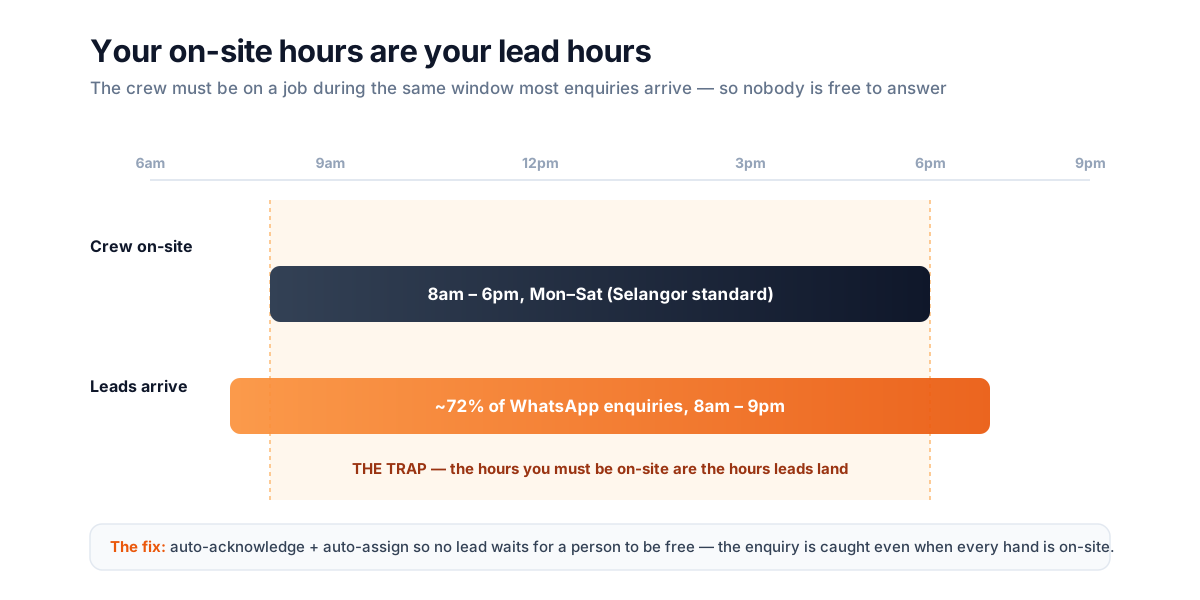
Because the constraint isn't attitude — it's physics. The people who can answer a renovation enquiry properly are your owner, your project manager and your senior installer. They're the only ones who can eyeball a photo of a leaking bathroom and know roughly what it'll cost, or answer "can you do hacking on level 20?" without checking. And those exact people spend the working day on a job site, hands full, phone buried in a pocket under a dusty vest.
Now line that up against when leads actually arrive. WhatsApp customer-service benchmarks put around 72% of business messages between 8am and 9pm, with weekends adding another 15–20% of volume. In Selangor, the state government standardised construction work hours at 8am to 6pm, Monday to Saturday. Read those two facts together and the problem jumps out:
This is not a Malaysian quirk. It's baked into the trade everywhere. US home-services research is blunt about it: the same conditions that bring in the most calls — busy season, word of mouth, strong rankings — are the exact conditions that make answering them hardest. A contractor who's fully booked and out in the field is at once the most attractive to new callers and the least available to pick up. Signpost's analysis and contractor call studies put unanswered home-services calls as high as 62% — not because owners don't care, but because you can't take a call from the top of a ladder.
What does an unanswered lead actually do?
It doesn't wait for you. This is the part that stings: a renovation lead that goes unanswered rarely sits patiently until you're back at your desk. It moves on.
Homeowners message several firms at once — the same way they'd get three quotes for anything expensive. So when your reply lands six hours later, you're not first, you're not second, you might not be read at all. The home-services data suggests around 85% of people who can't reach a business simply contact the next name on the list, and most decide within about a minute whether to keep trying or move on. Your carefully-built reputation doesn't help if the buyer never gets to a conversation.
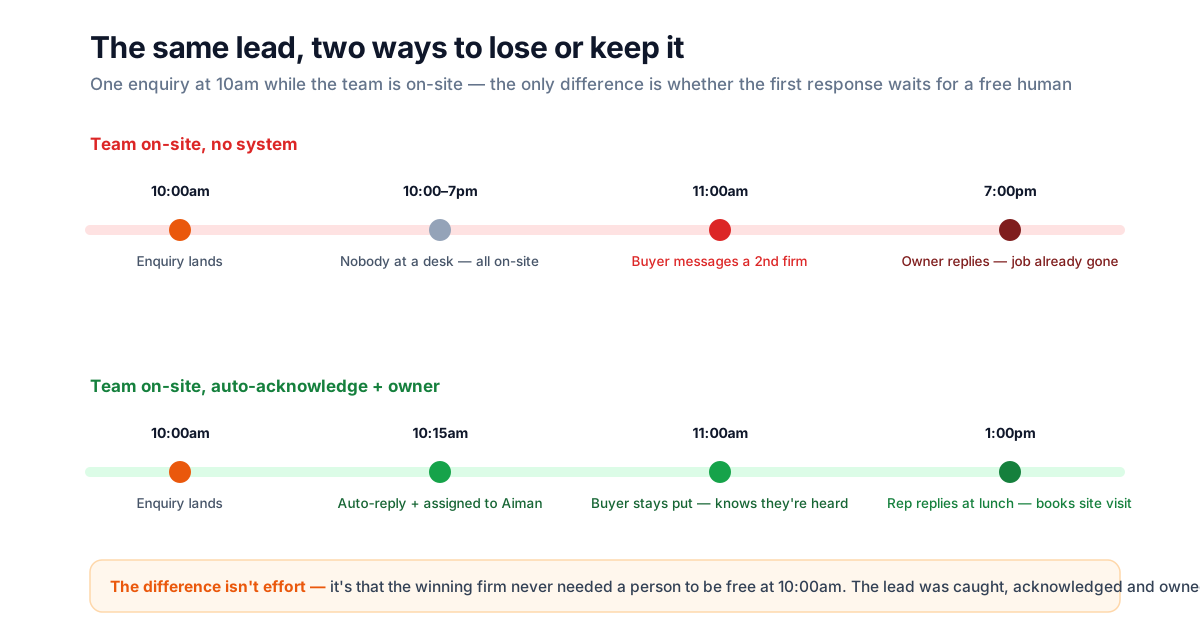
And the cost isn't a RM500 job. In renovation, a single lost enquiry can be a full-unit fit-out — flooring, built-ins, wet works, the lot. Miss one because you were on a scaffold, and you've handed a five-figure job to whoever happened to be free to type "Hi, yes we can help — when can we view?" It's worth being precise about what that gap costs; we did the ringgit math in the real cost of a lost renovation lead.
Why doesn't "hire a salesperson" or "try harder" fix it?
Because you can't out-discipline a structural gap. This is the mistake I see most: an owner realises leads are leaking, feels bad about it, and resolves to "check WhatsApp more often" or "reply within the hour from now on." It works for a week. Then a bad site day comes, a client emergency eats the afternoon, and the resolve quietly dies — because willpower was never the missing piece.
Hiring a dedicated salesperson is a better instinct, but on its own it just relocates the bottleneck:
| The reflex fix | Why it still leaks |
|---|---|
| "Everyone reply faster" | Willpower can't beat being physically on-site all day; it fails on the first busy day |
| "The boss handles all leads" | The boss is the one most often on-site — so the whole sales desk goes offline with him |
| "Post leads to the team group" | A lead owned by everyone is owned by no one — it sits (the lost-in-the-group-chat problem) |
| "Hire one salesperson" | Still takes lunch, drives between visits, sleeps, goes on leave — gaps still swallow leads |
| "Check WhatsApp at breaks" | The buyer already messaged three firms by then and picked one |
Notice the pattern: every reflex fix still depends on a specific human being free at the exact moment a lead lands. That dependency is the leak. The only durable fix is to remove it.
How do you close the on-site trap?
You stop making the first response depend on who's free, and you let a system catch, acknowledge and hold every lead until a human can do the part only a human should. Four moves do almost all of the work:
- Auto-acknowledge every enquiry, instantly, 24/7. The moment a lead messages, they get a warm one-liner — "Hi! Thanks for reaching out about your reno 🙂 We're on-site today but you're in the queue — one of our team will WhatsApp you properly by [time]. Roughly which area and unit type?" That single message does two jobs: it tells the buyer they're heard (so they stop shopping quite so hard), and it starts the qualifying. It doesn't pretend to be a person — it buys your on-site team the hours they physically need.
- Assign one owner the second it lands — by a rule, not a volunteer. Round-robin, by area, or by project type. The lead has a name against it before anyone's back from site, so it's not waiting for someone to notice — it's waiting for one specific person to act. That's what turns "who's got this?" into an owned task.
- Put a next-action date on everything. Renovation deals need five or more follow-ups, yet 44% of firms give up after one — and a field team running on memory forgets the second nudge first. A system that surfaces "these three are overdue" at 7pm means the follow-up happens even after a brutal site day.
- Watch the first funnel gap. Enquiries → replied in time. If that number is ugly, it's not your closers failing — it's the on-site trap, measured. Fix the capture and the rest of the funnel stops bleeding.
The bottom line
The renovation firms losing the most leads aren't the careless ones — they're often the busiest and best, precisely because being busy on-site is what makes answering hard. The enquiries arrive during your mandated site hours, your best responders are up a ladder, and the buyer moves on long before anyone's back at a desk. You will not fix that by feeling guilty and promising to check WhatsApp more. You fix it by making sure no lead ever depends on a specific person being free — auto-acknowledge, auto-assign, one owner, a follow-up list the system keeps. Then your crew can do what they're good at on-site, and still not lose the job to whoever happened to be near a phone.
For the full system this sits inside — capture, speed, ownership, follow-up and funnel — start with the complete guide to managing renovation leads in Malaysia, and see why the first five minutes matter so much and how to never miss a WhatsApp enquiry again.
How HotLead closes the on-site trap
HotLead sits on top of your existing WhatsApp — nothing changes for the homeowner — and takes the first response off your on-site team's shoulders:
- Auto-greeting on every new enquiry, day or night, so a lead that lands at 10am while you're on a scaffold gets an instant, warm acknowledgement instead of silence — the buyer knows they're heard and stops shopping around.
- Automatic routing to one owner — round-robin, manual, or by your own rule — so every lead has a name against it the moment it arrives, not after someone gets back from site.
- Next action on every lead and overdue follow-ups flagged, so the second, third and fifth nudge happen even after a punishing site day, instead of dying in your memory.
- A funnel and team view that shows exactly where leads leak — including the enquiries-to-replied gap that the on-site trap creates — so you can see the problem instead of guessing at it.
If your leads "go cold fast" even though your work is good, the leak is almost certainly here: nobody was free to answer while the team was on-site. Close that one gap and the same enquiries start turning into site visits. See how HotLead works, or read how it fits a renovation firm or a construction contractor specifically.
Sources: The Malaysian Reserve — Selangor sets construction work hours 8am–6pm, Mon–Sat and The Star — Selangor standardises construction industry work hours (mandated site hours overlapping lead-arrival hours); iProperty — construction & renovation working hours in Malaysia (9am–5pm weekday / Saturday-morning norms and stricter strata rules); WhatsApp customer-service benchmarks on message timing (~72% of business messages 8am–9pm; 15–20% weekend volume); Signpost — how much business contractors lose from missed calls and Contractor In Charge — missed-call statistics for home-service companies (unanswered-call rates up to ~62%, ~85% of callers move to the next firm, "the problem is built into the business itself"); MIT / Dr James Oldroyd lead-response study on the 5-minute window; follow-up figures (80% of sales need 5+ follow-ups, 44% quit after one) as cited in the complete guide to managing renovation leads in Malaysia.
Frequently asked questions
Why can't my renovation team just reply to leads faster?
Because the people best placed to reply — the owner, the project manager, the senior installer — are on a job site during working hours, hands full, phone in a pocket under a dusty vest. That's the same window most enquiries arrive in. Telling a field team to "reply faster" asks them to be in two places at once. The fix isn't more discipline; it's decoupling the first response from whoever happens to be free — an automatic acknowledgement and a clear owner assigned the second a lead lands, so the enquiry is caught even when every hand is on-site.
What time of day do most renovation WhatsApp enquiries come in?
Mostly during the working day and early evening. WhatsApp customer-service benchmarks put roughly 72% of business messages between 8am and 9pm, with weekends adding another 15–20% of volume. That daytime window overlaps almost perfectly with when your crew is on-site — Selangor, for instance, standardised construction hours at 8am–6pm Monday to Saturday. So the leads land exactly when your best responders are least available to pick up.
Isn't hiring a dedicated salesperson the answer?
It can help, but on its own it often just moves the bottleneck. A single salesperson still takes lunch, drives between site visits, sleeps, and goes on leave — and a lead that arrives during any of those gaps still sits. The durable fix is a system that catches and owns every enquiry regardless of who's free — an instant auto-reply so the buyer knows they're heard, automatic routing to one owner, and a follow-up list the system remembers for you. A salesperson works far better on top of that than instead of it.
How do I stop losing leads that come in after hours or on weekends?
Treat after-hours as normal, not exceptional — a good chunk of renovation enquiries land at night and on weekends when someone is finally home looking at their empty unit. Set an automatic acknowledgement that fires 24/7 so the buyer gets an instant "got your message, we'll be in touch first thing", assign the lead to an owner so it's waiting for someone by morning instead of buried, and put a next-action date on it so nobody has to remember. The goal is that no lead depends on a human being awake and free at the moment it arrives.
We're a small crew — is this really our problem too?
Especially yours. On a small reno or contracting team the owner often IS the salesperson, the PM and the site lead all at once — so when they're on-site, the whole sales function goes offline. Big firms can staff a desk; a five-person crew can't. That's exactly why a light layer on top of WhatsApp that auto-acknowledges, assigns and reminds matters more for a small team, not less — it's the only "extra staff" you can afford.
Keep reading
- The Only Three Ways to Grow a Renovation Firm — and Which Lever to Pull FirstEvery renovation firm's revenue comes down to three levers — how many leads you get, how many you close, and how big each job is. They multiply, so a modest lift on each compounds. But they cost wildly different amounts to pull, and most owners reach first for the one they should reach for last. Here's the ranking, with Malaysian numbers.
- Sight Unseen: Winning the Overseas Malaysian Who Renovates a Unit They Can't VisitA Malaysian working in Singapore collects the keys to a KL condo and messages you to fit it out — but they can't come to a site visit, can't walk your showroom, and will wire a deposit to a firm they've never met. Most firms treat this lead like a walk-in, go quiet when the buyer can't pop by, and lose the highest-budget job in the inbox. Here's why the remote buyer is your hardest-trust but best-paying lead, and how to build a remote lane that actually closes it.
- "Ok, Proceed" Isn't Money in the Bank — I Built an AI to Ask for the Deposit the Moment a Renovation Buyer Says YesA Cheras contractor closes a RM62k job on WhatsApp, the buyer says "ok proceed lah", and then the owner — mid-site, phone in a dusty hand — has to stop, pull the bank details, the agreed deposit and the scope, and type a careful money message. In that gap a hot yes quietly cools back to "let me think." The 2026 reflex is to ask AI to detect the yes and auto-fire the invoice. I built it, and it asked a half-committed buyer for 40% to a personal account two seconds after a soft "ok ok". Here's the version that kills the typing delay without asking for money off a misread.