

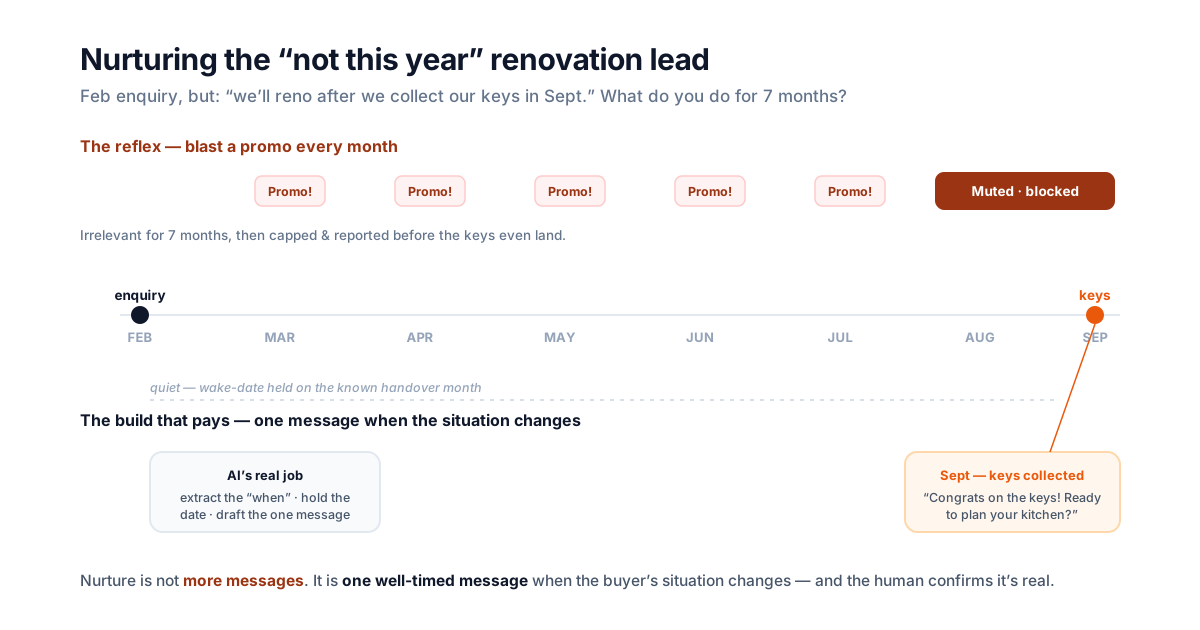
Here is the lead every renovation and interior-design owner in Malaysia has, and almost nobody works. A homeowner messages in February — nice enquiry, real project, semi-D kitchen-and-living — and then says: "Actually we're planning to renovate after we collect our keys in September." You reply politely, they thank you, and that's it. The lead goes into a WhatsApp chat you'll never scroll back to, or a spreadsheet tab labelled "later" that gets opened never. Seven months on, they renovate — with whichever firm happened to be in front of them in September.
That lead was not a bad lead. It was a dated lead. And it is worth roughly the same RM1,280 in expected gross profit as any other winnable enquiry — the real ringgit math is here — with one difference: it told you exactly when it would be ready. So the 2026 question an owner actually cares about is a fair one: can AI nurture this "not this year" pile profitably, so those jobs come back to me instead of a competitor? I built it and measured it. The reflex version was worse than doing nothing. The version that worked used AI for a much narrower job than the hype sells. Here's the whole thing — the problem, what the pile costs before AI, the wrong build, the build that pays, and what AI still can't do.
What does the "not this year" pile actually cost before any AI?
It costs you the single largest, cheapest source of future jobs you already own — and you're paying to acquire these people twice. The lead is already captured, already qualified, already interested. All that's missing is time. But because nothing in the business holds a lead for six months, the interest evaporates and you re-buy the same customer later through an ad, or lose them entirely to the firm that stayed in view.
The data on delayed buyers is blunt. Marketing Donut's oft-cited figure is that 63% of people requesting information won't buy for at least three months, and 20% take more than a year — and renovation, a considered high-ticket purchase, sits at the slow end of that curve. Oracle puts it plainly: about 80% of leads that aren't ready to buy now will make a purchase within the next 24 months. They are not lost. They are early. Treating "not ready now" as "no" is throwing away four in five future customers on a timing technicality.
And there's a second, quieter cost: this is the one stage of the lead-management chain with no owner and no tool. Capture, first reply, qualify, follow-up on a live quote — firms at least try those. Nurture the dormant pile? Almost no one. The memory required — "message the Semenyih couple the week their keys land in September" — is exactly the kind of long-horizon reminder a human brain drops and a spreadsheet never surfaces. Which is precisely the shape of problem you'd hope to point software at.
So can't AI just nurture them? The reflex build — and why it's worse than nothing
Yes, AI will happily nurture your dormant leads. The problem is how it does it by default. The reflex build — the one almost every "AI marketing" tool ships — is a drip campaign: dump the not-ready leads into a list and auto-send a monthly promo. "New year offer!" in January. "CNY special!" in February. "Mid-year sale!" in June. Set it and forget it. It feels like nurture. It is closer to slow self-sabotage.
Here's why it fails, and it's specific to this business. A renovation is a considered, once-in-many-years, high-ticket decision — nobody renovates a RM60k kitchen because a coupon landed. So a monthly discount blast to a buyer who is seven months from being ready is not persuasion; it's noise. Worse, it's noise on a channel that punishes noise. On WhatsApp, business-initiated marketing messages are frequency-capped and governed by a quality rating that drops when people mute, block or report you — the full mechanic is in the companion build on manual versus AI follow-up. So the reflex nurture spends seven months teaching your most patient future buyers to block your number, and by September — when they're finally ready — you've been muted or your template sends are throttled. You nurtured them right out of the funnel.
So "can AI nurture your dormant leads?" is a useless yes. Sending is trivial and nearly free — a drafted message is on the order of a tenth of a sen in tokens, the same rounding error as in the first-reply experiment. The cost was never the sending. The cost is the reputation and the relationship the reflex build burns.
What actually worked — extract the date, hold it, send one message when the situation changes
The build that paid did the opposite of the drip. Instead of "message everyone monthly," it was: message no one until their situation changes — then message that one person, once, about the thing that changed. And renovation hands you an unfair advantage for exactly this, which is the un-Googleable heart of the whole piece.
Most "not now" leads in most industries are a vague fog — "maybe later," a wake-date you can only guess. A renovation "not now" is almost always dated, because it's pinned to a fixed event on the Malaysian property calendar. Vacant possession is legally fixed at 24 months for individual-title and 36 months for strata-title properties from the SPA; the defect liability period runs a known 12 to 24 months; buyers plan around CNY, year-end bonuses and the handover wave. So "after we get our keys in September," "once my DLP ends in March," "after Chinese New Year" aren't fog — they're diarise-able dates. And pulling a structured date out of messy Manglish chat is precisely what a language model is good at.
So the build had AI do three narrow, safe jobs:
- Extract the "when." Read the chat, pull out the not-now signal and the future date attached to it — "keys in Sept," "after CNY," "once we sell the old place."
- Hold a wake-date. Turn that into a single dated next action months out — not a campaign, one reminder — so it surfaces on the right day instead of dying in memory.
- Draft the one message. On the wake-date, draft a specific, low-pressure re-touch that references the real project and the thing that changed — not a promo.
The difference in the output is the whole story. The reflex drip, in June, sends:
"Mid-year renovation SALE! 🎉 Get 10% off all packages this month. Book now!"
The build that pays stays silent until September, then drafts:
"Hi Mr Lim — congrats on collecting your keys this month! You'd mentioned wanting to start on the kitchen and living once you moved in. Happy to pop by for a look whenever you've settled. No rush — just didn't want you to have to hunt for us again."
One is a coupon fired at a stranger. The other is a firm that remembered, arriving the week the buyer became ready, referencing the exact project they described. It doesn't discount, doesn't nag, and doesn't need to — it's the only message in their inbox that proves someone was paying attention.
I'm not going to hand you a fabricated conversion lift from a trial I didn't run at scale — that's exactly the hype this series exists to avoid. What I can anchor to is real research on why this direction works. Forrester found companies that excel at lead nurturing generate 50% more sales-ready leads at 33% lower cost, and the Annuitas Group found nurtured leads make 47% larger purchases than non-nurtured ones. What the build adds isn't a new marketing law — it's a way to produce the relevant, well-timed touch (the kind that earns those numbers) without a human remembering a date six months out, and without the drip that earns you a block instead.
The judgment AI can't make — is "not now" even real?
Here's the part the reflex build ignores and the honest build can't: not every "not now" is a lead to nurture. And telling them apart is a judgment call AI fails, for the same reason it fails across the whole lead process — the deciding fact isn't written in the chat.
There are three kinds of "not now," and they look almost identical to a model:
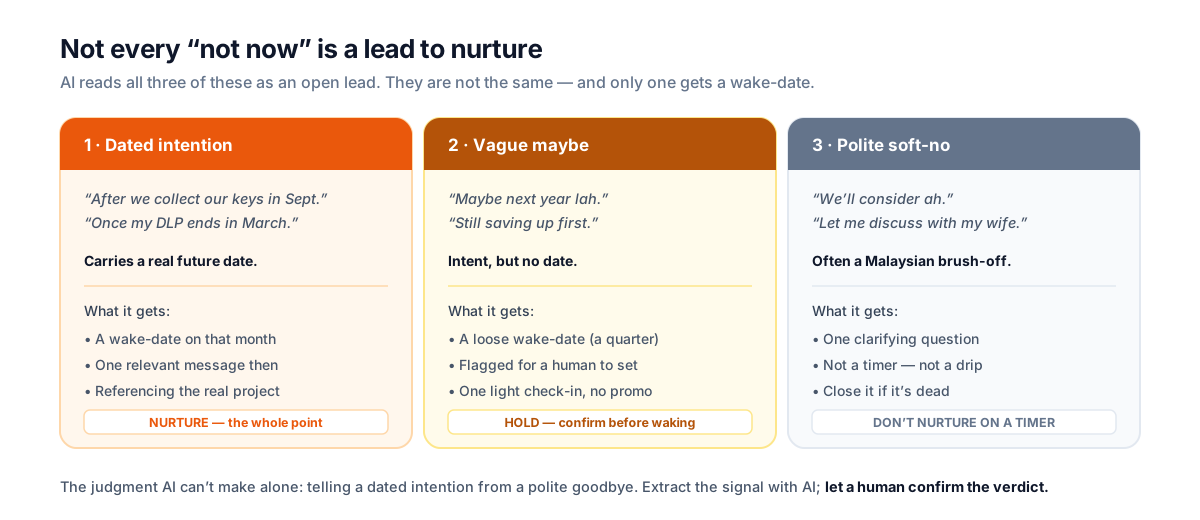
The trap is the third one. In Malaysian buying culture, "we'll consider ah" and "let me discuss with my wife first" are frequently a polite goodbye — the same soft-no that gets a live deal logged as still-open. If AI files that as a "not this year" lead and dutifully wakes it in six months, you've built a machine that chases people who already said no, wrapped in a smile. The dated intention deserves the wake-date. The vague maybe deserves a loose hold and a human's eye. The soft-no deserves one clarifying question and then a clean close — not a spot in the nurture queue.
So the split is the same one every experiment in this series lands on, applied to nurture: AI extracts the timeline and drafts the message; a human decides whether the "not now" is real, and owns the send. AI can't know that the couple got retrenched in May, or quietly renovated with the developer's panel contractor, or were never serious. Those facts live off-channel — and nurturing blind into them is how a helpful tool turns into an annoying one.
Why is this the honest answer for a Malaysian firm right now?
Because the timing is a genuine, ownable edge here, and the market is being sold the lazy version of it. Renovation demand doesn't arrive randomly — it arrives on a calendar you can read in advance: the property-handover wave with its NAPIC-scale completions, festive pushes, DLP expiries. A firm that captures the date attached to each "not now" lead and shows up the week it matters is doing something no amount of ad spend buys: being the remembered option at the moment of readiness.
Meanwhile plenty of owners will switch on an "AI nurtures your leads automatically" feature that just drips promos at the pile — the reflex build, sold as a finished product. An AWS-commissioned study of 1,000 Malaysian businesses found 27% now use AI but 73% are stuck on basic, off-the-shelf tools, with around half citing a digital-skills gap. Translation: a lot of firms will automate the annoyance at scale and wonder why their WhatsApp number went quiet. The grounded move isn't to skip AI on nurture — it's to point it at the narrow, safe, valuable jobs (extract the date, hold it, draft the one message) and keep a human on the part that isn't (is this lead even real, and is now the moment).
What should an owner actually do on Monday?
You can capture most of this without buying anything AI at all — the expensive failure here is forgetting, and that's a habit-and-system fix first, a drafting fix second.
- Stop deleting the "not now" pile. Every dated "not this year" lead is a future job. Give it an owner and a place to live, not a dead spreadsheet tab.
- Capture the date, not just the "no." When a lead says "after we get our keys" or "next year," ask when — the month, the trigger — and write it down. That date is the whole asset.
- Set one wake-date, not a drip. A single dated reminder to re-touch that lead the week their situation changes beats a monthly blast every time. If AI drafts the message, feed it the real project and the trigger, and tell it to reference both — never to send a promo.
- Judge before you wake. Before any nurture message goes, a human decides whether the "not now" was a real dated intention or a polite goodbye. Nurture the first. Close the second.
How HotLead fits — and what it deliberately does not do
I'll be straight, because over-claiming is the exact hype I keep arguing against. HotLead does not run automated nurture drips or decide on its own that a lead is ready — and after this experiment, that restraint is the point, not a gap. What it does is hold the memory that nurture actually depends on:
- A next action and an overdue-follow-up nudge on every lead, so a "revisit in September" surfaces on the right day instead of dying in someone's head — the memory layer, given to a person, not fired on autopilot.
- One owner per lead, so the human who remembers this couple is waiting on their keys is the one who gets the nudge and writes the message.
- A funnel and per-channel view, so you can actually see whether not-yet-ready leads are quietly leaking out of your pipeline — the stage most firms can't even see.
- An optional AI assistant you can switch on that warms a brand-new enquiry instantly — while the judgment of whether a dormant lead is real, and the send, stay your team's call, by design.
In other words, HotLead makes sure the "not this year" lead is never forgotten and reaches the person best placed to judge it and message it. If your dormant pile is where your future jobs quietly die, start with the complete guide to managing renovation leads in Malaysia, see how it fits a renovation firm, and read the companion builds on manual versus AI follow-up and what AI still can't do in a contractor's lead process.
Sources: Delayed-purchase behaviour (63% of information-requesters won't buy for at least three months; 20% take more than 12 months) from Marketing Donut — why you must follow up leads. The 80%-of-not-ready-leads-buy-within-24-months figure from Oracle — what is lead nurturing. Lead-nurturing outcome research (Forrester: 50% more sales-ready leads at 33% lower cost; Annuitas Group: nurtured leads make 47% larger purchases) as compiled by HubSpot — 30 thought-provoking lead nurturing stats. Malaysian vacant-possession and defect-liability timelines (VP 24 months individual-title / 36 months strata-title from the SPA; DLP 12–24 months) from PropertyGuru Malaysia — guide to vacant possession. Malaysian AI adoption (27% adoption, 73% on basic tools, ~half cite a digital-skills gap; AWS-commissioned study of 1,000 businesses) from Tech Wire Asia — Malaysia's AI adoption paradox. Illustrative compute cost uses GPT-4o mini API pricing (USD0.15 / 1M input, USD0.60 / 1M output). Expected-gross-profit-per-lead and Malaysian renovation cost bands as derived in the cost of a lost renovation lead; WhatsApp template frequency-cap and quality-rating mechanics as cited in manual versus AI follow-up; the property-handover demand wave as covered in the renovation enquiry surge after a property handover.
Frequently asked questions
What is lead nurturing for a renovation firm?
It is the system for keeping the "not ready yet" enquiries warm until they are ready to buy — the homeowner planning for next year, waiting on their keys, saving up, or holding out for a bonus. Most renovation firms have no such system, so these leads quietly die even though a large majority of not-ready buyers eventually purchase. Good nurture is not a stream of promos; it is remembering each lead's real timeline and re-touching once, with something relevant, at the moment their situation changes.
Can AI nurture renovation leads that aren't ready to buy yet?
Yes, for the parts that are memory and drafting, not for the parts that are judgment. AI is very good at reading "we'll renovate after we collect our keys in September" out of a chat, turning it into a wake-date, and drafting a relevant message for that month. It is not good at telling whether "next year lah" is a real dated intention or a polite Malaysian brush-off — and it will treat both as an open lead. So the profitable split is AI extracts the timeline and drafts the message; a human confirms the lead is real and owns the send.
Why is a monthly promo blast the wrong way to nurture renovation leads?
Because a renovation is a considered, high-ticket, once-in-many-years decision, not an impulse buy an offer can trigger. A homeowner waiting seven months for their keys does not want a "10% off this month" every four weeks — it is irrelevant, it reads as spam, and on WhatsApp business-initiated marketing messages are frequency-capped and can get your number blocked and quality-rated down before the buyer is even ready. You spend your relationship and your sender reputation nurturing someone into muting you.
What makes renovation leads easier to nurture than most?
A concrete future date. Unlike a generic B2B lead where "maybe later" is an open guess, a renovation "not now" usually comes attached to a real event on the Malaysian property or festive calendar — vacant possession is fixed at 24 to 36 months from the sale-and-purchase agreement, the defect liability period runs a known 12 to 24 months, and buyers plan around CNY, bonuses and handover. "After we get our keys in September" is a wake-date you can actually diarise, which is what makes AI-assisted nurture unusually tractable here.
Does HotLead automatically nurture my leads with AI?
No, and after this experiment that is deliberate. HotLead keeps a next action and an overdue-follow-up nudge on every lead, so a "revisit in September" surfaces on the right day instead of dying in someone's memory — that is the memory layer nurture actually needs. It gives each lead one owner and shows you a funnel so you can see whether not-yet-ready leads are being lost. It does not fire automated drip sequences or decide on its own that a lead is ready. If you draft nurture messages with a separate AI tool, keep a human deciding whether the timing is real and tapping send.
Keep reading
- The Only Three Ways to Grow a Renovation Firm — and Which Lever to Pull FirstEvery renovation firm's revenue comes down to three levers — how many leads you get, how many you close, and how big each job is. They multiply, so a modest lift on each compounds. But they cost wildly different amounts to pull, and most owners reach first for the one they should reach for last. Here's the ranking, with Malaysian numbers.
- Sight Unseen: Winning the Overseas Malaysian Who Renovates a Unit They Can't VisitA Malaysian working in Singapore collects the keys to a KL condo and messages you to fit it out — but they can't come to a site visit, can't walk your showroom, and will wire a deposit to a firm they've never met. Most firms treat this lead like a walk-in, go quiet when the buyer can't pop by, and lose the highest-budget job in the inbox. Here's why the remote buyer is your hardest-trust but best-paying lead, and how to build a remote lane that actually closes it.
- "Ok, Proceed" Isn't Money in the Bank — I Built an AI to Ask for the Deposit the Moment a Renovation Buyer Says YesA Cheras contractor closes a RM62k job on WhatsApp, the buyer says "ok proceed lah", and then the owner — mid-site, phone in a dusty hand — has to stop, pull the bank details, the agreed deposit and the scope, and type a careful money message. In that gap a hot yes quietly cools back to "let me think." The 2026 reflex is to ask AI to detect the yes and auto-fire the invoice. I built it, and it asked a half-committed buyer for 40% to a personal account two seconds after a soft "ok ok". Here's the version that kills the typing delay without asking for money off a misread.