

A contractor in Kajang told me about the "easy" job that nearly cost him a client relationship and a chunk of margin. A WhatsApp came in one evening, almost pleading: "Bro, my contractor took my RM30k deposit, hacked my kitchen and the two bathrooms, then disappear. Already two months no reply. Can you take over and finish? Please, I just want it done."
It felt like the easiest lead he'd had all month. The buyer was desperate. Already committed — money spent, walls open, no going back. Half the demolition was done for him. So he did what he does with every hot lead: he moved fast. Looked at the photos she sent, quoted a number on WhatsApp to "continue and finish," kept it friendly and cheap because she'd already been burned once. She said yes on the spot, grateful.
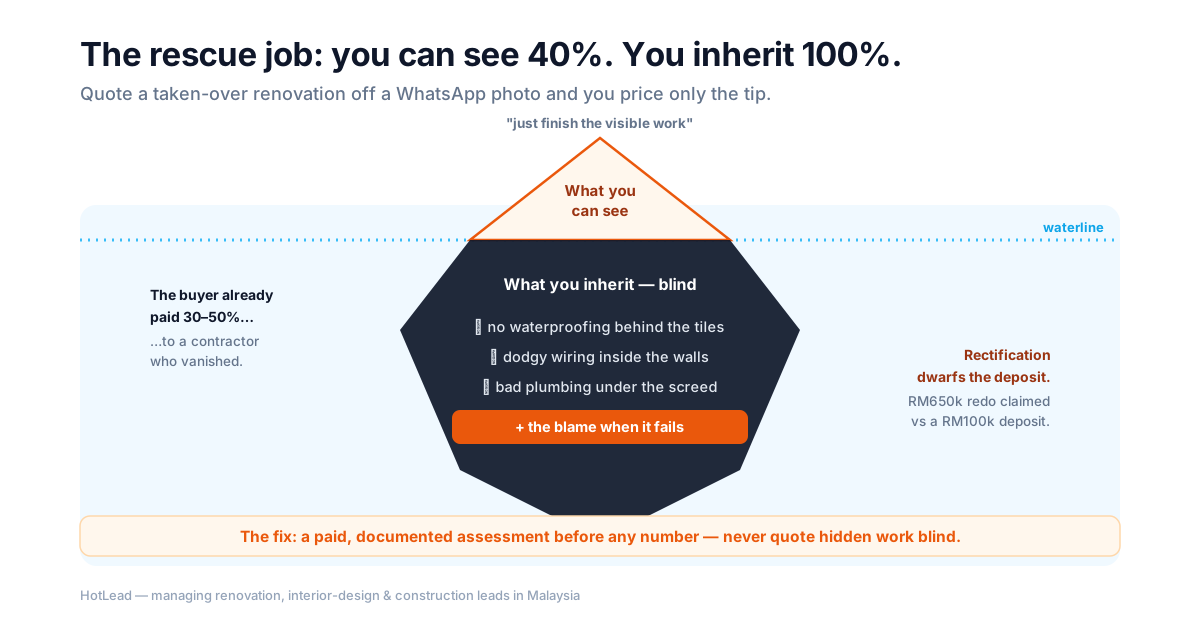
Then he opened up the bathrooms. The previous contractor had tiled straight over bare screed with no waterproofing membrane at all. The kitchen wiring was a hazard. Half of what looked "done" had to be torn out and redone. His cheap "just finish it" number was now a loss — and when he told her the real cost, the trust she'd handed him curdled into here we go again, another contractor.
That's the trap I want to walk through, because these leads are common in Malaysia and they arrive wearing a disguise. The rescue job looks like the easiest lead in your inbox. It's the most dangerous.
What makes a takeover enquiry different from a normal renovation lead?
A normal enquiry is a buyer choosing who to start with. A takeover lead is a buyer who's already been burned and needs someone to clean up. Same WhatsApp, completely different animal — and the differences all point one way: more risk, less known, priced blind.
On a fresh job you're pricing a clean slate — an empty or lived-in unit you can measure, a scope you and the buyer define together, a relationship that starts at zero and builds up. On a rescue job you're pricing someone else's half-finished work, where the buyer often can't tell you what was done well, what was done wrong, and what was never done at all. Three unknowns stacked on top of each other, and the most expensive one — the hidden work — is invisible until you open it up.
This isn't a rare corner of the market, either. Between January 2022 and June 2023, the Construction Industry Development Board (CIDB) received 150 complaints involving house-renovation fraud — and that's only the ones formally reported to CIDB. Add the Rawang case where five homeowners lost over RM127,000 to a fake contractor, the FMT-reported deposit-and-ghost cases, and every quiet abandonment that never makes the news, and you have a steady stream of burned homeowners — each one eventually landing in some other contractor's WhatsApp asking for help.
Why is the "easiest" lead actually the most dangerous?
Because everything that makes it feel easy — the desperation, the commitment, the half-done work — is exactly what makes it risky to price and dangerous to own. Four things bite, and none of them show up in the photos:
- You inherit hidden defects you can't see or price. The dangerous work in a renovation is buried — waterproofing behind the tiles, wiring in the walls, plumbing under the screed. A runaway contractor's shortcuts hide in precisely those places. You can't quote it off a WhatsApp photo any more than you can quote a fresh job off a photo of the kitchen — the number that matters is the one you can't see.
- The rectification usually dwarfs the deposit. Finishing the visible 40% is cheap. Tearing out and redoing the bathroom that was tiled over bare screed is not. In one widely-reported dispute over abandoned renovation work, the client claimed RM650,000 in rectification costs against a RM100,000 deposit — the cost of a takeover lives in fixing what's wrong, not finishing what's left.
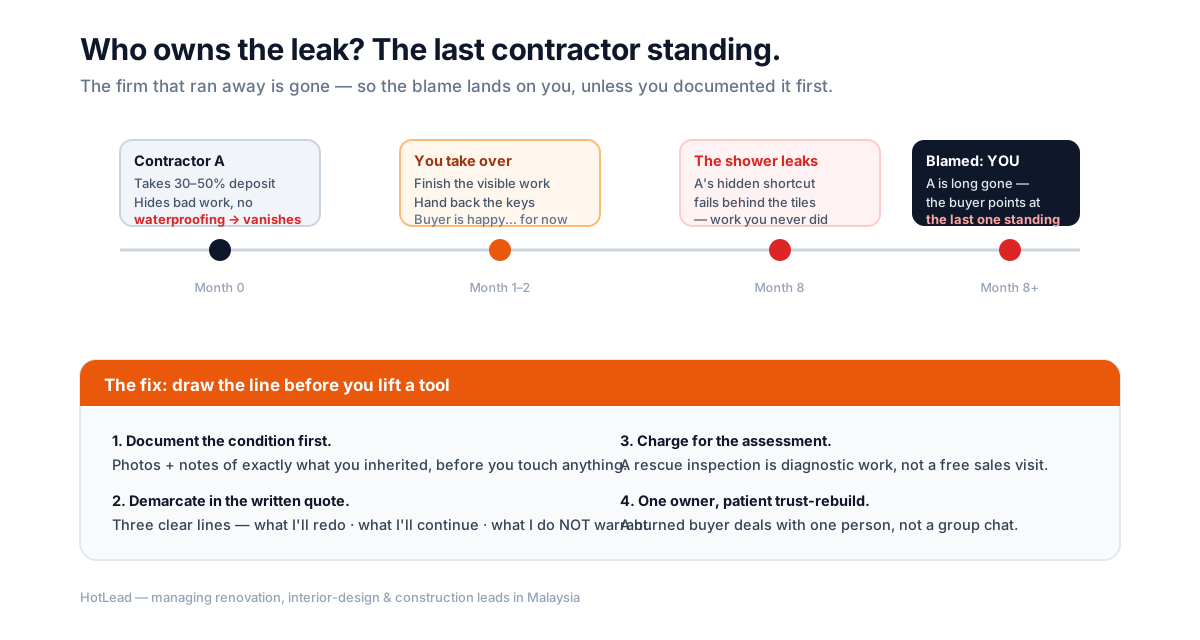
- You inherit the blame, because you're the last one standing. This is the one nobody warns you about. When the shower leaks six months later, the homeowner doesn't chase the contractor who ran away — he's long gone. They point at you, the last contractor who touched the job. You didn't lay that membrane, but you own the complaint.
- The buyer is burned, broke and distrustful. They've already handed 30–50% to someone who vanished. They're financially raw, hyper-price-sensitive, and primed to read every contractor as the next scammer. That trust deficit isn't your fault — but you inherit it, and one honest "the real cost is higher than I first thought" can tip them straight back into suspicion.
How should you actually handle a rescue lead?
You handle it the opposite way to a fresh hot lead — fast on the acknowledgement, patient and documented on the number. The speed goes into making the frightened buyer feel heard; the discipline goes into never pricing hidden work blind. Six moves:
- Tag it as a takeover lead the moment it lands — not a fresh reno lead. That one label routes it into a careful, assessment-first lane instead of the fast-quote lane, so nobody on your team fires off a WhatsApp price to "win" it. It's a distinct lead type, exactly like a strata committee job or a government tender is distinct from a homeowner walk-in.
- Reply fast and warm — but do not quote. Acknowledge the distress quickly; a burned buyer who's been ghosted for two months feels every hour of silence. But be honest in that first reply that a takeover can only be priced properly after you've seen it. Speed on the reply, not on the number.
- Gate it behind a paid, documented site assessment. This is the one job where you should charge to inspect. A rescue assessment is real diagnostic work — opening up suspect areas, judging what's salvageable, documenting condition. It's a deliverable, not a free measurement visit. A serious burned buyer will pay it; a tyre-kicker hunting a free second opinion to wave at their old contractor won't.
- Document the condition before you touch anything. Photos, notes, a written record of what you're inheriting. This is your defence against inheriting the blame — the demarcation between the previous firm's defects and your work has to exist on paper before you lift a tool.
- Quote to a clear line — redo, continue, not-my-defect. Your written scope should draw three explicit boundaries: what you'll tear out and redo, what you'll continue as-is, and what existing work you are not warranting. No line, no protection.
- Give it one owner, and let them rebuild the trust. A rescue job is won by a person the buyer slowly learns to trust again — not by whoever grabs the chat next. Assign one owner by rule, not by group-chat volunteer, and keep the job with them through the whole nervous, questioning process.
Fresh lead versus takeover lead — the reflexes that flip
Run a rescue lead through your fresh-lead reflexes and you'll misprice it and inherit the mess. Here's how the two actually differ, and why nearly every winning move flips:
| Fresh renovation lead | Takeover / rescue lead | |
|---|---|---|
| The buyer's state | Shopping, hopeful, comparing 3–5 firms | Burned, committed, distrustful, needs it fixed |
| What's known about scope | Clean slate you can measure and define | Partly hidden — done, done-wrong, and not-done, mixed together |
| What you inherit | Nothing | Someone else's defects, liability, and a broken trust |
| The real risk | Losing the job to a faster firm | Winning the job and losing money on it |
| How to price it | Measure, quote, follow up | Paid assessment first — never off a photo |
| The winning reflex | Speed — fast reply, relentless follow-up | Speed on the reply, patience on the number |
| Who's blamed if it fails later | The firm that did the work | You — the last contractor standing |
Why doesn't the burned buyer just go to a lawyer or the tribunal?
Because for most homeowner renovations the formal recourse is slow, capped, or barely worth it — which is exactly why they're in your WhatsApp instead. It helps to understand the buyer's position, because it explains why they arrive so anxious and why your process has to rebuild trust the system won't.
A homeowner whose contractor absconded has thin options. Chasing it as cheating is hard to prove — the law generally requires showing the contractor intended to abscond from the very start, so at most it's treated as a civil dispute. The Tribunal for Consumer Claims (TTPM) is capped at RM50,000, which many gutted-and-abandoned jobs exceed once rectification is counted. CIDB's e-Bantuan channel and the National Consumer Complaints Centre can mediate, but they don't rebuild a bathroom. And unlike a housing-developer dispute, a homeowner's own renovation sits outside CIPAA's fast statutory adjudication, so there's no quick route to force payment or resolution.
So the buyer's real Plan B isn't the courts — it's the next contractor. That's you. Knowing that changes how you show up: you're not just quoting a job, you're the first honest contractor they've spoken to in months, and behaving like one — a fast reply, a proper inspection, a clear written line — is most of what wins it.
When is a takeover job actually worth taking?
Take it when you can inspect the hidden work, draw a clean line around it, and the buyer will pay for a proper redo — walk away when any of those is missing. Not every rescue lead is a bad job; plenty are fair, profitable, and win you a loyal client. The screen is whether you can price it honestly and protect yourself.
Good signs it's worth it: the abandonment is recent so less is buried, the buyer has documentation and a contract with the old firm, you can open up and inspect the suspect areas before quoting, a clean demarcation is possible, and the buyer accepts that some work has to be redone rather than just "continued."
Walk away when you can't inspect before quoting, when the buyer wants you to warrant the entire job including the previous firm's work, when there's a live legal dispute you'd complicate by touching the site, or when the buyer only wants the cheapest number to "just finish it" and won't pay to redo what's wrong. As with a lead you're better off not chasing, sometimes the most profitable takeover lead is the one you politely decline — a rescue job taken on the buyer's terms instead of on a documented assessment is just how a healthy firm inherits an unhealthy job.
How HotLead helps you handle rescue leads without inheriting disasters
HotLead sits on top of the WhatsApp your enquiries already land in — nothing changes for the homeowner messaging you — and it's built so a dangerous takeover lead gets handled on the right process instead of being fast-quoted like a walk-in:
- Captures and tags every enquiry the moment it arrives, so a takeover or rescue job can be marked as its own lead type and routed into an assessment-first lane, not the fast-quote lane.
- Assigns one owner instantly — round-robin, manual, or a custom rule we set up during onboarding — so a nervous, burned buyer deals with one person rebuilding their trust, not a group chat where the job goes cold or gets a careless number.
- Keeps a next action and flags overdue follow-ups, so the paid assessment gets booked, the documented condition report gets done, and the careful quote actually goes out — the steps a rescue job lives or dies on.
- Shows your funnel and per-channel ROI, so you can see which takeover leads are live, which ones you should be walking away from, and whether rescue work is a profitable lane for your firm or a margin leak.
HotLead doesn't inspect the job or draw the demarcation for you — that's your expertise, and on a rescue lead it's the whole game. What it does is make sure the frightened buyer gets a fast, warm reply, one owner, and a tracked process, so your firm's discipline shows up exactly where the last contractor's didn't.
If your firm keeps getting pulled into half-finished jobs that turn into money-losers, the leak usually isn't your skill — it's that you answered a rescue lead like an easy hot lead and quoted before you'd seen what you were inheriting. Start with the renovation lead-management hub or the contractor hub, read the complete guide to managing renovation leads in Malaysia, or see how HotLead works.
Sources: CIDB received 150 complaints involving house-renovation fraud between January 2022 and June 2023, and the rise of unregistered contractors, from BERNAMA — Demand Sees Uptick In Unregistered Contractors Undertaking Renovation Works; the common deposit-and-vanish pattern (30–50% upfront "to buy materials," minimal work, then absent) and the difficulty of proving cheating from Recommend.my — How to Avoid Cheating Contractors in Malaysia and FindContractor.my — 5 Renovation Scams in Malaysia; the Rawang case of five homeowners losing over RM127,000 to a fake contractor via Recommend.my; the RM650,000 rectification claim against a RM100,000 deposit in an abandoned-renovation dispute from Malay Mail — counter-claim over failed renovation work; mandatory CIDB registration and the recourse options for a renovation dispute — the RM50,000 Tribunal for Consumer Claims (TTPM) ceiling, CIDB e-Bantuan, and the National Consumer Complaints Centre — from PropertyGuru — Hiring A Renovation Contractor In Malaysia. The Kajang, Cheras and Puchong contractor scenarios are illustrative; the pattern is one we see repeatedly.
Frequently asked questions
Should I quote a takeover job from the photos a homeowner sends on WhatsApp?
No — a photo of a half-done kitchen tells you almost nothing about the takeover job, because the expensive risk is what you can't see. Waterproofing is behind the tiles, wiring is inside the walls, plumbing is under the screed, and the previous contractor's shortcuts are buried in exactly those places. A confident WhatsApp number quoted off photos will be wrong, and once you've named it the burned buyer holds you to it. Acknowledge fast and warmly, but tell them honestly that a rescue job can only be priced after a proper on-site assessment.
Should I charge for the site assessment on a takeover job?
Usually yes, and it's the one job type where a paid assessment makes the most sense. On a fresh lead a free measurement visit is a normal cost of sale, but a rescue job needs real diagnostic work — opening up suspect areas, documenting the condition, working out what's salvageable versus what has to be torn out and redone. That's a deliverable, not a sales call. A burned homeowner who has already lost a deposit usually values a contractor who takes the problem seriously enough to inspect it properly, and the paid assessment filters out the ones just hunting for a free second opinion to wave at their runaway contractor.
Am I liable for the previous contractor's defective work if I take over?
You're not legally responsible for their work, but in practice you inherit the blame unless you protect yourself — because you become the last contractor who touched the job, and that's who the homeowner points at when something fails. The defence is documentation. Before you touch anything, record the condition of what you're inheriting with photos and notes, and put a clear demarcation in your quote — this is what I'll redo, this is what I'll continue, and this is existing work I am not warranting. Without that line, a leak from the previous firm's waterproofing becomes your problem and your reputation.
How is a rescue lead different from a normal renovation enquiry?
A normal enquiry is a buyer choosing who to start with; a rescue lead is a buyer who has already been burned and needs someone to clean up. The differences that matter — the scope is partly hidden and genuinely unknowable without inspection, the buyer is financially and emotionally raw and hyper-price-sensitive, there may be an unresolved dispute with the old contractor, and you carry liability for work you didn't do. Treat it like a fresh, easy hot lead and you'll misprice it and inherit the mess. Tag it as its own lead type and run it on a slower, more careful process.
When should I walk away from a takeover job?
Walk away when you can't inspect the hidden work before quoting, when the buyer wants you to warrant the entire job including the previous firm's work, when there's a live legal dispute you'd be complicating by touching the site, or when the buyer only wants the cheapest number to "just finish it" and won't pay for a proper redo of what's wrong. A rescue job you take on the buyer's terms rather than on a documented assessment is how a healthy firm inherits an unhealthy job — sometimes the most profitable takeover lead is the one you politely decline.
Keep reading
- Did We Already Say RM68k? Using AI to Stop Quote Drift Across a Long Renovation ThreadOver a weeks-long WhatsApp thread with two or three quote revisions, a rep re-states a number that contradicts an earlier promise — and re-opening a settled price quietly invites a discount that eats a whole job's profit. So I pointed AI at the drift. It works beautifully as a flag, and dangerously as an auto-corrector.
- The Warranty as a Closing Lever: Why a Longer Guarantee Beats a Discount on a Renovation DealA quote is stalling and the buyer wants a reason to say yes. Before you drop the price, look at the other lever in your hand — a longer workmanship warranty. It is the same expected-value decision as a discount, but the math runs the opposite way — a price cut costs you thousands with certainty, while extending the defects cover costs you a couple of hundred ringgit in expectation, for arguably more trust with a scam-wary buyer. Here is the EV case for the non-price concession, the trap that turns it into a hidden liability, and which leads it actually moves.
- "Can You Just Build It, My Neighbour Also Did" — Handling the Renovation Lead That Needs Council Approval FirstSome renovation enquiries can't legally start next month, no matter how ready the buyer is — a kitchen extension, a hacked-through wall, a roofed-over air well all need the council's written approval first. Quote a fast build price to win the job and you either lose it to a "boss, can start" cowboy, or win it and inherit the stop-work order, the RM50,000 fine and a client who later can't sell the house. Here's how to spot the permit-first lead and sell the approval as protection.